

A shift is happening in ceiling lighting. Hard, glossy surfaces are giving way to softer, woven textures. Walk through any design showroom or scroll a few interior feeds, and you’ll spot pendants wrapped in linen, cotton, and even recycled polyester blends. These textile pendant lights bring a warmth that metal or glass just can’t match. But that warmth comes with a set of technical realities that rarely show up in the marketing photos.
I’ve found that most people mistake textile pendants for glass fixtures when it comes to heat and cleaning. The fabric’s woven structure is both its charm and its Achilles’ heel: it diffuses light beautifully, but it also traps dust, lets light through unevenly if the weave is inconsistent, and warps if you use too hot a bulb. My rule of thumb is to look for a shade with a white inner coating—that’s what actually gives even illumination and keeps the fabric from looking dirty inside. And I never recommend using a dimmer that goes below 20% because some LEDs cause a high-pitched hum that is amplified by the fabric.
If you’re considering a pendant with a fabric shade, a handful of practical checks—before you even cut open the box—can save you from a scorched, sagging, or buzzing fixture hanging over your dining table. This guide walks through what really matters, from the fire label to the bulb base, so you end up with a fixture that’s safe, long-lasting, and every bit as soft-looking as you imagined.
Key Takeaways
- A textile pendant diffuses light through its woven fabric, but uneven weave or missing inner liner often creates patchy, yellowish spots.
- Always check for a UL listing or CE marking and a visible fire-retardant label—fabric can ignite if a high-wattage bulb sits too close.
- Use LED bulbs with a maximum of 8–10 watts (equivalent to 60W incandescent) to prevent heat damage; never exceed the manufacturer’s rating.
- Dust collects inside the shade and lightweight fabric can warp during washing—vacuum with a brush attachment monthly and only spot-clean when absolutely necessary.
What Makes a Textile Pendant Light Different
A pendant light named after its shade material might sound simple, but the word “textile” covers a lot of ground. From a coarse burlap to a finely woven linen, every fabric type handles light, heat, and humidity differently. Understanding those differences is the first step toward a fixture that lasts.
Fabric Choices: Linen, Cotton, Polyester, and More
The outer fabric of a textile pendant light is typically linen, cotton, polyester, or a blend. Linen offers a crisp, natural texture that filters light with a slightly speckled glow—it is breathable, so it sheds heat relatively well, but it wrinkles easily and can shrink if exposed to moisture. Cotton is softer and more even in weave; however, untreated cotton is highly absorbent, which becomes a problem in steamy kitchens. Polyester and other synthetics resist moisture and are less likely to sag, but they can melt or discolor if a bulb runs hot. Many manufacturers now use a fire-retardant polyester that meets flammability standards while keeping a matte, fabric look.
A circular pendant light often uses these textiles stretched over a metal or beech wood frame. The frame material matters too: beech wood is rigid and doesn’t warp easily, but it can darken over time near a hot bulb. A steel frame is more heat-tolerant but heavier, requiring a sturdier ceiling canopy and mounting screws.
The Hidden Liner – Why a White Inner Coating Matters
Flip over a fabric shade and you’ll often see a second layer bonded to the inside. This liner—usually a white PVC or a stiffened fabric—is what actually controls the light. Without it, the bulb’s glow passes directly through the outer weave, highlighting every inconsistency. Dark spots appear where threads are denser; lighter bands show through thinner areas. A white inner coating diffuses the light evenly and also reflects it back toward the bulb, which reduces the shadow of the lamp socket and brightens the room below.
That liner is also the component most vulnerable to heat. PVC liners can warp into wavy ridges if a bulb exceeds the wattage stamped on the label. I’ve pulled down fixtures where the liner had shrunk into a stiff, puckered cone, leaving a gap between fabric and frame. That’s not just ugly—it exposes the bulb directly to the outer fabric, which is now one careless cleaning away from contact.
Are Textile Pendants Safe? Fire Retardancy and Certifications
Even a flame-retardant fabric can burn if a high-heat bulb touches it directly. That’s why reputable textile pendant lights carry a fire-retardant treatment label—look for a statement on the shade or in the manual confirming compliance with UL (Underwriters Laboratories) standards in North America or the CE marking in Europe, which indicates conformity with EU safety regulations including flammability requirements. Some shades use inherently flame-resistant fibers, such as certain treated polyesters, while others are coated with a fire-retardant spray. Over time, that spray can degrade, especially if the shade is washed. The only way to maintain the rating is to keep the original treatment intact, so cutting or re-covering the shade yourself often voids its safety certification.
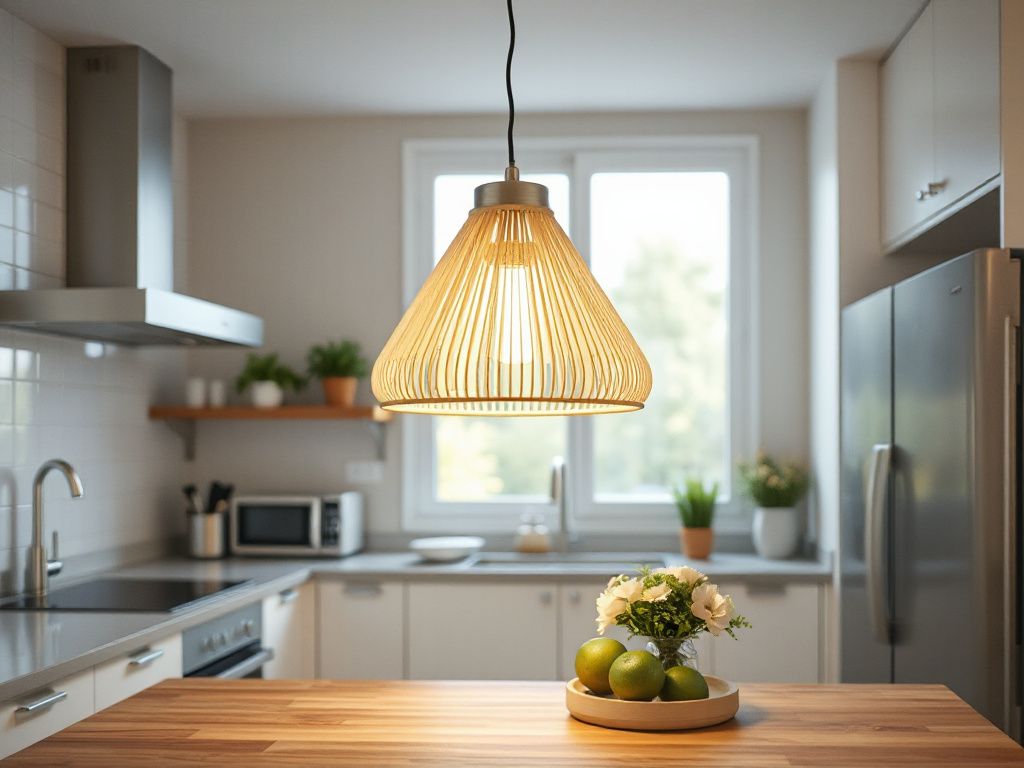
For most household applications, an IP20 rating is standard. That rating means the fixture is protected against solid objects larger than 12mm (so fingers won’t accidentally touch wiring) but has no water protection. That’s a critical limit: it tells you the pendant isn’t suitable for bathrooms, outdoors, or any location where moisture can condense inside the fabric.
Installation and Wiring – An Electrician’s Safety Checklist
Homeowners often treat a pendant light swap as a plug-and-play job. With a textile shade, the margin for error shrinks: the fabric can hide loose wiring until a hot spot develops. Taking fifteen minutes to inspect what’s inside the canopy prevents a fire hazard and guarantees the shade hangs level.
What to Look for in Hardware and Mounting
Open the box and immediately test the mounting plate and screws. A steel frame shade, especially a larger one over 16 inches in diameter, puts real weight on the ceiling fixture. Look for a mounting bracket made of stamped steel—cast aluminum alternatives can crack under torque. The canopy should have a rubber gasket or felt padding where it meets the ceiling; without it, the metal edge can slice into the ceiling paint and create an unsightly ring.
The cord set that comes with the pendant needs to be at least 18-gauge stranded copper for LED loads, but if a manufacturer supplies a thinner cord (20-gauge or higher number), I treat it as a red flag. Fabric-wrapped cords are popular, yet some cheap imports use a brittle plastic inner insulation that cracks when bent sharply around the strain relief. Give the cord a firm flex near the canopy—if you hear any crackling, stop. That’s insulation failure waiting to happen.
The CE and UL Marks: What They Actually Mean
A CE marking is a self-declaration from the manufacturer that the product meets EU safety directives. It’s not a third-party testing certification like a UL listing, which involves actual lab testing and ongoing factory inspections. Both symbols signal that the fixture has passed baseline electrical and fire safety requirements, but in regions where UL or ETL is the norm, a CE mark alone isn’t enough for insurance purposes. During inspection, an electrician would look for a holographic UL sticker or an ETL mark on the lamp holder. If neither exists, the product likely hasn’t been tested for North American standards. That doesn’t mean it’s dangerous automatically, but it means you’re taking on liability.
Avoiding Common Wiring Hazards
Inside the canopy, the wire connections should sit inside a plastic junction box or at minimum be covered by a sturdy insulating cap. Bare connections wrapped only in electrical tape are a shock hazard. Also, verify that the ground wire—usually bare copper or green—is properly attached to the metal mounting bracket. A textile shade acts as an insulator, so if a live wire comes loose and touches the frame, the fabric could prevent a circuit breaker from tripping instantly, leaving the metal parts energized. A solid ground path is non-negotiable.
If the pendant uses a beech wood or other wooden frame, check that the lamp holder is fastened with screws, not glue. Heat cycles cause wood to expand and contract; glue will eventually fail, and the socket can drop onto the fabric shade, creating a fire contact point.
Choosing the Right Bulb for a Fabric Shade
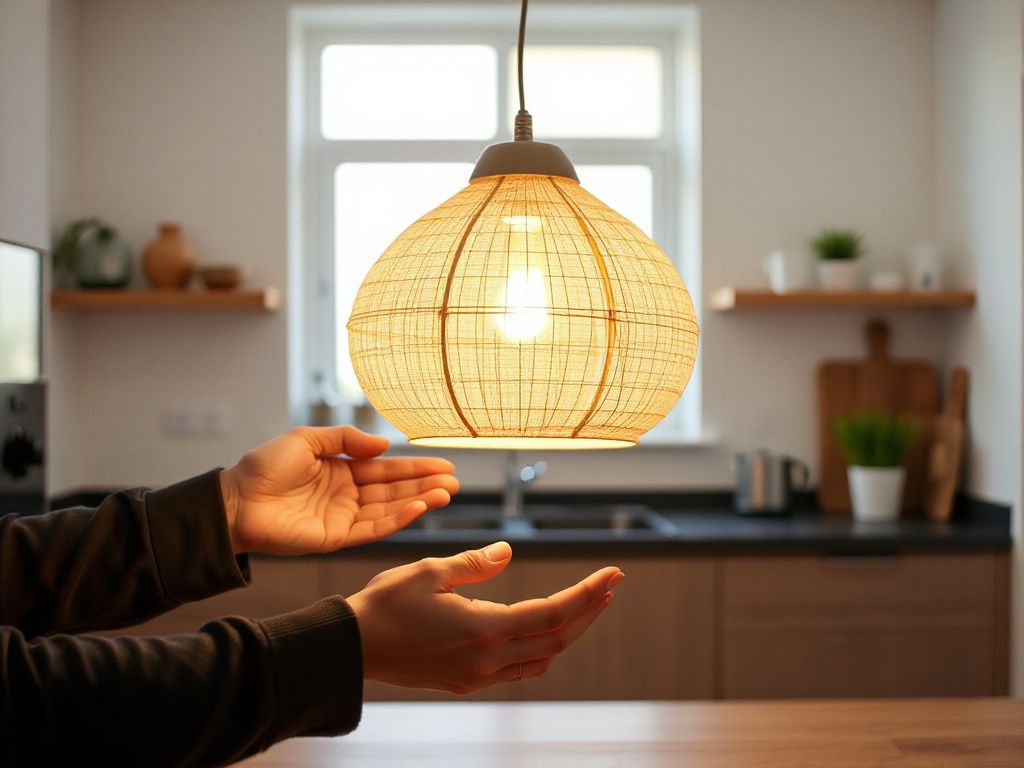
Bulb selection is where aesthetics collide with physics. You want a warm, inviting glow, but the fabric can’t handle the heat of an incandescent bulb. LED technology solves most of the problem, yet not all LEDs are created equal when they’re tucked inside a textile drum.
For a broad look at how glass shades differ in light output, our 2026 roundup of clear glass pendants shows why diffused light like a textile’s can actually be more flattering over a table.
Wattage Limits and LED Compatibility
Every textile shade comes with a sticker stating the maximum wattage—commonly 40W for incandescent or 8–10W for LED. An 8W LED produces roughly the same lumens as a 60W old-school bulb, so that number is generous enough. The real threat isn’t the average heat but the concentrated hot spot directly above the bulb. If the shade hangs close to the bulb envelope—say, within 2 inches—the fabric can reach temperatures over 90°C (194°F) with a high-wattage LED. At that point, even a treated fabric starts to degrade.
The National Fire Protection Association (NFPA) has documented that lamps are a common ignition source in residential fires, often due to bulbs exceeding fixture ratings. Stick to LED bulbs with a heatsink design that directs warmth downward, away from the shade. A bulb shaped like a standard A19 with a plastic body tends to trap heat up top, while a filament-style LED with a glass envelope and open air flow runs cooler inside the shade.
Dimming Issues: The Hum Below 20%
I mentioned the 20% dimmer rule earlier, and it’s worth explaining the physics. Many LED bulbs use pulse-width modulation (PWM) to dim. At low settings, the driver cycles on and off rapidly, generating audible vibrations in the bulb’s magnetic components. A metal or glass shade tends to dampen that sound. A fabric shade, however—especially one with a stiff inner liner—acts like a drum head, amplifying the buzz into an irritating hum. You might not notice it during a noisy dinner party, but in a quiet bedroom, it’s unbearable. The fix is simple: choose LED bulbs labeled “dimmable” and pair them with a dimmer that is compatible with the bulb’s electrical spec, or just set the dimmer floor to 20% and avoid going lower.
Why Smart Bulbs Can Be Tricky Inside Fabric
Smart bulbs pack a radio receiver and a small microprocessor inside the base—components that generate a few extra degrees of heat. When enclosed in a textile shade with limited ventilation, that extra heat accumulates. I’ve measured temperatures inside a linen drum shade with a Philips Hue bulb at full brightness, and the internal air hit 105°F (40°C) in about 30 minutes. That’s not an immediate fire risk, but it’s enough to accelerate the aging of the fabric and the PVC liner. If you plan to use a smart bulb, choose a shade with a wider top opening that allows hot air to escape, or opt for a design where the bulb sits lower, leaving a large air gap between the lamp and the fabric ceiling.
Cleaning and Maintaining Your Textile Pendant
Dust is the quiet killer of fabric pendants. It’s not just a cosmetic issue; built-up dust on a warm light fixture becomes an odor sponge and can, over years, turn into a fire accelerator if it’s composed of flammable lint. A monthly maintenance routine keeps the light even and the room smelling neutral.
Regular Dusting and Vacuuming Techniques
Turn off the light and let the bulb cool completely. Use a vacuum cleaner with a soft brush attachment on the lowest suction setting. Gently pass the brush over the outside of the shade in vertical strokes—horizontal rubbing can pull threads loose. Then reach inside the shade and vacuum the white liner. The inside catches more dust than the outside because static electricity from the bulb attracts airborne particles. For a deep clean, use a lint roller on the interior surface; it removes particles the vacuum might miss without abrading the delicate coating.
Can You Wash a Fabric Lampshade? The Risks
Some guides claim you can wash a polyester shade in a bathtub. I strongly advise against it unless the manufacturer’s instructions explicitly say the shade is removable and machine-washable. Linen and cotton shades will shrink unevenly, causing the fabric to pull away from the frame seams. The wire or plastic frame hidden inside the seam can rust, staining the fabric with orange marks. Even a shade labeled as “spot clean only” can leave water rings if you use too much liquid. If you must clean a stain, mix a tiny drop of mild detergent with distilled water, use a white microfiber cloth, dab—never rub—and immediately dry the spot with a hairdryer on cool, held at least 12 inches away to avoid heat warping.
Dealing with Odors and Discoloration
A textile pendant over a kitchen island absorbs cooking oils carried by steam. Over time, the white liner turns yellowish and develops a faintly rancid smell. That discoloration is often permanent—the oil bonds with the PVC coating. The only way to minimize it is to install the pendant high enough that the shade stays above the hot air column rising from the stovetop, and to run the exhaust fan every time you cook. In living areas, cigarette or candle smoke has a similar effect. An air purifier with a HEPA filter near the area reduces the particulate load on the shade. If yellowing is already present, replacing the shade is the surest fix; scrubbing often deteriorates the fire-retardant treatment.
Design Tips: Where Textile Pendants Shine (and Where They Don’t)
Used correctly, a textile pendant light anchors a room with soft, diffuse illumination that makes skin tones look warmer and wooden furniture glow. But it’s not a universal fixture—its material limitations rule out certain spots.
Dining Tables, Bedrooms, and Living Spaces
A pendant over a dining table is the classic application. The fabric softens the light aimed at plates, avoiding harsh shadows. For a square table, a square pendant light with a textile shade aligns neatly with the table geometry and looks intentional rather than haphazardly circular. In bedrooms, a textile pendant hung low on either side of the bed replaces table lamps, freeing up nightstand surface. The fabric’s opacity also cuts side glare, so when you’re lying down, the bulb isn’t shining directly into your eyes. Living rooms benefit from one large textile pendant centered in a seating area, particularly one with a beech wood frame that echoes mid-century furniture.
Bathrooms and Kitchens: The Humidity Problem
The IP20 rating on most textile pendants means they are not protected against moisture. In a bathroom, steam rises and condenses inside the fabric, causing mold growth and loosening any glue holding the liner. Even if the shade looks dry on the outside, moisture trapped between the fabric and the PVC liner can create a mildew smell. Similarly, a kitchen near a boiling pot generates bursts of steam that quickly saturate cotton or linen fibers. If you love the look, consider using a textile pendant only in a well-ventilated kitchen with a powerful range hood, and place it at least 4 feet horizontally from the cooktop. For bathrooms, choose a fixture rated at least IP44 or opt for a sealed glass alternative instead.
Mixing Textile with Other Lighting Types
A textile pendant casts downward, often leaving the upper walls in shadow. Pairing it with recessed ceiling lights or wall sconces balances the room. The combination prevents the “floating island of light” effect where only the table is bright while people’s faces are in semidarkness. Uplighting a nearby wall with a floor lamp behind a sofa also adds depth, making the pendant’s fabric texture visible from across the room. Layering is particularly important with dark-colored textile shades—black or charcoal fabrics absorb a lot of light, so the pendant may seem dim unless ambient sources compensate.
When arranging multiple pendants over a long dining table or kitchen island, hang them at least 30 inches apart to keep the fabric shades from touching. Vibrations from people walking overhead can cause shades to sway and rub against each other, abrading the fabric surface and leaving bare spots.
Frequently Asked Questions
Can I wash a fabric lampshade at home?
It’s risky. Most textile shades cannot be submerged without shrinking or warping. The liner may separate from the fabric, and any metallic frame inside can rust. If the manufacturer’s instructions say the shade is removable and washable, use cold water and a gentle cycle, then air dry flat on a towel, never in a dryer. Spot cleaning with a barely damp cloth is safer.
What bulb wattage is safe for a textile pendant?
Always follow the label on the shade. Typically, 8 to 10 watts LED (equivalent to 60W incandescent) is safe. Never exceed the stamped maximum, and choose LED bulbs with a heatsink design that pushes warmth downward. A bulb that runs cooler extends both the fabric’s life and the inner liner’s integrity.
Why does my fabric shade look patchy or yellowish?
Patchiness often comes from an inconsistent weave or lack of a white inner coating—light shines through thicker and thinner threads unevenly. Yellowish stains usually mean cooking oils or cigarette smoke have bonded with the PVC liner. Once that happens, cleaning rarely restores the original white; replacement is often the only fix.
Can I use a textile pendant in a bathroom or kitchen?
Not recommended unless the fixture has an IP44 rating or higher. Standard textile pendants carry an IP20 rating, which offers no moisture protection. Steam from a shower or boiling pot will penetrate the fabric, causing mold, odor, and potential electrical corrosion. For kitchens, place the pendant well away from the stove and ensure strong ventilation to minimize grease exposure.
