

Unsecured area rugs contribute to over 20,000 fall-related emergency room visits each year in the US, according to the National Floor Safety Institute. Most people worry about tripping—yet almost no one thinks about what happens underneath a blue shag rug until a slip has already occurred. I have seen homeowners ruin a perfectly good shag by using a turbo brush vacuum head. The most underrated tool for this pile is a simple carpet rake, which lifts the fibers without pulling them. And the blue dye in mass-market shag rugs often isn’t colorfast; a spilled drink can leave a permanent halo if you don’t blot it immediately. This article walks through everything worth knowing about owning a blue shag rug: from pile height and backing materials to the small daily habits that keep it safe, vivid, and soft for years.
Key Takeaways
- Vacuum only with suction—beater bars shred the fibers; a carpet rake and gentle shaking do more for a blue shag rug than aggressive brushing ever will.
- Blue dyes in shag rugs are notoriously unstable when wet, so liquid spills must be blotted, never rubbed, to prevent permanent color transfer.
- A quality rug pad isn’t optional on hard floors; it blocks slippage, dampens noise, and can extend the rug’s lifespan by cushioning the latex or jute backing.
Understanding the Blue Shag Rug: Fibers, Construction, and Dye Behavior
Shag rugs are defined by their long, loose pile—typically 1 to 3 inches. The pile can be made from synthetic filaments like polypropylene or polyester, semi-synthetic nylon, or natural wool sourced from New Zealand. Each fiber behaves differently. Polypropylene is inherently stain-resistant and often used in budget-friendly tufted shags, but its memory is poor under heavy furniture. Polyester delivers intense color saturation—those deep navy and cobalt blues—yet can mat down in high-traffic areas. Nylon is resilient, bouncing back even after years of footfall, though it costs more. New Zealand wool brings a soft, insulating feel and natural flame resistance, but wool shags shed noticeably for the first few months and require more cautious wet cleaning because the blue dye sits on the fiber’s outer cuticle, where moisture can wick it unevenly.
Construction matters as much as the face fiber. Most blue shag rugs are tufted, meaning yarn is punched through a backing and secured with a layer of latex. A secondary backing of jute or synthetic mesh adds bulk and stiffness. When I evaluate any shag, I turn it over first. A poorly cured latex backing will crumble within two years, leaving a trail of debris on the floor. A jute backing, while natural, absorbs moisture from slab foundations, which can gradually warp the rug and encourage mildew. Both rear-side observations reveal what the retailer won’t mention.
Why the Blue Bleeds: Dye Chemistry in Shag Rugs
The vivid blue in an affordable shag typically comes from acid dyes or disperse dyes that bind weakly to synthetic fibers. Water alone can lift the dye and deposit it in a ring around the spill. In a test I did years ago, a single drop of tap water on a navy polypropylene shag left a lighter circle after air-drying because the dye migrated outward with the moisture. This is not a defect of the specific rug—it’s a known limitation of the dye class. OEKO-TEX Standard 100 certification confirms the absence of harmful substances, but it does not guarantee colorfastness. A rug carrying the OEKO-TEX label still needs the same prompt blotting as any other blue textile.
The Carpet and Rug Institute (CRI) recommends suction-only cleaning for high-pile rugs. That guidance is especially critical for blue shag rugs because the long fibers act like wicks: moisture travels fast and deep, carrying dye with it. A wet cleaning machine lifts dirt but also pulls color from the base of the yarn where it’s most concentrated. If deep cleaning is unavoidable, test a hidden corner with a damp white cloth first—any blue transfer means stop immediately and call a professional who understands reactive dyes.
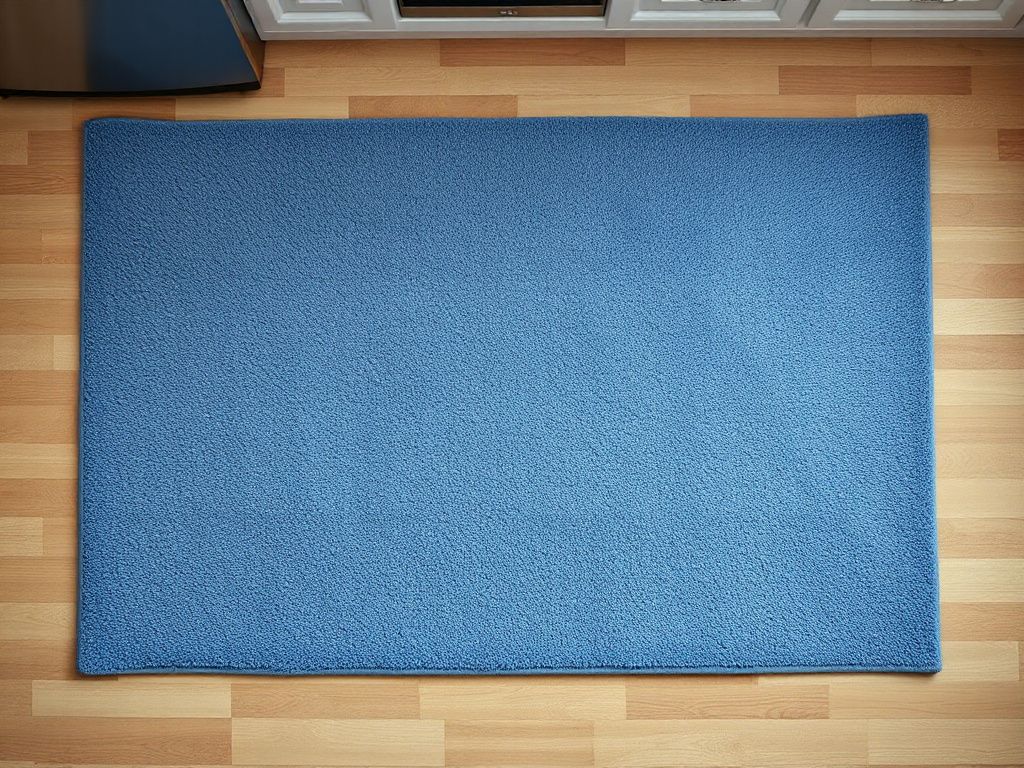
Placement, Light, and Pile Height: Making the Right Choices
A blue shag rug can cool a sun-drenched living room or turn a bedroom into a calm retreat, but its location dictates how long it lasts. Direct, unfiltered sunlight is the quickest path to faded color. Ultraviolet radiation breaks the double bonds in dye molecules. Even a polypropylene shag rated for 500 hours of lightfastness will show dulling by a south-facing window within two seasons. For those sunlit spots, a light blue shag rug will camouflage the fade better than navy because contrast within the fiber is less stark when the top layer bleaches out.
Choosing Pile Height for Traffic and Comfort
- 1 to 1½ inches: Best for dining rooms and home offices where chairs slide. Shorter pile resists matting and is easier to rake. A light blue shag rug in this height still gives a plush feel without snagging chair legs.
- 1½ to 2½ inches: The sweet spot for living rooms and bedrooms. Foot traffic is moderate, and the pile height offers enough depth for barefoot comfort. Sweep a washable entry rug at the door to cut down on grit that works its way into the shag.
- Above 2½ inches: Mostly decorative or for ultra-low-traffic corners. These shags feel luxurious, but they trap pet hair and dust aggressively. I only recommend them in a reading nook or under a canopy bed where footfall is minimal.
One thing I learned as a reviewer who hangs heavy wall mirrors and checks anchor points obsessively: the base a thing sits on determines its safety. For a shag rug, that base is the floor underneath. On hardwood, the rug will slide if you merely step onto a folded corner. A dense felt-and-rubber rug pad stops lateral movement and absorbs the impact of foot traffic, which in turn keeps the latex or jute backing from grinding against the floor. In my own home, every high-pile rug gets a pad with a coefficient of friction above 0.8—standard smooth rubber tends to fail under shifting weight.
Room Color Pairings and Sizing Notes
A navy blue shag rug anchors a room with deep, saturated color, but it visually shrinks the floor area. In spaces smaller than 10 by 12 feet, choose a medium or light blue instead to keep the room from feeling closed in. Shades of blue in rugs work beautifully against warm wood tones and crisp white trim. When you introduce black, the dynamic shifts. Understanding how blue interacts with darker shades can be invaluable—our guide to choosing a black and blue rug covers that interplay in detail. Meanwhile, a blue fluffy rug for a bedroom often lands best in a cool, tonal palette: soft greys, silver, or muted lavender keep the space serene.
Area rug sizing rules are straightforward but frequently ignored. For a living room, at least the front legs of the sofa and chairs should rest on the rug. For a dining room, measure the table and add 24 inches on all sides so chairs remain on the rug even when pulled out. A blue living room rug 8×10 works for many standard-sized seating arrangements, but always tape out the dimensions on the floor before buying.
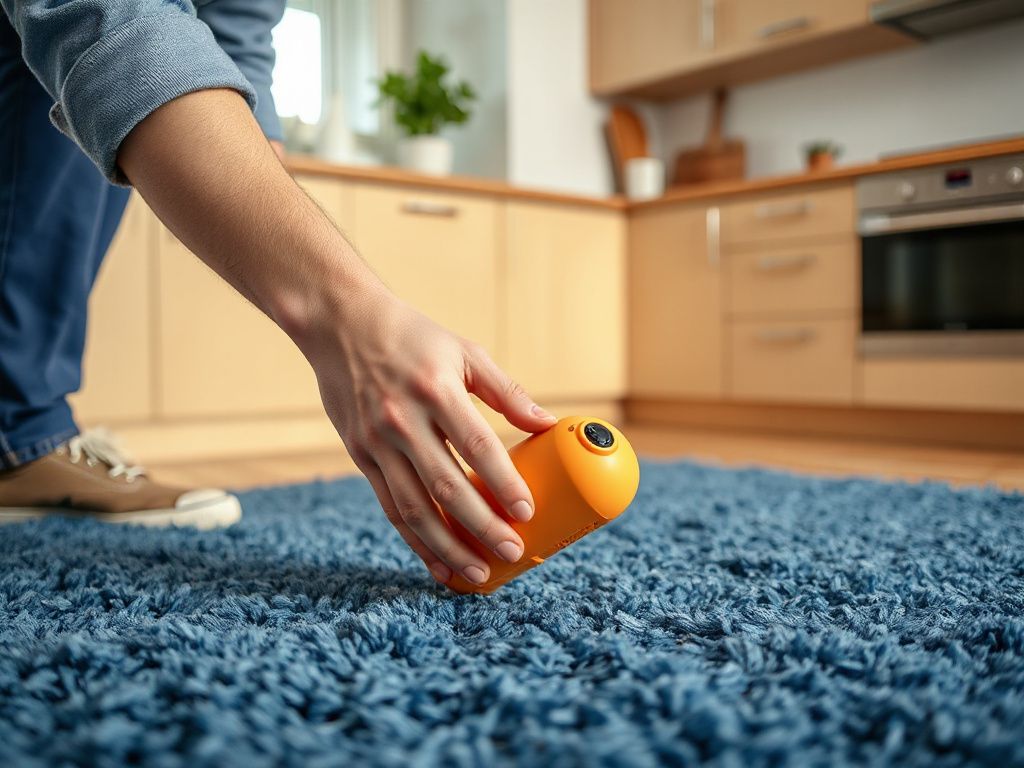
Daily and Deep Care for a Blue Shag Rug That Lasts
Shag rugs are unlike other soft flooring. Their open, vertical pile traps dust mites, pollen, and pet dander in a way flat-weave rugs cannot. Regular maintenance keeps allergens from building to levels that trigger reactions. A 2018 study in the Journal of Allergy and Clinical Immunology found that carpeted floors can act as a reservoir for allergens, releasing them when disturbed. For a shag rug, that release happens when you walk across it. The fix isn’t to avoid shag—it’s to clean it correctly.
Vacuuming Without Damage
Turn off the beater bar. Always. The rotating brush grabs shag fibers, yanks them, and either breaks them or unwinds the tufting twist. The CRI explicitly states that shag and frieze rugs need suction-only cleaning. Use an upholstery attachment or a straight-suction floor nozzle. Move slowly in the direction of the pile—not against it—to lift dust without tugging. For a blue fluffy rug with a longer pile, a weekly shake outside is even gentler. If you don’t have outdoor space, drape the rug over a sturdy railing and gently beat it with a broom handle to dislodge fine silt.
The Carpet Rake: The Most Underrated Tool
A carpet rake looks like a long-handled comb with rows of stiff plastic or metal tines. It realigns crushed fibers, restores loft, and pulls up embedded hair without the risk of a vacuum’s suction pulling yarn loops. I use a rake once a week on my own navy blue shag. Two minutes in the same direction of the pile revives the look and delays matting. For pet owners, this is the only reliable way to lift fur that clings deep in the pile—vacuuming often pushes it down further. After raking, you can collect the loosened hair with a lint roller or a rubber-bristled broom.
Liquid Spills: Immediate Blotting Protocol
- Scoop solids with a spoon—never scrape, which drives the substance in.
- Place a thick stack of white paper towels over the spill and press firmly with your palms. Do not rub, do not dab from the edges inward. Press straight down to absorb liquid without spreading it.
- Lift the towels. If the blue dye has transferred onto them, stop immediately and consult a cleaner.
- If towels show only the spilled liquid, blot with a fresh dry stack. Repeat until no more moisture transfers.
- Mix a drop of clear, dye-free dish soap in a cup of cool water. Dip a corner of a white cloth in it, blot the stain for a few seconds, then blot with plain water to rinse. Test on an inconspicuous area first.
The key variable is whether the blue dye moves. I’ve seen a crystal-clear seltzer spill leave a permanent ring on a mass-market shag because the water pulled blue dye from the yarn and deposited it at the edge of the spill. A rug that has been properly pre-treated during manufacture may resist this, but you won’t know until a spill happens. That is why I stress blotting absolutely dry—leaving any moisture in the pile allows it to wick dye slowly overnight.
Removing Pet Hair
Pet hair clings to shag fibers like it does to Velcro. A carpet rake plus a lightly dampened rubber glove run over the surface lifts most of it. For a deeper clean, a squeegee pulled across the rug creates static that catches fine hairs. A blue shag rug, especially a darker navy, shows pet hair less than a light beige rug, but the accumulation still affects the pile’s ability to spring back. A monthly session with a washable entry rug at every exterior door reduces the amount of tracked-in hair dramatically.
Machine Washing a Small Shag Rug
If the rug measures under 3 by 5 feet and the care label explicitly permits machine washing, use a front-loading machine on a gentle cycle with cold water. Place the rug in a mesh laundry bag to keep loose fibers from tangling in the drum. Add two bath towels to balance the load. Air-dry flat, never in a dryer—heat can melt synthetic fibers and shrink the latex backing unevenly. A second-round air fluff cycle without heat can help restore the pile. I still hand-wash my own small shag rugs in a bathtub, using a squirt of pH-neutral textile cleaner and a soft brush, then dry them over a drying rack with a fan blowing underneath. The control is worth the extra effort.
Safety, Stairs, and Longevity: Small Checks That Prevent Big Failures
Every time I mount a heavy wall shelf, I check the anchor holes, the toggle bolts, the load rating. A rug needs the same scrutiny applied to its underside. The backing—whether latex or jute—determines how the rug interacts with the floor. On hardwood, a shag without a rug pad is an injury waiting to happen. The fibers compress underfoot, reducing contact area and allowing the backing to glide on a microscopic air cushion. A rubber-and-felt pad rated for high-pile rugs breaks that glide and adds a frictional coefficient high enough to hold during a quick change of direction.
Are Shag Rugs Safe for Stairs?
Generally, no. The thick pile hides the stair edge, making it easy to misjudge where the tread ends. A runner with a low, dense pile is far safer. If a blue shag runner is absolutely required for aesthetic reasons, use a heavy-duty stair-specific rug pad with a non-slip rubber backing and hammer down the carpet with stair rods at the back of each tread. Even then, expect to need frequent re-tensioning. I have installed stair runners and I check them every month for lateral shift. Shag on stairs is a compromise I rarely endorse.
Lifespan: What to Realistically Expect
A well-maintained tufted shag rug in a medium-traffic room can last 5 to 8 years. Wool shags, with proper rotation and cleaning, can reach 15 years. Polypropylene and polyester shags in high-traffic spaces may flatten within 3 years. Rotating the rug every three months and swapping the orientation of the furniture layout can slow uneven wear. A rug pad that absorbs impact preserves the latex bond; crumbling latex is the number one reason a shag rug gets thrown out before the face fiber wears thin.
Repairing a Snagged Fiber
If a yarn loop catches on a heel and pulls up, never cut it off. That leaves a bald divot that grows. Instead, thread a blunt needle with matching thread, pierce the back of the rug near the snag, loop around the pulled yarn and tug it back down to the pile level. Secure with a tiny dot of clear fabric glue on the rear side, not on the face. For tufted rugs, if the yarn has broken off completely, you can anchor a new piece using a latch hook, matching the fiber type and shade as closely as possible. I keep a few spare strands from the rug’s own shedding for this exact purpose.
A blue shag rug represents a delightful mix of comfort and color, but its weaknesses are concrete. The dye is fragile when wet. The pile is easily crushed. The backing deteriorates under stress. Knowing these facts up front—and acting on them with simple tools like a rug pad, a carpet rake, and immediate blotting—can transform the ownership experience from repeated frustration to years of barefoot happiness.
Frequently Asked Questions
How do I clean a blue shag rug without damaging the fibers?
Use a suction-only vacuum or a carpet rake. Never use a beater bar; it breaks the long fibers. For liquid spills, blot immediately with white paper towels—do not rub. Test any cleaning solution on a hidden corner because the blue dye often bleeds. A mix of cool water and a drop of clear, dye-free dish soap works for spot cleaning, but always dry the area completely afterward.
Will a blue shag rug fade in direct sunlight?
Yes. Ultraviolet light degrades the dye molecules over time. A navy blue shag can show fading within two years of strong sun exposure. Light blue rugs disguise fading better than dark blue ones. Using window films that block UV rays or placing the rug away from unshaded south-facing windows significantly slows color loss.
Can I machine wash a small shag rug?
Only if the care label explicitly states it is machine-washable, and even then use a front-loader on gentle with cold water inside a mesh laundry bag. Do not use heat to dry. Air-dry the rug flat and fluff it with a carpet rake. If in doubt, hand-wash in a bathtub with a mild textile cleaner—you have far more control over the process and drastically reduce the risk of dye migration.
