

Nothing wrecks a window treatment faster than fabric that’s too thin to hold a pleat or measurements that forgot the header allowance. I’ve seen plenty of otherwise well-made panels sag into a puddle because the cloth was too light, and that’s the exact mistake we’re helping you avoid today. The single most important step is understanding curtain fabric for curtains—its weight in ounces per square yard, its drape, and how it behaves under its own heft.
Out of the three items we’re covering, the Curtain Fabric Heavy earns our top recommendation as the best raw material for making serious, light-blocking window coverings. It pairs well with the two sewing guides below, but if you’re buying just one thing, that heavy fabric is the one I’d put my own money on.
📌 This article contains affiliate links. As an Amazon Associate I earn from qualifying purchases, at no extra cost to you. Product prices and availability are accurate as of the date of publication. Full disclosure.
| Product | Best For | Buy Link |
|---|---|---|
| Curtain Fabric Heavy | Dense, light-blocking panels | Check Price |
| How to Make Curtains by Rebecca Yaker | Step-by-step measuring and sewing | Check Price |
| Singer(R) Sewing Custom Curtains | Technique-focused drapery projects | Check Price |
How We Chose These Picks for Curtains and Curtain Fabric
We compared these three items against the two things that actually matter when you’re covering a window: fabric weight (measured in ounces per square yard) and the quality of instruction for turning that fabric into curtains that hang straight. Too-light fabric will billow and refuse to hold a pleat; too-stiff fabric will crack at the fold lines. For the instructional books, step-by-step clarity on measuring and installation separates genuinely useful guides from coffee-table decoration. The most common failure we see is mis-measuring because someone ignored header and hem allowances—leading to panels that can’t even be installed straight. We weighted heavy fabric’s density and drape heavily, and for the books we looked for comprehensive coverage of measuring, pattern repeats, and hardware. Before you order, check the fabric listing for an exact weight in ounces; if it’s missing, treat that as a red flag and ask the seller.

How to Make Curtains by Rebecca Yaker (Best Instructional Guide for Precise Measuring)

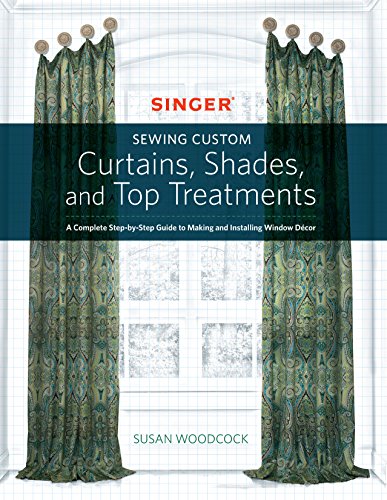
Singer(R) Sewing Custom Curtains (Practical Reference for Sewing Drapery)
Curtain Fabric Heavy (Our Pick for Dense, Light-Blocking Panels)
Best for anyone who wants substantial, room-darkening drapes without guessing on fabric weight. This is a no-nonsense bolt of fabric that prioritizes density over decoration.
The word “heavy” in the product name does a lot of work here. In drapery terms, heavy typically means at least 8–10 ounces per square yard, which is roughly double the weight of standard quilting cotton. That heft means the material will fall in soft, deep folds instead of floating upward with every breeze, and it’ll hold a pinch pleat without collapsing. I’d reserve this for living rooms or bedrooms where light control and sound absorption matter. The listing doesn’t specify fiber content, which is frustrating—polyester blends resist wrinkles better, while cotton breathes more but sags if stretched. If you’re pairing this heavyweight with rings, our guide to the best curtain rings for heavy curtains is worth a look.
One practical annoyance: the seller omits the actual fabric weight in ounces per square yard, so you’re trusting the word “heavy” without a number to verify. For drapery curtain fabric like this, that number is the single most useful spec, and its absence makes buying a bit of a gamble. On the plus side, a heavy weave usually means better blocking—just pair it with a sturdy rod and extra center brackets, because dense cloth puts real strain on hardware. If you’re making blackout panels, add a separate blackout lining rather than expecting this fabric alone to kill every ray of light.
Pros:
- Generous density — intended for weighty, floor-length drapes that need to stay put.
- Holds pleats well — the heft prevents the puffy, billowy look that ruins a tailored window.
- Good light blocking potential — thick weave naturally cuts more glare than sheer or mid-weight cloth.
- Versatile base — works for pinch pleats, goblet pleats, or simple rod-pocket panels.
Cons:
- No stated fiber content or exact weight — you’re buying on trust, not spec sheet numbers.
- Requires heavy-duty hardware — lightweight rods or flimsy brackets will bow under the load.
Why It Made Our List
Who should buy this: DIYers who want substantial curtains and already understand that fabric weight is the make-or-break factor. Pass on this if: you need light, airy sheers or you’re dressing a small window with a flimsy tension rod.
How to Make Curtains by Rebecca Yaker (Best Instructional Guide for Precise Measuring)
A thorough, step-by-step book that fixes the most common curtain failures before you ever cut fabric. Author Rebecca Yaker, published by Storey Publishing LLC.
This is a handicrafts and arts & crafts book, and it reads like one: practical, project-based, and refreshingly specific about numbers. Yaker walks through measuring your window correctly, adding header and hem allowances, calculating pattern repeats, and then sewing panels that actually reach the floor. This book covers everything from choosing the right curtain fabric for curtains to installing the finished panels, which is why we consider it the best companion to any fabric purchase. What separates this guide from the Singer book below is its obsessive focus on measurement—the step where most first-time curtain makers go wrong. The paperback format means you can prop it open next to your sewing machine, though the binding may not stay flat on its own.
Compared to the Singer title, this one spends more time on installation and fitting curtains to the window, which is exactly the skill that prevents sagging or crooked hangs. One honest annoyance: because it’s a physical book, you’ll need to page back and forth between measuring charts and sewing steps, and there’s no digital version noted. But for the price of a couple yards of fabric, it’s an insurance policy against wasted material. If you’re working with bay windows, our bay window curtain ideas article has layout tips that pair well with the measuring techniques here.
Pros:
- Comprehensive measuring coverage — includes header, hem, and side allowances that many guides skip.
- Clear step-by-step instructions — written for home sewists, not professionals.
- Covers pattern repeats — vital for striped or patterned fabric that must align across panels.
- Installation guidance included — not just sewing, but hanging hardware and rod placement.
Cons:
- Physical book only — no searchable digital version, so finding a specific tip takes flipping pages.
- May not cover every modern hardware style — focuses on classic rods and rings more than tension systems.
In a Nutshell
Great match for: first-time curtain makers who want to avoid the #1 mistake of mis-measuring. Think twice if: you’re an experienced sewist who only needs a pattern library, not measurement fundamentals.
Singer(R) Sewing Custom Curtains (Practical Reference for Sewing Drapery)
Perfect for sewists who want brand-trusted techniques for custom window treatments, especially pinch pleats and Roman shades.
Singer’s name carries weight in sewing circles, and this book leans into that with technique-focused chapters on creating professional-looking curtains. Expect detailed sections on pinch pleats, goblet pleats, and—importantly for this site—Roman shades, which use a different mechanism than traditional curtains. The book assumes you already know how to thread a machine, so it spends less time on basics and more on the fiddly parts: getting crisp pleat folds, attaching lining without puckers, and adding weights to hems so panels hang straight. While the Storey book is more about measuring, Singer is more about construction.
One honest annoyance is that the instructions for Roman shades can be dense, and if you’re a visual learner, the diagrams may feel sparse compared to video tutorials. But the written steps are precise, and having them in one place beats pausing a YouTube video with sticky fingers. If you’re making panels for a patio door, the techniques here pair nicely with our best curtains for sliding doors roundup, which covers hardware and width options.
Pros:
- Singer brand authority — decades of sewing machine expertise distilled into fabric handling tips.
- Pinch pleat and Roman shade coverage — the two most requested custom styles are thoroughly explained.
- Focus on construction details — lining attachment, hem weights, and pleat reinforcement.
- Great for intermediate sewists — skips the hand-holding and gets to techniques that elevate results.
Cons:
- Assumes basic sewing skill — if you’ve never sewn a straight seam, start with the Storey book instead.
- Dense diagrams — some Roman shade steps are easier to grasp in video form than on a printed page.
The Real Deal
Ideal for: confident sewists who want to tackle pinch pleats or custom Roman shades without guesswork. Not great if: you need measurement basics or you prefer visual, video-based instruction.
How to Choose the Right Curtain Fabric and Sewing Guide
Buying the fabric and the instruction manual are two halves of the same project. Here’s what to weigh before you spend a cent.
Fabric Weight: Why Ounces Per Square Yard Decide Everything
The number you need is ounces per square yard. Lightweight curtain fabric (2–4 oz) works for sheers but won’t block light or hold a pleat; heavy curtain cloth (8–12 oz) gives you the dense, straight-hanging panels most people picture. If a listing doesn’t state the weight, you’re gambling on a product you can’t verify—and that’s the biggest red flag in this category. The Curtain Fabric Heavy above falls into the heavy end, which is why it earned our top spot for raw material.
Blackout vs. Light-Filtering: Understanding Curtain Material
Your curtain material choice determines how much light gets through. Blackout fabrics often have an acrylic or foam coating on the back; that coating can be damaged by high heat, so iron on the front side only or use a pressing cloth. Light-filtering fabrics are uncoated and let a soft glow through, but they won’t darken a bedroom for daytime sleep. If you want true blackout with the Curtain Fabric Heavy, add a separate blackout lining because the weave alone may not be enough.
Measuring Mistakes That Ruin Curtains
Most failed curtain projects start with a tape measure. You need to add 4–6 inches for the header (the part above the rod) and 8–12 inches for the hem (the bottom fold). Then add extra for side seams and pattern repeats if your fabric has stripes or a large motif. The How to Make Curtains book spends more pages on this than any other guide we’ve seen, which is why it’s our recommended companion to any fabric purchase.
Sewing vs. Buying: What the Books Teach You
Making custom curtains costs roughly the same as buying mid-range ready-mades once you factor in fabric, lining, and hardware—but you get exact measurements and fabric choice. The Singer book teaches construction techniques like pinch pleats; the Storey book teaches measuring and installation. Pair both with a heavy fabric like the Curtain Fabric Heavy and you’ll end up with window coverings that outlast anything from a big-box store.
Our Final Recommendation
For the best raw material, the Curtain Fabric Heavy is the clear winner—dense, pleat-holding, and ready for serious room-darkening panels. For budget-conscious guidance, the How to Make Curtains book delivers the most comprehensive measuring instruction and prevents the #1 cause of wasted fabric. The Singer book is a worthy runner-up for technique-focused sewists. If you want layered, draped fabric that looks professionally made, start with the heavy fabric, follow the Storey measuring steps, and use Singer for the pleat details.
Frequently Asked Questions
What’s the best curtain fabric weight for making blackout curtains?
Look for fabric weighing at least 8 ounces per square yard. Heavyweight polyester blends with a tight weave block the most light, but for true blackout you’ll still need a coated blackout lining attached behind the face fabric. The Curtain Fabric Heavy’s name suggests it sits in this range, though the listing doesn’t confirm an exact number.
How much curtain fabric do I need for a standard window?
Measure the window width and multiply by 2 to 2.5 for fullness. Then add 8–12 inches for hems, 4–6 inches for the header, and 2 inches for side seams. For a 36-inch-wide window, you’d need roughly 72–90 inches of fabric width, plus vertical allowances. The How to Make Curtains book has a full chart for this.
What’s the difference between a Roman shade and a traditional curtain?
A Roman shade stacks into horizontal folds when raised using a cord or cordless mechanism, while a traditional curtain slides sideways on a rod. Roman shades use less fabric and are better for shallow windows, but they require precise measuring and a working lift system. The Singer Sewing Custom Curtains book includes Roman shade instructions, noting that cordless mechanisms are safer for homes with children.
Why do my curtains sag or stretch after hanging?
Sagging usually means the fabric is too light for the span or the rod isn’t strong enough. Heavy fabric needs a center support bracket on any rod over 48 inches, and the fabric itself should weigh at least 6–8 ounces per square yard to resist stretching under its own weight. Always check the fabric’s weight before buying—if it’s missing, ask the seller.
How do I make neat pinch pleats when sewing curtains?
Pinch pleats require stiffening the top edge with buckram, marking pleat intervals evenly, and then stitching three small tucks per pleat before pressing. The Singer Sewing Custom Curtains book walks through this in detail, including how to space pleats so the panel hangs with equal fullness across the rod.
