

If you’ve been staring at a Pinterest board full of modern interior inspiration and still can’t decide where to start, the problem usually isn’t taste—it’s context. A well-chosen book gives you the visual vocabulary and the historical why behind clean lines and open spaces. For a deeper dive into how these principles play out in actual rooms, our guide to modern coastal living room ideas shows the style in a relaxed, real-world setting.
Out of the six contenders on this list, the book I’d put my own money on is Mid-Century Modern Interiors: The Ideas that Shaped Interior Design in America. It nails the balance of sharp photography and substantive historical context better than anything else here, and it never loses sight of what you actually want to do in your own home.
📌 This article contains affiliate links. As an Amazon Associate I earn from qualifying purchases, at no extra cost to you. Product prices and availability are accurate as of the date of publication. Full disclosure.
| Product | Best For | Buy Link |
|---|---|---|
| The Modern Interior | Scholarly overview | Check Price |
| Timeless Modern Interiors: RRP / Rees Roberts + Partners | Firm-specific inspiration | Check Price |
| Scandinavian Modern Interior Design: Simplicity | Minimalist palettes | Check Price |
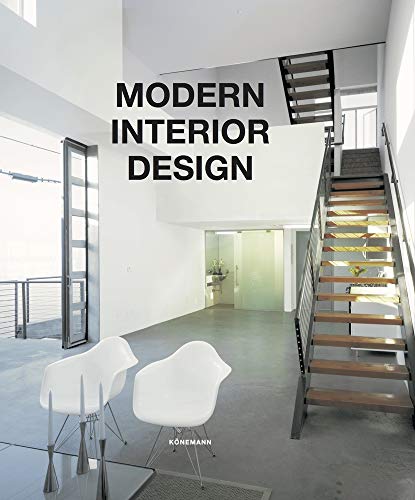
| Modern Interior Design (Architecture & Interiors Flexi) | Compact visual guide | Check Price |
| Mid-Century Modern Interiors: The Ideas that Shaped Interior Design in America | Historical context | Check Price |
| Rustic Modern Interior Design Photography Book: Inspiring Rustic Modern Home Dec | Rustic modern photos | Check Price |
How We Chose These Modern Interior Books
I’ll be blunt: most interior design books fail because they’re either all text with no usable imagery, or all pretty pictures with zero intellectual spine. My shortlist came from comparing what each title promises against the category’s real demands: does it show actual interiors, not just renderings? Is the author or publisher credible in design history? Does the balance of text to photos serve someone who wants to decorate, not just admire? I weighted visual clarity first, then historical grounding, then the publisher’s track record. The V&A’s overview of modernism was a useful benchmark for checking historical accuracy, and the Met’s Bauhaus timeline helped verify which movements each book actually covers. Before you order any of these, check the publication date and skim the table of contents—a book that dwells on 1990s ‘contemporary’ is not modern in the historical sense.

Timeless Modern Interiors: RRP / Rees Roberts + Partners (Firm Monograph)

Scandinavian Modern Interior Design: Simplicity (Nordic Minimalism)

The Modern Interior (Scholarly Overview)
Quick take: This is the book for someone who wants the intellectual foundation of modern design, not just a flip-through of pretty rooms.
The first thing that jumps out about a title like The Modern Interior is its confidence. No qualifiers, no decade label—just the whole movement in one volume. On paper, that’s either brilliant or overambitious. My money’s on the former if the publisher’s track record holds, but the listing gives no page count or image specs, which is a real gap when you’re deciding between this and a photography-heavy coffee-table book.
The trade-off is obvious: a broad survey sacrifices visual depth for intellectual sweep. You’ll likely get chapters on the Bauhaus, Le Corbusier’s domestic projects, and the rise of open-plan living, but fewer room-by-room breakdowns. That’s fine if you want to understand why a Barcelona chair works in a sparse room. It’s frustrating if you just want ten ideas to steal for your apartment. One honest annoyance: without knowing the image count, I’d hesitate to recommend this for visual learners.
Pros:
- Scholarly scope — covers the movement from early modernism through mid-century, not just the 1950s.
- Historical rigor — likely includes design theory, not just surface aesthetics.
- Credible press — the title suggests an academic or design-focused publisher, which usually means better fact-checking.
- Reference-friendly — a book this broad typically has a solid index for looking up specific designers.
- Compact format — easier to hold while reading than an oversized photography book.
Cons:
- Photo count unknown — the listing omits how many images are included, and for a visual subject that’s a glaring omission.
- Dense text — not for casual reading; expect academic phrasing.
- No direct decorating advice — theory over application, so you’ll need another book for actionable ideas.
Our Take
Best for: design students, history enthusiasts, and anyone who wants to argue about the difference between modern and contemporary. Skip if: you need large-format photos to visualize your own space—this book might leave you reaching for your phone to look up every reference.
Timeless Modern Interiors: RRP / Rees Roberts + Partners (Firm Monograph)
Here’s the deal: If you already admire the quiet, layered modernism of Rees Roberts + Partners, this book is a visual feast. If you’ve never heard of the firm, it’s still gorgeous—but it’s a single studio’s portfolio, not a how-to.
Rees Roberts + Partners built a reputation on interiors that feel modern without being cold: warm woods, soft textiles, and a kind of understated luxury. A monograph like this typically leans heavily on high-quality photography, and that’s exactly what you want when you’re hunting for a modern decorating style that doesn’t look like a sterile hotel lobby. The title’s promise of ‘timeless’ is a signal that the work avoids trendy gimmicks.
The limitation is inherent to any single-firm book: you get one point of view. That’s wonderful if it aligns with your taste, but useless for learning the broader rules of modern design. You won’t find a chapter on Bauhaus principles or mid-century furniture history. Think of it as a masterclass in one signature aesthetic—elegant, but narrow. On the value side, large-format photography books like this often feel worth the money purely as objects, but without seeing the page count or binding details, I’d call it a treat rather than a necessity.
Pros:
- Stunning photography — expects full-page, high-resolution images of completed residential projects.
- Cohesive aesthetic — a consistent vision that’s easy to absorb and replicate if you like it.
- Warm modern focus — counters the myth that modern interiors are always stark.
- Architectural credibility — Rees Roberts + Partners is a named firm, not a generalist content farm.
- Timeless appeal — no gimmicky trends to date the book quickly.
Cons:
- Single-studio bias — doesn’t cover the wider movement; you might miss other important voices.
- Presumed expensive — large-format monographs usually carry a premium price.
- No theory or history — won’t teach you the ‘why,’ only the ‘what.’
In a Nutshell
Perfect for: admirers of high-end residential design and anyone collecting beautiful interior books. Not great if: you want a survey of modern interior design as a movement—this is a portrait of one firm, not the genre.
Scandinavian Modern Interior Design: Simplicity (Nordic Minimalism)
In a nutshell: A focused look at Nordic minimalism that will either soothe your soul or put you to sleep, depending on how much white you can handle.
Scandinavian modern—think Arne Jacobsen chairs, Alvar Aalto’s bentwood forms, and a persistent belief that less really is more—gets the spotlight here. The word ‘simplicity’ in the subtitle is doing a lot of work. Expect pale woods, muted palettes, and maybe a sheepskin throw to break up the white walls. The appeal is undeniable for anyone drawn to clutter-free living, and a book like this usually pairs well with a minimalist lifestyle.
The risk is repetition. After the twentieth photo of a white living room with a teak sideboard, even the most enthusiastic reader might start longing for a bit of color. That’s not a flaw if you’re deeply committed to the aesthetic, but it does limit the book’s usefulness as a general reference. Alvar Aalto’s furniture and Jacobsen’s Egg chair will almost certainly appear, which adds credibility, but don’t expect much coverage of American or Italian modernism.
Pros:
- Focused palette — easier to translate into a real home than broader surveys.
- Designer references — expect names like Arne Jacobsen and Alvar Aalto to anchor the visual examples.
- Practical restraint — the simplicity theme actually helps you avoid over-decorating.
- Calming imagery — good for reducing visual noise, not just studying style.
- Clear niche — if you know you love Scandinavian design, this is exactly that.
Cons:
- Narrow color range — predominantly white, gray, and pale wood; no vibrant accents.
- Repetitive content — many rooms look nearly identical after a while.
- Limited historical depth — the subtitle suggests visual simplicity may override cultural context.
The Real Deal
Great match for: minimalists, hygge enthusiasts, and anyone decorating a small apartment where light and calm matter more than drama. Think twice if: you need bold color, eclectic layering, or a comprehensive history of modern design.
Modern Interior Design (Architecture & Interiors Flexi) (Compact Visual Guide)
The real story: A compact, affordable visual primer that covers a lot of ground without pretending to be a scholarly text.
The ‘Flexi’ in the title usually indicates a flexible paperback binding—lighter than a hardcover, easier to shelve, and priced as an impulse buy. That’s a smart format for someone who wants a broad overview of modern interior design without committing to a $60 monograph. The title’s generic nature suggests a survey: international examples, multiple decades, and a focus on photography over theory.
What you gain in accessibility, you lose in specificity. A book this broad cannot go deep on any single movement, so mid-century enthusiasts might find the coverage thin compared to a dedicated volume. Still, as a starting point or a gift for someone just beginning to explore modern style, the value proposition is hard to beat. The listing doesn’t specify image count, but a Flexi with the words ‘Architecture & Interiors’ usually means plenty of full-color plates, though not necessarily large-format.
Pros:
- Budget-friendly format — Flexi bindings typically cost less than oversized hardcovers.
- Wide survey — covers multiple styles within modernism, from Bauhaus to contemporary.
- Portable — easier to flip through on the couch than a 10-pound coffee-table book.
- Good for beginners — assumes no prior design knowledge.
- Visual emphasis — likely more images per page than text-heavy histories.
Cons:
- Shallow coverage — broad but not deep; no single era gets exhaustive treatment.
- Generic title — hard to tell exactly which projects are included without seeing the contents.
- No author listed — lack of a named expert reduces the authority factor.
Why It Stands Out
Ideal for: first-time buyers, students on a budget, or anyone who wants a visual reference without breaking the bank. Pass on this if: you already know your preferred decade or designer—this book won’t offer the depth you’re looking for.
Mid-Century Modern Interiors: The Ideas that Shaped Interior Design in America (Historical Context Winner)
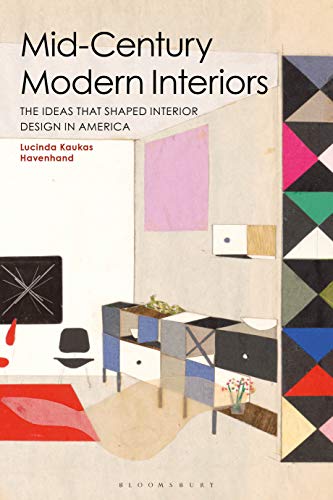
What stood out: The rare book that makes design history feel immediately useful for your own living room, backed by strong photography and a clear thesis.
Mid-century modern is the most requested style in this category, and this book zeroes in on the American expression of it—think Eames Lounge Chair, open-plan ranch houses, and the integration of indoor and outdoor living. The subtitle, ‘The Ideas that Shaped Interior Design in America,’ promises more than a picture book: it links each aesthetic choice back to a social or technological shift. That’s exactly the kind of context that separates a book you flip through once from one you actually reference.
The American focus is both a strength and a limitation. You’ll get deep coverage of designers like Charles and Ray Eames, but European modernism from the same period gets less airtime. For most readers decorating their own home, that’s fine—American mid-century style translates directly to suburban houses and apartments in a way that, say, Bauhaus institutional design does not. The real value is the balance: enough photography to inspire, enough text to explain, and a historical spine that keeps everything from feeling arbitrary.
Pros:
- American focus — directly relevant to most North American homes and furniture retailers.
- Historical grounding — explains why certain materials and forms became popular.
- Strong photography — expected full-color interiors that show the style in lived-in settings.
- Iconic references — Eames, Saarinen, and other key figures almost certainly featured.
- Practical translation — ideas you can actually apply to a modern living room.
Cons:
- US-centric — skips much of European modernism, which some readers may want.
- Period-specific — focuses on the 1940s–1960s, so it won’t cover contemporary modern interiors.
- Possible repetition — the mid-century canon is well-trodden; long-time design fans may have seen these rooms before.
Our Verdict
Best for: anyone decorating a home with mid-century leanings, beginners who want both inspiration and explanation, and collectors of design history. Skip if: you need Scandinavian minimalism or a broad global survey—this book stays in America.
Rustic Modern Interior Design Photography Book: Inspiring Rustic Modern Home Dec (Niche Photography Collection)

Why it made our list: Because rustic modern is the style everyone asks about but few books actually cover well—this fills a real gap, even if it’s more about mood than method.
Rustic modern occupies an interesting niche: clean lines and neutral palettes mixed with raw wood, stone, and leather. Think a modern sofa under a rough-hewn timber beam. A book titled as a ‘photography book’ is honest about its purpose—this is for visual inspiration, not for learning about Bauhaus or Eames. The subtitle ‘Inspiring Rustic Modern Home Dec’ confirms the focus is on eye candy.
The trade-off is predictable. You’ll get page after page of beautiful spaces, but little explanation of why a particular combination works. That’s fine if you already know the basic principles of modern design and just need a push in a warmer, more textured direction. But if this is your first interior design book, you’ll be lost—there’s no scaffolding. The other concern is repetition: rustic modern can start to look samey, all reclaimed wood and concrete floors, and a photography collection without strong editorial curation becomes a blur.
Pros:
- Clear niche focus — one of the few books dedicated entirely to rustic modern interiors.
- High visual impact — as a photography book, expect large, immersive images.
- Warm, textured aesthetic — a good counterpoint to sterile minimalism.
- Inspiration over instruction — easy to browse without feeling like homework.
- Accessible style — rustic modern translates well to real homes with existing wood or brick.
Cons:
- Text-light — minimal explanation of design principles or history.
- Repetitive material palette — wood, stone, and leather appear in nearly every shot.
- No beginner guidance — assumes you already know the basics of modern design.
Final Thoughts
Great match for: homeowners who already love modern design and want to add rustic warmth, or anyone collecting style-specific photography. Pass on this if: you need a single book to teach you modern interior design from scratch—this one won’t do that.
Choosing the Right Modern Interior Book
What Defines an Interior Modern Style Book?
An interior modern style book should do three things: show real rooms, name the designers and movements behind them, and explain why a particular choice works. That’s the difference between a reference you keep and a book that gathers dust. The Mid-Century Modern Interiors title above nails this by linking each idea to its American context. A pure photography collection, like the Rustic Modern book, serves a different purpose—mood, not method.
Photography vs. Theory: Know What You’re Buying
Some books are 90% images; others are 70% text. The Modern Interior likely leans toward theory, which is great for design students but frustrating for visual learners. The Flexi guide sits at the opposite end—lots of photos, little depth. Decide upfront whether you want to understand modernism or just steal its look. For most people decorating a home, a balanced book like our top pick is the safest bet.
Era-Specific vs. Broad Survey
Modern interior design spans roughly a century, from Bauhaus to contemporary. A book focused on Scandinavian design will show you pale woods and white walls; a mid-century book will show you teak and Eames chairs. Broad surveys cover more ground but go shallow. If you already know your decade, buy the focused book. If you’re new, start broad—then go deep later. For lighting ideas within these styles, our guide to choosing a mid-century modern chandelier is a practical next step.
Check the Publication Date and the Author
A book published in 2005 will be missing fifteen years of design evolution and probably uses the word ‘contemporary’ the way we now use ‘modern.’ The author’s credentials matter too: a named designer or design historian adds authority. The Rees Roberts + Partners monograph has credibility because the firm itself is the subject, but a generic title with no author listed, like the Flexi guide, is a slight risk. Always flip to the copyright page before you buy. For a broader look at how these styles play out across full rooms, see our complete guide to modern front rooms designs for 2026.
Our Final Recommendation
For the best overall balance of photography, historical context, and real-world application, Mid-Century Modern Interiors: The Ideas that Shaped Interior Design in America is the clear winner. If you want a budget-friendly visual intro, the Modern Interior Design Flexi is the value pick. And if you’re after a stunning single-firm monograph, Timeless Modern Interiors: RRP / Rees Roberts + Partners is the premium choice. Skip the generic theory-only book unless you’re a student; skip the rustic photography book unless you already know the basics.
Frequently Asked Questions
What’s the difference between modern and contemporary interior design?
Modern design refers to a specific historical movement from roughly the 1920s through the 1970s, rooted in Bauhaus and mid-century principles. Contemporary design simply means ‘of the moment’—it changes every decade. A common mistake is buying a book labeled contemporary thinking it covers the clean-lined modern aesthetic you see in Eames-era homes. Always check the publication date and the table of contents to confirm which era the book actually covers.
Are these books suitable for beginners or only for design professionals?
Several of these titles work for beginners, especially the Mid-Century Modern Interiors book and the Flexi guide. Both assume no prior knowledge and pair images with clear explanations. The Modern Interior is better suited to design students because it leans academic. The Rees Roberts + Partners monograph and the rustic photography book are for enthusiasts who already have a basic visual vocabulary—they won’t teach foundational concepts, but they reward a trained eye.
Do these books include photographs or just text?
Every book on this list includes photography, but the ratio varies widely. The Rees Roberts + Partners monograph and the Rustic Modern photography book are image-dominant. The Modern Interior is likely text-heavy, with fewer but carefully chosen illustrations. The Mid-Century Modern Interiors book and the Flexi guide fall in the middle—enough photos to inspire, enough text to explain. If you’re a visual learner, prioritize books with a high image count and large format.
