

In the past few seasons, I’ve noticed a real shift among my San Diego clients. Beach condos and oceanfront houses are no longer just weekend getaways with cheap vinyl blinds. People are living there year-round, working remotely, and they want window treatments that don’t turn into corroded, faded messes by the end of summer. That is why the conversation about coastal window treatments has moved from picking pretty fabric to understanding material science — and it’s a conversation I have almost daily.
As someone who has outfitted beachfront properties for years, the first thing I tell people is that the fabric is only half the battle — the metal parts inside the headrail are what fail first in salt air. I’ve seen countless custom Roman shades with beautiful Sunbrella fabric on the outside but rusty, corroded springs and cords within months. Always insist on marine-grade stainless steel or aluminum hardware, and make sure the fabric is solution-dyed so the sun doesn’t bleach it in a single season.
If you are planning to dress the windows of a home within a mile of the ocean, this article walks through exactly what degrades ordinary Roman shades, how to choose materials that survive, and the maintenance habits that extend their life.
Key Takeaways
- Salt air attacks metal components first. Look for marine-grade stainless steel or anodized aluminum headrails, and cordless or motorized systems with fewer exposed parts.
- Solution-dyed or UV-stabilized fabrics are non-negotiable. Printed or piece-dyed fabrics can fade noticeably within a single season of intense coastal sun.
- Moisture demands breathable, mildew-resistant materials. Choose fabrics with antimicrobial treatments or open weaves, and schedule a deep clean every three to six months.
What Actually Happens to Roman Shades Near the Ocean
Before you spend money, it helps to understand the three environmental forces working against your window treatments on the coast: salt spray, ultraviolet radiation, and humidity. Each one damages a different part of the shade, and ordinary products fail quickly because they only address one of the three.
Salt Spray Corrodes the Hardware You Cannot See
The most expensive part of a Roman shade is often the lifting mechanism inside the headrail — the springs, cords, pulleys, and cord locks. Salt air is an electrolyte, which means even small amounts of salty moisture accelerate galvanic corrosion on metal surfaces. A standard steel spring that would last a decade in a desert home can seize up in less than a year a few hundred yards from the surf. I have taken apart shades where the fabric looked brand new but the cord lock had rusted shut, making the shade impossible to raise or lower.
This is exactly why I always insist on marine-grade stainless steel (type 316) or anodized aluminum for every metal component that is not visible. The ASTM B117 salt spray test is the industry standard for measuring corrosion resistance, and components rated for 1,000 hours or more in that test will handle coastal exposure far better than generic hardware. If a manufacturer will not tell you what the internal parts are made of, walk away.
UV Radiation Bleaches Fabric and Weakens Threads
Coastal sun is not just bright — it carries a higher proportion of ultraviolet A and B wavelengths because there are fewer clouds and less atmospheric filtering. UV radiation breaks down the chemical bonds in dyes and synthetic fibers. A piece-dyed cotton or printed polyester fabric can lose 30 to 40 percent of its color within a single summer if it faces west or south. Solution-dyed acrylic, on the other hand, has the pigment mixed into the polymer before the fiber is extruded, so the color goes all the way through. That is why fabrics like Sunbrella and Phifertex are standards in coastal window treatments: they hold their color for years, not months.
Look for a UPF 50+ rating on any fabric meant for oceanfront windows. That number means the material blocks at least 98 percent of UV radiation, which protects your furniture and flooring as well as the shade itself. A fabric without that rating is still usable for north-facing windows, but you will be replacing it sooner.
Humidity Traps Moisture Inside the Folds
Roman shades fold upward into horizontal pleats, and those pleats create small pockets where humid air lingers. In a coastal home with 70 to 80 percent relative humidity, that trapped moisture invites mold and mildew within the fabric weave. Even if you do not see visible black spots, you might notice a musty smell when you raise or lower the shade. Woven woods and tight cotton weaves are particularly vulnerable, while breathable synthetics and open-weave fabrics allow air to circulate and dry out faster.
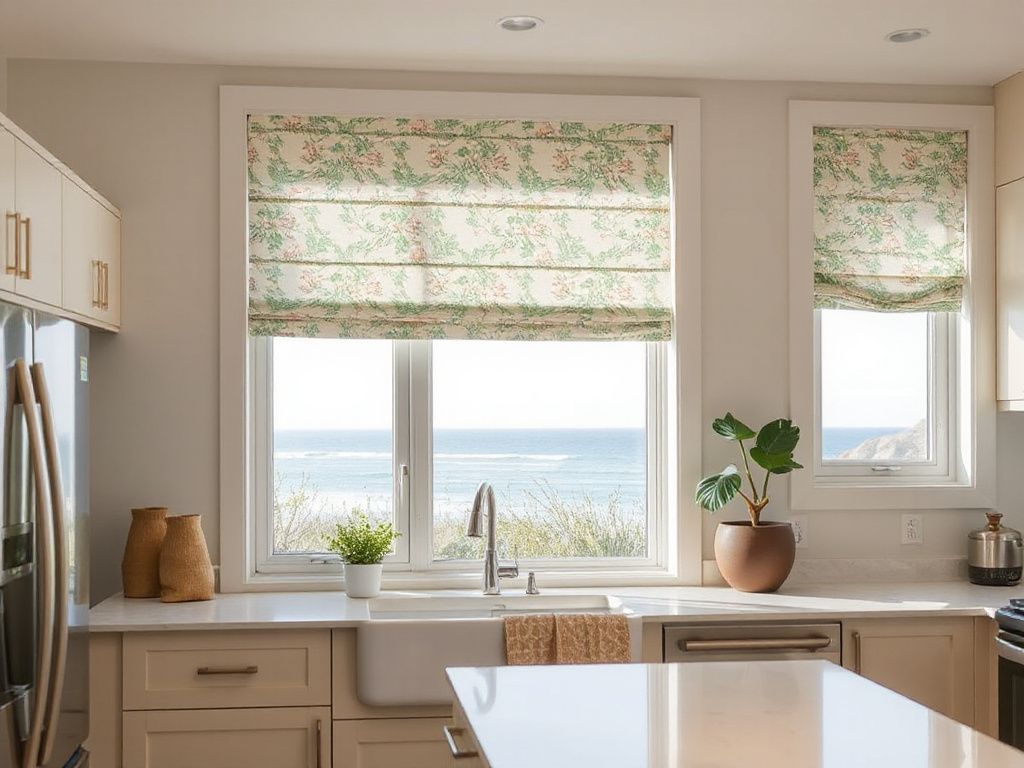
Choosing the Right Roman Shade Materials for Coastal Conditions
Now that you know what you are fighting, the selection process becomes much simpler. You are not shopping for a color or a pattern first — you are shopping for a material system that will survive, and then picking the look you like from that narrower set.
Fabric: Solution-Dyed Acrylic, Polyester, or Olefin
My first choice for oceanfront Roman shades is solution-dyed acrylic. It resists fading, dries quickly, and does not support mold growth the way natural fibers do. The downside is a softer, more casual drape, which actually suits coastal interiors well. If you want a crisper fold or a more tailored look, a solution-dyed polyester with a UV stabilizer package works nearly as well and costs less per yard. Olefin is the budget option: it is inherently hydrophobic and fade-resistant, but the color range is limited and the fabric can feel stiff when pleated.
What about linen or cotton blends? They look beautiful in magazine photos of beach houses, but I rarely install them within a mile of salt water. Cotton absorbs moisture, holds it against the hardware, and fades unevenly along the fold lines. If a client insists on a natural fiber, I recommend treating it with a fluoropolymer-based fabric protector every six months and accepting that it will need replacement after two to three summers. For comparison, a quality solution-dyed acrylic shade regularly lasts seven to ten years in the same window.
Lining: The Hidden Layer That Does Heavy Work
Most custom Roman shades include a lining, and in coastal conditions that lining matters as much as the face fabric. A blackout or thermal lining adds a second layer of UV defense and keeps the shade from becoming a heat radiator in the afternoon. But make sure the lining is also solution-dyed or at least UV-stabilized. I have seen white cotton linings turn yellow and brittle while the outer fabric looked fine. For maximum durability, choose a shade with a bonded lining — where the face and lining are laminated together — because it eliminates the air gap where moisture and mold like to hide.
Hardware: What to Specify for Salt Air
Here is the non-negotiable list I give every coastal client:
- Headrail: Anodized aluminum or powder-coated aluminum. Avoid raw steel and uncoated brass.
- Springs and lifting mechanism: Marine-grade stainless steel (type 316) or a sealed, self-lubricating polymer system.
- Cord locks and tassels: If corded, choose nylon-coated steel or stainless. Better yet, go cordless.
- Brackets and screws: Stainless steel or zinc-plated with a corrosion-resistant coating.
The difference in cost between standard hardware and marine-grade hardware is often less than $40 per shade, but it can add five or more years to the life of the product. That is the single best value upgrade in the entire coastal window treatment category. And if you are also considering exterior solutions, our guide to exterior window treatment ideas covers awnings and shutters that reduce the sun load before it ever reaches your shades.
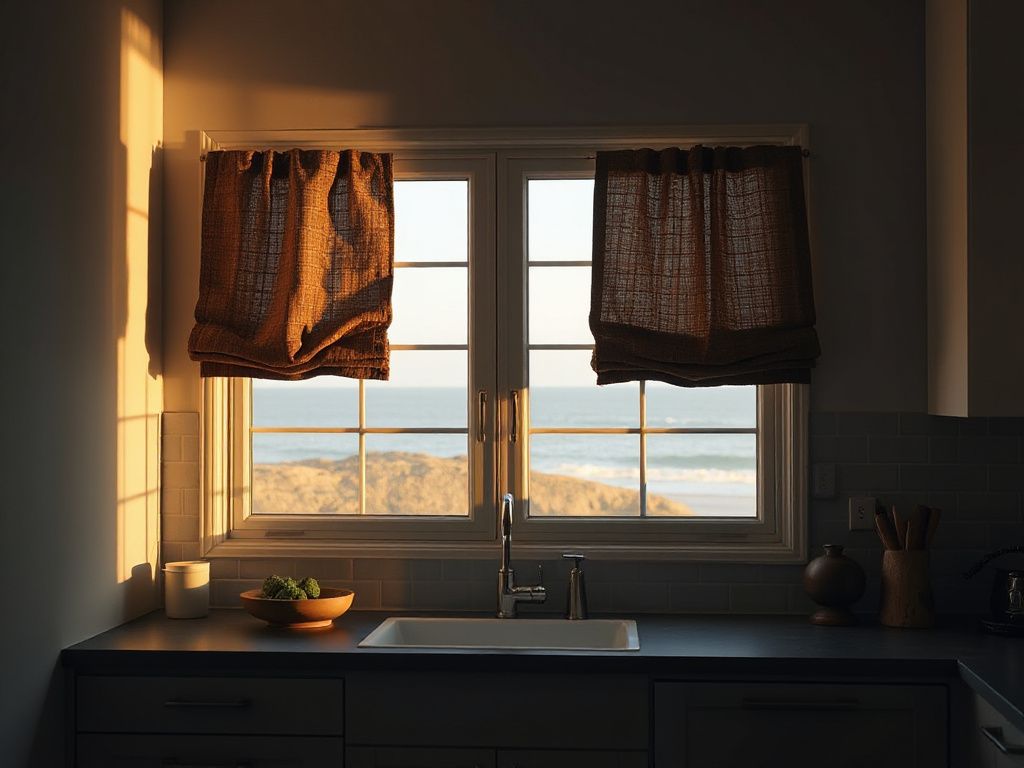
Design and Installation Choices That Affect Longevity
Material choices get you most of the way there, but how you mount and operate the shade plays a surprising role in how long it lasts. Two identical shades on the same wall can have very different lifespans depending on these decisions.
Inside Mount vs. Outside Mount in Coastal Homes
An inside mount fits within the window frame and looks cleaner, but it traps the shade inside the recess where salt-laden air and condensation collect. If the window frame itself sweats — common in poorly insulated beach cottages — that moisture wicks directly into the shade’s side hems. An outside mount covers the entire frame and leaves a small air gap between the shade and the glass, which improves airflow and reduces condensation contact. In my San Diego installs, outside mounts on ocean-facing windows consistently show fewer mildew issues after two years than inside mounts on the same house.
One exception: if you have deeply recessed windows with operable storm shutters on the interior, an inside mount may be your only option. In that case, add a small spacer behind each bracket to create a 1/4-inch air gap and choose a shade with a moisture-resistant liner.
Cordless and Motorized Systems Reduce Corrosion Points
Traditional corded Roman shades have a continuous loop of cord that runs through a cord lock, a pulley, and often a spring mechanism. Each of those is a separate metal part that can corrode. Going cordless removes the cord lock and pulley entirely, leaving only a simple spring or tension mechanism inside the headrail. Going motorized removes those as well, because a small electric motor raises and lowers the shade via a sealed drive shaft. Motorized shades cost more upfront — usually $150 to $300 extra per window, depending on the brand — but they eliminate the two most common failure points in salt air and also solve the child safety concern. The U.S. Consumer Product Safety Commission has pushed hard for cordless window coverings, and coastal homes with grandchildren often benefit doubly from that change.
If you do not want to spend on motors, a cordless lift system with a sealed spring cartridge is the next best thing. Ask your fabricator whether the spring cartridge is replaceable — some are, meaning you can swap a corroded internal spring without buying a whole new shade.
Measuring Correctly Prevents Gaps and Flapping
Coastal winds can be strong, even when the shade is inside the window. An outside mount that extends only an inch or two beyond the frame will flap and chafe against the casing. Chafing wears through the fabric at the top corners within a season. For outside mounts within two miles of the ocean, I specify at least 3 inches of overlap on each side and 4 to 5 inches above the frame. That extra coverage also blocks more light and helps the shade hang straighter in a breeze. If you need guidance for bedroom windows specifically, our bedroom window treatments guide includes measuring tips that apply to any room.
Maintenance Routines That Extend Coastal Shade Life
Even the best materials need routine care in a salt-air environment. The good news is that coastal Roman shade maintenance is not complicated — it just needs to be consistent.
Weekly Dusting and Monthly Deep Vacuuming
Salt particles settle on horizontal surfaces, and the pleats of a Roman shade are horizontal surfaces. Dust the shade weekly with a dry microfiber cloth or a vacuum cleaner fitted with a soft brush attachment. Work from top to bottom, opening each pleat slightly to reach the fold creases where salt accumulates. Once a month, vacuum both sides thoroughly with the brush attachment. This prevents salt from grinding into the fibers and keeps the shade from developing a dull, whitish film.
Spot Cleaning vs. Full Wash
For most coastal homes, a full wash of Roman shades is risky because the headrail and lift mechanism can get wet. Instead, spot clean stains with a mild detergent solution — one teaspoon of clear dish soap per cup of lukewarm water — applied with a sponge, then blot dry immediately. Never rub the fabric hard, because that pushes dirt and salt deeper into the weave. If the shade needs more than spot cleaning, unclip the fabric panel from the headrail (many custom shades are designed for this) and hand wash it in cold water, then hang it to dry completely before reattaching. Check the manufacturer’s care tag first; some solution-dyed acrylics can be machine washed on a gentle cycle, but the lining may not survive.
Inspection Schedule: Check Hardware Every Three Months
Set a calendar reminder to inspect the headrail, brackets, and any visible cords every three months. Look for:
- White or greenish powder on metal parts — that is corrosion, not just dust.
- Stiff or jerky lifting movement — indicates internal rust or a failing spring.
- Fraying or discoloration along fold lines — UV damage or salt abrasion.
- Mildew odor when the shade moves — moisture trapped in the lining.
Catching a corroded bracket at month six lets you replace a $5 part. Ignoring it until month eighteen often means the whole shade falls off the wall, damaging the fabric and the window casing in the process.
Coastal Building Codes and Hurricane Considerations
If your home is in a designated wind-borne debris region or a hurricane-prone coastal zone, local building codes may require impact-rated glazing and specific anchoring for anything mounted near windows. Roman shades themselves are interior window treatments, so they are not subject to the same code as exterior shutters, but the mounting brackets must be anchored into solid framing, not just drywall anchors, if you live in a high-wind area. A shade that falls during a storm becomes a projectile inside the room.
Many coastal building departments also require that any motorized shade system have a battery backup in case of power loss during an evacuation order. Check with your local permitting office before installing motorized shades in a new construction or major remodel. For homeowners looking to integrate shades with a broader coastal design scheme, these modern coastal living room ideas show how to layer window treatments with furniture and paint for a cohesive look.
Frequently Asked Questions
How often do I need to clean Roman shades in a coastal environment?
Weekly light dusting and monthly vacuuming are the baseline for any home within a mile of the ocean. Salt particles settle daily, and letting them accumulate for more than a few weeks grinds them into the fabric weave, dulling the color. A full wash or professional cleaning should happen every three to six months, depending on how often the windows are open and whether the shade faces the surf. If you notice a white film forming on the pleats, increase the frequency.
What are the signs that my Roman shade fabric is degrading from sun exposure?
Fading is the most obvious sign, but look for uneven color loss along fold creases and fabric that feels stiff or papery to the touch. UV exposure also weakens threads, so check the stitching on the bottom hem and side edges — if the thread color has changed from dark to light or frays easily when rubbed, the shade is nearing the end of its useful life. A shade that has turned brittle will eventually tear along the lift rings, so replace it before that happens.
Should I use Roman shades or cellular shades for beach house windows?
Both can work, but Roman shades typically offer better fabric choices for coastal durability because you can specify solution-dyed acrylic and marine-grade hardware. Cellular shades trap air in their honeycomb cells, which improves insulation but also traps moisture and salt particles more easily. That trapped moisture accelerates mildew growth behind the shade. If you want the soft look of Roman shades and the energy efficiency of cellular, a Roman shade with a thermal bonded lining gives you most of the insulation benefit without the enclosed air pockets.
