

Why does your hallway floor end up buried under coats, backpacks, and wet shoes by Wednesday afternoon, when Monday morning you had it perfectly clear?
The answer often comes down to one thing: your wall-mounted hooks and racks are either in the wrong place, mounted incorrectly, or simply not up to the load you’re asking them to carry.
Effective entryway mudroom storage isn’t about buying more bins or baskets—it’s about understanding how weight, wall type, and placement work together.
Key Takeaways
- Wall-mounted hooks must be screwed into studs or use load-rated drywall anchors, never adhesive strips for heavy coats.
- Standard adult hook height is 60–65 inches from the floor; kids’ hooks sit at 30–36 inches.
- Choose rust-resistant materials like stainless steel, brass, or powder-coated steel for damp mudrooms.
- Distribute heavy loads across multiple hooks instead of one, and always check the combined weight rating of a coat rack.
The Foundation: Understanding Your Wall and Load Requirements
In installing hooks and racks for an entryway, the critical distinction is between mounting into a wall stud versus using a drywall anchor.
A beginner will often rely on adhesive strips or standard screws into drywall, but for enduring load with heavy coats and bags, you need either a stud location or a properly rated anchor that distributes weight.
I’ve seen countless hooks pull out of the wall because they were mounted with the wrong fastener for the wall type.
That pull-out happens fast—a loaded hook can rip out a chunk of drywall in seconds when the fastener fails.
Wall Types and What They Mean for Your Hooks
Drywall is the most common wall material in modern homes, but it is not a solid surface. A single screw driven into drywall without an anchor will pull out under as little as 20 to 30 pounds of direct downward force.
Plaster walls, common in older homes, are harder but brittle; they require masonry screws or expansion anchors that grip the lath behind the plaster. Brick or concrete walls demand a hammer drill and sleeve anchors.
The U.S. Consumer Product Safety Commission warns against overloading wall-mounted fixtures because falling objects can cause injury, especially to young children.
How Much Weight Can a Wall-Mounted Coat Rack Hold?
The weight rating printed on a wall-mounted coat rack refers to the total combined load across all hooks, not the capacity of each individual hook.
For example, a rack rated for 50 pounds with five hooks means all five hooks together should not carry more than 50 pounds; that works out to 10 pounds per hook if evenly distributed. A typical winter coat weighs between 3 and 5 pounds, but a loaded backpack can easily hit 15 to 20 pounds.
Always check the rack’s specification sheet, and if no rating is given, assume the weakest fastener you plan to use sets the limit.
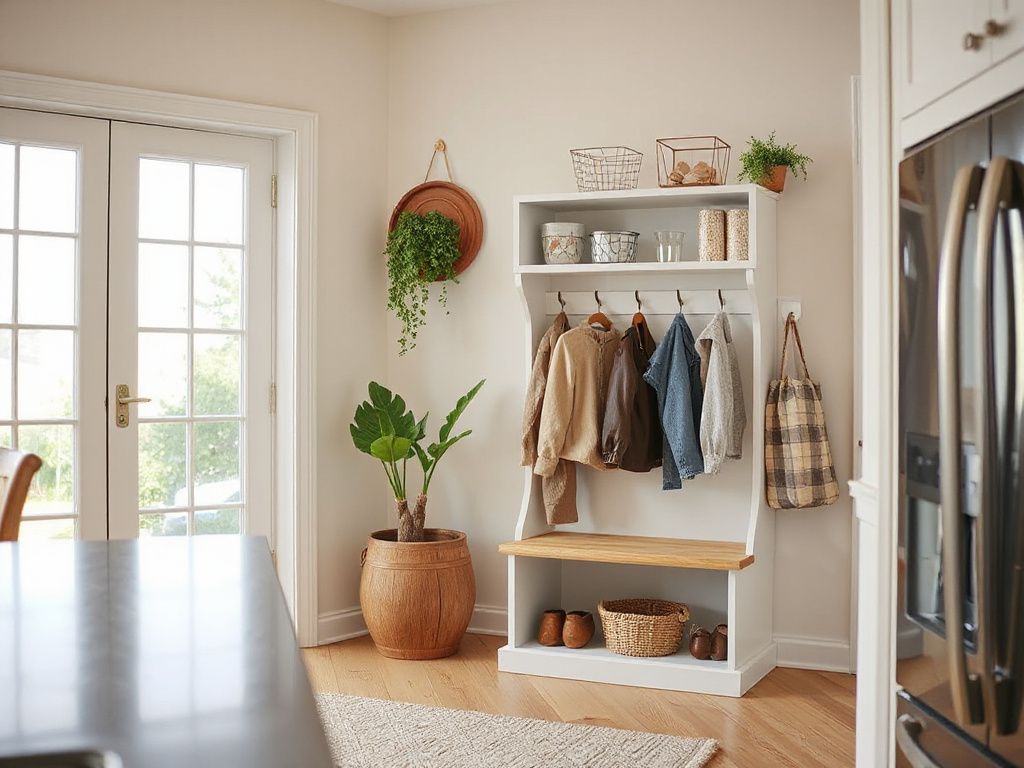
Choosing Hooks and Racks for Entryway Mudroom Storage
Coat Hooks vs. Hat Hooks: What’s the Difference?
A coat hook has a deeper throat and often a ball or curved end to keep heavy garments from slipping off. A hat hook is shorter and shallower, designed for lighter items like caps, scarves, or dog leashes.
Using a hat hook for a heavy winter coat leads to constant slipping and frustration. For coats, backpacks, and bags, choose coat hooks with a depth of at least 2 inches from the wall to the back of the hook curve.
Materials That Resist Rust and Wear
In a damp mudroom where snow and rain drip off boots and coats, ordinary steel hooks will rust within a season. Choose powder-coated steel, stainless steel, or solid brass instead.
Powder-coated steel hooks resist chipping and rust far better than painted steel, because the coating is baked on rather than sprayed. Brass develops a natural patina that actually protects the underlying metal from further corrosion.
Magnetic hooks that attach to the side of a metal file cabinet or a steel door can work for light items, but most mudroom walls are drywall or plaster, so magnetic hooks are rarely useful. A magnetic hook’s holding power depends entirely on the thickness and flatness of the metal surface, and most residential doors are not magnetic. Save magnetic hooks for the inside of a metal locker or a steel utility shelf.
For backpacks specifically, a dedicated rack or shelf helps distribute the load; check out our roundup on entryway backpack storage solutions for options that keep straps off the floor.

Installation Steps for Secure Hooks and Racks
Finding a Wall Stud: A Step-by-Step Guide
Wall studs in most North American homes are spaced 16 inches on center, measured from the center of one stud to the center of the next.
Start with a magnetic stud finder, which detects the drywall screws or nails holding the drywall to the stud. Move the finder slowly across the wall until it sticks, mark that spot, then confirm by knocking—a stud sounds solid, while a cavity sounds hollow.
For a detailed walkthrough on using a stud finder and verifying stud locations, Family Handyman has reliable step-by-step guides.
Using Drywall Anchors Correctly When a Stud Isn’t Available
If you must mount a hook or rack on drywall without a stud, choose a load-rated anchor. A properly installed toggle bolt in 1/2-inch drywall can support up to 50 pounds, but a plastic expansion anchor of the same size may fail at 15 to 20 pounds.
Toggle bolts work by folding flat to pass through a pilot hole, then opening behind the drywall to spread the load over a wide area. Molly bolts expand with a screw, and they often include a setting tool. Always drill the pilot hole to the exact diameter specified on the anchor package; too large and the anchor spins, too small and the drywall crushes.
One of the most common mistakes people make when installing entryway hooks is drilling the pilot hole too large for the anchor. The anchor then spins freely and never tightens. Another is using the shortest possible screw to save time; a 1-inch screw may not reach the stud through 1/2-inch drywall plus the hook’s mounting plate. Use screws that penetrate at least 1 inch into the stud.
Height Placement for Adults and Kids
Adult hooks mounted at 60 to 65 inches from the floor keep coat collars off the ground and allow easy reach for most people. For children, install a second row of hooks at 30 to 36 inches high.
A double row of hooks works well in a family mudroom: adults use the top row, kids use the bottom, and the space between can hold a small ledge for gloves or hats. Measure from the floor, not from the baseboard, because baseboards vary in height.
Organizing Your Entryway: Beyond the Hook
Small Entryway Solutions: Using Vertical Space
When floor space is tight, think upward. A wall-mounted coat rack with five hooks spaced 8 inches apart can hold five average winter coats if each coat weighs less than 5 pounds, but the combined load may exceed the rack’s total rating.
Add a shelf above the hooks for baskets of gloves, hats, and scarves. Over-the-door hooks use a metal bracket that hangs over the top of a door. They can hold 10 to 15 pounds if the door is solid core, but most interior doors are hollow core and will bow under a heavy coat. For heavy coats, limit over-the-door hooks to one per door and choose a model with a padded top edge to prevent scratching.
Adding a Mudroom Bench or Cubbies for Full Storage
A mudroom bench with built-in cubbies turns dead wall space into a drop zone for shoes and bags, reducing the load on wall hooks by 30 to 40 percent.
Cubbies with individual baskets or bins give each family member a designated spot, which prevents the pile-of-coats-on-the-floor problem. The bench itself provides seating for pulling off boots, and the shoe storage below keeps wet footwear off the wood floor.
Maintenance and Long-Term Care
Preventing Rust in a Damp Mudroom
Even rust-resistant materials benefit from a quick wipe-down after a rainy day. Brass hooks develop a natural patina over time, which actually protects the underlying metal from further corrosion, but stainless steel remains rust-free even in constant high humidity.
For extra protection, apply a thin coat of clear paste wax to metal hooks twice a year. The wax seals the surface against moisture and salt from winter boots without changing the appearance.
Cleaning Wooden and Metal Hooks
Wooden hooks coated with a beeswax or mineral oil finish resist moisture absorption and cracking far better than bare wood. To clean, wipe with a damp cloth and mild soap, then reapply a thin coat of food-grade mineral oil.
For metal hooks, avoid abrasive cleaners or steel wool, which scratch the protective coating. A soft cloth with warm water and a drop of dish soap removes grime, and a dry cloth prevents water spots.
Frequently Asked Questions
How much weight can a wall-mounted coat rack hold?
A wall-mounted coat rack’s weight limit is the total for all hooks combined, not per hook. Most residential racks are rated between 30 and 50 pounds when properly anchored to studs. A rack without a listed rating should be treated as a 20-pound maximum and distributed evenly across at least three hooks.
Should I use screws or adhesive hooks for my mudroom?
For heavy coats, backpacks, or bags, always use screws into wall studs or heavy-duty drywall anchors. Adhesive hooks are only appropriate for items under 5 pounds, like keys or dog leashes, because moisture and repeated loading weaken the adhesive bond. If you’re renting and cannot drill, consider over-the-door racks rated for at least 20 pounds.
How do I find a wall stud to install a hook securely?
Use a magnetic stud finder to locate drywall screws, then confirm by knocking for a solid sound. Studs are typically spaced 16 inches apart in North American homes. Mark the stud center with painter’s tape, drill a small pilot hole, and if you feel resistance and see wood shavings, you’ve hit the stud.
How do I organize a small entryway with limited wall space?
Maximize vertical space with a narrow wall-mounted rack, add a shelf above for baskets, and use a small bench with shoe cubbies. For a rental entryway mudroom storage setup without drilling, use over-the-door racks or tension-mounted hooks rated for at least 20 pounds each. A clutter-free entryway also makes a better first impression for guests; while you’re planning hosting, you might look up the best place for candle light dinner near me, but the same decluttering principles apply.
