

You spent a weekend building a beautiful raised bed, then realized it faces the wrong sun angle and now you cannot lift it. That tight knot of regret is exactly why moveable garden beds exist. They solve the problem of permanent mistakes, awkward corner lighting, and the changing needs of a real garden — without forcing you to dig up and start over.
I review planters the way an interior stylist reviews a side table. A moveable garden bed is not just a container; it is a piece of punctuation that can shift the whole sentence of your yard. Over the years, I have watched clients fill a gorgeous cedar box with saturated soil, then try to roll it across a deck and end up with a cracked frame and a very bruised ego. So before you buy or build, let me walk you through what actually matters — from caster math to where a mobile bed belongs in a real home.
Key Takeaways
- Always calculate the fully watered weight of your bed and soil, then choose casters with at least 50% extra load rating.
- Locking casters are mandatory on any surface with even a 1% slope; four locking wheels prevent the bed from rolling away.
- Move a mobile bed only when the soil is dry — wet soil adds hundreds of pounds and makes the top-heavy frame prone to tipping.
- Level the bed after every move using levelling feet or shims, otherwise water pools on one side and roots suffer.
What Are Moveable Garden Beds?
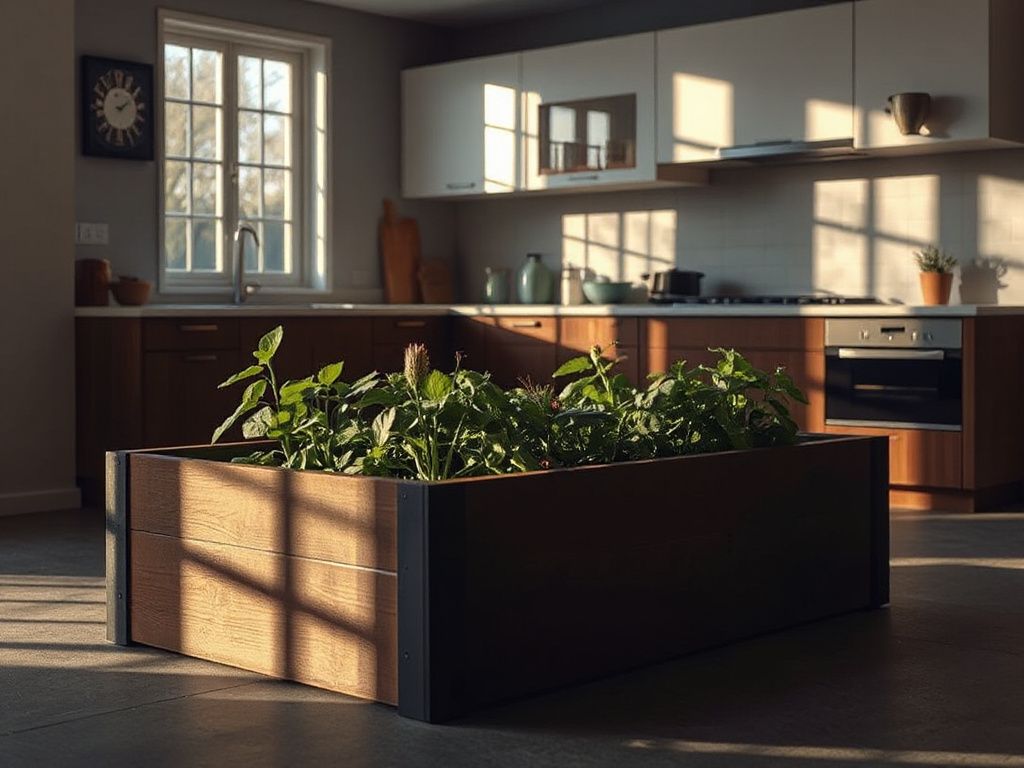
A moveable garden bed is essentially a raised bed or large planter equipped with wheels, casters, or a design that allows repositioning without disassembly. The frame can be made from western red cedar, galvanized steel, composite lumber, or even repurposed crates. What separates a mobile bed from a traditional raised bed is not the material but the mobility system. That system usually involves casters mounted to the base, or a separate garden dolly that the bed sits on.
Most people assume any box with wheels will work. That assumption collapses quickly when you consider that a 2-foot by 4-foot bed filled with potting mix can weigh over 500 pounds dry. Add water, and you are looking at 700 pounds or more. A moveable bed is not a wheelbarrow; it is a small piece of architecture that happens to roll. Understanding that distinction early will save you from buying undersized casters or building a frame that flexes under its own load.
From a styling perspective, moveable garden beds give you something permanent planters never can: the ability to recompose your outdoor room seasonally. You can place a galvanized steel planter on a sunny balcony in spring, wheel it into partial shade in July, and tuck it against a wall in winter. That flexibility is invaluable in urban gardening and balcony gardening, where every square foot counts and sun patterns shift dramatically through the year. For more context on designing a coherent garden space, our garden layout guide explains how fixed and mobile elements work together.
Which Plants Suit a Moveable Bed?
Shallow-rooted annuals, leafy greens, herbs, and compact perennials are the easiest candidates. Deep-rooted tomatoes need a bed at least 18 inches deep, which makes the whole unit heavier. I often recommend starting with salad greens, chard, basil, and trailing flowers. If you want something dramatic, a dwarf citrus tree works in a large galvanized steel bed on heavy-duty casters, but you must account for the root ball weight plus soil. Plants that tolerate some root restriction — like peppers, strawberries, and most culinary herbs — perform well in mobile containers.
For beds that live on a shady balcony or patio corner, our article on shade garden pots covers plant choices that thrive without direct sun. That resource pairs naturally with moveable beds because you can start a bed in shade, then roll it into dappled light as needed.
Can You Put Locking Casters on Any Raised Bed?
Technically yes, but structurally maybe not. A flimsy pine bed with a thin bottom will sag and crack under point loads from casters. The bed needs a rigid base plate or a reinforced frame. I always recommend at least 3/4-inch plywood or a metal cross-brace system under the floor. Then use a locking caster on every corner — not just two — because a bed with two locking wheels can still pivot and slide on a slope. The locking mechanism must be a total lock, meaning it stops both wheel rotation and swivel. Partial-lock casters are fine for shop carts, but a garden bed needs full locking to stay put when you are leaning over it to plant.

Choosing Casters, Frames, and Materials
The caster is the heart of a moveable bed, and most people choose it last. That is backwards. Start with the loaded weight of your bed, including soil at field capacity (the point after watering when it stops draining but remains saturated). A typical potting mix at field capacity weighs roughly 40 to 50 pounds per cubic foot. So a 2×4 foot bed, 12 inches deep, holds 8 cubic feet of soil — about 320 to 400 pounds wet. Add the frame weight, and you have your total. Now multiply by 1.5, then divide by four to get the minimum load rating per caster.
For example, a 400-pound bed needs casters rated at least 150 pounds each with a 50% safety margin. That is not optional. In my years of gardening, I’ve learned that the most common mistake is underestimating how heavy a moveable bed becomes when the soil is saturated. I always check the caster load rating against the fully watered weight and advise clients to keep at least a 50% margin of safety. I also plan moves when the soil is dry—not just for weight—but because wet soil makes the bed top-heavy and prone to tipping. I never drag a bed casually; I walk the path first, inspect for obstacles, and use a second person or a dolly for stability. My rule is simple: if you can’t lift it with one person, don’t rely on wheels alone.
What Size Wheels Do You Need for a Movable Planter?
Wheel diameter directly controls how easily the bed rolls over obstacles. A 2-inch caster is fine for a smooth interior floor, but outdoors you need at least 3 inches for deck boards. For gravel, mulch, or uneven pavers, 4 to 6 inches is much better. Larger wheels also reduce the force required to start rolling, which matters when you are moving 500 pounds. I always advise homeowners to think about the roughest surface the bed will ever cross, not the easiest. If you have a garden dolly with small wheels, you will regret it the first time you try to move the bed over a door threshold.
Installing Casters on a Wooden Bed Frame
Use heavy-duty mounting plates with four bolts per caster, not two. Pre-drill the bolt holes to prevent splitting, and place a metal washer on both sides of the wood. If the bed has a solid bottom, mount casters directly into the bottom with 2-inch lag screws. If the bottom is slatted or thin, add a 3/4-inch plywood plate spanning the full width and screw the caster plates into that. For a western red cedar frame, use stainless steel hardware; cedar’s natural tannins will corrode zinc-plated screws over time. A galvanized steel bed usually comes with pre-drilled caster mounts, but check the manufacturer’s weight rating before assuming it will hold a full load of wet soil.
Are There Any Alternatives to Wheels for Moving Planter Boxes?
Yes. A garden dolly or a hand truck with a flat platform lets you move a non-wheeled bed without permanently attaching casters. You slide the dolly under one end, tip the bed slightly, and roll. This approach works well for very large beds that stay in one place most of the year. Another option is levelling feet with built-in wheels that drop down when you tilt the bed — common on commercial planters. For a fully DIY solution, some gardeners place a bed on a sheet of heavy plywood and use a wheelbarrow-style axle with removable handles. However, if you move the bed more than twice a season, integrated casters are far more convenient. For permanent raised beds that never move, our complete guide to raised garden bed plans covers traditional non-mobile designs in depth.
Moving, Safety, and Load Management
This is where most mobile beds fail — not in the garden, but on the path between two spots. A saturated bed on small casters will refuse to roll, then suddenly lurch and tip. I have seen a 600-pound galvanized steel planter shear a caster mount clean off because the owner tried to move it across a 1-inch threshold with wet soil inside. The bed itself was fine; the caster plate bent like a cheap spoon.
The first rule of moving a raised garden bed without breaking it: dry the soil first. Stop watering three to five days before the planned move, depending on weather. This reduces weight by 20 to 30 percent and lowers the center of gravity, making the bed dramatically more stable. If you cannot wait, use a hand truck under the heavy end while a second person guides the other end. Never drag a bed on casters sideways; that creates a twisting load on the mounting bolts.
Does a Moveable Bed Need to Be on a Flat Surface?
For storage and planting, yes — the bed should sit level. A slope of even 1 percent (about 1 inch over 8 feet) will cause water to pool on the downhill side, leading to root rot and uneven growth. Before moving, survey the destination. Use a 4-foot level and add levelling feet under the low end, or place shims under the casters. For a deck, check that the surface itself is level first. Decks can sag over time, and a heavy bed will exaggerate that sag. Also verify the deck’s load capacity. Most residential decks are designed for 40 to 50 pounds per square foot live load, but a 500-pound bed on four small casters concentrates that weight into four point loads. A caster with a 2-inch wheel can exert over 100 psi on a deck board. The International Code Council publishes deck load standards that professionals use; for outdoor structures, always check local codes before placing a heavy mobile planter on an elevated surface.
Can You Move a Moveable Bed with the Soil Inside?
Yes, and you should — removing soil defeats the purpose of mobility. But do it correctly. The soil must be dry, not just surface-dry but dry six inches down. Pro tip: insert a moisture meter into the soil; if it reads above 40% moisture for a standard potting mix, wait another day and retest. When rolling, stand at one short end and pull, do not push from the long side. Pulling keeps the load trailing behind and reduces the chance of the casters hitting an obstacle and stopping abruptly. If crossing grass or gravel, lay down a path of 1/2-inch plywood sheets first. A wheelbarrow can shuttle tools and extra soil alongside, but never try to transport the bed itself in a wheelbarrow.
Understanding Caster Weight Limits
Every caster has a rated capacity based on a smooth, level surface at walking speed. On rough surfaces, that rating drops. A caster rated for 150 pounds on concrete may only handle 100 pounds on gravel due to impact loads. Multiply your fully loaded bed weight by 1.5, then divide by four. That is your minimum per-caster rating. Also check the wheel material: hard plastic wheels can crack under load, while solid rubber or polyurethane handle minor bumps without damage. Galvanized steel frames often have built-in caster mounts with ratings printed on them; do not exceed those numbers, even if the wheel itself is rated higher.
Styling Moveable Beds in Real Homes
Now for the part I care about most: where a moveable bed actually belongs in a home. I treat decorative accents like punctuation for a room, and a planter is no different. A moveable bed is a bold em dash — it can interrupt a boring wall, break up a long deck, or create a visual full stop at the end of a path. The advantage over a fixed raised bed is that you can use it as an exclamation point today and a quiet parenthesis tomorrow.
On a balcony, one or two moveable beds serve as movable green walls. You can roll them out to catch morning sun, then pull them back to create a seating nook in the evening. In urban gardening, where balconies and rooftops are the only garden space, mobility is not a luxury; it is how you chase sunlight through a canyon of buildings. For a permanent garden design, a moveable bed can act as a temporary accent that gets swapped seasonally — a galvanized steel trough of tulips in spring, a western red cedar box of ferns in summer. When you are done with that seasonal statement, roll it into storage or repurpose it on a different patio. This is a form of vertical gardening in spirit, because you are layering greenery at different heights and positions throughout the year.
How Do I Prevent Waterlogging in a Moveable Bed?
Drainage holes are non-negotiable, even in a bed that sits on a deck. Without drainage, a single heavy rain can turn your potting mix into a swamp that rots roots and adds hundreds of pounds of water weight. Drill at least four 1/2-inch holes per square foot of bottom surface. Elevate the bed slightly above the deck using levelling feet or small risers so water can escape and air can circulate underneath. If you use a soaker hose inside the bed, route it along the top two inches of soil and run it on a timer to avoid saturation. For beds placed on a balcony over a neighbor’s space, add a drip tray with a drain spout that directs water into a bucket or planter — this also protects the deck surface below.
How Do I Winterize a Moveable Garden Bed?
Wheels give you a huge advantage in winter: you can move the bed against a south-facing wall to capture heat, or into a garage or shed to protect it from freeze-thaw cycles. If the bed stays outside, empty it of annuals, cut back perennials, and push the bed against a wall out of prevailing wind. Cover the soil with a thick layer of mulch, then wrap the sides with burlap or a frost blanket. Lock all four casters so the bed does not shift during winter storms. For a galvanized steel bed, avoid letting the bottom sit in standing water; use levelling feet to raise it an inch. A western red cedar bed can stay outdoors, but untreated cedar will grey over time — that is purely aesthetic. If you have a garden dolly, store it indoors to prevent rust on the wheel bearings.
One final styling note: a moveable bed does not have to be a rectangle on wheels. A round galvanized steel planter on a dolly can rotate on a patio to show different plants at different times. A long cedar trough on casters can divide a deck into zones, then roll to the edge to open the space for a party. That is the real power of mobility — not convenience, but composition. You get to rearrange your outdoor room the way you rearrange furniture indoors. And unlike a sofa, the bed grows its own upholstery.
Frequently Asked Questions
How do I move a raised garden bed without breaking it?
Stop watering three to five days before the move so the soil dries out. Walk the path and clear obstacles, then pull from a short end rather than pushing from the long side. Use a hand truck under the heavy end and a second person at the other end. Move slowly, and if you hit resistance, stop and inspect — never force a caster over a threshold or gap. After placement, check that all four casters are locked and the bed is level.
What is the weight limit for a caster on a garden bed?
Caster weight limits are usually given for smooth, level surfaces at walking speed. For a moveable garden bed, calculate the fully watered weight of the bed plus soil and frame, then multiply by 1.5 for a safety margin. Divide that number by four to get the minimum rating per caster. On rough surfaces, use a 2.0 safety factor instead. Always check that the caster mounting plate and bolts are rated for the same load as the wheel itself.
Can I move a moveable garden bed with the soil inside?
Yes, and that is the entire point. Keep the soil dry before moving, and insert a moisture meter to confirm the soil is below 40% moisture at a six-inch depth. Pull the bed rather than push, and lay plywood sheets over grass or gravel to create a smooth path. Do not attempt to move a bed with wet soil on a slope — the top-heavy load can tip over, damaging the frame and spilling soil.
How much soil do I need to fill a moveable garden bed?
Calculate the volume by multiplying length × width × depth in feet. A standard 2-foot by 4-foot bed, 12 inches deep, holds 8 cubic feet of potting mix. That fills the bed to the top; leave 2 inches of headspace for mulch and watering. Most bagged potting mix is sold in 1-cubic-foot or 2-cubic-foot bags, so you would need four to eight bags depending on size. A 2-cubic-foot bag of moistened potting mix weighs about 40 to 50 pounds.
Does a moveable bed need to be on a flat surface?
For planting and watering, yes. A slope of even 1 percent causes water to pool on the low side, which leads to uneven root growth and possible rot. Use a 4-foot level and place levelling feet or shims under the low-end casters until the bed reads level. On a deck, verify that the deck itself is level and that the concentrated load from the casters does not exceed the deck’s structural capacity. Lock all four casters after levelling.
