

Floor coverings are a multibillion-dollar category in the United States, with area rugs outpacing wall-to-wall carpet in growth every year for the past decade, according to the Carpet and Rug Institute. Tan area rugs sit right at the center of that demand because they offer a warm neutral that hides light dust while still reading as intentional. But the wrong tan rug in the wrong room turns into a daily fight against visible dirt and stubborn stains, and I have seen that fight wear people out. The good news is that avoiding it comes down to a few unglamorous decisions made before you ever bring the rug home.
When I guide clients on tan area rugs, I always stress that the wrong fiber can turn a beautiful neutral statement into a constant battle against visible dirt. Tan is a forgiving color for hiding some things, but not stains, so the first question is always: how much foot traffic will this see? I also watch for the tendency to pick a shade based on a showroom sample, not the actual lighting of the room it’s headed for. A tan that looked warm and creamy under the showroom’s halogen lights can read flat and muddy next to a north-facing window. That mismatch is one of the most common reasons people return a rug within a month.
Key Takeaways
- Polypropylene and nylon tan rugs resist stains far better than wool or jute, making them the practical choice for high-traffic living rooms and entryways.
- A quality rug pad is not optional on hardwood — it prevents sliding, reduces fiber wear, and keeps the edges from curling into trip hazards.
- Tan rugs can fade unevenly in direct sunlight, so rotate every three to four months and use window treatments if the room gets strong southern exposure.
Choosing the Right Fiber for a Tan Area Rug
The fiber determines how a tan rug behaves under daily life. That is the whole conversation. Color is what you notice first, but fiber is what you live with for years. For a tan rug, the choice of fiber changes how often you need to vacuum, how much a spilled coffee costs you, and whether the rug still looks good after a full season of bare feet and dog paws.
Synthetic Fibers: Polypropylene and Nylon
Polypropylene is the most stain-resistant of the common rug fibers. It is solution-dyed, which means the color runs through the entire fiber rather than sitting on the surface, so you can scrub a tan polypropylene rug with mild soap and water without pulling the color out. Nylon is a close second for durability and holds its pile height longer under heavy traffic. Both are good choices for a tan rug in a family room, a hallway, or anywhere with food and drinks. The listing will usually say “power loomed” or “machine made,” and those constructions hold polypropylene and nylon very well. If you want to understand the difference between machine-made constructions, our guide to power loomed rugs explains what the term actually means for durability.
A tan polypropylene rug will not absorb a red wine spill the way a wool one will. That single difference is why I push synthetic fibers for anyone who entertains regularly or has kids. The trade-off is that polypropylene can feel less plush underfoot and may develop a slight sheen over time with heavy abrasion. Nylon costs more than polypropylene but resists matting better, so a tan nylon rug in a hallway will look newer for longer. Both fibers are approved for indoor use and do not shed the way wool can.
Natural Fibers: Wool, Jute, and Sisal
Wool is the traditional choice for a tan rug because it takes dye beautifully and has natural soil-hiding properties. A hand-knotted wool rug in tan or greige can last decades with proper care. But wool is not stain-proof — far from it. Any liquid that sits on wool begins to bond with the protein fiber, which is why coffee and red wine need to be blotted immediately rather than scrubbed. For a high-traffic living room where spills are a question of when, wool means you are signing up for faster response times. Our piece on Moroccan wool rugs covers the traditional aesthetic, but the care requirements apply across all wool tan rugs.
Jute and sisal are plant fibers that look beautiful in tan and natural shades. They are also the least forgiving options for spills. Jute absorbs moisture quickly and can develop a musty smell or warping if a drink soaks through. Sisal is stiffer and stains permanently from water itself, not just from colored liquids. These fibers belong in low-moisture zones — a bedroom, a formal sitting room, a home office. A tan jute rug in a dining room is a mistake I have watched too many people make. The feel underfoot is rougher than wool or polypropylene, which some people love and others cannot stand. On the maintenance side, a tan sisal rug will never hide dried mud; the fibers are too coarse and the color too flat. If you need a plush, soft option, our roundup of the best thick plush area rugs 8×10 focuses on exactly that trade-off.
When you are comparing a tan wool rug to a tan polypropylene rug, the numbers matter. Polypropylene typically costs between $2 and $6 per square foot for a medium pile. Wool runs from $8 to $25 per square foot for a hand-tufted or hand-knotted piece, and jute usually sits around $3 to $8. The cheaper rug may actually be the better daily performer in a messy household — a fact that surprises people who assume higher price equals easier care.
Ethical and Chemical Certifications
If you are buying a tan wool rug, check for a GoodWeave label. GoodWeave certifies that no child labor was used in the rug’s production and that adult workers were paid fairly. For synthetic tan rugs, look for OEKO-TEX certification, which means the rug has been tested for harmful substances and is safe for indoor air quality. These labels are not marketing fluff. A rug without any certification may still be fine, but a certified rug removes a layer of guesswork, especially in a nursery or a room where a baby crawls on the floor every day. The Carpet and Rug Institute also maintains a green label program for low-emission floor coverings, and their database is worth a quick check if chemical sensitivity runs in your family.
Placement and Sizing That Actually Reduce Daily Friction
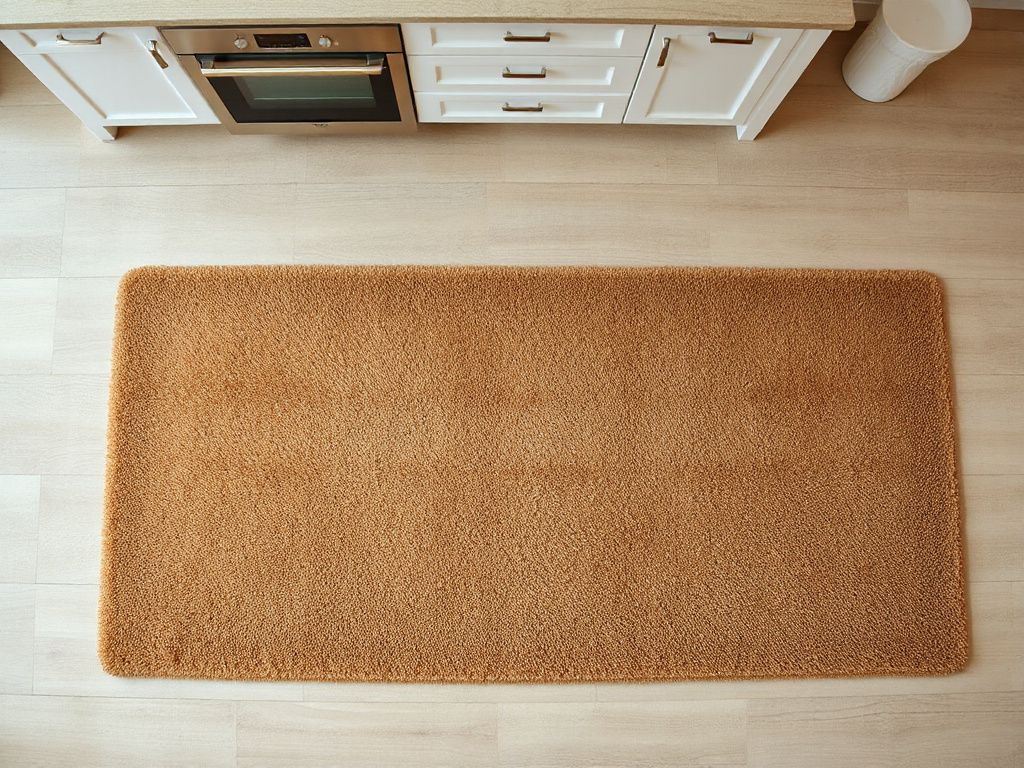
A tan rug that is too small for the room looks like an afterthought and creates a visual break in the floor that your eye trips over every time. A rug that is too large can make a room feel cramped and swamp the furniture. The right size depends on the room’s function and the traffic pattern, not just the square footage of the floor.
Living Rooms and Family Rooms
The standard rule is to choose a tan area rug large enough that at least the front legs of every major seating piece rest on the rug. For a typical eight-foot sofa, that usually means an 8×10 or 9×12 rug. In an open-plan living area, a 9×12 tan rug defines the conversation zone without cutting off the walkway to the kitchen. A tan area rug measuring 8×10 feet covers enough floor to anchor a six-seat sectional while leaving a 12-inch border of bare floor on all sides. That border is what keeps the rug from looking like wall-to-wall carpet.
If your living room gets heavy foot traffic across one corner — say, the path from the front door to the hallway — choose a tan rug with a low pile or a flatweave construction. A plush tan rug will show wear lines within six months along that path. Pile height matters more than people think. Anything over half an inch creates more resistance underfoot, which is comfortable for sitting but brutal for walking. For a busy living room, a pile height between 0.25 and 0.4 inches is the sweet spot.
Bedrooms and Quiet Zones
In a bedroom, the tan rug’s job is warmth and softness, not stain resistance. This is where a plush wool or a thick synthetic shag earns its keep. The common sizing mistake is buying a rug that only covers the foot of the bed. Instead, run the tan rug under the bed so it extends at least 18 inches on each side and 24 inches at the foot. A 5×8 rug works for a twin or full bed; a queen needs an 8×10; a king needs a 9×12. A rug pad is still necessary even on carpet, because it keeps the tan rug from bunching when you slide out of bed in the morning.
Under Furniture and in Entryways
Entryways punish tan rugs harder than any other spot in the house. Incoming shoes carry grit, moisture, and road salt in winter. For this zone, choose a tan rug with a flatweave or very low pile, and make sure it is machine washable if the size allows. A 2×3 or 3×5 tan runner works well, but a 4×6 tan area rug can also function as a landing pad. A tan rug in an entryway should be vacuumed or shaken out twice a week during wet seasons, not once a week like a living room rug. The extra maintenance is the price of having a light-colored rug at the front door. If that sounds like too much, go for a tan rug with a pattern rather than a solid color. A subtle geometric or border pattern hides the daily grime far better than a flat field of tan.
Regarding pattern: a tan rug with a low-contrast pattern in cream, taupe, or soft brown will hide wear and light staining without shouting. Avoid high-contrast patterns with stark black or navy elements on a tan ground; those make every speck of dust on the tan areas obvious by comparison. The goal is to let the pattern do the work of camouflaging minor soil, which a solid tan rug simply cannot do.
Cleaning and Stain Management Without Ruining the Rug
Every tan rug will get dirty. The question is whether the dirt becomes permanent damage. Quick response and the right technique matter far more than the specific cleaning product. Here is how to handle the most common scenarios without turning a small stain into a big discolored patch.
Routine Vacuuming and Dirt Removal
Vacuum a tan area rug at least once a week in low-traffic rooms and twice a week in high-traffic zones like living rooms and hallways. Use a vacuum with a beater bar or rotating brush for synthetic and wool rugs, but turn the beater bar off or use a suction-only attachment for jute and sisal. The beater bar can shred natural plant fibers over time. For a tan wool rug, vacuum in the direction of the pile to lift embedded dirt without pulling fibers loose. A tan polypropylene rug can handle aggressive vacuuming without losing its color, which is one practical advantage synthetic fibers hold over dyed wool.
Once a month, flip the rug and vacuum the back. Dirt works its way through the pile and settles at the base; vacuuming only the face never removes that grit. This is especially true for tan rugs because the light color makes the settled dust visible as a gray haze after a few months.
Spot Cleaning: Coffee, Wine, and Mud
The sequence for any liquid spill on a tan rug is blot, don’t rub, and work from the outside edge inward to prevent spreading. Use a white cloth or white paper towel so you can see how much color is transferring. For coffee or tea on a tan wool rug, mix one teaspoon of clear dish soap with two cups of cold water, dampen the cloth, and blot. Do not soak the rug. Wool takes forever to dry and a wet wool rug in a warm room develops a sour smell. For red wine, club soda helps because the carbonation lifts the liquid to the surface before it binds with the fiber. Blot with club soda, then with a dry cloth. Repeat until the cloth comes away clean. On a tan polypropylene or nylon rug, any mild household cleaner without bleach will work, because the fiber is not porous. On a tan jute or sisal rug, use dry cleaning powder or a dry towel only. Water is the enemy of plant fibers — it causes swelling and can leave a permanent watermark that looks worse than the original stain.
For dried mud, let it dry completely first. Wet mud smears and pushes the soil deeper. Once dry, scrape off as much as possible with a dull knife or the edge of a credit card, then vacuum thoroughly. Any remaining stain on synthetic tan rugs can be treated with a mixture of one part white vinegar to three parts water, blotted gently. On a tan wool rug, vinegar can strip the natural lanolin and dull the color, so stick with a wool-safe detergent and cold water.
Professional Cleaning Costs and Frequency
A large tan area rug — say 8×10 or larger — should be professionally cleaned every 12 to 18 months, more often if you have pets or small children. The average cost in the United States runs between $2 and $4 per square foot, so an 8×10 tan rug (80 square feet) costs roughly $160 to $320 for a full wash. Hand-knotted wool or antique tan rugs may cost more, up to $5 or $6 per square foot, because they require special handling. Machine-made tan rugs in polypropylene can sometimes be cleaned at home with a rented carpet cleaner, but the rental unit’s strong suction can pull at the rug’s bound edges. If the tan rug is valuable or has sentimental value, pay the professional. The cost of a bad DIY cleaning is usually higher than the professional fee.
Solving Common Problems: Fading, Shading, and Pile Crush
Even a well-chosen tan rug will develop quirks over time. Most of these are not defects; they are the rug reacting to light, pressure, and humidity. Knowing which ones you can fix and which ones are permanent prevents unnecessary panic and wasted money.
Why Tan Rugs Fade and How to Slow It
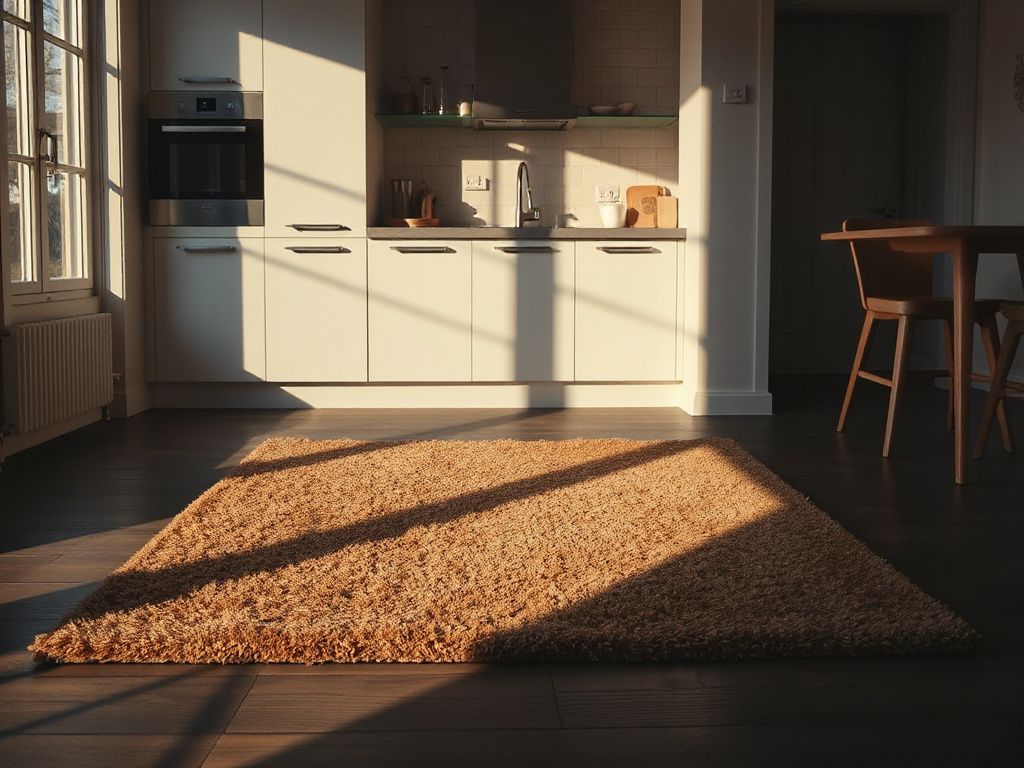
Direct sunlight bleaches the color out of almost any floor covering, but tan shows it differently than darker shades. Instead of looking faded, a sun-exposed tan rug often develops a washed-out, chalky appearance, especially along the edge nearest a large window. UV light breaks down both natural and synthetic dye molecules, and a tan wool rug left in direct southern sun can lose noticeable color within six months. The fix is not a special spray; it is behavior. Rotate the rug 180 degrees every three to four months so the fading evens out. Use sheer curtains or UV-blocking window film in rooms where the tan rug sits in full sun for more than four hours a day. For sliding glass doors, consider a tan rug with a higher knot count or denser pile — denser rugs have more fiber surface area per square inch, so the sun has to bleach more material before the color shift becomes obvious.
If your tan rug already shows uneven fading, there is no product that restores the original color on natural fibers. Synthetic tan rugs can sometimes be re-dyed, but the result often looks patchy and the process costs nearly as much as a new rug. For a quick cosmetic fix, place a piece of furniture or a larger accent rug over the faded edge to hide it while you save for a replacement.
Shading, Pile Reversal, and Vacuum Marks
That dark and light patchiness you see on some tan rugs is called shading or pile reversal. It happens when the fibers are pushed in different directions by foot traffic and vacuuming, so light reflects off the pile at different angles. A tan rug with a cut pile shows shading more than a loop pile or flatweave. This is not dirt, and more vacuuming will not fix it. In fact, aggressive vacuuming can make it worse. Grooming with a soft brush in one direction can temporarily even out the reflection, but permanent pile reversal is considered a characteristic of the rug, not a flaw. If the patchy appearance bothers you on a tan rug, choose a loop pile or a patterned flatweave next time — those constructions show almost no shading at all.
Furniture legs create pile crush on any tan rug, especially under heavy sofas and beds. The crushed fibers look darker because they are pressed flat and reflect less light. To minimize this, move the furniture an inch or two every month, or place furniture coasters or felt pads under the legs. A tan rug pad with a dense felt layer helps distribute the weight of furniture legs, which reduces permanent pile crush in the areas that get the most weight. Steaming the crushed area with a handheld steamer and brushing the fibers upright can sometimes restore the pile, but results are temporary on wool and usually permanent on polypropylene.
Using a Rug Pad — Non-Negotiable
A rug pad under a tan area rug on hardwood floors serves three jobs: it prevents sliding, it protects the floor from the rug’s abrasive backing, and it extends the rug’s life by absorbing impact. Without a pad, a tan rug on a smooth floor will creep every time someone walks across it, and the constant micro-movement grinds the fibers against the wood. The best pad for a tan rug on hardwood is one made of felt with a natural rubber backing. The felt cushions; the rubber grips. Avoid pads made entirely of PVC or vinyl, as they can stain both the floor and the back of the rug over time. For a tan rug over wall-to-wall carpet, use a thin felt pad or a non-slip mesh designed for carpet-on-carpet use. A rug pad with a thickness between 0.25 and 0.5 inches is adequate for most tan area rugs; thicker pads make the edges obvious and create a tripping hazard.
Can You Layer a Tan Rug on Wall-to-Wall Carpet?
Yes, and it works better than most people expect. A tan area rug over neutral carpet adds texture and defines a seating area without adding too much pattern. The main issues are edge visibility and stability. The rug’s edges will roll slightly against the plush carpet, so choose a tan rug with a bound or serged edge rather than a raw fringe. A low-profile non-slip pad designed for carpet-on-carpet installation keeps the tan rug from shifting. One caution: the tan rug’s color may appear darker over dark carpet and lighter over light carpet, so test a sample on the actual carpet before buying. The reflection of the carpet’s color through the tan rug’s thin areas can shift the whole look.
Frequently Asked Questions
How do I keep a tan area rug from showing every speck of dirt?
Choose a tan rug with a low-contrast pattern or a mottled, variegated design rather than a flat solid color. Vacuum twice a week in high-traffic zones, and place a mat outside entry doors to catch grit before it reaches the tan rug. For solid tan rugs, a quick pass with a carpet rake between vacuuming sessions lifts the pile and hides the flat, dirty look of compressed fibers. Polypropylene tan rugs are the easiest to keep clean because dirt sits on the surface rather than working into the fiber.
What materials are best for a tan rug in a high-traffic living room?
For a living room that sees daily foot traffic, pets, and spills, a tan rug made of polypropylene or solution-dyed nylon is the best balance of stain resistance and durability. These fibers are non-porous, so liquids bead up and can be blotted away without leaving a permanent mark. Wool looks beautiful in tan but requires immediate attention to spills and costs more to clean professionally. Jute and sisal are the worst choices for a high-traffic tan rug because moisture and abrasion break down the plant fibers quickly.
Why does my tan rug look darker in some spots and lighter in others?
That patchy appearance is usually pile shading or pile reversal, not dirt. When fibers are pressed in different directions by foot traffic and vacuuming, they reflect light unevenly, creating dark and light patches on the tan surface. This is normal for cut-pile rugs and cannot be permanently removed by cleaning. Choosing a tan rug with a loop pile or flatweave construction eliminates most shading because the fibers all lie at the same angle and reflect light uniformly.
How do I remove coffee or red wine stains from a tan wool rug?
Act immediately. Blot the liquid with a white cloth; never rub. For coffee, use a mixture of one teaspoon clear dish soap and two cups cold water, applied to the cloth and blotted from the outside edge inward. For red wine, blot with club soda first to lift the liquid, then blot dry. Do not saturate wool, and keep the area elevated or use a fan to dry it quickly. If the stain persists, call a professional cleaner within 48 hours — once the stain bonds with the wool fiber, it becomes much harder to remove.
