

You finally found the piece—a family heirloom, an estate sale score, or a flea market gamble—and now you’re staring at an antique wool blanket, afraid to do anything with it. One wrong wash and that century-old textile becomes a felted lump. That frustration is real, and I’ve felt it in my own hallway when testing vintage rugs next to modern ones. The difference is that a damaged wool blanket can’t be re-ordered from a catalog.
When I look at an antique wool blanket, I first check the selvedge and hems to see if it’s mill-made or artisan-made. That instantly tells me whether I’m dealing with a commercial product like a Pendleton or a possibly unique weaver’s piece. Then I gently flex the fabric in a bright light to expose any moth trails or weak spots that might be invisible at first glance. Most beginners just sniff for odor, but the structural integrity is what really matters for preservation. A rotten blanket can be unsalvageable even if it smells fine.
Key Takeaways
- Never machine-wash an antique wool blanket; even one agitation cycle can felt and shrink the fibers irreversibly.
- Check the selvedge, hems, and weave structure first—those details separate mill-made blankets like Pendleton from one-of-a-kind artisan weaves.
- Mothballs are hazardous; cedar blocks or freezing cycles are safer deterrents for stored antique wool.
- Some 19th-century green dyes contain arsenic, so handle very old blankets with care and wash your hands afterward.
Beginner Skill Level: Identifying What You Actually Own
Before you clean, display, or store an antique wool blanket, you need to know what fibers and construction you are dealing with. I treat this step the way I treat inspecting a vintage hall runner—you can’t decide on a pad or cleaning method until you know if the backing is jute or cotton.
How to Tell If Your Old Blanket Is Pure Wool or a Blend
The fastest visual test is the selvedge. Machine-woven mill blankets from Pendleton Woolen Mills or Hudson’s Bay Company have clean, reinforced edges that run parallel to the weave. Hand-woven Navajo blankets often show a double selvedge cord along each side, created by the weaver’s technique rather than a loom’s finishing process. If the edge is simply cut and hemmed, you might be looking at a piece cut from a larger bolt—common for Beacon Manufacturing blankets of the 1930s and 1940s.
A burn test is definitive but destructive, so skip it. Instead, rub a small hidden area between your fingers. Wool feels warm and slightly grip-py, even when cold. Cotton blends feel cool and smooth. Synthetic blends often pill into tiny balls along the surface. The Woolmark certification system exists for modern textiles, but for antiques you won’t find that label—you have to rely on tactile and structural clues.
Mill-Made vs. Artisan-Made: Pendleton, Hudson’s Bay, and Navajo Weaves
The distinction matters because a commercial blanket from Pendleton Woolen Mills or Faribault Woolen Mill has known production dates and standard patterns, which makes it easier to research collector value. A hand-woven Navajo piece—especially a Two Grey Hills style with its fine geometric bands—carries cultural significance as well as potential appraisal value. Hudson’s Bay Company point blankets have a distinct system of short black lines woven into the corner, originally indicating the number of beaver pelts the blanket traded for. That’s a classic trade blanket, not a point blanket for everyday use.
One self-contained fact worth quoting: A Hudson’s Bay point blanket uses a series of short indigo lines woven into one corner, and each line historically represented one made beaver pelt in the fur trade. That marking system dates back to the late 1700s and remains recognizable today.
What Is a ‘Point Blanket’ vs. a ‘Trade Blanket’?
A point blanket is a specific commercial product with the point markings described above. A trade blanket is a broader category—any wool blanket produced for exchange with Native American or First Nations communities, often in bright colors like red or green. U.S. Army surplus blankets are another common find: they are usually olive drab, tightly woven, and have no decorative points. Their value is lower but they are still excellent wool sources for utilitarian use.
Intermediate Skill Level: Assessing Condition and Fragility
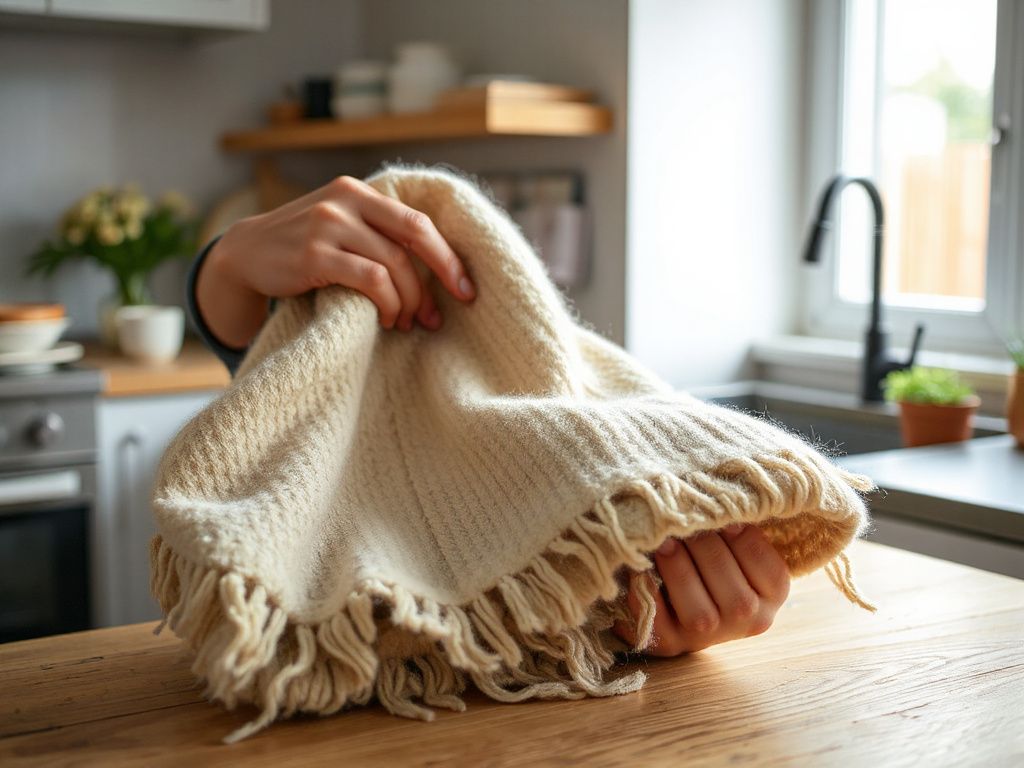
This is where my rug-testing habits kick in. I flex every corner of a hallway rug before I lay it down, because a hidden tear along the binding means a tripping hazard. For an antique wool blanket, hidden tears mean the piece may simply fall apart the first time you drape it over a chair.
Signs of Rotted or Overly Fragile Wool
Gently press the blanket between your palms and release. Healthy wool springs back slowly. Rotted wool crunches, stays compressed, or leaves a dusty residue. Hold a section up and tug very lightly—about the force of closing a paperback book. If threads separate with a soft rip, the wool is too far gone for anything but museum-style flat storage.
Look for moth trails: irregular, wandering lines where larvae have eaten through the pile. Small round holes are also moth damage. A few holes can be stabilized, but if the trails cross an area larger than your hand, the structural integrity is compromised. The Smithsonian Museum Conservation Institute notes that wool-eating insects prefer dark, undisturbed areas—exactly where you would store a blanket without airing it.
Are Moth Holes Repairable? When to Patch vs. Re-weave
Small holes under one inch in diameter can often be stabilized with a sheer backing fabric stitched around the edges. A professional textile conservator can perform re-weaving, which is the only method that restores the original surface. For an everyday-use blanket, a patch of matching wool felt sewn with a fine needle is acceptable. For a valuable Navajo weaving, never patch it yourself—the fibers may be too brittle and the cultural integrity matters.
How to Identify Age and Origin Without a Label
If the blanket’s label is gone, look at the weave density. A blanket with more than 20 yarns per inch in both directions is almost certainly machine-made after 1900. Hand-woven Navajo rugs and blankets often have 30 to 50 wefts per inch, which required thousands of hours of labor. The presence of synthetic dyes—bright, uniform colors—points to post-1880 production. Earlier natural dyes like indigo, madder, and cochineal fade unevenly and often bleed into adjacent fibers over time.
Mackinaw wool refers to a heavy, dense fabric originally produced for logging and outdoor work, and many antique Mackinaw blankets are thick enough to serve as floor protectors. That’s where my area rug knowledge crosses over: if the blanket is a Mackinaw in good condition, it can genuinely handle being laid on a hallway floor as a temporary runner. Most antique wool blankets cannot survive that kind of abrasion.
Advanced Skill Level: Safe Cleaning, Odor Removal, and Pest Prevention
Now we get to the part that scares everyone: cleaning. The rule is simple: never machine-wash an antique wool blanket. Not on gentle, not in a front-loader, not in a mesh bag. Agitation causes wool fibers to interlock and shrink—a process called felting—and it cannot be reversed.
How to Get Musty Smell Out Without Washing
Air circulation is your first tool. Lay the blanket flat on a clean cotton sheet in a shaded, breezy spot for 48 hours. Rotate it once. If the smell persists, place the blanket in a large plastic bin with an open box of baking soda, but do not let the powder touch the wool. Seal the bin for three days, then air again. For severe mustiness, consult a professional textile cleaner who uses a low-moisture dry-cleaning method specifically for wool.
The musty smell in old wool often comes from mold spores that are dormant but not dead. Freezing will not kill all mold species, but it will kill adult clothes moths and larvae. Freeze the blanket in a sealed bag at 0°F for at least 72 hours, then let it return to room temperature before opening the bag to prevent condensation.
Mothballs Are Hazardous—Use Cedar or Freezing Instead
Traditional mothballs contain naphthalene or paradichlorobenzene, both of which are classified as pesticides. The EPA warns that mothballs are not safe for use around children, pets, or in living spaces, and the residues can persist on fabric for years. Instead, use cedar blocks or shavings placed in a separate cloth pouch near—not touching—the blanket. Cedar’s aromatic oils deter moths but do not kill existing larvae. For active infestations, freezing followed by careful vacuuming of the storage area is the non-toxic fix.
If you want a heavier blanket for daily use that you can machine-wash without worry, a heavy wool blanket made in the last decade is a better choice than risking a fragile antique in the washing machine.
Storing an Antique Wool Blanket to Prevent Moth and Light Damage
Fold the blanket loosely along its natural crease lines, but place acid-free tissue paper inside each fold to prevent sharp creases. Store it flat in an archival-quality box, or rolled around a cardboard tube covered with acid-free paper. Never hang an antique wool blanket—gravity will stretch the weave and create permanent distortion. The storage area should be dark, cool, and dry, with a relative humidity between 40% and 50%. Wool absorbs moisture from the air, so a damp basement will destroy a blanket faster than moths ever could.
The National Park Service recommends inspecting stored textiles at least twice a year, ideally when seasons change, because moth activity peaks in spring and early summer. Open the storage container, air the blanket for an hour in indirect light, and check the folds for any new holes or frass.
Display, Use, and Value: Can You Actually Use an Antique Wool Blanket?
This is the question I get most often, and my answer depends on the blanket’s condition and your tolerance for risk. A Hudson’s Bay point blanket in excellent condition from the 1940s can handle light use as a decorative throw on the arm of a sofa. A Navajo weaving with brittle warps should be framed or hung on a wall, never draped where a pet could scratch it.
Using an Antique Wool Blanket as a Throw or Rug
If you decide to use one as a throw, place a smooth cotton or linen base fabric between the blanket and the upholstery to reduce friction. Rotate the blanket every month so wear is distributed. Never use it on a bed where body oils and friction from sheets will abrade the surface night after night. My hallway testing taught me that even a modern wool rug loses pile height after six months of daily foot traffic. An antique blanket has no pad, no binding, and no twist retention—so floor use is out of the question for all but the heaviest Mackinaw wool pieces.
If you want the look of a plaid wool throw but need something that can survive a family room, a plaid sherpa blanket gives you the visual warmth without the fragility. For a chunky, hand-knit aesthetic that you can toss in the wash, an arm knit blanket works well as a modern alternative.
What Affects the Value of an Antique Wool Blanket?
Condition is everything. A Pendleton blanket with a moth hole the size of a dime loses more than half its collector value compared to an identical intact piece. Rarity matters next: limited production runs, unique colorways, or documented provenance to a specific family or event increase value. Native American weavings carry additional value if the weaver is known or the pattern is a recognized regional style. Appraisals require a professional textile appraiser who specializes in the specific type—general antique dealers often undervalue or overvalue wool blankets because they don’t inspect the selvedge structure.
Some historic green dyes contain arsenic, particularly those used before the 1860s. Scheele’s green and Paris green were popular dye pigments made from copper arsenite. If your blanket has a bright, almost glowing green and you suspect it dates before 1900, do not handle it without gloves, do not let it touch food surfaces, and wash your hands after any contact. The arsenic is bound within the fibers, but old fibers shed.
One self-contained factual sentence: An antique wool blanket with a known maker label from Pendleton or Hudson’s Bay often has a collector value that exceeds its practical usefulness, especially if the label is intact and the pattern is a rare colorway.
Caring for Hand-Woven Navajo Wool vs. Mill-Made Blankets
The two types require different handling. Hand-woven Navajo textiles often use handspun yarns with natural lanolin still present, which resists dirt but attracts insects. Mill-made blankets from the early 20th century were often treated with Eulan, a mothproofing agent introduced in the 1920s, so they may be more pest-resistant but less tolerant of moisture because the chemical can break down into acidic compounds over time. Never wash a hand-woven textile, even by hand, because the dyes may bleed and the warp tension can shift permanently. For a mill-made blanket that is structurally sound but dirty, a professional wet-cleaning by a textile conservator is the only safe option.
Frequently Asked Questions
Can I wash an antique wool blanket in a washing machine on a gentle cycle?
No. Even a front-loader’s gentle cycle creates enough agitation to felt wool fibers and shrink the blanket permanently. The only safe washing method is a professional textile conservator’s wet-cleaning process, which uses no agitation and controlled temperature. If the blanket is simply dusty, airing and careful vacuuming through a screen are safer.
How do I get a musty smell out of an antique wool blanket without damaging it?
Start with 48 hours of flat airing in shade. If the smell persists, seal the blanket in a bin with open baking soda for three days, then air again. For deep odors, freeze the blanket at 0°F for 72 hours to kill active insects, then consult a professional. Never use fabric sprays or febreeze-type products, as the chemicals can bond with wool’s protein fibers.
Are moth holes in my antique wool blanket repairable, or should I just leave them?
Small holes under one inch can be stabilized with a matching wool patch and a fine zigzag stitch. Larger holes or multiple trails that cross each other require re-weaving by a professional textile conservator. Leaving holes unrepaired allows them to spread because the surrounding fibers are already weakened. For a valuable Navajo weaving, never attempt repairs yourself.
What is the difference between a point blanket and a trade blanket?
A point blanket, like those from Hudson’s Bay Company, has short black lines woven into one corner that originally indicated the number of beaver pelts the blanket traded for. A trade blanket is any wool blanket made for exchange with Native communities, often in bright solid colors. Point blankets are a subset of trade blankets, but not all trade blankets have point markings.
Can I use my antique wool blanket as a throw on my couch, or should I preserve it?
A structurally sound mill-made blanket from the 1940s or later can handle light occasional use as a throw. Place a smooth fabric underneath to reduce friction, rotate it monthly, and never use it on a bed. Hand-woven or pre-1920 blankets should be preserved flat or displayed on a wall, not used daily. If the blanket has any brittle areas or tears when you flex it, it is too fragile for regular use.
