

You bought a tall square planter because it looked sharp in the corner of the patio, and then spent a full season fighting top-heavy plants, soggy soil at the bottom, and a wobble every time the wind picked up. The shape promised structure, but the reality demanded a different set of rules than your standard round pot. A tall square planter is not simply a short one scaled up, and ignoring that is the fastest way to kill a healthy tree or send a heavy container through a deck railing.
I learned the hard way when I moved a 30-inch-tall square planter onto a windy balcony. The surface of the soil felt bone dry every afternoon, so I kept watering. Two weeks later, the roots were rotting, and the whole thing nearly tipped on a gusty Tuesday because the centre of gravity sat too high. The problem had nothing to do with the plant and everything to do with the container’s geometry.
The increased height changes water dynamics because gravity pulls moisture deeper while the surface dries first. You cannot judge watering by touching the top inch; you have to check weight or use a moisture meter pushed to the bottom. Stability is a function of footprint versus height: a planter that is taller than it is wide needs ballast or anchoring, especially in exposed spots. Adding gravel to the bottom sounds like a fix, but it reduces the effective root zone and creates a perched water table; a sturdy base and a lower centre of gravity do the real work.
Key Takeaways
- Tall square planters hold far more soil than they appear to, which means overwatering is the most common failure. Water collects at the bottom, not the top, so judge moisture by weight or a deep probe.
- Filled with wet soil, a tall square planter can weigh well over 200 pounds. Verify balcony and deck load limits before you place one, and never assume an empty pot’s heft reflects its full state.
- Choose materials and dimensions for the specific plant, not just the look. Deep-rooted trees need at least 18 to 24 inches of soil depth, while shrubs can handle 12 to 16 inches.
What Makes a Tall Square Planter Different
A tall square planter is a container with a square footprint and a height that typically equals or exceeds its width. The square base gives it four clean corners that align with walls, railings, and paving lines, which is why stylists treat them like punctuation: they halt the eye and mark a threshold. The height, usually 18 to 36 inches, raises the crown of the plant to waist or chest level, turning a simple shrub into an architectural feature.
But that same height creates a soil column far deeper than what most nursery pots provide. A standard 12-inch-round pot holds roughly 3 gallons of mix. A 20-inch-square by 30-inch-tall planter holds closer to 50 gallons. That volume dries slowly at the bottom, so the plant’s roots sit in moisture for days after the surface looks parched. Overwatering is not just possible; it is the default when you treat a tall planter like a short one.
The square shape also changes how the planter interacts with wind and heat. Four flat sides catch wind from any direction equally, unlike a cylinder that deflects it. A square footprint of 16 by 16 inches provides a stable base only if the height stays under roughly 24 inches. Beyond that, the planter becomes top-heavy the moment you add a leafy canopy. This is why square nursery pots are ideal for the early growth stage, but a permanent tall planter needs a different approach to ballast and anchoring.
Material Choices That Actually Work
The material of a tall square planter dictates its weight, insulation, and lifespan. Here are the realistic options:
- Western Red Cedar: naturally rot-resistant and lightweight, but still needs a liner because even cedar breaks down over a decade of constant soil contact. Look for FSC-certified lumber if sustainability matters to you.
- Cor-ten steel (ASTM A588): forms a stable rust patina that protects the inner steel, and the weight provides inherent stability. The rust colour also warms up modern hardscapes.
- High-density polyethylene (HDPE): often sold as “wood-look” or recycled plastic planters. Heavy enough to resist tipping, impervious to rot, and lighter than concrete. A strong all-rounder for tall designs.
- Fiberglass-reinforced plastic (FRP): surprisingly strong for its weight, and available in high-gloss finishes that mimic ceramic or stone. Good choice for rooftop or balcony use where weight is a concern.
- Concrete or cast stone: the heaviest option, which helps stability but makes moving a nightmare. Concrete also cracks in freezing climates if moisture gets trapped inside the pores.
Each material changes the styling equation. A cedar planter softens a modern entry, while a Cor-ten steel box anchors an industrial loft terrace. The key is not to choose the prettiest finish first; choose the material that matches the location’s sun exposure, wind load, and winter temperatures.
Sizing for Trees, Shrubs, and Perennials
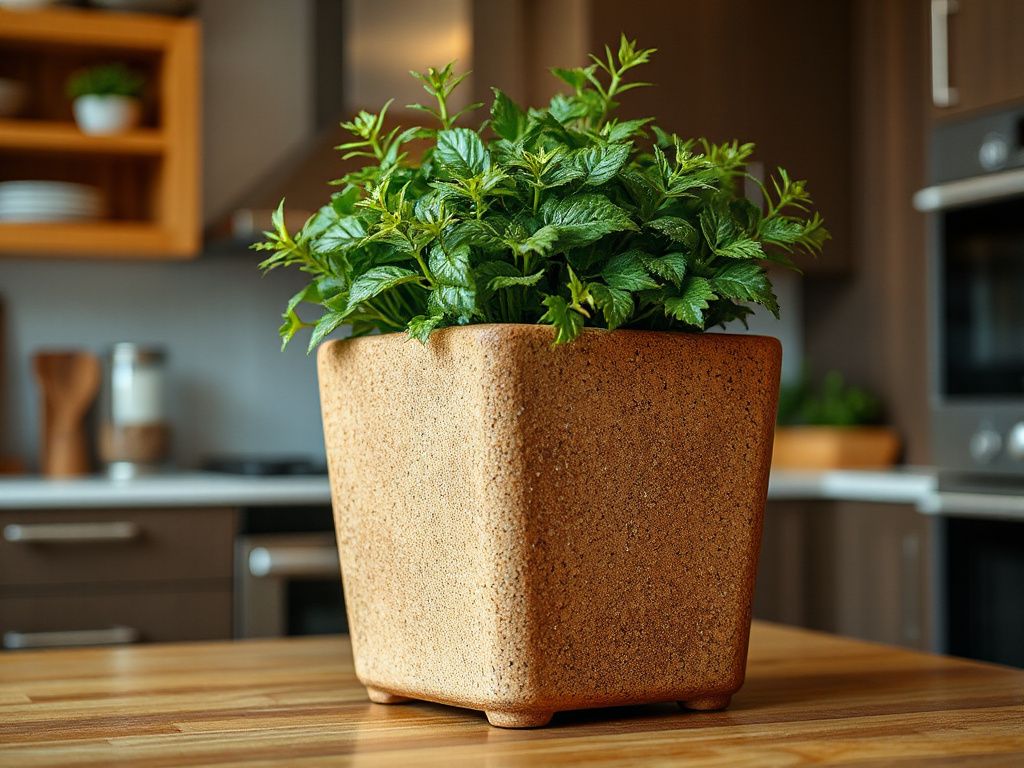
The most common question I get from readers sizing a tall square planter for a tree is: “How deep does it need to be?” The answer depends on the root system, not the canopy. Most small ornamental trees—Japanese maples, dwarf citrus, crape myrtles—need 18 to 24 inches of soil depth to establish a healthy taproot and lateral roots. Shrubs like hydrangeas or boxwoods can manage with 12 to 16 inches. Perennials and annuals need only 8 to 12 inches, but a tall planter with that shallow a soil fill wastes half its volume.
A tall square planter with a 20-inch interior depth supports root systems of most small trees, while a 12-inch depth suits shrubs and perennials. That sentence is worth quoting on its own because it gives a concrete starting point. If you plan to grow vegetables, treat them like perennials: most leafy greens and root crops need 12 inches, while tomatoes and peppers prefer 18 inches or more. For a deep planter, the soil mix matters more than the container itself—more on that in the next section.
Soil, Drainage, and the Overwatering Trap
The biggest mistake people make with tall planters is treating the soil surface as a reliable moisture gauge. In a shallow pot, the top inch drying out means the whole pot is drying. In a tall planter, the top two inches can be bone dry while the bottom third is still saturated. That mismatch leads to constant, low-level overwatering, which suffocates roots and invites rot.
The fix is to use a soil mix engineered for deep containers. Potting mixes labelled “outdoor container mix” or “raised bed mix” contain coarse particles like pine bark fines and perlite that prevent compaction. Avoid using straight garden soil; it packs down into a brick in a container and holds too much water. A 50/50 blend of quality potting mix and compost works well for most ornamental plantings. For trees and shrubs that prefer drier feet, add an extra 10 percent perlite or coarse sand.
Drainage holes are non-negotiable, but how many does a tall square planter need? The general guideline among nursery professionals is one 1-inch drainage hole for every 12 to 16 inches of planter footprint. So a 20-inch-square planter should have at least two to three holes spaced evenly across the bottom. If the planter sits directly on the ground, elevate it on pot feet or a spacer to let water escape freely. A drainage hole grid—a plastic or metal insert that sits over the holes—prevents soil from clogging them while still allowing flow.
For wooden tall planters, the question of lining comes up constantly. Untreated wood in contact with soil rots within two to three seasons, even rot-resistant species eventually break down. A waterproof liner—either a plastic planter insert or a sheet of landscape fabric (geotextile) stapled inside—extends the life of a cedar or fir planter by years. The liner must have drainage holes punched to match the planter’s bottom holes. If you skip the liner, you are buying a new planter every three years.
Should you use a self-watering insert? In a tall planter, yes. A self-watering insert (sub-irrigation) places a water reservoir at the base with a wicking mechanism that draws moisture upward as the soil dries. This prevents the bottom from staying swampy while keeping the upper roots hydrated. Just be aware that sub-irrigation works best with lightweight, peat-based mixes; heavy soil wicks poorly. And you still need to check the reservoir level weekly during hot weather.
Weight, Stability, and Where You Can Actually Put One
Filled with wet soil, a tall square planter can weigh hundreds of pounds. That statement is not an exaggeration. A 24-inch-square planter that stands 30 inches tall holds roughly 8 cubic feet of moist potting mix, which alone weighs about 400 pounds before you add the container and plant. If you live in an apartment or condo, check the balcony load-bearing capacity before you buy. Most residential balconies are rated for 50 to 100 pounds per square foot of uniform load; a 24-inch-square planter covers 4 square feet, so a 400-pound planter plus soil exceeds the rating on an older structure.
The same container that feels manageable empty becomes a two-person lift once saturated with water. That is why mobility matters. Mobile planters with casters let you roll a 300-pound tree out of the winter wind or into a sunnier corner. If your tall square planter does not have casters, place it on a sturdy dolly rated for at least 500 pounds. Never drag a heavy planter across a deck; the friction will gouge wood or tear composite surfaces.
Wind toppling is the other stability issue. The rule: a planter that is taller than it is wide needs either ballast or anchoring. Anchoring options include bolting the planter to the deck, strapping it to a railing, or filling the bottom 6 inches with dense material like bricks or pavers—but remember the gravel mistake from earlier. A better method is to choose a planter with a broad, flat base that extends at least 2 inches beyond the soil line on each side. That wide lip, often called a skirt, catches the wind and pushes the centre of gravity downward. For exposed balconies, a pair of planters pushed together against a wall is far more stable than one standing alone.
Winterizing a Tall Concrete Planter
In freezing climates, porous materials like concrete or terracotta can crack when the soil freezes and expands. Concrete absorbs water into its pores; when that water freezes, it expands by about 9 percent, splitting the container from the inside. The fix is to move the planter indoors or into a sheltered garage before the first hard freeze. If you cannot move it, wrap the planter in burlap or an insulating blanket, and cover the soil with a 4-inch layer of mulch. Do not let the soil stay waterlogged going into winter; dump any excess water and let the top few inches dry out before covering.
For wooden planters, winter is less of a cracking risk, but the freeze-thaw cycle can loosen joints. Tighten any screws or brackets in late autumn, and check the liner for tears. A tall square planter left outside all winter will survive just fine if the plant inside is hardy to two zones lower than your own, but the container itself needs that small bit of maintenance.
Styling a Tall Square Planter as Punctuation
This is where the fun begins. A tall square planter is not a background object; it is a visual full stop. The square form reads as intentional, even architectural, so you want to place it where it can punctuate a space rather than clutter it. My three favourite placements:
- Flanking an entry door. A pair of matching tall square planters on either side of a front door creates a visual frame that draws the eye upward and makes the entry feel deliberate. Use the same plant in both, like a pair of clipped boxwoods or small columnar evergreens.
- Corner of a balcony or patio. The tall planter fills the awkward corner and provides privacy screening without taking up the middle of the floor. For screening, choose an evergreen like emerald green arborvitae or a compact holly that keeps its leaves year-round.
- As a room divider indoors. Large indoor plants in square planters can define zones in an open-plan living space. A 30-inch-tall planter with a fiddle leaf fig or rubber tree anchors a seating area and gives the room a vertical focal point.
A pair of matching tall square planters flanking a front door creates a visual frame that draws the eye upward and makes the entry feel intentional. That sentence works on its own as a styling rule. For a more layered look, pair a tall square planter with a hanging planter box at eye level. The contrast between the grounded square base and the floating linear box adds rhythm to a patio wall or covered porch.
When choosing plants for a tall square planter, root depth matters more than surface area. That means tap-rooted trees and deep-rooted shrubs will thrive, while shallow-rooted groundcovers will struggle to reach water at the bottom. Evergreen screening plants like skip laurel, yew, or dwarf Alberta spruce are ideal because they grow upward, filling the vertical space without overhanging the planter’s edges too much. Avoid fast-growing vines like English ivy unless you plan to prune constantly; they will take over the square silhouette within a season.
Maintenance, Soil Replacement, and Long-Term Care
Do you need to replace the soil in a tall planter every year? No, but you do need to refresh the top layer and monitor nutrient depletion. In a deep container, the lower soil rarely gets disturbed, but it also loses structure over time as organic matter breaks down. I recommend replacing the top 6 to 8 inches of soil every two to three years and adding a slow-release granular fertiliser each spring. For heavy feeders like tomatoes or citrus, top-dress with compost monthly during the growing season.
If you notice water pooling on the surface more than a minute after watering, the soil has become hydrophobic or compacted. Try poking several deep holes with a dowel or soil probe, then water slowly with a diluted wetting agent. That simple fix restores water penetration without replacing the entire 50-gallon root mass.
For a tall planter on casters, lubricate the wheels once a year and check that the casters are locked before you leave it in place. A rolling planter on a slope can drift, and a 400-pound container moving on its own is a hazard. If you have a self-watering insert, flush the reservoir every spring to remove salt buildup from fertiliser and hard water.
Frequently Asked Questions
How do I keep my tall square planter from toppling over in wind?
Choose a planter whose base is at least as wide as its height is tall, and add a broad, flat skirt if possible. Fill the bottom 4 to 6 inches with dense material like pavers (not gravel), and place the planter against a wall or railing. For permanent installations, bolt the planter to the deck or use a heavy-duty strap. If the plant’s canopy catches a lot of wind, prune it back each spring to reduce sail area.
Should I put rocks or gravel at the bottom of a tall planter for drainage?
No. That practice creates a perched water table because water does not move easily from fine soil into coarse gravel. Instead, keep a uniform soil texture throughout, place a drainage hole grid or landscape fabric over the holes to prevent soil loss, and elevate the planter on pot feet. If you need to reduce weight, use an inert filler block in the bottom, not rocks.
How much does a tall square planter weigh when filled with wet soil?
A 24-inch-square by 30-inch-tall planter can weigh over 400 pounds when filled with moist potting mix and a mature plant. That figure includes roughly 8 cubic feet of soil at about 50 pounds per cubic foot. Always check your balcony or deck load rating before placing one, and use a hand truck or casters rated for at least 500 pounds for moving.
How deep should a tall square planter be for a tree?
Most small ornamental trees need 18 to 24 inches of soil depth to establish healthy roots. Shrubs require 12 to 16 inches, while perennials need only 8 to 12 inches. If your planter is taller than those depths, fill the bottom with an inert block rather than soil to avoid creating a waterlogged pit below the root zone. For a square pendant light guide and other geometric decor tips, see our full lighting guide.
