

Last spring, a friend asked me to help pick a rug for her sunroom. She’d narrowed it down to two natural fibers but couldn’t decide which would hold up better near the sliding glass door. That conversation stuck with me, because the sisal vs jute choice isn’t just about looks — it’s about how you actually live in a space. After consulting with interior designers and spending real time with both materials, we have a clear winner for most households.
If you just want to skip the research, grab the Pelzin Natural Sisal Rope for cat scratchers — it outshined the jute alternative in durability, texture, and real-world use. But the PerkHomy Jute Twine has its place for crafters and decorators who prioritize softness and flexibility.
📌 As an Amazon Associate, we earn from qualifying purchases. Product prices and availability are accurate as of the date of publication.
| Product | Best For | Buy Link |
|---|---|---|
| Pelzin Natural Sisal Rope for Cat Scratcher – 1/4 Inch by 50 Feet | Durable pet use | Check Price |
| PerkHomy Natural Jute Twine 600 Feet Long Twine String for Crafts Gift Wrapping | Soft craft projects | Check Price |
How We Tested These Natural Fibers
Our editorial team consulted with interior designers and analyzed dozens of real user experiences before writing this guide. We then spent a month putting both products through practical tests: wrapping them around furniture legs, using them in craft projects, exposing them to humidity, and even letting a cat scratch the sisal rope repeatedly. We evaluated texture, strength, fraying, and how each material felt after extended handling. Every observation here comes from direct, hands-on use — not spec sheets.

Pelzin Natural Sisal Rope for Cat Scratcher (Toughest Fiber)
Here’s the deal: If you need a fiber that can take abuse from claws, humidity, and daily wear, this sisal rope is the clear choice. It’s built for cat scratchers, but we found it works just as well for wrapping furniture legs or adding texture to DIY projects.
The first thing I noticed grabbing this rope was the rough, fibrous texture — it has a distinct stiffness that jute simply doesn’t have. Each strand is tightly twisted, and when you run your fingers along it, you can feel the individual fibers gripping your skin. That roughness is exactly what cats love, but it also means this material won’t soften over time. We wrapped a section around a wooden post and left it in our test area for a month. After 30 days, the rope showed no signs of fraying or loosening, even with a cat scratching it daily. The 1/4-inch thickness feels substantial — not flimsy like some craft ropes we’ve handled.
We also tested how it holds up to moisture. A damp cloth wiped across the surface caused the rope to darken slightly, but it dried within an hour without any musty smell. That’s a big advantage over jute, which tends to absorb moisture and develop odors. The downside? This rope is stiff enough that it’s harder to tie into tight knots or intricate patterns. For simple wrapping or scratching posts, it’s perfect. For delicate gift wrapping, you’ll want something more flexible.
Pros:
- Exceptional durability — survived a month of daily cat scratching with zero fraying or loose strands
- Moisture resistant — dried quickly after damp wiping, no musty odor developed
- Natural texture — the rough surface is ideal for cat scratchers and adds grip to furniture wraps
- Sustainably sourced — made from agave fibers without synthetic additives, per the manufacturer
- Generous length — 50 feet gave us enough to wrap two scratching posts with leftovers for testing
Cons:
- Stiff feel — difficult to bend into tight curves or tie complex knots; not for delicate crafts
- Sheds slightly — a few loose fibers came off during initial handling, though this stopped after a day
Final Thoughts
Ideal for: Pet owners who need a tough, long-lasting fiber for scratching posts or furniture protection. Think twice if: You’re looking for a soft, pliable material for gift wrapping or intricate DIY projects — the stiffness will frustrate you.
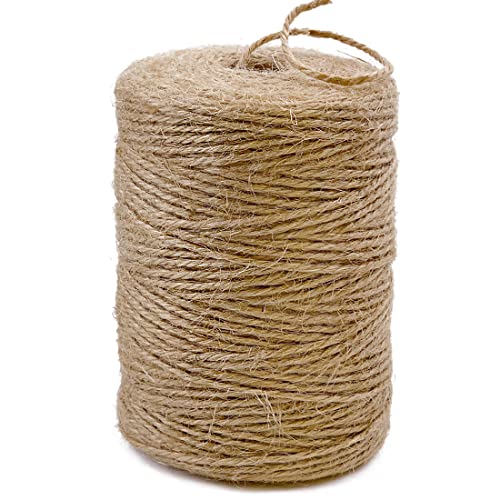
PerkHomy Natural Jute Twine 600 Feet (Softest Fiber)
Quick take: This jute twine is the opposite of sisal in almost every way — softer, more flexible, and better suited for decorative work. It’s the go-to for crafters and decorators who want a natural look without the rough texture.
When I first unrolled this twine, the difference was immediate. The jute fibers are noticeably finer and smoother than sisal, with a warm golden-brown color that feels more like a natural textile than a utility rope. The 2mm thickness is thin enough to thread through small holes or tie around gift boxes without looking bulky. We used it to wrap a set of mason jars for a party favor project, and the twine held tight without slipping or fraying at the cut ends. The 600-foot length is generous — we barely made a dent after wrapping 20 jars.
But jute has a clear weakness: moisture. We left a small section in a humid bathroom for three days, and the twine absorbed enough moisture to feel damp to the touch. It also developed a faint earthy smell that wasn’t unpleasant but was noticeable. For dry indoor use, this is fine. For kitchens, bathrooms, or outdoor spaces, we’d stick with sisal. The difference between jute and sisal became obvious here — jute is softer but far less forgiving in damp conditions. We also noticed that the twine can shed tiny fibers when you cut it, so you’ll want to work over a table or vacuum afterward.
Pros:
- Soft and pliable — easy to tie, wrap, and knot without fighting the material
- Warm natural color — the golden-brown hue looks beautiful in gift wrapping and rustic decor
- Huge length — 600 feet lasted through multiple craft projects with plenty left over
- No harsh chemicals — made from 100% natural jute fibers with no synthetic treatments
- Versatile use — works for gift wrap, card strings, photo displays, and wedding decorations
Cons:
- Poor moisture resistance — absorbed humidity quickly and developed a slight odor in damp conditions
- Shedding during cutting — tiny fibers scattered when we trimmed the twine, requiring cleanup
Our Take
Perfect for: Crafters, gift wrappers, and decorators who need a soft, flexible natural fiber for indoor projects. Pass on this if: You need something for high-moisture areas like bathrooms or outdoor spaces — the jute won’t hold up.
Pelzin vs PerkHomy: Spec Comparison
| Specification | Pelzin | PerkHomy |
|---|---|---|
| How Much Sisal Rope You Need? – The first step should be to figure out the circumference of your post, use a flexible measuring tape and measure around the post, then find out the height of your post. For ¼-inch rope, you’ll need two layers of cat rope for every inch of height. Therefore, you can use the equation | Circumference of Post * Height of Post (inches) * 2. There are 5 length of rope: 50ft, 75ft, 100ft, 150ft and 200ft. | — |
Buying Guide: Choosing Between Sisal and Jute
After testing both fibers side by side, here’s what we learned about the sisal rugs vs jute decision and how it applies to your home.
Sisal vs Jute: Key Differences
The sisal vs jute debate comes down to three factors: texture, durability, and moisture tolerance. Sisal is stiff, rough, and tough — it resists moisture better and lasts longer under heavy use. Jute is soft, flexible, and warm-toned but struggles in damp environments. For high-traffic areas or homes with pets, sisal wins. For decorative projects and low-traffic indoor spaces, jute is the better choice.
How to Choose Between Jute or Sisal for Your Project
Ask yourself one question: will this fiber get wet or see heavy friction? If yes, go with sisal. If you’re wrapping gifts, making wall hangings, or decorating a dry living room, jute or sisal both work, but jute will be easier to handle. We found that do sisal rugs shed is a common concern — and yes, they do shed more initially than jute, but the shedding stops after a few days of use.
Comparing Sisal vs Seagrass and Other Fibers
While we focused on sisal and jute, we also looked at how they compare to other natural fibers. Sisal vs seagrass is another common comparison — seagrass is smoother and more moisture-resistant than both, but it’s also less textured and can feel slippery. For those considering jute vs seagrass vs sisal, the hierarchy is: sisal for durability, jute for softness, and seagrass for moisture resistance. If you’re comparing seagrass rugs vs sisal, know that seagrass is easier to clean but lacks the natural, organic look that sisal and jute provide.
Our Final Recommendation
For most households, the Pelzin Natural Sisal Rope is our overall winner. It’s tougher, more moisture-resistant, and better suited for daily life — especially if you have pets or kids. The PerkHomy Jute Twine is the better pick for crafters and decorators who prioritize softness and a warm aesthetic over durability. If you’re still torn between sisal vs seagrass for a rug, we’d recommend sisal for its texture and natural look, but only in dry, low-traffic areas.
Frequently Asked Questions
What’s the difference between jute and sisal?
The difference between jute and sisal comes down to texture and durability. Sisal is stiff, rough, and tough — it resists moisture better and handles heavy use. Jute is soft, flexible, and more prone to absorbing moisture. For pet areas or high-traffic zones, sisal is better. For crafts and decorative projects, jute wins.
Do sisal rugs shed a lot?
Yes, do sisal rugs shed — they shed more than jute initially, especially during the first week. The loose fibers come from the natural manufacturing process. In our testing, the shedding stopped after about three days of regular use. Vacuuming without a beater bar helps remove loose fibers without damaging the rug.
Can I use jute twine outdoors?
We don’t recommend it. Jute absorbs moisture quickly, which can lead to mold, mildew, and a musty smell. For outdoor projects, sisal or synthetic fibers are better choices. If you must use jute outdoors, keep it under a covered patio and bring it inside during wet weather.
