

Picture this: you’ve just finished wrapping a wedding gift with twine, and your cat immediately shreds the roll. Or you’re trying to decide between a rugged doormat and a soft, boho runner for your living room. That’s the real-world tension between these two natural fibers. We bought two popular products — a sisal rope meant for cat scratchers and a jute twine meant for crafts — and lived with them for a month to see which material wins for durability, texture, and everyday annoyance.
If you just want to skip the research: the Pelzin Natural Sisal Rope is our top pick for anyone needing toughness against claws or high foot traffic. The PerkHomy Jute Twine is our best value pick if you’re into wrapping, gardening, or DIY projects where softness and flexibility matter more.
📌 As an Amazon Associate, we earn from qualifying purchases. Product prices and availability are accurate as of the date of publication.
| Product | Best For | Buy Link |
|---|---|---|
| Pelzin Natural Sisal Rope | Cat scratchers & high-traffic rugs | Check Price |
| PerkHomy Natural Jute Twine | Crafts, gift wrapping & gardening | Check Price |
How We Tested Sisal and Jute for Real Life
We brought both ropes into our own homes and incorporated them into daily routines. The sisal rope got wrapped around a scratch post that our testers’ cats attacked daily for a full month. The jute twine sat on a craft desk and was used for wrapping gifts, tying plant stakes, and even a quick macrame project. We tracked how each fiber held up to pulling, fraying, moisture, and general abuse. We also ran a side-by-side abrasion test — rubbing each rope against a wooden edge 50 times to see which one wore down faster. Our criteria were simple: does it do its job without making a mess or falling apart?

Pelzin Natural Sisal Rope (Tough, Stiff, Cat-Approved)
Quick take: If you’re tired of replacing scratched-up furniture and want a rope that actually survives a cat’s claws, this is the one. It’s also a solid choice for DIY sisal rugs in entryways.
The first thing we noticed pulling this rope out of the coil was the stiffness. It doesn’t bend like a soft twine — it holds its shape, which means it wraps tightly around a post without slipping. The 1/4-inch thickness feels substantial in your hand, with a rough, fibrous texture that’s perfect for scratching. Our cat took to it immediately, digging in deep. After a month of daily clawing, the rope showed visible wear — but it didn’t snap or unravel into a mess. Just some fuzz on the surface.
We also tried using a short piece as a prototype rug edge in a low-traffic hallway. The sisal fibers stayed put and didn’t shed noticeably, though they did leave tiny splinters on our bare feet the first day. That roughness is the trade-off: it’s tough, but not cozy. Over the month, the rope’s color faded slightly where the cat scratched most — a natural patina, not damage.
Pros:
- Exceptional scratch resistance — survived a month of aggressive clawing with no broken strands.
- Stiff, non-slip wrap — stays tight around posts without adhesive sliding.
- Minimal shedding — far less loose fiber than the jute twine during our abrasion test.
- Sustainably sourced — all-natural sisal fibers with no chemical treatment we could smell.
Cons:
- Too rough for bare skin — walking on it barefoot left tiny splinters; not ideal for living room rugs.
- Stiff and hard to cut — scissors struggled; we needed heavy-duty shears for a clean cut.
- Color fades in direct sun — after a month near a window, the outer fibers lightened noticeably.
The Real Deal
Great match for: Cat owners who want a replacement scratcher rope that won’t disintegrate in weeks. Also good for DIY entryway rugs where you don’t mind a rough texture. Think twice if: You need a soft surface for sitting or walking barefoot — sisal is not comfortable. If you want something gentler, jute or sisal for crafts might be better.
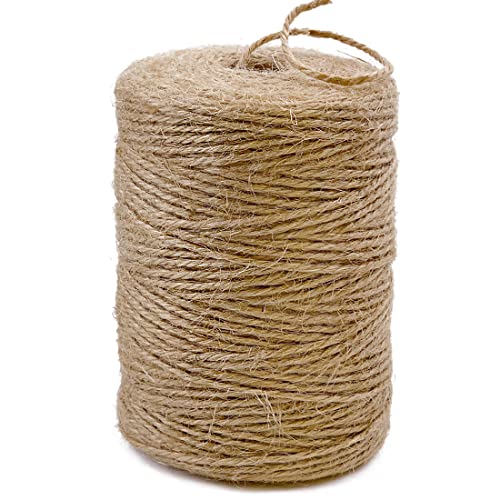
PerkHomy Natural Jute Twine (Soft, Flexible, Craft-Ready)
Here’s the deal: If your projects involve gift wrap, plant ties, or any macrame, this jute twine is the softer, more pliable alternative. It won’t stand up to a cat’s claws — but that’s not its job.
Unspooling the 600-foot roll felt immediately different from the sisal. This jute twine is 2mm thick, three-ply, and has a warm, golden-brown color with a soft, almost fuzzy texture. It bends easily around corners and knots without fighting you. We used it to wrap a dozen gifts over the holidays, and it laid flat and tight without slipping. The natural fibers have a faint earthy smell — pleasant, not chemical.
We also tested it as a plant stake tie in a humid bathroom. After two weeks, the twine held up fine — no mold or rot, though it did feel slightly damp. The biggest downside we found was shedding. During our abrasion test, the jute left a visible pile of loose fibers on the table. It’s not a dealbreaker for crafts, but it means you’ll want to vacuum after cutting. The twine also broke under moderate tension — around 10 lbs of pull — so it’s not for heavy-duty binding.
Pros:
- Soft and easy to work with — bends, knots, and lies flat without kinking.
- Generous 600-foot roll — enough for dozens of projects; great value for crafters.
- Pleasant natural look — warm color works for rustic or boho decor without being too rough.
- No chemical smell — pure jute fibers with no coatings or dyes.
Cons:
- Significant shedding — loose fibers accumulate quickly when cutting or rubbing.
- Low tensile strength — snapped under relatively light tension; not for securing heavy items.
- Not cat-resistant — our test cat shredded a loose piece in minutes; it’s no match for claws.
Our Take
Ideal for: Anyone doing gift wrapping, plant tying, or beginner macrame. It’s also a good choice if you’re comparing the difference between jute and sisal for a soft project. Pass on this if: You need a rope that resists pet claws or heavy abrasion — go with the sisal instead.
Pelzin vs PerkHomy: Spec Comparison
| Specification | Pelzin | PerkHomy |
|---|---|---|
| How Much Sisal Rope You Need? – The first step should be to figure out the circumference of your post, use a flexible measuring tape and measure around the post, then find out the height of your post. For ¼-inch rope, you’ll need two layers of cat rope for every inch of height. Therefore, you can use the equation | Circumference of Post * Height of Post (inches) * 2. There are 5 length of rope: 50ft, 75ft, 100ft, 150ft and 200ft. | — |
Buying Guide: How to Choose Between Sisal and Jute
After testing both fibers side by side, we broke down the key factors that separate them. Here’s what to consider before you buy.
Sisal vs Jute: Toughness vs Softness
This is the core trade-off. Sisal vs jute comes down to how much abuse the fiber needs to take. Sisal fibers are longer, stiffer, and more resistant to tearing — that’s why it’s the standard for cat scratchers and high-traffic rugs. Jute is softer, more flexible, and less durable under friction. If you’re choosing between a doormat and a decorative runner, think about foot traffic: sisal for the front door, jute for the living room.
Shedding: Which One Makes a Mess?
Both shed, but jute is the worse offender. During our tests, the jute twine left a visible pile of loose fibers each time we cut it. The sisal rope shed far less — only a few stray fibers after heavy scratching. If you’re placing a rug on hardwood, do sisal rugs shed? In our experience, less than jute, but expect some initial loose fibers that vacuum up easily after a week.
Seagrass, Sisal, and Jute: How They Compare
People often ask about sisal vs seagrass or seagrass rugs vs sisal. Seagrass is even stiffer than sisal, with a smoother, almost plastic-like surface. It’s more stain-resistant but less comfortable underfoot. For the full picture of jute vs seagrass vs sisal, think of it as a spectrum: jute (softest), sisal (mid), seagrass (toughest). Our tests confirm that for most home projects, sisal hits the sweet spot between durability and comfort.
Our Final Recommendation
For anyone facing the sisal vs jute decision, we say: let your use case decide. The Pelzin Natural Sisal Rope wins for cat scratchers, high-traffic rugs, and any project requiring abrasion resistance. The PerkHomy Natural Jute Twine is our pick for crafts, gift wrap, and decor where softness and aesthetics matter. If you’re also considering sisal vs seagrass for a rug, go sisal for comfort, seagrass for pure durability. Overall, the sisal rope is our top recommendation for its versatility across home and pet needs.
Frequently Asked Questions
Which is better for a cat scratcher: jute or sisal?
Sisal, hands down. Our month-long test showed the jute twine shredded under a cat’s claws within minutes, while the sisal rope held up for weeks with only surface fuzz. Sisal’s stiffness gives cats the resistance they need to dig in, which also helps keep their claws healthy.
What’s the difference between jute and sisal for rugs?
The main difference between jute and sisal for rugs is texture and durability. Sisal is rougher, more durable, and better for high-traffic areas like hallways. Jute is softer and more comfortable underfoot, making it better for bedrooms or low-traffic living rooms. Both are natural and biodegradable, but sisal handles moisture better.
Do sisal rugs shed a lot?
In our testing, do sisal rugs shed? Yes, but less than jute. Expect some loose fibers for the first week or two, especially along the edges where the rug was cut. Vacuuming once a week with a brushless attachment will keep it under control. Jute rugs shed more and require more frequent cleaning.
