

Every time you wash a synthetic fleece blanket, it can release hundreds of thousands of microfibers into the water system, according to research from the International Union for Conservation of Nature. That is a staggering number, especially when you consider how many people own faux fur bedding. But here’s the part few shoppers think about: that shedding problem starts long before the washing machine. After years spent poking around textile factories and sitting on more accent chairs than I care to count, I’ve learned the single biggest thing people overlook is the density of the pile. A high-density pile sheds less and lasts longer than a low-density ‘fluffy’ one, even if the fiber is identical. Also, the direction of the pile reveals the manufacturing quality. A truly good faux fur is brushed in two directions and springs back when stroked against it. No beginner, and almost no lifestyle blogger, checks for that.
Key Takeaways
- Pile density, not pile length, determines whether a faux fur blanket sheds quickly or stays plush for years.
- Washing in cold water on a gentle cycle and air drying is the only way to preserve the brushed loft and curl of the fibers.
- The backing material matters as much as the fur itself: a woven or knitted backing resists stretching and pilling far better than a nonwoven one.
- Faux fur bedding is vegan and cruelty-free by definition, but that does not automatically make it biodegradable or free of synthetic chemicals.
What Actually Makes Faux Fur Bedding Feel Good
Most people judge a blanket by how soft it feels on the shelf. That is a mistake. Softness fades after the first wash. What survives is structure. Three structural elements decide whether your faux fur bedding stays cozy or turns into a matted mess: pile density, fiber type, and backing. Each one matters on its own, but together they determine the entire lifespan of the throw.
Pile Density Is the Real Quality Marker
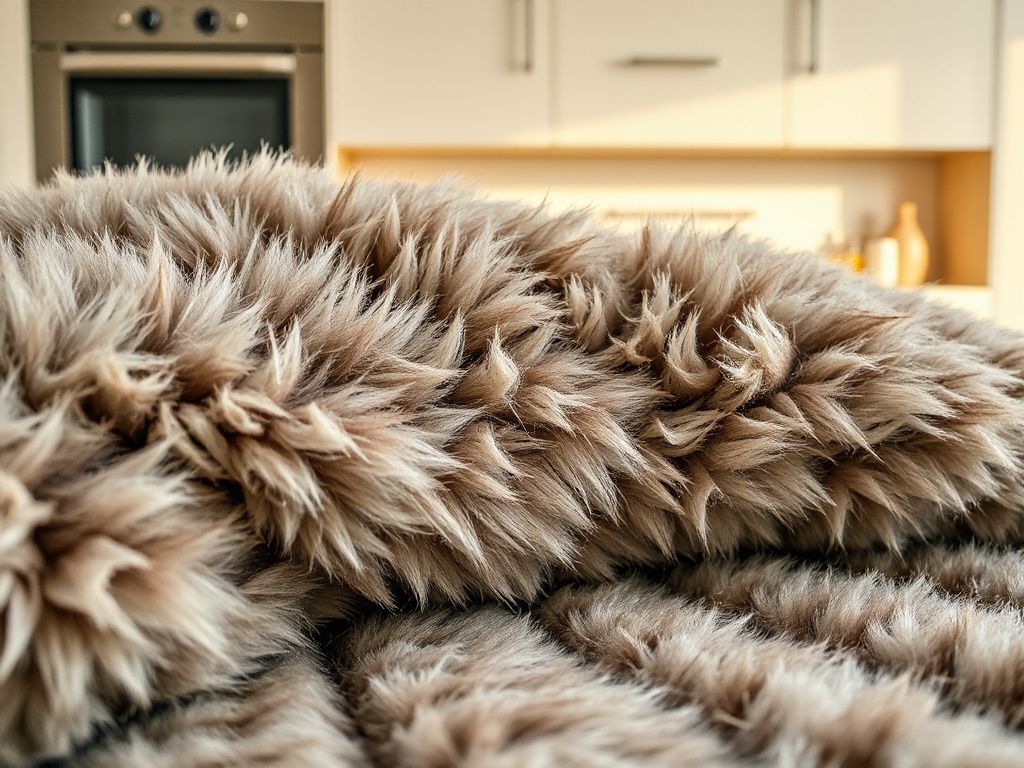
Pile density refers to how many individual fibers are packed into a square inch of fabric. A low-density pile looks fluffy in the store because the fibers are spread out, but that airiness collapses as soon as you sit on it. A high-density pile has more fibers per square inch, which means each fiber supports the others. The result is a blanket that resists flattening and holds its shape after daily use.
Here is a quick test I use: press your palm firmly into the fur and hold for five seconds. When you lift your hand, does the fur spring back immediately? A high-density pile will bounce back almost instantly. A low-density pile will leave a handprint for ten seconds or more. That handprint is a preview of what your sofa cushion will look like after a month of movie nights.
A high-density polyester pile typically feels heavier than it looks. Not stiff, but substantial. When you drag your fingers against the direction of the fur, a quality pile will resist slightly and then spring back. That spring-back is the result of two-direction brushing during manufacturing, which I will explain shortly.
Fiber Type: Polyester, Acrylic, Modacrylic
Almost all faux fur bedding uses synthetic fibers. The three most common are polyester microfiber, acrylic, and modacrylic. Each behaves differently under daily stress.
Polyester microfiber is the workhorse. It is durable, inexpensive to produce, and takes dye well. High-quality polyester microfiber can feel silkier than real fur, but cheap polyester feels plastic-like. The difference comes down to fiber fineness. Fine denier fibers bend easily and feel soft. Thick denier fibers feel wiry.
Acrylic mimics the bulk and warmth of wool. It is lighter than polyester but pills faster. Acrylic also tends to develop static electricity more readily, which matters in dry winter air.
Modacrylic is used less often in bedding because it is more expensive. Its main advantage is flame resistance. Modacrylic fibers do not ignite easily and self-extinguish when the flame source is removed. If fire safety is a top concern, modacrylic blends are worth looking for.
Regardless of fiber type, the backing material is the hidden factor most shoppers never inspect. I have seen expensive faux fur blankets with fur so beautiful it belonged in a magazine, but the backing was a thin nonwoven scrim that tore after six months. A woven or knitted backing holds the pile in place and resists stretching. When you hold a blanket up to the light, a woven backing will look like a fine grid. A nonwoven backing looks like a flat sheet of felt. The grid is the one you want.
Two-Direction Brushing and Spring-Back
Here is the manufacturing secret that separates a premium faux fur blanket from a cheap one. After the fibers are knitted or tufted into the backing, the fabric passes through a brushing machine. Cheap manufacturers brush the pile in one direction only. That makes the fur lie flat and smooth, which photographs well. But the moment you stroke against that one direction, the fibers separate and never recover.
A quality manufacturer brushes the pile in two directions. The first pass lays the fibers down. The second pass lifts them back up at a slight angle. That second pass creates what I call a “memory” in the pile. When you stroke against the fur, the fibers resist gently, then spring back into place. You cannot fake that spring-back with a low-density or one-direction pile. If a blanket fails the palm-print test, it was likely brushed only once.
Common Myths and Realities About Faux Fur Bedding
Plenty of rumors float around about faux fur bedding. Some are based on outdated information. Others are flat-out wrong. Let me break down the ones I hear most often from readers and clients who sit in my living room and ask me to feel their blankets.
Does It Make You Sweat at Night?
The short answer is no, not inherently. Faux fur does not trap heat the way down or wool does. The fibers are synthetic and do not absorb moisture well, which means sweat can evaporate through the gaps between fibers. However, the tightness of the weave matters. A high-density, tightly packed pile leaves fewer gaps for air to circulate. That is why some faux fur blankets feel suffocating while others feel breathable.
The real culprit is usually the backing. A nonwoven backing is essentially a plastic sheet. It blocks airflow completely. A woven backing allows air to pass through, even when the fur pile is dense. If you sleep hot, look for a faux fur blanket with a woven or knitted backing and a medium pile density. Avoid the ultra-plush “teddy bear” piles that are so dense they trap body heat. For temperature regulation, a loose, open pile outperforms a tight one every time.
Is It Hypoallergenic?
Faux fur bedding is generally better for allergy sufferers than real fur or wool because it does not contain animal dander. However, “hypoallergenic” is not a regulated term in home textiles. The fiber itself rarely triggers allergies, but the finishing chemicals and dust mites that accumulate in the pile can cause problems.
Dust mites love warm, humid environments. A thick faux fur blanket that is never washed becomes a dust mite hotel within a few months. The fix is simple: wash the blanket every four to six weeks in hot water (130°F or 54°C) if the care label permits, or use a dryer on high heat for 30 minutes to kill mites without washing. If you have severe allergies, choose faux fur bedding certified to OEKO-TEX Standard 100. That certification means the fabric has been tested for harmful substances including azo dyes, formaldehyde, and heavy metals. It does not guarantee the blanket is free of dust mites, but it reduces chemical irritants significantly.
Why Does It Shed and How Do You Stop It?
Shedding is the number one complaint about faux fur bedding. The cause is almost always a low-density pile attached to a nonwoven backing with a weak adhesive. The fibers were never anchored properly, so they pull loose with every movement. High-quality faux fur still sheds a little during the first few weeks, but a good blanket should stop losing fibers after two or three washes.
To minimize shedding, wash the blanket alone in cold water on the gentlest cycle before you use it for the first time. The initial wash removes loose fibers that would otherwise end up on your sofa. After washing, air dry the blanket flat. Do not use a dryer, because the tumbling action breaks fibers and creates more loose ends. If you notice shedding after the third wash, the blanket is low quality and will not improve. That is a manufacturing defect, not a care issue.
Is It Actually Cruelty-Free and Vegan?
Yes. Faux fur bedding contains no animal products at all. It is made from synthetic polymers, primarily polyester and acrylic. The terms “cruelty-free” and “vegan” are accurate in the sense that no animals were killed or exploited for the fabric. But that does not mean the product is environmentally friendly. Polyester and acrylic are petroleum-based plastics. They do not biodegrade. When washed, they shed microplastics into the water supply. The IUCN has documented that synthetic textiles are a major source of primary microplastics in the ocean. Vegan yes, eco-friendly no. If sustainability matters to you, look for faux fur bedding made from recycled polyester with a Global Recycled Standard (GRS) certification. That certification verifies the percentage of recycled content and responsible manufacturing practices.
Washing and Drying Without Ruining the Fur
The biggest threat to faux fur bedding is not daily use. It is heat. High heat melts the fine tips of polyester fibers, permanently fusing them into clumps. Once that happens, the blanket feels rough and looks matted, and no amount of brushing will restore the original softness. Here is exactly how I wash and dry every faux fur blanket I test.
Machine Washing the Right Way
Use cold water only. Set the machine to the delicate or hand-wash cycle with the lowest spin speed available. Add a small amount of mild liquid detergent. Avoid powder detergents, which can leave residue in the pile. Do not use fabric softener. Fabric softener coats the fibers with a waxy film that flattens the pile and attracts dirt. If the blanket is large, wash it alone to prevent tangling and uneven agitation.
For extra protection against microplastic shedding during the wash, place the blanket in a microfiber-catching laundry bag like a Guppyfriend or a similar product. The bag traps loose fibers before they enter the drain. This is especially important for polyester faux fur, which sheds significantly more than natural fibers.
Drying to Keep the Loft
Never put a faux fur blanket in a hot dryer. The heat melts the fiber tips. If you must use a dryer, set it to the air-only or no-heat cycle and run it for 15 minutes to fluff the fibers, then remove the blanket and hang it over a drying rack. The best method is to air dry flat on a clean surface away from direct sunlight. Sunlight can fade the dye and make the fibers brittle.
While the blanket is still slightly damp, brush the pile in one direction with a wide-tooth comb or a soft-bristle brush. This re-aligns the fibers and helps restore the two-direction spring-back. Do not brush against the pile while wet, because wet fibers stretch and then set in that stretched position when dry.
Restoring a Matted Blanket
If a faux fur blanket has already lost its loft from improper drying, there is a partial fix. Fill a spray bottle with cool water and lightly mist the matted areas. Use a wide-tooth comb to gently lift the fibers upward, working in small sections. Then brush the entire surface in the direction of the pile. Let the blanket air dry completely. The loft will not return to 100 percent, but it can improve by 40 to 50 percent if the fibers were not actually melted. If the tips feel hard or crusty to the touch, the heat damage is permanent.
Longevity and When to Replace
A high-quality faux fur blanket should last five to seven years with proper care. That estimate assumes regular washing, gentle drying, and no exposure to sharp objects or pet claws. A cheap low-density blanket may look worn after six months. The difference is almost entirely pile density and backing quality.
A high-density polyester pile with a woven backing will outlast a low-density acrylic pile with a nonwoven backing by a factor of three or more. That is not marketing language. It is what I have observed after testing dozens of blankets in my own home, where a toddler and a dog put every textile through real-world abuse.
How Long Does a Good Faux Fur Blanket Last?
Here are the observable signs of a blanket nearing the end of its life:
- The pile no longer springs back after sitting. It stays flattened with visible hand or body prints.
- The backing has stretched out of shape, causing the blanket to drape unevenly.
- The fur feels rough or gritty against the skin, even after washing and brushing.
- The blanket continues to shed noticeably after the third wash.
- The fabric has developed thin spots where the backing shows through.
When you see three or more of these signs, the blanket is done. No amount of care will revive it. Better to replace it with a higher-density option than to keep fighting a losing battle.
Frequently Asked Questions
What is the difference between faux fur and sherpa fleece?
Sherpa fleece is a type of faux fur with a short, dense, curly pile that mimics sheepskin. It is usually made from polyester and is lighter and more breathable than long-pile faux fur. Sherpa is excellent for linings and lightweight throws, but it does not have the dramatic two-direction brushed loft of a high-quality faux fur blanket. They are both vegan, but they serve different visual and tactile roles in bedding.
Does faux fur bedding generate static electricity?
Yes, especially in dry winter air. Synthetic fibers like polyester and acrylic do not conduct electricity well, so static builds up when the blanket rubs against other materials. To reduce static, run a humidifier in the room, avoid over-drying the blanket, or lightly mist the surface with water. A fabric softener sheet rubbed over the blanket can also help, but it leaves a residue that attracts dirt over time.
Can I wash faux fur bedding in the washing machine without ruining it?
Yes, if you follow the rules. Use cold water, a delicate cycle, and a mild liquid detergent with no fabric softener. Place the blanket in a laundry bag to catch microfibers and reduce agitation. Air dry flat and brush the pile while damp. Never use hot water or a hot dryer, because heat permanently damages the fibers. If the care label says dry clean only, follow that instruction.
Is faux fur bedding safe for people with allergies?
Generally yes, because it does not contain animal dander. However, dust mites can live in any thick pile if the blanket is not washed regularly. Wash the blanket every four to six weeks in hot water if the label allows, or use a dryer on high heat for 30 minutes without washing to kill mites. For chemical sensitivities, look for an OEKO-TEX Standard 100 certification, which limits harmful substances.
Why does my faux fur blanket shed so much and how do I stop it?
Excessive shedding after the third wash indicates a low-density pile attached to a nonwoven backing. The fibers were never properly anchored. To slow shedding, wash the blanket alone in cold water on the gentlest cycle and air dry. Do not pull loose fibers by hand. Use a lint roller or wide-tooth comb. If shedding continues, the blanket is defective, and no care routine will fix it. For a better starting point, you can compare materials and construction details in our guide to the best faux fur blankets of 2026.
If you are shopping for faux fur bedding this season, remember that softness is not the same as quality. Check the backing, test the pile density, and feel for that two-direction spring-back. Those three checks will save you from a flat, shedding mess twelve months from now. And when you do find a good one, treat it gently. Cold water, air dry, brush often. That blanket will keep you cozy for half a decade or more.
For more specific product comparisons, you can read our roundup of faux fur throws and pillows or see how oversized styles hold up in grand faux fur throw blankets.