

You finally pull out the oversized king size sherpa blanket you’ve been saving for movie night, wrap yourself up, and within two minutes there are tiny white fuzzies clinging to your leggings. The cloud-soft feeling you remembered is gone. Instead, the fabric feels almost waxy. Flat. And the shedding. Oh, the shedding. You didn’t buy a cheap knockoff—at least, you didn’t think you did. So what happened?
I’ve been writing about sherpa blankets long enough to know the letdown usually has nothing to do with how much you spent. It’s almost always down to a few small details that nobody spells out on the tag. When I talk about sherpa, I’m obsessed with the difference between genuine sherpa—a brushed polyester fleece with a distinct directional pile—and those cheaper imitations that use a flocked backing to fake the look. Pile height and fiber density tell me more about how a blanket will actually live on my couch than any brand name ever could. A truly plush, breathable king size sherpa blanket doesn’t just happen by accident. It gets that way because the right materials met the right care, and because someone ditched the fabric softener years ago.
Key Takeaways
- Sherpa is a synthetic polyester fleece, not real sheepskin—its warmth comes from trapped air in the pile, not from natural fiber.
- King size dimensions vary wildly across brands; always measure your bed or sofa and check actual inches (often 90×90 or 108×108) before buying.
- Cold water + no fabric softener is the single biggest rule for keeping that plush feel—liquid softeners coat each fiber and cause matting.
- Shedding is normal for the first few washes, but a blanket with higher fiber density and a true brushed pile will stop shedding much faster than a flocked one.
What a Sherpa Blanket Actually Is (and Why the Cheap Stuff Falls Apart)
Sherpa is polyester fleece that’s been brushed to create a pile that mimics sheepskin. The manufacturing process uses fine needles to pull tiny loops of fiber to the surface, then shears them to a uniform height. That’s what gives the fabric its fuzzy, nubby texture on one side while the reverse usually stays smooth. Real sheepskin breathes and regulates temperature in a way synthetic fleece doesn’t, but a well-made sherpa blanket gets surprisingly close because the air pockets inside that dense pile trap body heat without feeling heavy.
The difference between a blanket that holds up and one that falls apart after three washes almost always comes back to pile height and fiber density. Short, sparse pile (think 3mm or less) feels thin, sheds easily, and loses its loft fast. Taller pile—some between 7mm and 10mm—feels plusher, holds more air for warmth, and resists matting if you treat it right. A flocked backing, the kind used on some budget blankets to fake sherpa texture, is basically short fibers glued or heat-pressed to a base fabric. It looks fine out of the package, but that surface wears down fast and the shedding never really stops because the fibers were never integrated into the weave. You can spot it by rubbing the nap in the opposite direction; if you see flat patches or a shiny base layer, that’s flocked, not true brushed sherpa.
If you’ve ever wondered why one king size sherpa blanket stays ridiculously soft for years while another looks like a sad bath mat after a single winter, this is why. A high-quality polyester fleece like microfiber-based sherpa often meets OEKO-TEX Standard 100 certification, meaning it’s tested for harmful substances. Brands like Bedsure and Bare Home commonly hit that mark. I’m not suggesting you need to memorize textile certifications, but seeing that little tag gives you confidence nobody’s using sketchy adhesives that break down in the dryer.
There’s also a whole category that overlaps with mink sherpa blanket territory—a denser, shorter pile that feels almost velvety. Same polyester family, different tactile outcome. Both are warm. Neither is actual wool. The biggest thing to remember: sherpa’s magic is in the brush job, not in the origin of the fibers.
How a King Size Sherpa Blanket Changes the Room’s Whole Personality
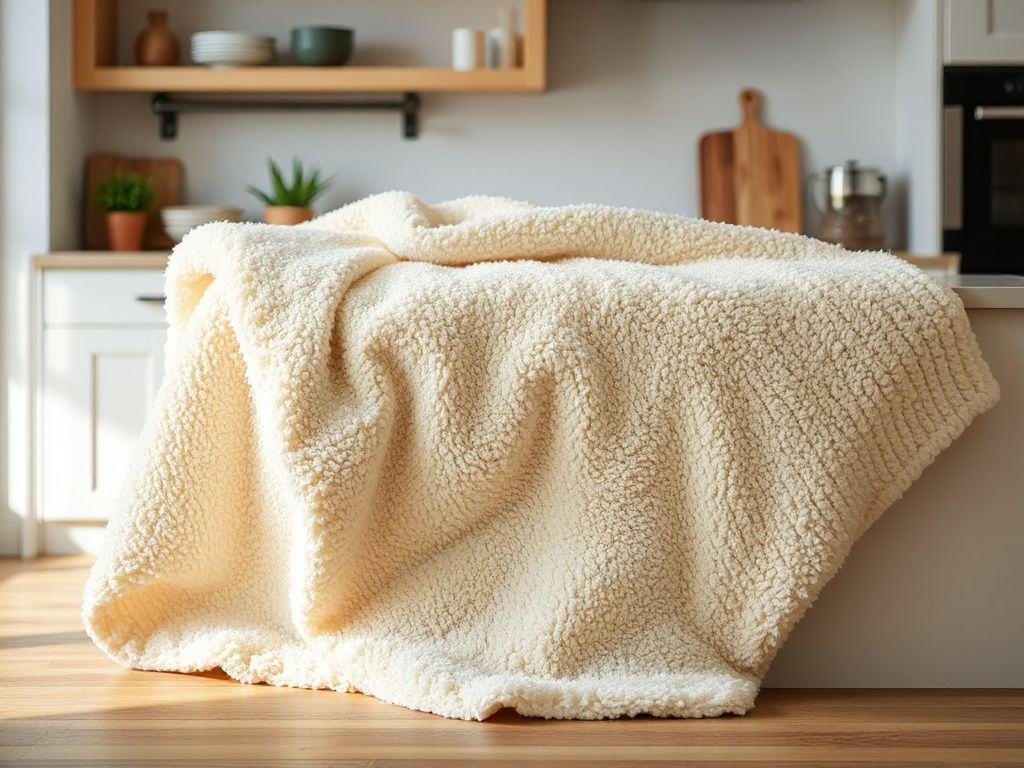
I see a lot of apartment dwellers treat a throw blanket like an afterthought, something you ball up at the end of the sofa and forget. But a properly sized king size sherpa draped across the bottom third of a bed or folded along the back of a deep sectional does a weirdly powerful thing—it grounds the entire seating area. The texture introduces softness against leather or woven upholstery, and because sherpa reflects light in a matte, diffused way, it makes the room feel calmer. No glossy sheen, just quiet warmth.
From a styling perspective, a king size sherpa blanket works almost like a neutral foundation. It layers under darker cushions, breaks up monochromatic gray sofas, and on a bed, it fills the visual gap between a flat duvet and the footboard. I’ve brought one into apartments that felt cold and echoey, and suddenly the bed looked pulled-together without any other changes. That’s where size actually matters. A standard throw (50×70 inches, maybe) looks skimpy on a king mattress. A 90×90 or 108×108-inch sherpa blanket, on the other hand, cascades enough to feel intentional. Before you click buy, grab a tape measure and check the exact width of your mattress. King beds are roughly 76 inches wide, so you want at least 90 inches across for that draped, hotel-room look.
If you want to add a little pattern into the mix without overwhelming a minimalist space, something like a plaid sherpa blanket can give you those classic cabin vibes while still offering the same soft texture. I tend to keep my larger bed blanket solid—cream, charcoal, camel—and let a smaller patterned throw add the accent. That way the king size sherpa blanket does the heavy lifting as a textural base and the patterned piece adds just a pop.
The Science of Softness and Warmth (Plus Why It Sheds at First)
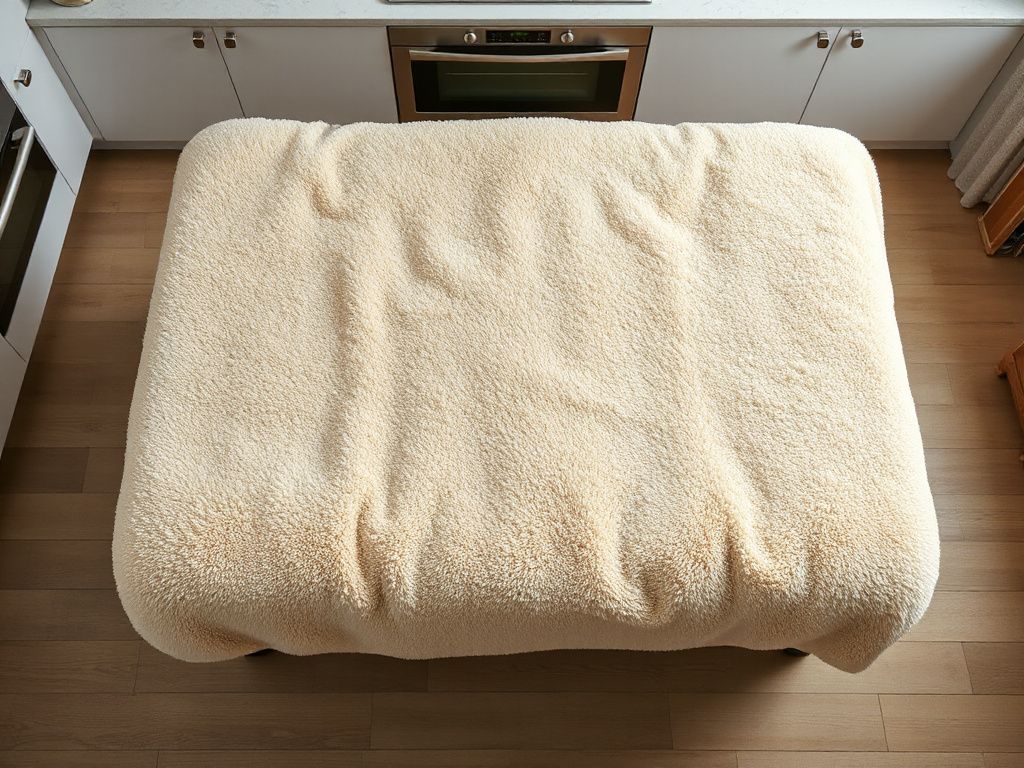
Sherpa fleece works by creating millions of tiny air pockets between the fibers. Your body heats those pockets, the pile traps them, and you stay warm without needing the blanket to be thick or heavy. That’s why a relatively lightweight king size sherpa blanket can feel surprisingly toasty even when the thermostat dips below 65°F. Polyester is hydrophobic, so it doesn’t absorb moisture the way cotton does. It wicks sweat away from your skin and dries fast, which is why you don’t wake up in a clammy mess the way you might under an acrylic throw. This also means it’s safe for allergy sufferers—there’s no lanolin, no wool proteins, and if you choose an OEKO-TEX certified option, you’ve eliminated a whole class of potential irritants.
But here’s the reality check: synthetic fleece can feel overly warm in midsummer unless the pile is on the shorter, less dense side. A king size sherpa blanket with a 7mm pile makes a perfect winter layer but might feel suffocating in July unless your AC is working overtime. A lighter microfiber blend with a 3-4mm pile breathes more readily and can transition between seasons. The trade-off is less loft and slightly less heat retention.
Shedding in the first few washes is frustrating but totally normal. Those loose surface fibers the brushing process created need somewhere to go. Real brushed sherpa sheds less overall than flocked versions because the fibers are actually part of the yarn structure. Still, you’ll see some fuzz in the lint trap. A lint roller or a quick pass with a fabric shaver after wash number two usually solves it. If the shedding doesn’t slow down by the fifth wash, you’re probably dealing with a flocked backing or a low-density pile that’s breaking down prematurely.
Static buildup is another thing nobody warns you about with polyester fleece. Dry winter air makes it worse. Running a humidifier in the bedroom or misting the blanket lightly with water before you crawl in helps discharge that crackly feeling. Tossing a couple of wool dryer balls into the dryer also cuts static without coating the fibers in the kind of waxy residue dryer sheets leave behind.
Washing a King Size Sherpa Blanket Without Turning It Into a Lumpy Mess
A king size sherpa blanket is big. Really big. Before you shove it into a standard top-loader, check the drum capacity. If the blanket is packed in tightly, the agitation won’t be even and you’ll end up with stretched, distorted areas. Front-loading washers without a center agitator are ideal. If you use a top-loader, fold the blanket loosely and see that it fills only about three-quarters of the drum to leave room for water and movement.
Water temperature: always cold. Warm or hot water can weaken polyester fibers and cause them to lose their crimp, which is what makes the pile stand up. Use a mild liquid detergent—powders sometimes don’t dissolve completely and can lodge in the nap. Skip any product labeled “2-in-1” or with built-in softeners. The cycle should be gentle or delicate, with a low spin speed to prevent excessive friction.
Drying is where most people go wrong. High heat is the enemy. It melts the tips of polyester fibers slightly, causing them to curl and matt together. Tumble dry on low or, even better, air fluff with no heat. Remove the blanket while it’s still slightly damp and let it finish drying flat over a drying rack or a clean surface. Hanging a wet king size sherpa blanket by one edge stretches it out of shape because of the weight of the water.
What to Do When Your Sherpa Blanket Feels Less Warm or Looks Pilled
You pull the king size sherpa blanket out of storage and suddenly it’s not as cozy as you remember. The pile looks clumped together in spots, and the whole thing feels thinner. This usually happens for two reasons: residual detergent or fabric softener buildup, or the pile got compressed during storage. A thorough wash in cold water with a cup of white vinegar in the rinse cycle—no detergent this time—can help strip that coating and restore some fluff. Don’t worry, the vinegar smell disappears completely once it dries.
Pilling, those tiny little balls of fuzz that form on the surface, is caused by friction. The sherpa side rubs against itself in the wash, against your sheets, or against your pajamas. You can’t entirely prevent it, but you can minimize it. Wash the blanket inside out, alone or with similar soft fabrics. If you notice pills forming, go over them gently with a fabric shaver or a sweater stone. Don’t pull them off with your fingers—you risk pulling the yarn out of the weave and creating a bald spot.
Why does the blanket feel less warm after washing sometimes? Because the pile has been flattened and the air pockets collapsed. If you used fabric softener or dried on high, the individual fibers lost their stand-up structure. To revive it, after a proper cold wash, toss the blanket into the dryer on air fluff with three or four wool dryer balls. They knock against the fabric, physically lifting the pile and separating any clumped fibers. Let it run for 20–30 minutes, check the softness, and repeat if needed. I’ve resurrected a pancake-flat sherpa this way more times than I can count.
Could a King Size Sherpa Blanket Replace Your Top Sheet?
Technically, yes—people do it. A king size sherpa blanket used as a top sheet on a cold winter night feels cozy and simplifies bed-making. But it’s not the same as a smooth cotton or linen sheet. Sherpa has a grippy texture that can catch on flannel pajamas, and it doesn’t slide against a duvet cover the way a flat sheet does. If you tend to toss and turn, you might wake up with the blanket bunched up underneath you. I’ve tried it, and I went back to a regular sheet with the sherpa as a mid-layer above that, topped by a light quilt. Best of both worlds: smooth cotton against skin, fuzzy warmth on top.
For people with sensitive skin or those who run hot, using a sherpa blanket directly against the body isn’t always the best call. Instead, layer it over a moisture-wicking flat sheet. That arrangement still gives you the visual warmth and the satisfying weight without any irritation. And if you’re leaning into bolder interior palettes, something like a red sherpa blanket can double as a standout accent that doesn’t need to touch your skin to make the room feel warmer.
Frequently Asked Questions
How often should I wash a king size sherpa blanket?
Unless it’s genuinely dirty or has absorbed odors, once every 4–6 weeks during heavy use is plenty. Washing too frequently accelerates fiber wear. Spot-clean small marks instead. Between washes, you can toss it in the dryer on air fluff with dryer balls for 10 minutes to refresh the loft.
Can I use bleach to get stains out of a white sherpa blanket?
Don’t. Chlorine bleach destroys polyester fibers and can cause permanent yellow discoloration. Even oxygen-based brighteners can weaken the pile over time. A paste of baking soda and water, left on the stain for 15 minutes then rinsed in cold water, is a safer first step for most organic stains.
Why does my sherpa blanket shed more on one side than the other?
The brushed sherpa side with longer pile loses more loose fibers initially because that’s where the manufacturing process cut and lifted the loops. The smooth reverse side has a tighter weave and minimal nap, so it sheds far less. This is normal and evens out after several washes.