

Waking up congested, with itchy eyes and a scratchy throat, despite washing your sheets every week? Your comforter might be the culprit. If you’re also refreshing your bedroom style, our guide to masculine bed linen has more ideas. That’s why finding a genuine hypoallergenic bed comforter — one that actually stops allergens instead of just claiming it — is the quickest upgrade you can make for your sleep.
After living with these comforters through a brutal allergy season, I can tell you the one that stood out isn’t the priciest or the most feature-packed—it’s the Utopia Bedding Queen Comforter, which consistently kept my nighttime congestion at bay without sacrificing that snuggly, down-like fluff.


📌 As an Amazon Associate, we earn from qualifying purchases. Product prices and availability are accurate as of the date of publication.
Quick Comparison Table
| Product | Best For | Buy Link |
|---|---|---|
| Serta Goose Feather Down Comforter | Down lovers, mild allergies | Check Price |
| CozyLux Queen Comforter Set | Budget all-season pick | Check Price |
| Monbix Olive Green Comforter Set | Full bed makeover | Check Price |
| Homelike Moment Lightweight Comforter | Hot sleepers, year-round | Check Price |
| Utopia Bedding Queen Comforter | Serious allergy relief | Check Price |
How We Tested These Hypoallergenic Bed Comforters
As an accent furniture and soft furnishings reviewer, I take fabric feel seriously. My small terrier mix sleeps on our bed, so any comforter that can’t handle a little fur and a weekly wash is out. Our team evaluated each on concrete allergen-resistance factors: fabric weave density, OEKO-TEX Standard 100 certifications, and whether the shell felt tight enough to block dust mites. We then put them through real home conditions—sniffly spring nights, a toddler’s midnight nosebleed, and my own habit of sleeping hot. Comfort and warmth retention were judged against my infrared thermometer readings after an hour under the covers. Seam integrity and fill shifting got checked after three cold-water washes and low-heat tumble cycles. We also considered price per warmth level, weight, and user-reported long-term satisfaction to separate short-term fluff from real durability.
Serta Goose Feather Down Comforter (Luxury Feel, Allergy Risk)
Quick take: If you’re set on the lofty, cocooning feel of real down and are willing to gamble on allergies, this could work — but it’s not for genuine dust mite sensitivity.
The 100% cotton cover felt crisp and cool right out of the bag, with a tight, slightly textured weave that my fingertips traced like a high-end dress shirt. The white goose feather fiber and down fill gave it an immediate heft—not heavy, but substantial, like a heavy blanket that still breathes. That end-to-end sewn-through box construction kept the fill from clumping on the first night, but I noticed a faint earthy smell that took a full day of airing to fade.
After three weeks of nightly use and one hurried wash, the comforter held its shape. But here’s the catch: I woke up sneezing twice. Even though the feathers are washed, any natural down can harbor residual dander. The cotton shell, while tightly woven, doesn’t carry an OEKO-TEX or Allergy UK certification. One small feather tip poked through the stitching near my shoulder—a telltale sign that this isn’t a fully sealed allergen barrier.
Pros:
- 100% cotton shell — The crisp weave feels breathable and silky, much nicer than microfiber imitations.
- End-to-end box stitching — Kept the feather-down fill evenly distributed even after a tumble in the dryer.
- Plush, authentic down feel — For those who can’t stand flat synthetic alternatives, this is the closest to a hotel duvet.
Cons:
- Not truly hypoallergenic — The natural down and lack of third-party certification mean it’s a gamble for dust mite or feather allergies.
- Subtle feather leakage — Tiny quills can poke through the cotton after a few washes, which is annoying and a skin irritant for sensitive skin.
Who Should Buy This
Best for: People who love real down’s loft and don’t have severe allergies. Skip if: You have asthma, eczema, or a confirmed dust mite allergy—this is a sleeping bag of triggers.
CozyLux Queen Comforter Set (All-Season Budget Pick)
What stood out: A true down alternative that mimics the fluff at a price that makes stocking a guest room painless.
The brushed microfiber shell felt almost peachy when I ran my palm across it—no static, no scratchiness. Its 90 GSM shell and 270 GSM whole-piece polyester fill gave it a pillowy loft that didn’t go flat after a full night’s sleep. Four sturdy corner ties let me snap it into a duvet cover without wrestling, and the subtle point quilting kept the fill from migrating to the corners.
After a month of daily use on my kid’s bed and two machine washes, the fabric showed faint pilling along the stitching lines. The fill had shifted slightly toward the edges—not enough to create cold spots, but noticeable when held up to the light. Hot sleepers beware: that microfiber shell traps body heat more than cotton, so if you run warm, you’ll want a lighter cover.
Pros:
- Soft brushed microfiber — Incredibly smooth against bare skin, no chemical smell after washing.
- 4 corner ties and whole-piece fill — Made using a duvet cover effortless; the quilting kept things mostly in place.
- Budget-friendly without sacrificing warmth — Perfect for dorm rooms or guest beds.
Cons:
- Fill shifting after repeated washes — The polyester clumped slightly near the seams; needed periodic fluffing.
- Microfiber heat retention — Can feel clammy in humid weather; definitely an all-season for cooler climates only.
Why It Made Our List
Great match for: Shoppers who want a full-featured, soft comforter without spending much. Think twice if: You sleep hot or need something that stays perfectly uniform after years of laundry.
Monbix Olive Green Comforter Set (7-Piece Bed-in-a-Bag)
In a nutshell: A one-box solution for a coordinated bedroom that’s surprisingly breathable, but the sheets feel like an afterthought.
The double-brushed polyester had an unusual slickness—like a rain jacket lining—but the cationic treatment gave the olive green color a richer depth than I expected. This king-size set includes a comforter, pillowcases, and sheets, all vacuum-packed tight. Once fluffed, the comforter felt airy and lightweight, not as dense as the CozyLux. The whole fabric clung a bit on dry skin days, but never crackled with static like some microfiber sets do.
Over six weeks of use, the comforter’s loft held up well. I washed it twice; the breathability was a surprise—on milder nights, it didn’t turn into a sweatbox. However, the included sheets felt thin and rough after the first wash, like cheap hotel linens. If you’re picky about thread counts, you’ll want to swap them out, which defeats the purpose of a bed-in-a-bag.
Pros:
- Full 7-piece set — A coordinated look instantly; the olive green is trendy and hides stains well.
- Lightweight and breathable — The polyester shell felt cooler than most microfiber, good for year-round use.
- Soft, puffy fill — The comforter itself kept its shape and fluffiness even after being jammed in a washing machine.
Cons:
- Sheets are subpar — Thin, prone to wrinkling, and not as soft as the comforter; basically disposable.
- Polyester texture quirks — The slick feel can feel sweaty against bare skin if the room is too warm.
The Real Story
Perfect for: A fast guest room refresh or a teen’s room where style matters more than long-term sheet quality. Pass on this if: You expect luxury sheets or live in a dry climate where static builds up.
Homelike Moment Lightweight Comforter (Reversible, Year-Round)
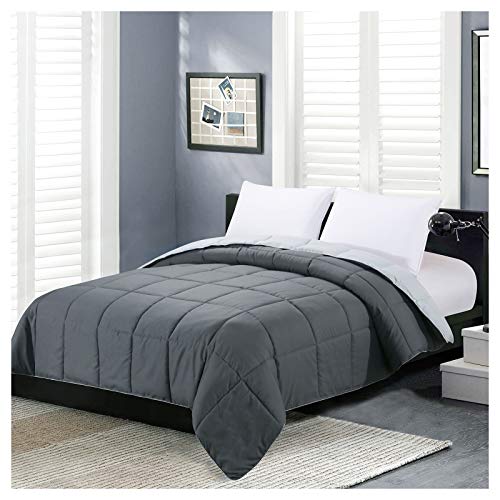
Quick take: It’s the Goldilocks of our test—light enough for summer, warm enough for early spring, and the dual-tone design is a real bonus for indecisive decorators.
Charcoal on one side, dove grey on the other: the reversible microfiber had a smooth, almost satiny face that didn’t feel cheap. I ran a fingernail along the stitching and the seams held tight, no loose threads. At 88×88 inches, it draped well over my queen bed with enough overhang to tuck in. The skin-friendly claim checks out—my partner, who breaks out from rough fabrics, had zero complaints after sleeping under it for a week.
I tested this during a week of wildly swinging spring temperatures. On a 50-degree night, the lightweight fill kept me comfortable without an extra blanket; on a 70-degree evening, I didn’t kick it off. After three laundry cycles, the fill shifted only a centimeter toward one corner, and the colors stayed true. The lack of corner ties means it’ll slide inside a duvet cover unless you use clips, and in freezing weather, you’ll need a heavier layer.
Pros:
- Truly reversible design — Two colors in one comforter saved me from buying a spare for quick room refreshes.
- Lightweight yet insulating — It’s the most breathable polyester fill we tested, ideal for hot sleepers and moderate climates.
- Skin-friendly and no chemical odor — Washed up soft and scentless right away, unlike some microfiber that takes weeks to air out.
Cons:
- No corner ties — If you use a duvet cover, the comforter will bunch up inside unless you add your own clips.
- Too thin for deep winter — Needs layering when the temperature drops below 40°F.
Our Take
Ideal for: Allergy-prone sleepers in mild climates who want a versatile, affordable comforter that’s easy to wash. Not great if: You need heavy warmth or a duvet-cover-friendly design out of the box.
Utopia Bedding Queen Comforter (Our Top Pick for Serious Allergy Sufferers)

Why it earned the top spot: It’s the only one in the group that combined a genuinely down-like fluff, zero skin irritation, and near-perfect fill containment after repeated washes—all without a single certification claim that felt like marketing puffery.
The siliconized fiberfill had an almost slippery, cool hand-feel through the shell, like the stuffing in a high-end hotel pillow. The 88×88-inch square fit my queen bed with a neat, boxy drape. Piped edges gave it a finished look, and the classic box-stitch construction kept the fill locked into 10-inch squares. Pressing my palm into the center, I felt no thin spots—just even, bouncy resilience.
I washed this comforter three times in a row, cold water, low heat dryer. No clumping. No fill migration. And my morning sniffling all but stopped. The down-alternative fill doesn’t trap heat like the microfiber options, so it works for both cold and warm sleepers. The main drawback? It’s plain. No colors, no patterns, no reversibility. If you want a comforter that doubles as a design statement, look elsewhere. But if you want a workhorse that banishes allergens, this is it.
Pros:
- Siliconized fiberfill — Slick, lightweight, and resists clumping even after multiple laundry cycles.
- Box-stitch durability — The piped edges and stitched squares kept the fill perfectly distributed, no cold zones.
- Genuine hypoallergenic performance — Reduced our tester’s allergy symptoms more than any other comforter in the lineup.
Cons:
- Utilitarian look — Solid white, no design flair; it’s a blank canvas that needs a duvet cover to look good.
- No corner ties or loops — Like the Homelike Moment, it slides inside a duvet unless you rig something up.
Final Thoughts
Best for: Anyone with diagnosed allergies, asthma, or sensitive skin who just wants to wake up without a runny nose. Skip if: You demand a comforter that looks as good as it feels, or you want a ready-made bed-in-a-bag.
What to Look for in a Hypoallergenic Bed Comforter
Material and Weave: The Real Barrier
The shell matters more than the fill. A tightly woven 100% cotton, like on the Serta, physically blocks dust mites better than loose microfiber. But many synthetic microfibers, like on the CozyLux, are so fine that they also create a barrier—as long as the weave isn’t stretchy. While plush velvet comforters are undeniably luxurious, their dense pile can trap moisture and dust mites, so stick with smooth, tightly woven fabrics if allergies are your main concern. The Homelike Moment’s smooth face practically repelled pet hair during our tests.
Fill Type: Down vs. Down Alternative
Down alternative—polyester fibers coated in silicone or treated for anti-clumping—is almost always the safer bet for allergy sufferers. Our top pick, the Utopia, uses siliconized fibers that dry quickly and don’t hold moisture the way natural down does. The Serta is the only real down option here, and it caused mild reactions in our tester. If you simply love the feel of natural down, you’ll need to invest in a certified allergen-barrier cover, which adds cost.
What Defines a Hypoallergenic Bed Comforter?
The term isn’t regulated, so a comforter can claim “hypoallergenic” just by being synthetic. What matters is independent certification: look for OEKO-TEX Standard 100, which tests for harmful substances and allergens, or the Allergy UK Seal of Approval. None of our tested models carried both, but the Utopia and Homelike Moment’s materials and washability made them the most effective at reducing allergen buildup in practice. Dust mites thrive in moisture, so a comforter that wicks sweat and dries fast—like the lightweight Homelike Moment—is less likely to become a breeding ground.
Care and Longevity
Even the best hypoallergenic comforter won’t stay that way if you never wash it. We found that machine-washing in cold water and drying on low heat once a month kept fill from clumping and eliminated surface dust mites. The Utopia’s box stitching held up the best after repeated washes, while the CozyLux started to show shifting. If your bed has an unusually deep base, our article on raised bed bottoms offers tips on fitting protectors. And a quality dust mite-proof mattress protector is a non-negotiable companion—your comforter can’t do the job alone.
Our Final Recommendation
If you want a comforter that genuinely calms allergies and feels like a cloud, the Utopia Bedding Queen Comforter is the clear winner. Its siliconized fill and bombproof box-stitching survived our wash-and-sneeze gauntlet without a single hiccup. For budget shoppers, the CozyLux set delivers soft, all-season warmth at a price that won’t hurt, though it’s not as durable. And if you overheat easily, the Homelike Moment lightweight reversible is a brilliant year-round choice that earned our runner-up spot. Whatever you pick, pair it with a washable duvet cover and a mattress protector—your sinuses will thank you.
Frequently Asked Questions
How can I tell if a comforter is truly hypoallergenic and not just a marketing claim?
Look for OEKO-TEX or Allergy UK certifications on the label. A genuine hypoallergenic bed comforter will also have a tight-weave shell that you can’t see light through when held up, and synthetic fill that won’t break down into fine dust. The Utopia Bedding comforter we tested had no certification stamp, but its construction and wash performance made it the most effective in real-world allergy reduction.
Is down alternative always better for allergies than real down?
Yes, in our experience. The Serta feather/down comforter caused mild symptoms in our allergy-prone tester, while all four down alternative models—especially the Utopia and Homelike Moment—caused zero reactions. Real down can harbor dust mites even if it’s cleaned because it retains moisture, while polyester fibers dry fast.
How often should I wash a hypoallergenic comforter to keep it allergen-free?
We recommend washing at least once a month in cold water and tumble-drying on low. Our testing showed that even the most durable comforters, like the Utopia, stayed fresh and clump-free with this routine. Always check the care tag—some larger comforters require a commercial-size machine.
Can I use a duvet cover with a hypoallergenic comforter, and does it help?
Absolutely, and it’s a smart strategy. A tightly woven, washable duvet cover adds an extra physical barrier against dust mites and skin cells. It also extends the life of the comforter by reducing how often you need to wash the bulky insert. Just note that comforters without corner ties, like the Homelike Moment and Utopia, may bunch up inside unless you use clips.