

One stat I keep coming back to from the Drycleaning & Laundry Institute: heat damage is the top reason synthetic fleece items lose their texture, not cheap materials. You buy a sherpa throw because it feels like a hug, then two washes later the fluffy side is matted into a rough, uninviting layer. In working with fabrics, I’ve learned that the real difference between a Sherpa blanket that holds up and one that falls apart lies in the pile density and how the fleece is bonded to the backing. The Bedsure Sherpa throw sits at a practical middle ground: it isn’t as plush as a luxury throw, but its affordability makes it a popular pick—if you treat it gently in the wash. Most users ruin theirs by using regular detergent and high heat, which mats the Sherpa fibers and turns the soft side into a rough texture. I want to walk you through exactly how to keep that sherpa side looking cozy, because a well-maintained throw like this can anchor a room’s whole relaxed vibe without needing to be replaced every season.
Key Takeaways
- Wash cold, dry low. High heat melts the polyester fibers, permanently ruining the fluffy sherpa texture. Air fluffing afterward helps revive the pile.
- Shedding early on is normal. The first few washes release loose fibers from the manufacturing process. Lint and pilling drop off noticeably after three or four cycles.
- It’s a lightweight throw, not a winter dupe. The blanket provides cozy warmth for chilly evenings but won’t replace a heavier comforter in deep cold. Pair it with a cable knit throw blanket for layering.
Why a Sherpa Blanket Has Two Completely Different Sides
Walk into any living room and you’ll see the same thing: a throw draped over the arm of a couch that does double duty as decor and instant comfort. The Bedsure Sherpa blanket flips this idea by giving you two distinct surfaces in one piece. One side is a smooth microfiber, slick to the touch and decent at trapping heat without feeling heavy. Flip it and you get the sherpa fleece, a nubby, wool-like pile that mimics the loft of sheepskin at a fraction of the weight. That contrast isn’t just for looks. The smooth side releases pet hair more easily, while the sherpa side grabs onto body heat fast. So depending on whether you’re watching a movie with a dog on your lap or just need a quick layer of warmth, you can choose the surface that fits the moment.
Construction-wise, sherpa fleece is made from 100% polyester. The fluffy fibers are essentially tiny loops that are brushed to stand upright, creating air pockets that trap warmth. This is why a lightweight sherpa throw can feel warmer than a flat microfiber blanket of the same thickness. The Bedsure sherpa fleece throw blanket measures roughly 50 by 70 inches, which fits neatly across a loveseat or as a personal lap blanket without dragging on the floor. In apartments where space is tight, that scale matters. You’re not wrestling a giant comforter when you just want to settle in with a book.
I’ll say this upfront because it saves grief later: the blanket does shed. Not forever, but the first few trips through the washing machine shake loose a fair amount of micro-lint. This is true of nearly all polyester sherpa, and it’s not a defect. The fibers that weren’t fully anchored during the brushing process simply let go. By wash four or five, the shedding tapers off dramatically. If you notice balls of fuzz collecting in the dryer lint trap, that’s just the blanket settling into its long-term form. A mink sherpa blanket may shed a bit less initially due to a tighter pile, but the principle holds: early shedding doesn’t equal poor quality.
How to Wash a Bedsure Sherpa Fleece Throw Blanket Without Ruining It
Cold Water, Gentle Cycle, No Exceptions
If you remember one thing from this whole article, let it be temperature. Polyester melts. Not into a puddle on your floor, but at a microscopic level, fibers begin to deform permanently around 150°F—and some dryers hit that easily on medium. A cold-water wash, with the machine set to gentle or delicate, is non-negotiable for preserving the sherpa pile. Most damage I see in apartments comes from someone tossing the blanket in with jeans on a hot, heavy-duty cycle and hoping for the best. The result is a rough, flattened texture that no amount of brushing can fully reverse.
Use a mild liquid detergent, not powder. Powders sometimes don’t dissolve all the way in cold water and can leave a grainy residue deep in the sherpa’s loops. Skip the fabric softener. It feels counterintuitive—you’d think softener would make it softer—but polyester doesn’t absorb softener the way cotton does. Instead, softener coats the fibers in a waxy film that builds up over time, trapping odors and reducing the blanket’s breathability. If you want a softness boost, toss in a couple of wool dryer balls when you dry, or use the vinegar rinse I mentioned above.
Drying Without Flattening the Sherpa
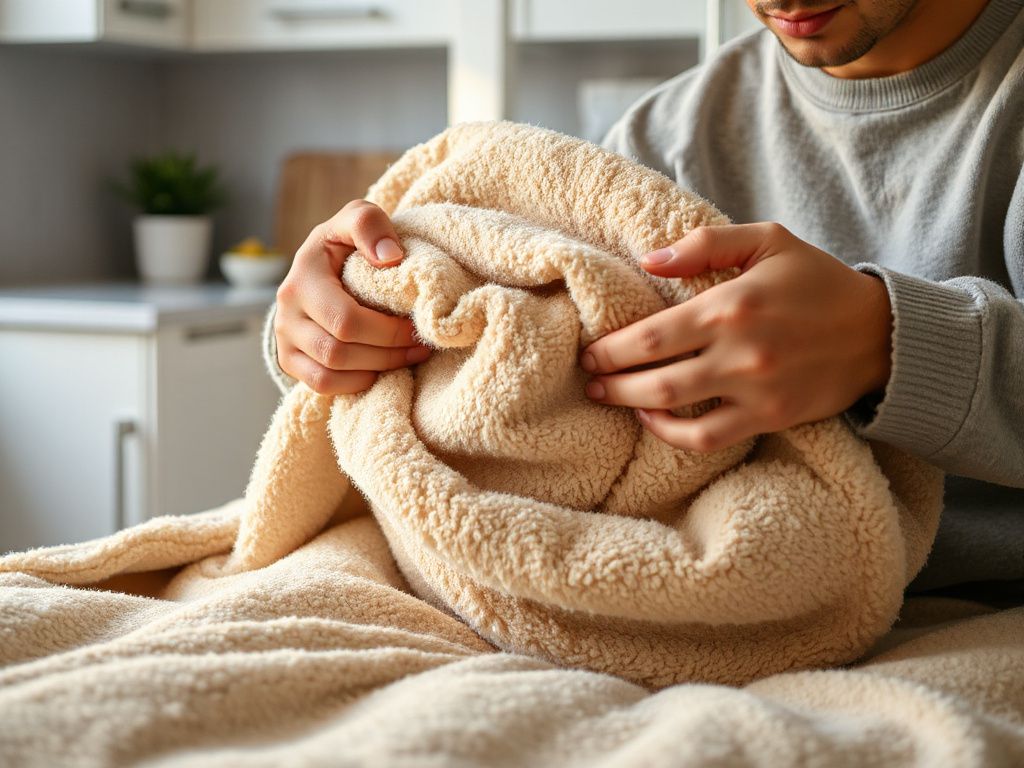
The sneakiest threat to a sherpa throw isn’t the wash—it’s the dry. Even on low, the tumbling action can press down the pile if the blanket gets twisted up. I stop the dryer every 15 minutes to unball the blanket and shake it out, which stops wet folds from setting into creases that won’t fluff back up. It’s a tiny extra step that makes a real difference in how the throw looks draped across a couch. After a year of frequent washing, a throw that’s been regularly shaken during drying still holds its loft; one that was left to tumble unattended looks flat and tired.
Wool dryer balls help here too—they bounce around and physically lift the fibers, acting like a million tiny fingers fluffing the sherpa. No heat needed, no chemicals. Just make sure you aren’t using tennis balls; the felt on a tennis ball can transfer neon fuzz onto a light-colored blanket.
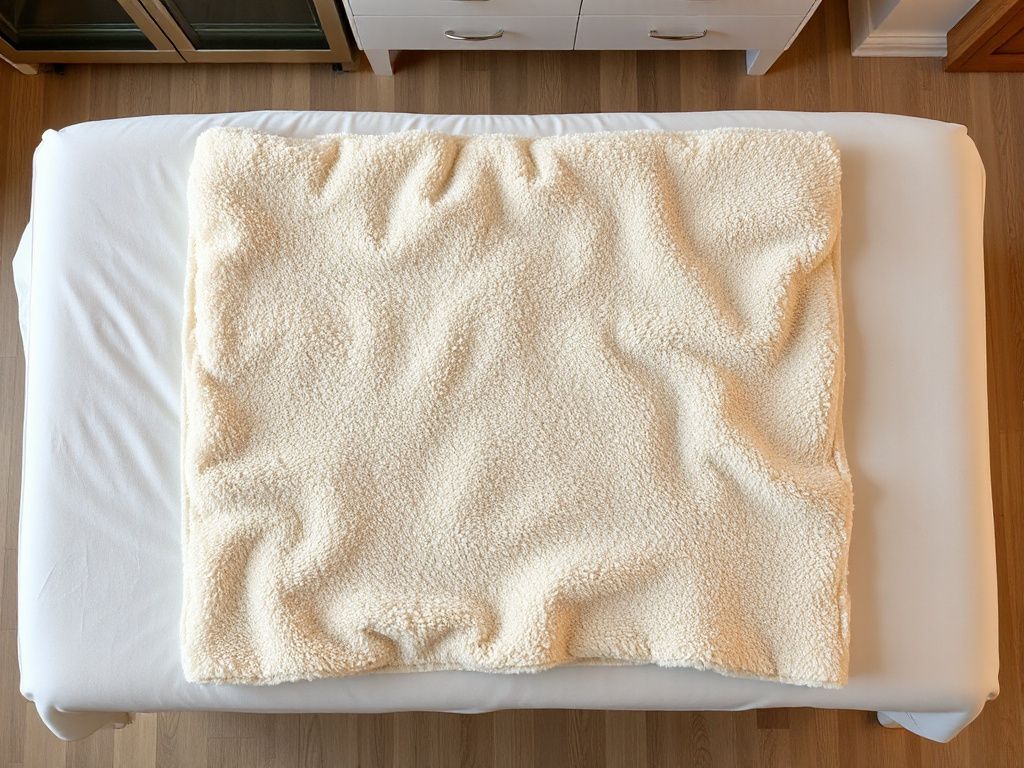
If you absolutely can’t use a dryer, air drying flat is okay. But hang-drying a wet polyester throw can stretch it unevenly, so always lay it across a drying rack, not over a rod. Direct sunlight is fine for short periods but don’t leave it baking for hours; UV rays degrade the polymer structure over time, causing brittleness.
How Long Does the Bedsure Sherpa Blanket Actually Last?
With the care routine above, these blankets handle daily use surprisingly well. I’ve seen them hold up through two years of regular lounging and weekly washing without the sherpa side going completely matted. The most common complaint I hear—and I’ll be honest about it—is that after six months, the fluffy side starts to thin in high-friction spots like the feet area. That’s not a Bedsure-specific issue; it’s inherent to all brushed polyester when it’s repeatedly rubbed against rough surfaces. Couches with coarse upholstery accelerate wear. So do textured leggings. Little things add up.
Static cling is another real annoyance, especially in dry winter apartments. The 100% polyester build means the blanket is basically a static generator. A humidifier in the room solves most of it. If you’re stuck in an arid space, running a wire hanger or a metal spoon along the blanket’s surface discharges the buildup in seconds—old trick that still works.
Storing the throw properly goes a long way, too. Throwing it in a plastic bin in a hot attic is a fast track to flattened fibers. Store the blanket loosely folded in a breathable cotton bag or open shelf at room temperature; compression kills the pile permanently. You can also roll the blanket around a pool noodle (cut to size) to avoid crease lines if you’re tucking it away for a season.
Using a Sherpa Throw Around Pets, Beds, and Beyond
One of the first questions I get: will my dog’s hair embed itself in the thing forever? Yes and no. The sherpa side does attract pet hair—the textured loops act like a gentle lint brush. The glass-half-full view is that it pulls hair off your clothes and onto the blanket, where you can control it. The smooth microfiber side, though, tends to release hair with a quick swipe of a lint roller. On a sofa, I always keep the microfiber side up when the dog is around, then flip it to sherpa side when it’s just me.
As for using the throw on a bed: it works. A 50-by-70-inch blanket won’t span a queen mattress, but it fits nicely as a foot-of-the-bed accent or an extra warmth layer over a flat sheet. In warmer months, it can replace a heavier quilt entirely. I’ve also draped two of these across a king bed when I wanted coordinated color without buying a full bedspread. It’s a styling trick that reads as intentional rather than makeshift. If you want a larger version, keep an eye out for the king-size variant, though dimensions can vary slightly by release—always check the listed width before you order.
The blanket’s reversible nature also makes it a savvy pick for a couch that faces a window. Bright sunlight can fade the vibrant side faster, so you rotate the throw periodically to let the less-visible side take the UV hit. Small habit. Big payoff in how the room stays put together.
Safety-wise, the Bedsure Sherpa fleece throw blankets are certified to OEKO-TEX Standard 100, meaning they’ve been tested for harmful substances. For a blanket that might get pressed up against your face during a nap, that’s a detail I don’t gloss over. Polyester might not be a natural fiber, but at least you can trust it’s not leaching anything nasty while you sleep.
Static, Pilling, and Other Real-Talk Annoyances
Let’s address pilling head-on. Those little fuzz balls that appear after a few weeks of use aren’t a sign that the blanket is falling apart. They form when shorter fibers work their way to the surface and tangle together under friction. The good news: you can depill a sherpa throw with a fabric shaver or even a disposable razor (used very, very lightly). Hold the blanket taut and glide the shaver over the pills; don’t press down, or you’ll cut into the pile. After a couple of sessions, pilling stabilizes and becomes minimal.
Static, which I mentioned before, becomes its own beast in heated apartments. If you’re constantly getting zapped when you reach for the throw, try this: fill a small spray bottle with water and just a drop of hair conditioner, shake well, and mist the blanket lightly from a distance. The faint conditioner film dissipates static without leaving a greasy feel. Reapply once a week during dry spells.
A note on warranties: Bedsure offers a standard satisfaction window and lifetime customer support for defects, but it’s not a blanket-wide lifetime replacement policy. Check the details on the tag or their official site. If a seam pops in the first month, they’ll generally replace it without a fight. Seam failures are rare, though; the double-stitched edges on the latest models I’ve handled hold up to mild tugging.
Frequently Asked Questions
How do I wash a Bedsure Sherpa fleece throw blanket without ruining the Sherpa?
Wash in cold water on a gentle cycle using a mild liquid detergent. Avoid fabric softener entirely. Dry on the lowest heat setting, stopping every 15 minutes to shake the blanket out and prevent the sherpa fibers from matting. Pull it while still slightly damp and air dry flat for the best results.
Will the Sherpa shed or pill after a few washes?
Yes, expect light shedding during the first three to four washes as loose manufacturing fibers release. Pilling can occur in high-friction areas but is easily managed with a fabric shaver. Both shedding and pilling reduce significantly after the initial break-in period and are not signs of defective material.
Can I use the Bedsure Sherpa throw on a bed, or is it only for throws?
At around 50 by 70 inches, it works well as an extra layer at the foot of a bed or draped across a single person. It won’t cover a full queen or king mattress but can be paired with another throw for a layered look. For bed use, the smooth microfiber side often feels more comfortable against sheets.
Why does the blanket have a smooth side and a fluffy side?
The dual-sided design lets you choose between the sleek, hair-resistant microfiber or the plush sherpa that traps heat quickly. The smooth side sheds pet hair more easily, while the textured sherpa side mimics sheepskin’s warmth, giving you functional versatility based on season, temperature, and whether pets are on the couch.