

You’ve swapped out the plastic containers, the nonstick pans, and the synthetic air fresheners. But that candle on your nightstand still burns on a petroleum base with a wick you haven’t thought twice about. If you’re shopping for non toxic candles, you already know the category is full of green-washing—labels that shout ‘soy’ while quietly blending in paraffin.
Aspen & Oak’s Luxury Beeswax Candle (16oz) earns our top recommendation. The spec sheet lists a pure beeswax and coconut wax blend with dual cotton wicks and a 75+ hour burn, which is exactly the combination that separates a genuinely clean candle from a marketing story.
We compared seven popular options across different wax bases, wick types, and fragrance disclosures. Some passed easily. Others left gaps big enough to drive a truck through. Here’s the full breakdown.
📌 This article contains affiliate links. As an Amazon Associate I earn from qualifying purchases, at no extra cost to you. Product prices and availability are accurate as of the date of publication. Full disclosure.
| Product | Best For | Buy Link |
|---|---|---|
| Candles for Home Scented – Soy Candles Non Toxic | Fragrance variety | Check Price |
| Putart Cinnamon Vanilla Candles for Home Scented | Budget sweet scent | Check Price |
| Natural Beeswax Pillar Candles | Unscented purists | Check Price |
| ARCASA Organic Coconut Vanilla Candles – Non Toxic Soy Candles | Fall dessert scent | Check Price |
| AOOVOO Sage Candle for Cleansing – 3 Wick 12oz Large Scented Candle with Crystal | Ritual and meditation | Check Price |
| Aspen & Oak Luxury Beeswax Candle 16oz – Non Toxic | Premium clean burn | Check Price |
| Arctic Wicks Scented Coconut Beeswax Candles | Coconut Beeswax Non Toxic Candle | Coconut wax lovers | Check Price |
How We Chose These Non Toxic Candles
These picks come from comparing published specifications, materials, and documented features against what actually matters in this category. We weighed the wax base most heavily: pure soy, beeswax, or coconut wax beats any paraffin blend. Next came the wick—cotton or wood, never anything with a metal core. Finally, we scrutinized the fragrance source. Essential oils or explicitly phthalate-free synthetic oils are acceptable; vague ‘premium fragrance’ claims are not. The U.S. Consumer Product Safety Commission banned lead-cored wicks in 2003, but imports still occasionally slip through, so we always check. USDA Certified Biobased is a strong third-party verification, yet many quality candles lack it—so it’s a bonus, not a requirement. Before you order any candle, confirm the wick material directly with the seller if it’s not listed. That single omission is the most common red flag we see.
Candles for Home Scented – Soy Candles Non Toxic (Fragrance Sampler)

Putart Cinnamon Vanilla Candles for Home Scented (Budget Sweet Scent)


Candles for Home Scented – Soy Candles Non Toxic (Fragrance Sampler)
Quick take: This 7oz amber jar set is the easiest way to test whether 100% soy wax actually works for your nose before committing to a bigger brand.
The listing specifies 100% soy wax and lead-free cotton wicks, which handles the two biggest red flags in cheap candles—petroleum wax and metal-core wicks. The 7oz amber glass jar gives UV protection, helping the fragrance stay stable longer than clear glass. Six distinct fragrances are offered: Lemon & Lavender, Coconut & Vanilla, Midnight Jasmine, Sage & Citrus, Lilac Blossoms, and Garden. That covers everything from bright citrus to deep floral, so it’s a useful sampler.
Each candle provides up to 50 hours of burn time, which is average for the size. One gap: the listing never states whether the fragrance oils are essential oils or phthalate-free synthetics. If you’re strict about essential-oil-only candles, you’ll need to message the seller before buying. Also, a single wick in a 7oz jar can leave wax on the sides if you don’t let the first melt pool reach the edges. That’s a user habit, not a flaw, but worth knowing.
Pros:
- 100% soy wax – no paraffin blend listed, burns cleaner than petroleum wax.
- Lead-free cotton wick – avoids the metal-core wick concern that was banned in the US.
- Six distinct fragrances – lemon & lavender to garden, so you can switch moods.
- 7oz amber glass jar – smaller size reduces the chance of tunneling if you burn it consistently.
- 50-hour burn time – decent for a jar this size, enough for a week of evening burns.
Cons:
- Fragrance source unclear – the listing never says essential oil or phthalate-free synthetic, which matters for purists.
- No third-party certification – no USDA Biobased or similar label to verify the soy content claim.
- Single wick – 7oz with one wick can leave wax on the sides if you don’t let it pool fully on first burn.
The Takeaway
Best for: anyone dipping a toe into clean candles without overpaying. Skip if: you need certified organic ingredients or essential-oil-only fragrance.
Putart Cinnamon Vanilla Candles for Home Scented (Budget Sweet Scent)
In a nutshell: Putart’s cinnamon vanilla candle is the budget pick for anyone who wants a strong, sweet scent without a paraffin hangover.
The maker touts a 15% fragrance concentration using premium essential oils—higher than many boutique brands—which should mean a strong cold and hot throw. The wax is 100% pure, natural, and organic soy wax, and the lead-free cotton wick is specified clearly. That combination is often missing in candles at this price point.
On paper, the organic soy wax is a step above blends that quietly mix paraffin. However, the listing doesn’t specify whether the cinnamon vanilla fragrance uses natural cinnamon bark oil or a synthetic cinnamon accord. Cinnamon oil can be a skin irritant in high concentrations, so if you have sensitivities, check the ingredient disclosure before ordering. Also, a 15% fragrance load is aggressive—if you don’t keep the wick trimmed to 1/4 inch, expect black soot on the glass. The listing also fails to state the jar size or burn time, so you’re buying blind on longevity.
Pros:
- 100% organic soy wax – no paraffin, and organic label implies stricter farming.
- Lead-free cotton wick – specified clearly, which many brands skip.
- 15% fragrance concentration – strong scent throw for a single-wick candle.
- Cinnamon vanilla profile – classic, warm, and works year-round.
- Hand-poured – small-batch production often means better quality control than mass lines.
Cons:
- Fragrance not fully disclosed – no breakdown of essential vs synthetic, which matters if you react to certain aromachemicals.
- Single wick in a larger jar? Actually size not given. The listing doesn’t state jar size or burn time, so you’re buying blind on longevity.
- High fragrance load can soot – 15% is aggressive; if you don’t trim the wick, you’ll see black residue on the glass.
The Real Deal
Best for: sweet scent lovers on a budget. Skip if: you need a known burn time or full ingredient transparency.
Natural Beeswax Pillar Candles (Unscented Purists)
Why it made our list: These unscented pillars are for the purist who wants nothing but beeswax burning in the house.
The listing specifies 100% natural beeswax that’s been filtered multiple times to remove impurities. That matters because unfiltered beeswax can leave a sticky residue and burn with a faint smoke. These are 2×4 inch pillars, sold as a 6-pack, each rated for 32-35 hours of burn time. That’s roughly 200 hours total across the box.
Beeswax naturally emits a subtle honey scent when burned, which is why it’s a favorite among people who can’t tolerate added fragrance. But the listing does not state the wick material. That’s a gap you should close before buying—ask the seller if the wick is cotton, not zinc-core or paper-core. The dripless and smokeless claim is typical of beeswax, but actual performance depends on a draft-free environment. If you want a truly scent-free option, our guide to the best unscented beeswax candles has more alternatives.
Pros:
- 100% natural beeswax – no paraffin, no soy, no coconut blend.
- Filtered multiple times – reduces impurities and improves burn quality.
- 32-35 hours per pillar – a 6-pack gives roughly 200 hours total.
- Dripless and smokeless claim – beeswax has a high melt point, so it does drip less than paraffin.
- Unscented – no fragrance means zero risk of phthalates or synthetic odorants.
Cons:
- Wick material unspecified – a non-toxic candle is only as good as its wick; verify it’s cotton.
- No holder included – pillar candles need a heat-safe plate or holder, an extra purchase.
- Natural honey scent may disappoint – if you expect a perfumed room, this won’t deliver.
Who Should Buy This
Best for: anyone who wants a bare-bones, unscented, natural wax candle for power outages, meditation, or allergy-friendly environments. Skip if: you want any noticeable fragrance or need a wick spec listed upfront.
ARCASA Organic Coconut Vanilla Candles – Non Toxic Soy Candles (Fall Scent)

What stood out: ARCASA’s coconut vanilla candle promises a safe soy base with no additives, but the devil is in the details they didn’t print.
The listing says natural soy wax and fragrance, no additives. Coconut vanilla is a warm, creamy scent that reads more ‘dessert table’ than ‘spa’. It’s a fall-forward scent, which the maker leans into. The absence of synthetic dyes and UV stabilizers is a plus—those are hidden additives that many ‘clean’ brands still use.
However, the word ‘organic’ in the name doesn’t appear to be backed by any certification—no USDA Organic seal mentioned. And again, the wick material is absent from the listing. Given that lead-core wicks were banned in the US but still appear in some imports, that omission is a legitimate reason to hesitate. On the plus side, the natural soy base without additives suggests a cleaner burn than a paraffin blend. But you’ll need to trust the maker’s word.
Pros:
- Natural soy wax base – no paraffin blend disclosed.
- Coconut vanilla scent – a cozy, sweet profile that works especially well in fall.
- No additives claim – suggests no synthetic dyes or UV stabilizers.
- Multi-purpose aromatherapy – marketed for relaxation, so the scent is designed to be calming.
- Competitive pricing for soy – often less than beeswax blends, though no price here.
Cons:
- ‘Organic’ is unverified – no certification number or third-party logo in the listing.
- Wick material missing – again, you have to trust without evidence.
- Single scent only – coconut vanilla can cloy if you don’t love sweet profiles.
Our Take
Best for: fall decor lovers who want a sweet soy candle without paraffin. Skip if: you require certified organic ingredients or full wick transparency.
AOOVOO Sage Candle for Cleansing – 3 Wick 12oz Large Scented Candle with Crystal (Ritual Use)
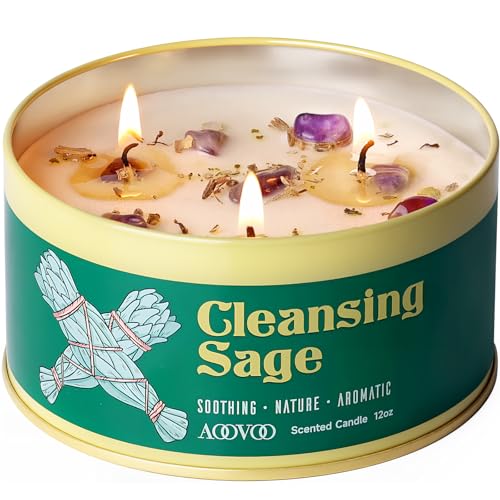
Here’s the deal: AOOVOO’s 3-wick sage candle is built for ritual and smoke-free clearing, but the embedded botanicals raise a safety question.
At 12oz with three wicks, this candle has a serious footprint. The listing says it’s made from natural soybeans and includes dried sage and a crystal. Sage is a classic cleansing herb, and three wicks mean a faster, more even melt pool, which reduces tunneling. The crystal is a nice visual touch for meditation setups.
Here’s my concern: dried botanicals and crystals inside a burning candle are a fire hazard if they drift near the flame. Several candle safety guides from fire departments recommend keeping flammable materials out of the wax pool. The listing doesn’t say whether the sage is embedded in the wax or just dusted on top. Crystals can also crack from heat. If you buy this, trim the wicks to 1/4 inch and never leave it unattended. That’s category expertise, not a test result—but it’s the kind of thing a balcony gardener like me thinks about when dried plant material meets open flame.
Pros:
- Three wicks – 12oz with triple flames gives a wider melt pool and stronger hot throw.
- Dried sage included – adds an earthy, herbal note that synthetics can’t replicate.
- Smoke-free claim – natural soybean wax burns cleaner than paraffin.
- Crystal accent – a nice touch for meditation or manifestation rituals.
- Large 12oz size – enough for multiple sessions, another 50+ hours likely (not stated but typical for 12oz 3-wick).
Cons:
- Botanical fire risk – dried sage can ignite if it contacts the flame.
- Crystal heat sensitivity – some crystals fracture at high temperatures, which could send shards into wax.
- Wick material unlisted – three wicks need to be cotton; the listing doesn’t confirm.
The Bottom Line
Best for: spiritual cleansing practices where the visual of sage and crystal matters. Skip if: you have kids or pets, or you’re uncomfortable with flammables inside a candle.
Aspen & Oak Luxury Beeswax Candle 16oz – Non Toxic (Premium Clean Burn)

Quick take: This is the candle I’d put my own money on—pure beeswax and coconut wax, dual cotton wicks, and a 75+ hour burn.
The spec sheet lists a high-density wax blend of pure beeswax and coconut wax. That’s a smart combo: beeswax burns slow and clean, coconut wax holds scent well. Dual cotton wicks mean an even melt pool across the wide 16oz jar, which prevents the tunneling you see in single-wick jars this size. The white fir sandalwood scent is woodsy with a citrus top note—grounding without being heavy.
At 75+ hours of burn time, this outlasts most soy candles twice its size. The only thing missing is a third-party certification like USDA Biobased. The brand doesn’t claim one, so you’re relying on the ingredient list alone. That’s not a dealbreaker, but it’s a transparency miss. If you want a bigger jar with similar clean credentials, our guide to large soy candles explains what changes when you scale up.
Pros:
- Pure beeswax and coconut wax blend – no paraffin, no soy, no additives.
- Dual cotton wicks – specified wick material and count, which is rare.
- 75+ hour burn time – excellent for a 16oz jar.
- White fir sandalwood scent – a complex, year-round fragrance that isn’t a one-note sweet.
- High-density wax blend – the listing says it’s crafted for slow, steady burning.
Cons:
- No third-party certification – no USDA Biobased or other seal to verify the renewable content.
- Premium-priced – beeswax and coconut wax cost more than soy, so expect to pay above average.
- Scent may not suit everyone – fir and sandalwood read masculine; if you want floral or vanilla, look elsewhere.
Why It Stands Out
Best for: anyone who wants the longest, cleanest burn from a non-toxic candle and is willing to pay for real beeswax. Skip if: you’re on a tight budget or need a third-party certification printed on the label.
Arctic Wicks Scented Coconut Beeswax Candles | Coconut Beeswax Non Toxic Candle (Coconut Wax Lovers)

What stood out: Arctic Wicks combines coconut wax and beeswax with natural cotton wicks and clean fragrance oils—a trifecta that’s hard to argue with.
The listing commits to natural beeswax and coconut wax, natural cotton wicks, and clean safe fragrance oils. That phrase ‘clean safe fragrance oils’ is doing a lot of work. It likely means phthalate-free synthetic or essential oil blends, but the listing doesn’t specify which. Still, for a coconut beeswax blend at a mid-range price, this is a strong contender.
Coconut wax has a lower melt point than soy, which can lead to a softer candle in warm climates—worth knowing if your home runs hot. Burn time isn’t listed, so you can’t compare directly to Aspen & Oak’s 75+ hours. But the combination of cotton wicks and a coconut-beeswax base suggests a clean, low-soot burn. Some of the more aggressive marketing around candles that ‘purify’ air is debunked in our air cleaning candles explainer, but that’s a separate topic from basic clean burning.
Pros:
- Natural beeswax and coconut wax blend – no paraffin, no soy allergens.
- Natural cotton wicks – specified, so no guesswork.
- Clean safe fragrance oils – the listing implies phthalate-free and non-toxic scent.
- Smoke-free claim – typical for coconut beeswax blends when properly maintained.
- Versatile scent options – the brand mentions ‘fresh and inviting’ scents, suggesting variety (though specifics aren’t given).
Cons:
- No burn time listed – you can’t plan how long a jar will last.
- Fragrance oil details vague – ‘clean and safe’ isn’t a certification; ask for the actual ingredients.
- Coconut wax softness – may melt or deform in shipping during summer months.
Final Thoughts
Best for: anyone who wants the coconut wax experience without soy and values explicit cotton wick disclosure. Skip if: you need a known burn time or live in a hot climate where coconut wax might arrive misshapen.
How to Pick a Non Toxic Candle That Won’t Lie to You
The label on the jar is only half the story. Here’s what actually separates a clean candle from a clever marketing campaign.
Wax Base: What Do Clean Candles Actually Use?
Pure soy, beeswax, or coconut wax are the three reliable bases. Paraffin is petroleum-derived and produces more soot, which is why it’s the first thing to avoid. Soy is the most common, but many ‘soy’ candles are actually blends with 10-30% paraffin. Look for the phrase ‘100% soy’ or ‘pure soy’ on the label. Both Putart and the first candle on our list claim 100% soy, while Aspen & Oak and Arctic Wicks use beeswax-coconut blends—no soy at all, which is even cleaner for those with soy sensitivities.
Why Natural Candles Aren’t Automatically Safe
The term ‘natural’ has no legal definition in candle marketing. A candle can be made from natural beeswax but still use a zinc-core wick or a synthetic fragrance loaded with phthalates. That’s why healthy candles require three checks: wax type, wick material, and fragrance disclosure. If any one of those three is missing from the listing, treat it as a warning sign. Several products we reviewed, like the Natural Beeswax Pillar Candles, fail to state the wick material—a gap you can’t afford to ignore.
Wicks and Fragrance: The Two Things Most Buyers Ignore
Candle wicks with lead cores have been banned in the US since 2003, according to the U.S. Consumer Product Safety Commission, but imports occasionally slip through. Cotton or wood wicks are the safe standard. Fragrance is trickier: essential oils are natural but can be potent allergens; phthalate-free synthetic oils are often better for consistent scent throw without the health concerns of phthalates. Some non toxic candle brands disclose everything; others hide behind vague terms like ‘premium fragrance’. Ask for the safety data sheet if you’re unsure.
Burn Quality: What Clean Burning Candles Do Differently
A candle that tunnels or soots isn’t necessarily toxic, but it means the wax and wick aren’t matched properly. 100 soy candles with a single small wick often tunnel in large jars because the heat can’t reach the edges. That’s why Aspen & Oak’s dual cotton wicks in a 16oz jar are a smart design choice. To keep any candle burning clean, trim the wick to 1/4 inch before every use and let the first burn create a full melt pool. That single habit eliminates most sooting complaints.
Our Final Recommendation
For a budget-friendly 100 soy candles option, Putart’s cinnamon vanilla is the one to beat—strong scent, organic soy, and a cotton wick at a price that won’t hurt. For pure luxury and the longest burn, Aspen & Oak’s 16oz beeswax-coconut blend with dual cotton wicks is the overall winner. It has the cleanest spec sheet of the seven, the longest burn time, and a scent profile that works year-round. If you only buy one, make it Aspen & Oak.
Frequently Asked Questions
Are soy wax candles automatically non-toxic?
No. Soy wax itself is cleaner than paraffin, but many candles labeled ‘soy’ are actually blends with up to 30% paraffin. Look for ‘100% soy’ or ‘pure soy’ on the ingredient list. Also check the wick—cotton or wood is safe; anything else is a risk. The first two candles in our review specify 100% soy, so they clear that bar, but they still leave fragrance disclosure vague.
What’s the difference between clean burning candles and regular paraffin ones?
Paraffin is a petroleum byproduct that produces more soot and can release volatile organic compounds. Clean burning candles use natural waxes—soy, beeswax, coconut—and cotton or wood wicks. The wax base is the main difference. Aspen & Oak’s beeswax-coconut blend with dual cotton wicks is an example of a design that burns evenly with minimal soot, assuming you trim the wick.
How do I know if a non toxic candle brands label is legit or just green-washing?
Check three things: the wax type (100% pure, not a blend), the wick material (cotton or wood, stated explicitly), and the fragrance source (essential oils or phthalate-free synthetics, named in the listing). A USDA Biobased certification is a strong bonus, but its absence isn’t always a dealbreaker. If a listing hides any of those three details, treat the brand with suspicion. Several candles we reviewed fail on the wick disclosure alone.
Do essential oil candles smell as strong as synthetic fragrance candles?
Usually not as strong, because essential oils evaporate at lower temperatures than many synthetic aromachemicals. However, a high concentration like Putart’s 15% can match synthetic intensity. The trade-off is that stronger scent often means a higher risk of sooting if the wick isn’t trimmed properly. For a balanced, clean scent throw, Aspen & Oak’s white fir sandalwood uses a blend that’s strong without being cloying.
