

Paraffin wax expands by roughly 10% as it transitions from solid to liquid, which means a filled container can crack even before you add a wick. That single property is why I tell people learning to work with liquid paraffin wax to always leave headspace, and it connects to a lesson I learned the hard way. I’ve spent years matching wick sizes to wax melt pools, and the single least obvious truth about this material is that its melt pool depth and temperature profile change with the container’s thermal mass. A beginner assumes all paraffin behaves the same, but the same wax acts differently in a thick glass jar versus a thin metal tin, forcing you to adjust pouring temperature and wick size. I’ve also seen countless hobbyists ruin their wax by overheating it without a thermometer, thinking ‘liquid’ means it is safe—but liquid wax can be far above the flash point while still looking clear.
Key Takeaways
- Liquid paraffin wax is molten paraffin wax at 70–90°C, not the same as liquid paraffin (mineral oil) that stays liquid at room temperature.
- The container’s thermal mass changes how the wax cools, so adjust pour temperature and wick size for glass vs. metal vessels.
- Always melt paraffin in a double boiler or wax melter, never directly on a stove, and use a thermometer to stay under 130°C to avoid fumes and fire risk.
What Is Liquid Paraffin Wax? (And What It Isn’t)
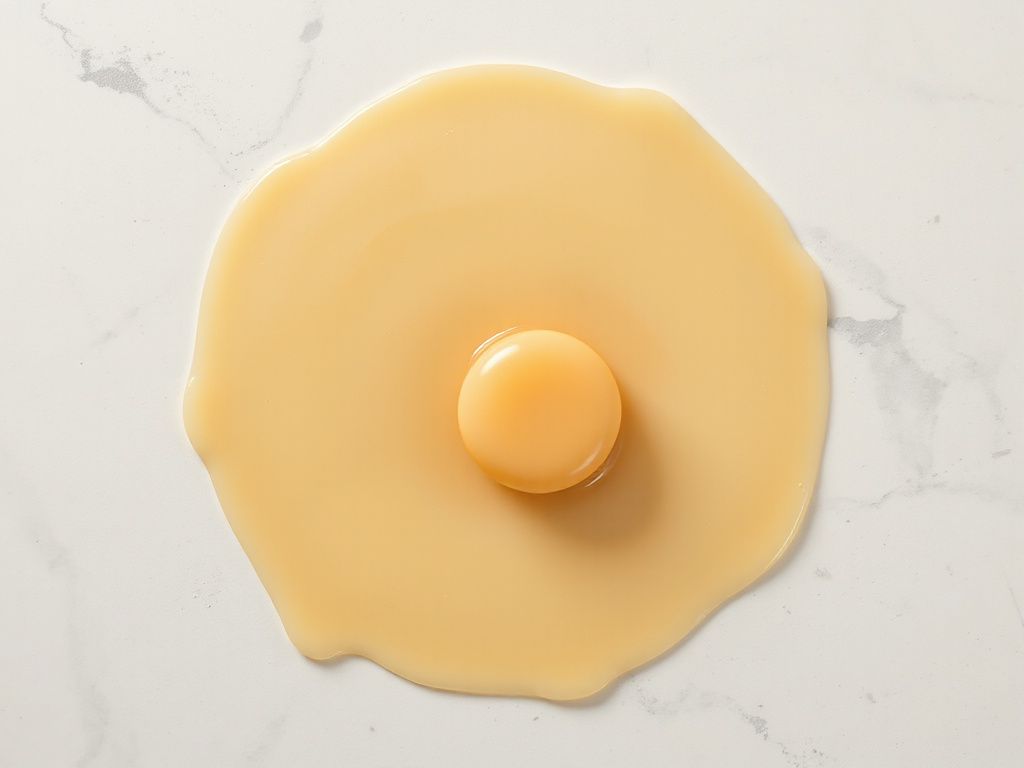
Paraffin wax is a white or colorless soft solid derived from petroleum, coal, or oil shale. At room temperature it is solid, but when heated past its melting point—usually between 46°C and 68°C (115°F–155°F) depending on grade—it becomes a clear, low-viscosity liquid. That molten state is what candle makers refer to as liquid paraffin wax, though the phrase also causes confusion with a completely different product.
Liquid paraffin (often called mineral oil) is a refined petroleum distillate that remains liquid at room temperature. It is used in laxatives, cosmetics, and some oil lamps, but it is not interchangeable with paraffin wax in candle recipes. If you pour mineral oil into a candle mold, it will never harden. The distinction matters because many beginners accidentally buy the wrong product when searching for candle supplies.
According to the PubChem database entry for paraffin wax, the material has a flash point near 200°C (392°F), which is far above normal pouring temperatures but still a real fire hazard if heated on a direct burner. That number explains why double boilers are non-negotiable. Paraffin wax also has a solidification point measured by the ASTM International standard D87, which helps suppliers grade wax by how quickly it sets.
From a styling perspective, paraffin wax is the workhorse behind most mass-market candles. It holds fragrance well, throws scent strongly, and takes liquid dye evenly. Those qualities make it a favorite for pillar candles that need to hold a crisp shape and for container candles that want a bright, uniform color. But the same wax behaves differently depending on whether you pour it into a thick glass apothecary jar or a thin metal travel tin—a fact I will unpack in a later section.
Melting Liquid Paraffin Wax Safely: Temperatures, Tools, and Technique
Melting paraffin wax is simple in theory but unforgiving in practice if you skip the tools. The safest setup is a double boiler or a dedicated wax melter with a thermostat. Fill the lower pot with a few inches of water, place wax chunks in the upper pot, and heat slowly so the water simmers but never boils hard. Water transfers heat gently and keeps the wax from touching the flame or electric coil.
Your target pour temperature for container candles is usually 70–85°C (158–185°F), though some pillar waxes pour slightly hotter at 85–90°C. The wax will melt between 55°C and 65°C, but pouring too soon causes frosting and poor adhesion. After melting, let the wax cool to the recommended range before adding fragrance or dye. Fragrance oils have their own flash points, so adding them above 95°C risks burning off the scent. Most candle suppliers suggest adding fragrance between 80°C and 85°C for paraffin.
Never exceed 130°C. Above that, paraffin starts to degrade, releasing acrid fumes and deepening to yellow. The clear liquid looks deceptively safe—it can be sitting at 150°C and still look like water, which is why a thermometer is essential. A thermometer with a 50–250°F range (glass candy thermometer works fine, or an infrared gun if you want speed) lets you catch overheating before it becomes a problem.
After pouring, let the candle cool slowly at room temperature. Place it on a wire rack away from drafts. Rapid cooling causes the wax to contract unevenly, creating cracks around the wick. If you see a dip forming as the wax sets, you can do a second pour at the same temperature to fill it in. Some candle makers reserve 10% of the melted wax for a top-up pour after the first layer solidifies.
Microwave and Stovetop: What Actually Works
A microwave seems convenient, but it heats wax unevenly and can create hot spots that exceed the flash point while the rest of the block remains solid. Unless you have a microwave-safe wax melter with a built-in thermostat, skip the microwave for any batch larger than a few ounces. Direct stovetop heating is even riskier because the pan bottom can reach 250°C within minutes, well past the point where paraffin breaks down. The only exception is a purpose-built electric wax melter with a temperature dial, which is effectively a controlled double boiler.
Container vs. Pillar Wax: Why Thermal Mass Changes Everything
Not all paraffin behaves the same once melted, and the biggest variable is the container you pour into. Container wax is formulated with a lower melt point and additives like Vybar 260 or stearic acid that improve jar adhesion and reduce shrinkage. Pillar wax is harder, has a higher melt point, and shrinks more as it cools, which is why pillar candles pop out of molds cleanly. If you pour pillar wax into a glass jar, it will pull away from the sides and look terrible; if you pour container wax into a mold, it may stick or sweat.
The thermal mass of a vessel changes the cooling curve. A thick glass jar holds heat for a long time, so the wax stays molten longer and can develop a deeper melt pool during the first burn. That deep pool requires a wick that can consume fuel without drowning. A thin metal tin loses heat quickly, so the wax solidifies faster and may need a slightly hotter pour temperature to level the surface before skinning over. I’ve wasted entire batches learning this: the same wick that burned cleanly in a 12-ounce glass tumbler tunneled badly in a shallow 4-ounce tin because the tin’s melt pool was twice as wide relative to its depth.
Wick selection depends on melt pool diameter and depth. Standard wick series like CD, LX, and ECO come in different sizes, and each has a recommended melt pool diameter. A wick too small for a deep container creates tunneling—a narrow hole down the middle while the outer wax stays hard. A wick too large produces smoke, soot, and an over-deep pool that can overheat the glass. Suppliers publish wick guides; for paraffin, the CandleScience wick guide gives a starting point based on wax type and jar diameter, but you will still need to test because every fragrance changes viscosity slightly.
Paraffin wax expands about 10% when melting and contracts the same amount when cooling, so always leave at least 1/4 inch of headspace in any container. That extra space prevents overflow during the melt and reduces the crater or dip that forms as the wax shrinks. If your candle develops a sinkhole after cooling, simply warm the top with a heat gun and pour a thin layer of the same wax at 75°C to fill it.
Adding Fragrance, Dye, and Additives Without Ruining the Wax
Fragrance oils are the easiest way to ruin a perfectly good pour. Each fragrance has a specific flash point, and adding it when the wax is too hot can evaporate the scent before the candle even hardens. For paraffin, the safe window is 80–85°C. Stir gently for at least two minutes to fully incorporate the oil, but avoid whipping air into the wax—air bubbles become pockmarks on the cooled surface.
Liquid dye is another common trap. A few drops tint a whole pound of wax, and adding too much can clog the wick, change the burn rate, and leave streaks. A reliable ratio is no more than 0.5% dye by weight, which for a 454-gram batch means about 2 grams of liquid dye. If you want a deep color, use a concentrated dye block instead of piling on more liquid. Too much dye also lowers the melt point slightly, so the candle may sweat oils on a warm day.
Additives like Vybar 260 (a polymer that increases opacity and fragrance retention) and stearic acid (a plant-based hardener) are optional but useful for pillar candles. Vybar is typically used at 1–2% of wax weight, stearic acid at 5–10%. These change the wax’s crystal structure and help reduce mottling, but they also shift the ideal pour temperature. When you add an additive, test a small batch before committing a full pour.
Paraffin Wax vs. Soy and Beeswax: A Styling Perspective
As someone who treats candle vessels as punctuation marks in a room, I pay close attention to how a wax’s burn behavior affects the overall look. Paraffin throws fragrance more strongly than soy wax and burns with a brighter, more stable flame. That makes it the better choice for open living spaces where you want scent to travel. Soy wax burns cooler and longer but has a softer scent throw, which suits small bedrooms or reading nooks where you sit close to the candle.
Beeswax has a higher melting point than paraffin and requires a thicker, hotter wick to stay lit. It also smells naturally sweet without any added fragrance. From a styling view, beeswax’s golden color works beautifully in frosted glass or ceramic holders, while paraffin’s near-transparent liquid state before cooling makes it ideal for embedding dried botanicals or colored layers. If you are deciding between paraffin and soy for your next project, our paraffin vs soy candle breakdown covers burn times and scent differences in more detail.
Storage, Reuse, and Cost Basics
Does liquid paraffin wax expire? Unused paraffin wax in solid form has an almost indefinite shelf life if stored correctly. Keep it in a cool, dry place away from direct sunlight and strong odors, because paraffin absorbs fragrance molecules from the air. Flakes or blocks sealed in a plastic bag will stay usable for years. However, once you add fragrance oil, the clock starts—most scented candles are best burned within 12 months before the top notes fade.
If you buy paraffin wax in bulk, the cost per candle drops quickly. A standard 16-ounce (454g) container candle uses roughly 1 pound of wax after accounting for the container’s volume. Paraffin wax typically costs between $3 and $6 per pound at retail in 2026, depending on grade and additives. Add fragrance oil (about $1–2 per candle) and a wick plus jar (another $1–2), and a single container candle lands between $5 and $10 in materials. Bulk buying from candlemaking suppliers can bring the wax cost under $2 per candle. That is a useful number when styling a room with multiple candles; a set of three matching vessels might cost less than one luxury store-bought candle, and you control the vessel shape to match your decor.
One adjacent product worth mentioning is liquid paraffin sold as lamp oil. That is not candle wax, but some people use it in oil candles or tiki torches. If you want a flame without a solid wick, lamp oil is the correct product, but it has a different safety profile and should never be mixed into melted wax for candles. For a ready-to-go project with all the right tools, our candle making kit reviews for 2026 include soy wax options that are beginner-friendly.
Fire Safety and Maintenance for Wax Melts and Warmers
Wax melts and fragrance warmers use a small bowl of paraffin wax heated by a low-wattage bulb or electric plate, not an open flame. That design reduces fire risk, but the wax still degrades after repeated heating. Replace the wax when it stops releasing scent or turns cloudy, and wipe the warmer bowl with a paper towel while the wax is still liquid to remove soot and dust. Never pour melted wax down the drain—it will solidify in the pipes and cause a clog.
For regular candles, trim the wick to 1/4 inch before every burn. Long wicks create tall flames, soot, and uneven melting. A wick trimmer or sharp scissors works fine. If you notice smoke after lighting, the wick is too long or the candle is sitting in a draft. Move it to a still spot and let the melt pool stabilize. Burn candles on a heat-resistant surface, never near curtains or under shelves, and never leave a lit candle unattended.
Frequently Asked Questions
Is liquid paraffin wax the same as paraffin oil?
No. Liquid paraffin (mineral oil) stays liquid at room temperature and will never solidify in a candle mold. Liquid paraffin wax is simply paraffin wax that has been heated past its melting point, and it returns to a solid as it cools. Confusing the two leads to failed candles and wasted supplies.
What temperature should I melt paraffin wax to avoid fires or smoke?
Heat paraffin wax gently in a double boiler until it reaches 70–90°C for pouring. The flash point is near 200°C, but keep temperatures below 130°C to avoid fumes and degradation. Always use a thermometer and never leave melting wax unattended. Direct stovetop heat can overshoot the flash point in minutes.
How do I fix a candle that has tunneling from uneven melting?
Tunneling usually means the wick is too small for the container’s diameter or the first burn was too short. Trim the wick to 1/4 inch, then burn the candle long enough for the melt pool to reach all edges—about one hour per inch of diameter. If it still tunnels, remelt the top layer with a heat gun and try a larger wick size.
