

Why does a candle barely taller than your thumb demand more fuss than the dinner candle you light without a second thought? Tiny taper candles are not simply scaled-down standard tapers. Their small melt pool demands a proportionally thinner wick and makes them far more sensitive to drafts and holder fit. A knowledgeable user verifies the exact diameter (often 3/4 inch) and trims the wick to a stub length that wouldn’t starve a thicker candle but is essential here, otherwise the flame sputters or drips unevenly.
Key Takeaways
- A 3/4-inch taper will lean in a holder meant for a 7/8-inch dinner candle, and that lean is the direct cause of most one-sided dripping.
- Expect under two hours of burn time from a tiny taper—plan table settings and outdoor evenings accordingly.
- Trim the wick to 1/4 inch before every light; anything longer causes smoking and fast, messy melting.
- Never leave any burning candle unattended, even for a quick trip inside from the balcony.
What Separates a Tiny Taper from a Dinner Candle?
On a balcony, you learn quickly that small things catch the wind. A tiny taper has less mass, so a gust bends its flame more than a full-size dinner candle. But the real distinction is geometric, not atmospheric. Standard dinner candles run 7/8 inch in diameter and often 10 to 12 inches long. Tiny tapers typically sit at 3/4 inch in diameter and under 8 inches—sometimes as short as 4 inches. That one-eighth-inch difference sounds negligible until you try to stand one in a holder built for the bigger size.
The smaller diameter also changes how the wax melts. A standard taper forms a melt pool that feeds the wick at a steady rate. A tiny taper’s pool is narrower and shallower, so it overheats faster if the wick is too thick or too long. This is why you cannot simply swap in a wick from a dinner candle and expect clean burning. The wick for a tiny taper is proportionally thinner, often a cotton braided wick sized for a smaller fuel load.
Dinner Candles, Tiny Tapers, and Votives: Not Interchangeable
People often confuse these three small-format candles. A dinner candle is the standard 7/8-inch table candle. A tiny taper is the slimmer, shorter version. A votive is a different animal entirely: it’s usually 1.5 to 2 inches wide, only about 1.5 to 2 inches tall, and designed to liquefy fully into a tight container. A tiny taper stands free on its own base and should never be placed in a votive cup, because the cup would smother airflow and create a dangerous pool of hot wax.
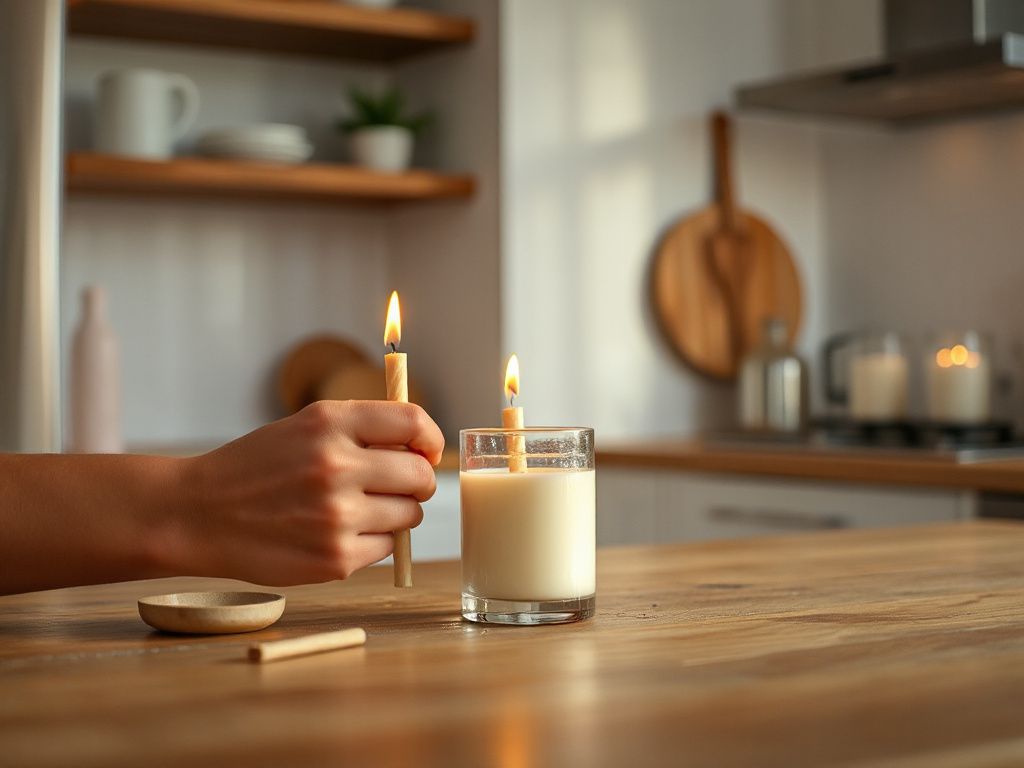
If you’re looking at holders, compare the opening before buying. A holder with a 3/4-inch socket grips a tiny taper correctly. A holder with a 7/8-inch socket leaves a visible gap—usually about 1/16 inch all around—and that gap is enough to let the candle tilt under its own weight or a breath of air.
Holder Fit: 3/4 Inch Is Not Optional
The most common cause of a dripping, unevenly burning small taper is a loose holder. You set the candle in, it looks fine, then ten minutes later it’s leaning like a late-summer sunflower. That lean changes the angle of the melt pool, so wax spills over one side and hardens in a lopsided skirt. The candle then burns down faster on the high side and slower on the low side, making the drip worse.
Why a Loose Holder Causes Uneven Burning
Wax melts from radiant heat and wick combustion. When the candle is vertical, the melt pool stays centered and the wick consumes it evenly. When the candle tilts even a few degrees, the pool shifts toward the low edge. Liquid wax runs down the side, cools into a drip, and removes fuel from the pool before the wick can burn it. This is not a draft problem—it’s a geometry problem. A properly fitted holder eliminates that variable entirely.
A 3/4-inch taper will lean in a holder meant for a 7/8-inch dinner candle, and that lean is the direct cause of most one-sided dripping. If your holder is old, check the socket with a caliper or a ruler. Vintage holders often have tapered sockets that were drilled for the old 7/8 standard. You’ll find that many vintage holders, as covered in our complete guide to vintage taper candle holders, were built for the older size. If the candle wiggles at all when you touch it, the fit is wrong.
Finding the Right Opening: What to Look For
Modern holders sometimes list the diameter explicitly, but many do not. The simplest test is to bring a tiny taper with you and insert it into the holder before buying. A correct fit holds the candle upright with no side-to-side play, but you can still remove it without twisting hard. If the holder has a spring clip or a set screw, that can accommodate a range of diameters, but those are rare for taper holders.
For outdoor use on a balcony, a snug fit matters even more. Wind pushes against the exposed length of the candle, creating a lever effect at the base. The longer the candle above the socket, the more torque at the socket. A 4-inch tiny taper has a shorter lever arm than a 6-inch one, so shorter candles handle gusts better. But a loose socket will defeat even a short candle.
Burn Time and Wick Discipline for Small Flames
Because the wax volume is small, a tiny taper burns out fast. Most burn for 1 to 1.5 hours, rarely reaching 2 hours. That is a fraction of a standard dinner candle, which can go 6 to 8 hours. If you set a table for a long dinner and light the tiny tapers at the start, they’ll be stubs before dessert. Plan to light them just before guests sit down, or have replacements ready.
The 1/4-Inch Rule Is Non-Negotiable for Tiny Tapers
Every taper wick should be trimmed to 1/4 inch before lighting. For a tiny taper, that length is not just a recommendation—it’s a mechanical requirement. A longer wick draws more liquid wax than the small melt pool can supply. The flame grows tall, flickers, and produces soot. Because the pool is so small, the excess fuel either burns as smoke or spills down the side as a drip. Trim to 1/4 inch with scissors or a wick trimmer every time you light, including relights after the candle has burned partway.
A wick that is too short starves the flame; the flame becomes small and may drown in its own melt pool. The sweet spot is exactly 1/4 inch above the solid wax surface. If you see a mushroom-shaped carbon ball at the tip after burning, the wick was too long at some point. Pinch off the carbon before relighting.
Why a Tiny Taper Drips Even When There’s No Draft
Dripping without a draft usually comes from three causes: a wick longer than 1/4 inch, a holder that doesn’t fit, or a wax blend without enough stearic acid. Stearic acid is a hardening additive that raises the melting point of paraffin and makes the wax burn cleaner with less dripping. Cheap tiny tapers sometimes skip it. Beeswax, by contrast, naturally has a higher melting point and tends to drip less than plain paraffin. If your tiny tapers drip from the first lighting despite a perfect holder and trimmed wick, the wax itself is the culprit.
Another factor is ambient temperature. On a warm balcony in summer, the outer layer of wax softens before the flame reaches it. That softened wax can sag or slip, causing drips even with a vertical candle. Keep tiny tapers in a cool place until you’re ready to light them, and don’t set them next to a grill or direct sun.
Wax Choice: Beeswax, Paraffin, and What That Means Outdoors
You have two realistic options for tiny tapers: paraffin or beeswax. Paraffin is a petroleum byproduct, cheap and widely available, but it burns faster and drips more unless the manufacturer added stearic acid. Beeswax is natural, comes from honeycomb, and burns slower with a warmer, honey-like scent. It also costs three to five times as much per candle. For an outdoor setting where wind shortens burn time anyway, paraffin’s lower price may make more sense. For an indoor table where you want a long, clean burn, beeswax justifies the cost.
Beeswax Burns Slower and Straighter—But Costs More
Beeswax has a higher melting point than paraffin, around 144–149°F versus 120–130°F for low-melt paraffin. That means the wax stays solid longer, the melt pool stays smaller, and the candle consumes its fuel more slowly. A beeswax tiny taper of the same dimensions as a paraffin one will typically burn 15–25% longer. The flame is also steadier, because the wax doesn’t flood the wick as easily. The trade-off is price, and the fact that beeswax candles are often only available in natural yellow or white unless dyed.
Paraffin and Stearic Acid: How Additives Change Behavior
Paraffin on its own is soft and oily, which is why it drips so readily. Adding stearic acid—a fatty acid derived from animal or vegetable sources—hardens the wax, raises its melting point, and reduces drips. A good paraffin tiny taper will list stearic acid in the ingredients. If the label only says “paraffin wax,” expect drips. Some manufacturers also add vybar or microcrystalline wax for similar effects. None of these additives are harmful when burned, but they affect burn time and soot production. If you’re sensitive to smoke, a beeswax tiny taper is the cleaner choice.
Don’t expect a tiny taper to purify the air, by the way. That’s a different category entirely, and some air cleaning candles make claims you should read carefully before believing. A tiny taper’s job is light and mood, not air filtration.
Storing Tiny Tapers So They Don’t Warp
Wax softens in heat and becomes brittle in cold. Store tiny tapers flat in a drawer or upright in a box with dividers, away from direct sunlight, radiators, and windows. A warm shelf near a south-facing window can cause the candles to bow into crescents. That bend makes them impossible to seat properly in a holder. If a candle warps, you can sometimes straighten it by warming it gently with your hands and rolling it on a flat surface, but prevention is easier than repair. Keep them in the same room temperature as your living space, not in a storage locker or garage that swings from freezing to hot.
Reusing Stubs, Mixing Colors, and Setting a Casual Table
Tiny tapers burn down to stubs quickly, so you’ll accumulate a pile of wax ends. Can you reuse them? Yes, within reason. Melt the stubs in a double boiler, remove the old wick bits, and pour the wax into a small mold or a heat-safe container with a new wick. The result is a votive or a melt, not a taper, because taper molding requires dipping or a vertical mold. But the wax isn’t wasted. This is a good weekend project if you have a dozen stubs; for one or two, it’s not worth the mess.
Mixing different-colored tiny tapers on a table works beautifully for a casual dinner. The only rule is to keep all candles the same height and diameter so the setting looks intentional rather than accidental. Two colors in alternating sequence is the easiest approach; three can get busy. If you’re setting a table outdoors, consider that darker wax colors absorb more heat and can soften faster in direct sun. Lighter colors hold up a little better on a warm balcony.
Melting Down Leftover Wax: Is It Worth It?
The math is simple: a tiny taper holds about 1 to 1.5 ounces of wax. After burning, you’re left with maybe 0.2 ounces of stub. Ten stubs give you 2 ounces—enough for one votive. If you enjoy the process of melting and pouring, go for it. If you just want to avoid waste, toss the stubs in a compost bin? No—paraffin doesn’t compost. Beeswax is biodegradable, but paraffin is not. Reuse or landfill are the only options. Melting stubs is the only way to keep paraffin out of the trash.
For a guide on handling larger wax formats, our large soy candles article discusses wax composition and burn behavior in bigger containers. Soy wax behaves differently from paraffin or beeswax, and it’s worth knowing the difference before you try to melt soy stubs into a new candle.
Mixed-Color Settings: Yes, With One Rule
There’s no functional reason to avoid mixed colors. Wax color does not affect burn performance in any measurable way, assuming the same wax base. The only practical caveat is that heavily pigmented candles sometimes leave colored residue on the holder rim if they drip. If you’re mixing colors on a table, put drip catchers or small saucers under each candle. That protects the tablecloth and makes cleanup trivial.
Fire Safety on a Balcony: Wind Is Not Your Friend
A balcony is a small, often enclosed space with wind, plants, and maybe wood furniture. A tiny taper’s flame is still an open flame, and it can ignite dry leaves, paper napkins, or a plastic chair just as easily as a larger candle. The National Fire Protection Association reports that candles start thousands of home fires every year, and the leading cause is leaving a burning candle unattended. On a balcony, unattended means even stepping inside for a glass of water while a gust blows the flame sideways.
Never Leave a Burning Candle Unattended—No Exceptions
This rule is absolute. A tiny taper has a small flame, but it can still ignite a nearby plant or curtain. Wind gusts on a balcony are unpredictable and can blow a napkin into the flame or tip a lightweight holder. The Consumer Product Safety Commission maintains recall alerts for candle holders that crack, tip, or overheat, so even a proper holder can fail. Always extinguish candles before leaving the room, even for a minute. Use a candle snuffer rather than blowing, because blowing can spray liquid wax onto surfaces.
Balcony-Specific Risks: Wind, Gusts, and Flammable Surroundings
If you light tiny tapers on a balcony, place them low and away from the railing edge. A candle in a tall holder acts like a sail; the wind pushes it over. Use a holder with a wide, heavy base, or set the candle inside a hurricane glass that shields the flame without restricting airflow too much. A hurricane with a bottom opening allows oxygen in while blocking cross-breezes. But never put a tiny taper inside a closed jar—the flame will consume oxygen and generate excessive heat, and the glass may shatter.
Keep a small fire extinguisher or a bucket of water within reach. It sounds extreme for a candle, but balcony fires spread fast because of wind. If a holder tips and wax spills onto a wooden deck, you want to douse it immediately, not run inside for a glass.
Frequently Asked Questions
How long do tiny taper candles burn compared to regular tapers?
A tiny taper typically burns for 1 to 1.5 hours, while a standard dinner taper can burn 6 to 8 hours. The shorter burn time is due to less wax volume and a smaller melt pool. Plan to light tiny tapers later in the evening or keep spares on hand for long dinners.
What size holder opening fits a tiny taper candle without wobbling?
You need a holder with a 3/4-inch diameter socket. A standard 7/8-inch socket will leave a gap that allows the candle to tilt, causing uneven burning and dripping. Always match the holder opening to the exact candle diameter, or use a foil shim for a temporary fix.
Why do my tiny taper candles drip even when there’s no draft?
Dripping without a draft usually means the wick is longer than 1/4 inch, the holder doesn’t fit snugly, or the wax lacks stearic acid or another hardener. Beeswax tiny tapers drip less than paraffin because beeswax has a higher melting point. Check all three factors before blaming the candle.
How short should I trim the wick on a tiny taper?
Trim to exactly 1/4 inch above the wax surface before every lighting. A longer wick draws too much fuel for the small melt pool, causing smoke and fast dripping. A shorter wick may drown in the melt pool. Use scissors or a wick trimmer, and remove carbon balls after each burn.
Can I leave a tiny taper candle burning while I step away from the balcony?
No. Never leave any burning candle unattended, even for a minute. On a balcony, wind can knock over a holder or blow flammable material into the flame. Extinguish the candle before you go inside, and use a snuffer rather than blowing to avoid spraying hot wax.
