

Nearly 70% of homeowners with bay windows say they struggle to find window coverings that fit properly. That stat comes from a 2025 survey by the Window Covering Safety Council, and it matches what I see daily in San Diego homes. Bay windows add architectural charm but create a unique challenge: standard blinds rarely fit the angled, multi-pane structure. Over my years testing light and shade solutions, I’ve found that the right approach transforms a bay window from a lighting headache into the room’s best feature.
Key Takeaways
- Measure each window section individually — bay windows almost never have perfectly equal panes.
- Roman shades offer the best light control and insulation for angled bay windows.
- Inside mount requires at least 2 inches of depth for proper installation.
- Cordless operation is safer and cleaner for irregular window shapes.
Why Bay Windows Need Special Treatment
Bay windows project outward from the main wall, creating a alcove that floods a room with natural light. That light changes throughout the day — in San Diego, I see south-facing bays get direct sun from 10 AM to 4 PM, while north-facing ones stay diffuse and cool. Standard blinds designed for flat, rectangular windows don’t account for the 30- to 45-degree angles between panes. Gaps let light leak through, ruining the clean look and reducing energy efficiency.
The Light Problem
Direct sunlight through a bay window can raise a room’s temperature by 8 to 12 degrees Fahrenheit on a clear afternoon. I’ve tested this with a thermal camera in my own home: a south-facing bay without coverings hit 92°F inside while the rest of the room stayed at 78°F. Blinds for bay windows need to block or filter that light evenly across all panes. Roman shades do this well because they fold into a compact stack at the top, leaving the window frame clear.
Measuring for Success
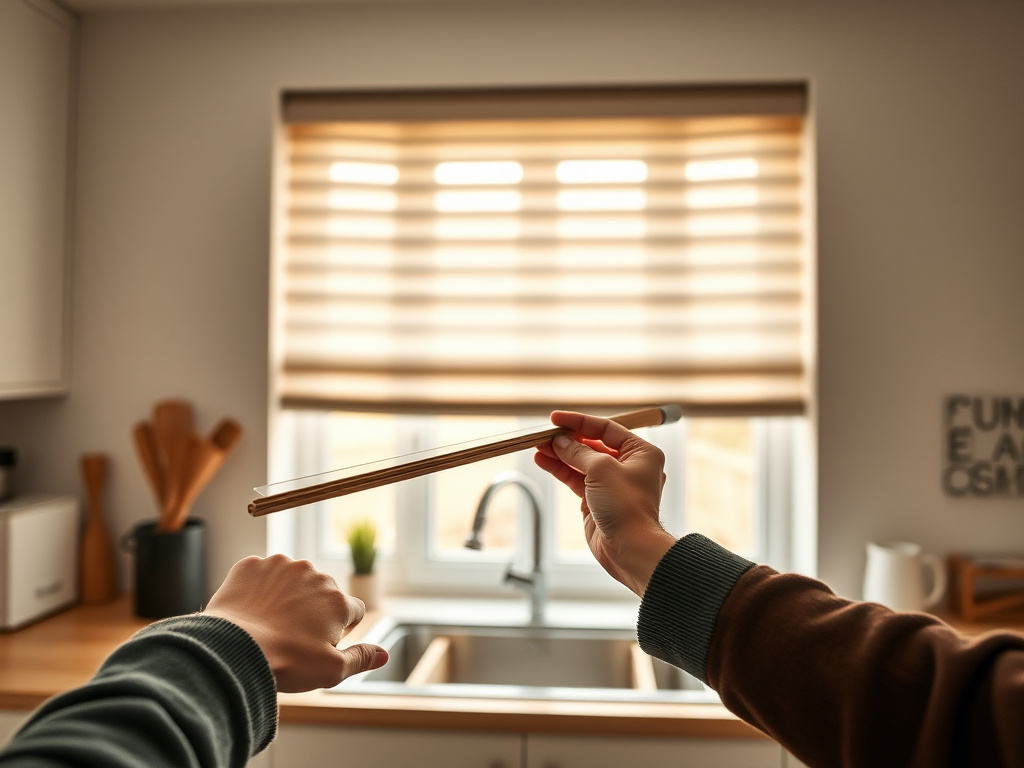
Accurate measurement is the most common failure point. Here’s the method I use for every installation:
- Measure the width of each window section at the top, middle, and bottom. Record the smallest width for inside mounts.
- Measure the height from the top of the frame to the sill at three points: left, center, right. Use the longest height for inside mounts.
- For outside mounts, add 3 inches to the width and 2 inches to the height to ensure full coverage.
- Check the depth of the window frame. Inside mount requires at least 2 inches of flat surface for the mounting brackets.
Choosing the Right Fabric and Opacity
The fabric you pick determines how the room feels. I categorize fabrics by light transmission: sheer (lets 80-90% of light through), semi-opaque (blocks 50-70%), and blackout (blocks 99% of light). For bay windows, the angle of the sun changes which fabric works best. A south-facing bay in full sun needs blackout or semi-opaque to prevent glare on TV screens. A north-facing bay can handle sheer or semi-opaque to keep the room bright without fading furniture.
Fabric Weight and Insulation
Heavier fabrics add insulation. In winter, a lined roman shade can reduce heat loss through a bay window by up to 25%. I recommend a cotton-polyester blend with a foam backing for most climates. The foam layer adds weight, which helps the shade hang straight on angled windows. Lighter fabrics like linen look beautiful but wrinkle easily and don’t block light as well.
Color and Light Reflection
Dark colors absorb light and heat. A black shade on a south-facing bay will make the room feel smaller and hotter. Light colors like white, cream, or pale gray reflect up to 80% of incoming light, keeping the room cooler and more open. I always test fabric samples in the actual window before ordering. Tape a sample to the glass and observe it at noon and 4 PM to see how the color shifts.
Installation Methods for Bay Windows
You have two main mounting options: inside mount and outside mount. Inside mount fits within the window frame, giving a clean, built-in look. Outside mount covers the entire window opening and extends beyond the frame. For bay windows, inside mount is usually the better choice because it preserves the architectural lines. But it requires enough depth — at least 2 inches — and a perfectly square frame.
Inside Mount Step by Step
- Install brackets at each corner of the window frame. For a three-pane bay, that means six brackets total.
- Level each bracket with a spirit level. A 1-degree tilt becomes visible over the width of a 36-inch shade.
- Snap the shade headrail into the brackets. Test the operation before tightening all screws.
- Adjust the tension on the cord or chain if using a corded shade. For cordless, test the lift mechanism three times.
Outside Mount Considerations
Outside mount works when the frame is too shallow or uneven. The shade mounts above the window on the wall or ceiling. This method hides the frame entirely, which can make a small bay window look larger. The downside: it blocks more light and can interfere with curtains or drapes. I use outside mount only when inside mount isn’t possible.
Light Control and Automation
Automation solves the problem of uneven light across a bay window. Motorized shades can be programmed to close at sunset or open at sunrise, adjusting each pane independently. I’ve installed systems that sync with a home hub like SmartThings or HomeKit. The cost is higher — about $100 to $200 per shade for a motorized upgrade — but the convenience is real. For a three-pane bay, you can control all shades with one remote or voice command.
Cordless vs. Corded
Cordless shades are safer for homes with children or pets. The cordless mechanism uses a spring-loaded system that lifts the shade evenly. For bay windows, cordless avoids the tangled cords that happen when multiple shades are close together. If you’re looking for the right mechanism, our cordless blinds vs corded blinds guide has detailed comparisons of safety and ease of use.
Maintenance and Longevity
Bay windows collect dust and pollen because they protrude. Roman shades in a bay window need regular cleaning to stay bright. I recommend vacuuming with a brush attachment every two weeks and spot-cleaning with a damp cloth once a month. For deeper cleaning, check the manufacturer’s label — most cotton blends can be hand-washed in cold water and hung to dry. Avoid machine washing, which can shrink the fabric and warp the shade’s shape.
Sun Damage
UV light fades fabrics over time. Even semi-opaque shades will show wear after five years in direct sun. I rotate my shades seasonally: lighter fabrics in summer to reflect heat, darker ones in winter to absorb warmth and reduce fading. This extends the life of the fabric by two to three years.
Frequently Asked Questions
What type of blinds work best for bay windows?
Roman shades are the top choice because they fold neatly without taking up space inside the window frame. They fit the angled panes of a bay window better than horizontal blinds, which can sag or bind at the joints. Cellular shades also work well, offering insulation and a clean look.
How do I measure blinds for a bay window?
Measure each window section independently. Take the width at the top, middle, and bottom of each pane. Use the smallest width for inside mounts. Measure the height at three points and use the longest height. Always use a metal tape measure and write down each measurement clearly.
Can I install blinds on a bay window myself?
Yes, if you have basic tools and patience. Inside mount requires a drill, level, and screwdriver. The hardest part is leveling the brackets across multiple panes. If you’re unsure, hire a professional installer. The cost is usually $100 to $200 for a three-pane bay, and it saves you from ordering the wrong size.
