

Most people think a roman shade has to be heavy, dark, and expensive to look good. I disagree. A faux roman shade valance gives you the look of a custom fabric shade without the weight or the cost. It’s about controlling how light enters a room, not just covering a window.
Key Takeaways
- A faux roman shade valance mimics the tailored folds of a real roman shade but uses less fabric, making it lighter and easier to install.
- Color temperature of the fabric affects how warm or cool your room feels — 3000K to 3500K works best for most living spaces.
- Installation is straightforward with basic tools: a level, drill, and measuring tape are all you need.
- Light control depends on the fabric’s opacity — choose a lining if you need blackout for bedrooms.
Understanding the Faux Roman Shade Valance
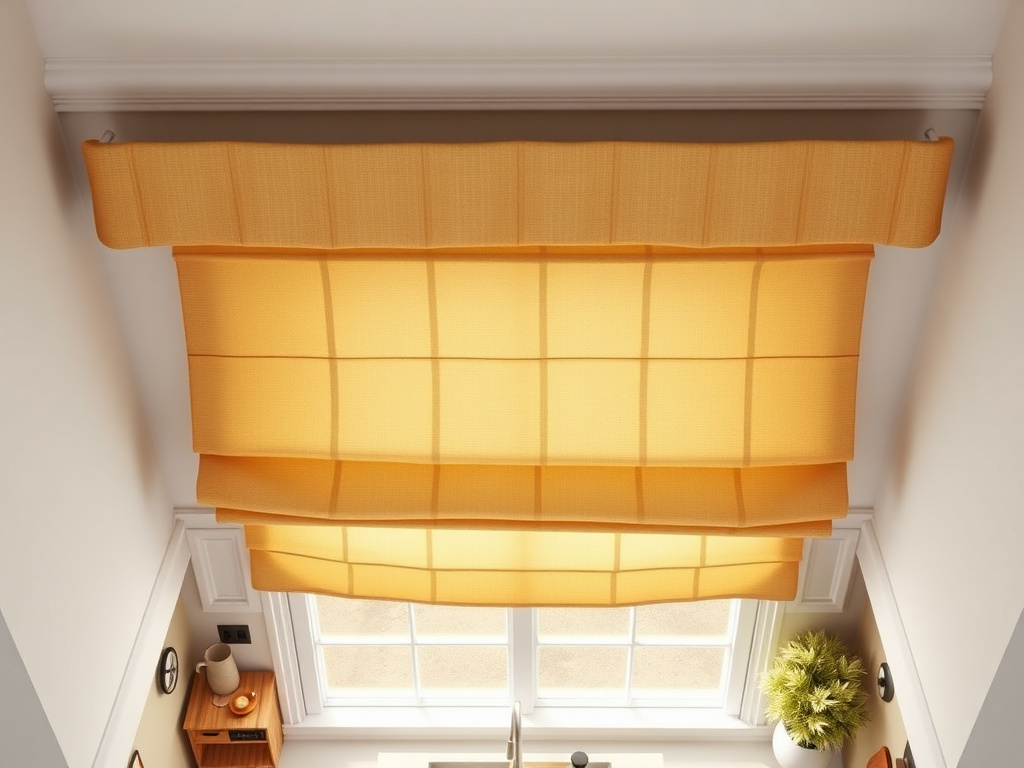
A faux roman shade valance is essentially a decorative valance that looks like the top portion of a roman shade. It doesn’t have the full mechanism to raise and lower — it’s fixed in place. This makes it a great choice if you already have blinds or shades underneath and just want a soft, finished look at the top.
In San Diego, where the sun is strong year-round, I see many homeowners pair a faux roman shade valance with cellular shades. The valance adds a layer of texture and warmth, while the cellular shade handles the actual light control. It’s a practical combo that doesn’t sacrifice style.
How Light Affects the Look
Light changes throughout the day. In the morning, east-facing windows get a cool, blue-toned light. By afternoon, west-facing windows are bathed in warm, golden light. A faux roman shade valance in a neutral beige or light gray will look different at 8 AM than at 4 PM. That’s why I always recommend testing fabric samples in the actual room before committing.
The color temperature of the fabric matters. A warm white (around 3000K) will feel cozy and inviting. A cooler white (around 4000K) will feel crisp and modern. If you’re unsure, start with a mid-tone — it’s the most forgiving.
Installation: What You Need to Know
Installing a faux roman shade valance is one of the easier DIY window projects. Unlike a full roman shade, you don’t need to deal with cords, pulleys, or a lifting mechanism. You’re essentially mounting a decorative panel.
Tools and Materials
- Measuring tape
- Level
- Drill with appropriate bits
- Screws and anchors (if mounting into drywall)
- Mounting brackets (usually included with the valance)
Step 1: Measure Your Window
Measure the width of the window frame or the area you want to cover. For an inside mount, measure the exact width of the opening. For an outside mount, add 4 to 6 inches on each side to ensure full coverage. Write down the measurements and double-check them.
Step 2: Mark the Bracket Positions
Hold the valance up to the window to see where you want it. Mark the bracket positions with a pencil. Use a level to make sure the marks are straight. Even a slight tilt will be noticeable in the finished look.
Step 3: Drill and Mount
Drill pilot holes at your marks. If you’re mounting into drywall, use wall anchors to hold the screws securely. Attach the brackets, then snap or slide the valance into place. That’s it — you’re done.
Choosing the Right Fabric and Lining
The fabric you choose determines how the valance interacts with light. A lightweight linen will let some light filter through, creating a soft glow. A heavier cotton or polyester will block more light and create a stronger silhouette.
Opacity Levels
- Sheer: Lets in the most light, good for a airy feel.
- Semi-sheer: Filters light while offering some privacy.
- Room-darkening: Blocks most light, ideal for bedrooms.
- Blackout: Blocks nearly all light, often with a special lining.
For a faux roman shade valance, room-darkening is usually enough. Since the valance is fixed, you don’t need full blackout unless you’re using it as a primary shade in a dark room.
Lining Options
If you want the valance to hang neatly and hold its shape, consider a bonded lining. This adds a layer of interfacing that gives the fabric body. Without it, lightweight fabrics can look limp. A bonded lining also helps reduce light bleed around the edges.
Maintenance and Care
Faux roman shade valances are low maintenance. Most can be vacuumed with a brush attachment to remove dust. For deeper cleaning, spot-clean with a mild detergent and water. Avoid machine washing unless the manufacturer specifically says it’s safe — the bonded lining can separate in the wash.
In coastal areas like San Diego, salt air can cause fabrics to fade faster. If your window gets direct afternoon sun, consider a UV-protective lining. It extends the life of the fabric and keeps the color from shifting.
Frequently Asked Questions
Can I install a faux roman shade valance over existing blinds?
Yes, absolutely. That’s one of the main reasons people choose a faux roman shade valance. It mounts to the top of the window frame or above it, leaving the existing blinds fully functional. You get the soft fabric look without losing the ability to adjust light or privacy.
How do I clean a faux roman shade valance without damaging it?
Start with a vacuum using a soft brush attachment. For stains, use a damp cloth with a drop of mild dish soap. Blot — don’t rub — to avoid spreading the stain. If the valance has a bonded lining, avoid soaking it. Air dry only. If you’re looking for complementary soft furnishings, our grand faux fur throw blankets guide has great options for cozying up your space.
What’s the best fabric weight for a faux roman shade valance in a sunny room?
A medium-weight fabric, around 8 to 10 ounces per square yard, works well. It’s heavy enough to hang nicely but light enough to allow some light through. Linen-cotton blends are a popular choice. Avoid very heavy fabrics like velvet unless you have strong mounting brackets and a solid wall.
