

Not long ago, a massage chair in a compact living room looked like a compromise. These days, I’m seeing more people squeeze a leather recliner massage chair into a studio corner or next to a bookshelf, and the room suddenly looks arranged rather than cluttered. That shift makes sense once you realize a good one works as a recliner, a reading spot, and a recovery tool all in one. If you’re also sorting through stationary seating for a reading nook, the way leather quality affects a leather wingback chair is a similar story, though the mechanisms differ completely.
I’ve spent a chunk of my professional life around recliner massage chairs — rearranging them, testing their creaks, and watching how they age. The thing I keep telling friends: most buyers overlook the distinction between the roller track and the leather quality, assuming any massage chair is essentially the same. The key differentiator is whether the track is a continuous L-shaped path that reaches the glutes and hamstrings, and whether the leather is top-grain rather than bonded, because bonded leather starts to crack and peel within a couple of years of regular use. I’ve also learned that zero gravity positioning is not just a gimmick — it genuinely reduces pressure on the spine, but only if the chair’s weight capacity and your body size allow proper alignment.
So if you’re scoping out a leather recliner massage chair for your apartment, let’s talk about what actually matters. I’ll keep it practical, same as I’d text a friend who found a promising floor model.
Key Takeaways
- An L-track roller path reaches the glutes and hamstrings; an S-track stops at the lower back, so your height and target areas should drive that choice.
- Top-grain leather outlasts bonded leather by years — bonded can flake within two to three years even with light use.
- Most massage chairs draw up to 200 watts and should plug directly into a wall outlet, never an extension cord.
- Weight limits, pacemaker warnings, and photocell sensors are safety features you cannot skip over, regardless of how good a chair feels in the showroom.
Why a Leather Massage Recliner Keeps Winning in Small Apartments
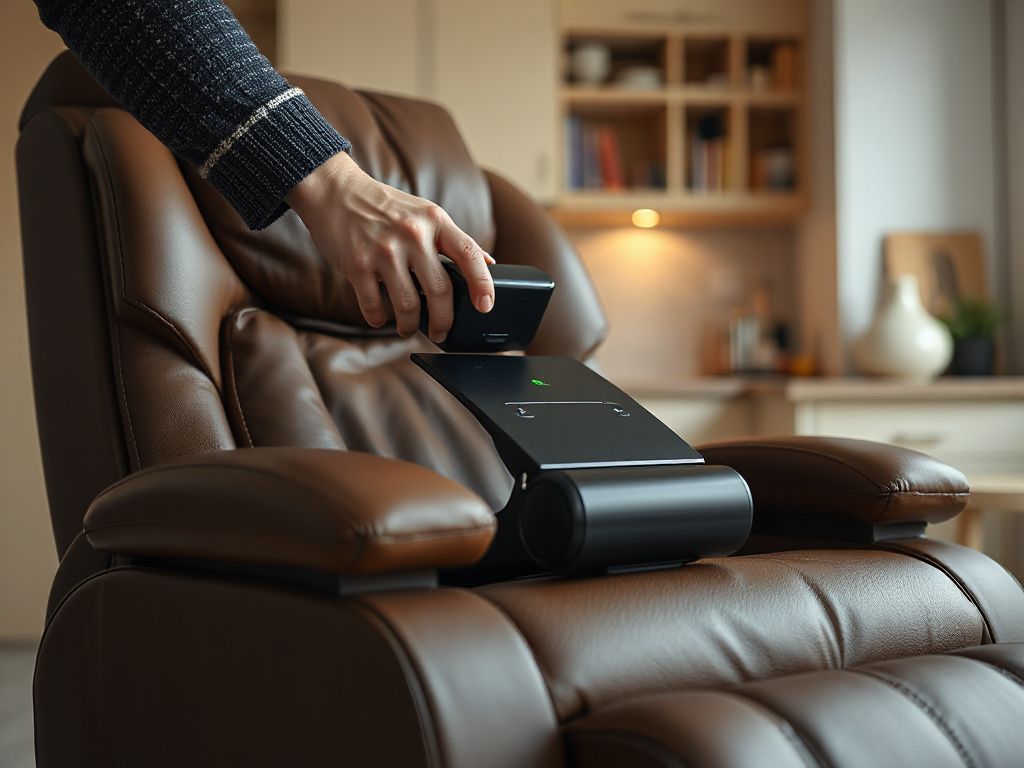
The apartment trend isn’t about having a spa room. It’s about replacing a bulky reading chair with one piece that does more. A leather recliner massage chair combines the look of an accent recliner with rollers and airbags that can work out lower back tension after a long commute. From a styling standpoint, leather reads intentional in a way fabric often doesn’t in a small space. A worn fabric rocker makes a corner look tired; a clean leather line makes the same corner look curated. That’s the same reason a green leather accent chair can anchor a seating group — the material carries visual weight without extra bulk.
Most frames that hold up for years are built on kiln-dried hardwood. That matters because the reclining mechanism and massage motors create repeated torque, and a softwood frame will creak or eventually split. You won’t see the frame, but you’ll hear it. Brands like Human Touch, Osaki, and Inada have spent years refining their internal chassis, and the ones built for apartment use tend to be narrower without sacrificing the roller track length. A standard recliner offers one position; a massage recliner changes the conversation because it actively works on your back instead of just holding you in place.
The Two Specs That Separate a Solid Chair from a Regret
When you’re comparing a leather recliner massage chair, skip the marketing photos and look at two things first: the roller track shape and the leather grade. Those two determine how the chair feels on day one and how it looks on day 700.
S-Track vs. L-Track: The Roller Path That Changes Everything
An S-track roller follows the natural curve of your spine, from the neck down to about the lower back. It’s the standard for older massage chairs and still perfectly good for shorter users or those who only want upper back and lumbar work. An L-track extends that path past the lower back and continues under the glutes and into the hamstrings. If you’re taller than about 5’10”, an L-track is almost always the better call because the longer path actually reaches the muscles that hold tension from sitting all day. The difference is not subtle: after a 20-minute session, an L-track chair leaves your glutes and upper hamstrings feeling worked over, while an S-track stops at the belt line and leaves that area untouched. Most buyers overlook this distinction, assuming any massage chair is essentially the same, and that’s why so many chairs end up barely used after the first month.
Top-Grain vs. Bonded Leather: The Two-Year Tell
Bonded leather is a layered product made from leather scraps glued to a polyurethane base. It looks smooth on the floor model, but repeated flexing from the reclining motion plus body heat causes that surface layer to micro-crack. Within two to three years, bonded leather starts to flake and peel, especially along the seat edge and the footrest. Top-grain leather, by contrast, is the outermost layer of the hide with the surface sanded for uniformity. It develops a patina rather than peeling, and it can last a decade or more with basic conditioning. I have seen bonded leather recliner chairs that looked ten years old after two years of daily use, while top-grain chairs from the same era still pass for new. If the chair you’re looking at lists “leather match” or “bonded leather” anywhere in the specs, treat that as a shorter-lifespan item.
Fit, Power, and What Actually Happens When You Press Start
Once the track and leather check out, the next layer is about your body and your wall outlet. Massage chairs are not one-size-fits-all, and ignoring the printed specs is the quickest way to break one or hurt yourself.
How to Confirm the Chair Fits Your Height and Weight
Every massage chair has a published height range and weight limit, usually in the manual and often on a sticker near the base. Exceeding the weight limit can damage the recline motor, strip the gears, and void the warranty. A chair rated for 300 pounds will fail early if a 330-pound person uses it daily, not because the frame breaks immediately but because the lift mechanism and roller carriage wear unevenly. For height, the shoulder airbags and neck rollers need to align with your actual neck and shoulders. If you’re under 5’2″ or over 6’2″, check the manufacturer’s stated range before buying; some chairs have adjustable shoulder positions, but most do not. The weight capacity is the hard limit you must respect, regardless of how comfortable the chair feels during a 10-minute demo.
Zero Gravity: Real Benefit or Marketing?
Zero gravity positioning reclines the chair so your knees are elevated roughly level with your heart, distributing your body weight across the seatback and reducing spinal compression. It is not a gimmick, but it only works if your body dimensions allow proper alignment. If the footrest doesn’t extend far enough for your legs, your knees hang awkwardly and the position puts pressure on your lower back instead of relieving it. Most chairs label this as a preset button, and using it during the last five minutes of a massage session tends to deepen the relaxation response. The US Consumer Product Safety Commission does not regulate zero gravity claims, but the biomechanical principle is straightforward: more reclined surface area equals less point pressure.
Electricity Draw and Placement
Most massage chairs draw up to 200 watts when the rollers and air compressor run at full speed. That’s less than a space heater but more than a laptop, so the chair should plug directly into a wall outlet. An extension cord, especially a thin indoor cord, can heat up and trip a breaker or ignite. The rule is printed in nearly every manual, yet I still see extension cords snaked behind apartment couches. Don’t do it. Look for a UL certification mark on the chair’s power cord or base, which means an independent lab checked the wiring and motor insulation for safe operation.
Air Pressure Massage vs. Roller Massage
Airbags work by inflating and deflating in sequence, squeezing your arms, calves, and feet to promote circulation. Rollers physically knead and tap along the track. A leather recliner massage chair typically combines both, but the ratio matters. Chairs with more airbags and a shorter track feel like a compression boot session for your legs, while chairs with a long L-track and fewer airbags feel like a deep tissue massage on your back and glutes. Neither is better by default; it depends on whether you carry tension in your shoulders or swelling in your lower legs. You can use the massage function while fully reclined — the rollers and airbags don’t care about the angle, and some programs even require full recline for the zero gravity sequence to engage properly.
Keeping It Running, Conditioning the Leather, and Staying Safe
Ownership doesn’t end at delivery. The maintenance schedule is simple, but skipping it turns a five-year chair into a two-year chair. And there are a few medical and mechanical warnings that you have to take seriously.
Leather Conditioning Schedule
Top-grain leather needs a conditioner every three to four months if you use the chair daily, and every six months with lighter use. Bonded leather cannot be conditioned effectively because the top layer is a plastic coating, not an open pore hide. Conditioning keeps the surface supple so the flex points along the seat and footrest don’t dry out and crack. Use a pH-neutral leather conditioner and wipe off excess with a microfiber cloth. This same routine applies to any leather furniture, so if you already care for a leather sofa, you know the drill.
What That Grinding Noise Means
If the massage mechanism starts making a grinding noise, stop using the chair immediately. A grinding sound usually means the roller track has debris caught in it, a roller bearing has worn out, or the recline motor is struggling against an obstruction. Continuing to run the cycle can strip the gears and turn a $50 repair into a full track replacement. Unplug the chair, remove the back cover if the manual allows, and look for hair, dust, or a loose roller head. If you can’t identify the problem, call a certified repair tech rather than poking around the internal wiring. Most massage chair motors are rated for about 1,500 to 2,000 hours of run time, which translates to roughly seven to ten years of daily 20-minute sessions before the motor needs service. But that assumes you never run the chair with an obstruction or exceed the weight limit.
Safety Concerns with Implanted Devices and Obstructions
People with pacemakers, defibrillators, or other implanted electronic devices should not use a massage chair without prior approval from a doctor. The massage motors and air compressors generate electromagnetic fields that can interfere with device function. This warning is not a suggestion; it appears in every reputable manual and is consistent with FDA guidance on medical device electromagnetic interference. If you have any implanted device, clear it with your cardiologist first. The same caution applies to anyone with a spinal fusion, recent surgery, or acute disc herniation — mechanical rollers can aggravate existing nerve compression just as easily as they can relieve it.
The safety photocell sensor, usually located near the lower leg and foot area, is a critical feature that stops the reclining action if it detects an obstruction, like a pet or a child’s arm. Never bypass or disable it. I’ve seen DIY tinkerers tape over the sensor to make the footrest close faster, and that’s how fingers get pinched. The sensor is there because the recline motor has enough torque to break small bones. Leave it alone.
One more thing about warranties and powered furniture: a massage chair’s electrical and mechanical parts are not covered forever. Most brands offer one to three years on parts and labor, with the frame often excluded from the warranty after the first year. Kiln-dried hardwood frames resist warping, but the reclining mechanism is the expensive part to fix. If you’re buying used or secondhand, ask for the service history and check whether the photocell still works before paying. And if you’re also comparing a standard powered recliner without massage, the complete guide to a power swivel recliner chair walks through similar motor and mechanism considerations.
Frequently Asked Questions
Is a zero gravity position actually better for my back, or is it just marketing?
Zero gravity significantly reduces spinal compression by elevating your knees and distributing weight across the backrest, but only if the chair fits your body. If the footrest doesn’t reach your calves properly, the position becomes uncomfortable and offers no benefit. Test it in person or confirm the chair’s height range before relying on that feature.
Can I use the massage function while the chair is fully reclined?
Yes, and in fact most zero gravity preset programs run the rollers and airbags only after full recline. The mechanism doesn’t care about the angle. Just be mindful that a fully reclined leather chair takes up more floor space behind it, so leave at least 12 inches of clearance from the wall.
How often do I need to condition the leather to keep it from cracking?
Condition top-grain leather every three to four months with daily use, and every six months with occasional use. Bonded leather cannot be conditioned and will flake regardless of what you apply. If you already use leather conditioner on a sofa, the same product works on the chair’s contact surfaces.
Are there any safety concerns with these chairs for someone with a pacemaker?
Yes, absolutely. Anyone with a pacemaker, defibrillator, or other implanted electronic device should not use a massage chair without prior approval from a doctor, because the motors and compressors can interfere. The FDA’s medical device guidance backs this caution. Get clearance before even sitting in one that’s plugged in.
What’s the most common mistake people make when first using a massage chair?
Cranking the intensity to maximum on the first session. That leads to muscle soreness, bruising, or sciatic nerve irritation. Start at the lowest roller pressure and airbag strength, then increase gradually over several weeks. Your back needs time to adapt to mechanical massage, same as a new exercise routine.
I’ll end with this: a leather recliner massage chair can be the single piece that makes your apartment look put together and feel lived in, but only if you buy one that fits your body, respect the weight limit, and keep up with the leather. The roller track and leather grade are the two details that tell you whether a chair will still be worth keeping three years from now.