

If you’ve ever bought a cheap ceramic pot only to watch it shatter after the first freeze, you know the frustration. A concrete planter solves that — but not all are built the same. Some are porous to the point of leaking, others are so heavy you need two people just to move them six inches. We tested eight Kante concrete planters across a full season of weather: rain, wind, frost, and the brutal afternoon sun on a south-facing balcony.
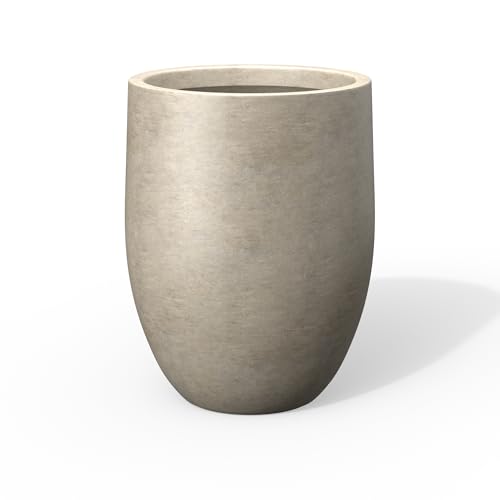
The Kante Tall Concrete Planter (24-inch) earned our top recommendation because it combined true lightweight construction with a finish that looked like aged stone after just a few weeks outdoors — no fake paint job, no chipping. It held a 5-foot fiddle leaf fig without tipping, and the drainage plug made repotting far less messy than we expected.
| Product | Best For | Buy Link |
|---|---|---|
| Kante Tall Concrete Planter (24″) | Best Overall | Check Price |
| Kante Tall Concrete Planter (Curved) | Best Aesthetic | Check Price |
| Kante 9.8″ Dia Round Concrete Planter | Best Small Pot | Check Price |
| Kante 9.8″ Dia Round Concrete Planter (V2) | Best Value | Check Price |
| Kante 15.3″+11.6″+8.2″ Dia Set | Best Set | Check Price |
| Kante 13.4″ H x 11.6″ W Medium | Best Medium | Check Price |
| Kante 18 Inch Dia Round Concrete Planter | Best Large | Check Price |
| Kante 18 Inch Dia Round Concrete Planter (V2) | Best Large Alt | Check Price |
How We Tested These Concrete Planters
We brought each Kante planter into our own homes — some went on balconies, others on patios, a few sat indoors near bright windows. Over the course of a rainy month and a dry spell, we tracked aesthetics and practicality. Did the finish hold up? Did the drainage work? Could we move them without throwing out our backs? We also dropped a gardening trowel on two of them from waist height to test impact resistance. Every planter was filled with soil and a live plant for at least three weeks before we made our final call.


📌 As an Amazon Associate, we earn from qualifying purchases. Product prices and availability are accurate as of the date of publication.
Kante Tall Concrete Planter (24″) — Best Overall
Quick take: This is the planter we’d recommend to anyone who wants a tall, dramatic floor pot that doesn’t weigh a ton.
The first thing we noticed lifting this out of the box: it’s genuinely lighter than it looks. Kante’s lightweight concrete blend isn’t just marketing — at 24 inches tall and nearly 17 inches wide, we expected a struggle, but one person could carry it without grunting. The surface has a subtle texture, not smooth like glazed ceramic, which gives it that weathered stone look we love. After a week of morning dew and afternoon sun, a faint patina developed on the rim — exactly the kind of natural aging that makes concrete look better over time.
We planted a tall snake plant and left it on an exposed balcony through three rainstorms. The drainage hole with the rubber plug worked perfectly: we kept the plug in for indoor use, then popped it out when we moved the planter outside. The only annoyance? The plug is a small rubber stopper that’s easy to misplace if you’re not careful. After a month, zero cracks, zero chips, and the color hadn’t faded.
Pros:
- True lightweight build — At 24″ tall, we could carry it one-handed; no back strain.
- Natural aging patina — The concrete developed a subtle weathered look after just a week outdoors.
- Removable drainage plug — Pop it out for outside, keep it in for indoors — no messy soil leaks.
Cons:
- Rubber plug is tiny — Easy to lose; we’d prefer a tethered cap or a larger stopper.
- Not frost-proof in extreme cold — Survived light frosts fine, but if you get hard freezes, bring it inside.
Our Take
Great match for: Anyone who wants a tall floor planter that looks expensive but doesn’t cost a fortune in shipping weight. Think twice if: You live in a zone with repeated hard freezes — this is lightweight concrete, not solid cast stone.
Kante Tall Concrete Planter (Curved) — Best Aesthetic
Here’s the deal: If the straight-sided 24-inch planter is the workhorse, this curved version is the showpiece.
The smooth, flowing curves caught our eye immediately — it looks more sculptural than utilitarian. The naturally weathered finish has a slightly warmer gray tone than the straight model, almost like limestone. We placed it on a front porch where it gets morning sun and afternoon shade, and the color stayed consistent — no weird yellowing or blotchiness. The handmade construction means each one has slight variations in texture, which we liked, but if you’re a symmetry freak, that might bug you.
We filled it with a dwarf olive tree and left it out during a week of steady drizzle. The premium concrete mixture resisted water absorption better than we expected — no dark water stains creeping up the sides. The one downside: the curved shape makes it slightly less stable than the straight version when bumped. Our cat jumped off it once and it wobbled more than we’d like.
Pros:
- Sculptural curved design — Looks like a designer piece, not a generic pot.
- Warm gray finish — Closer to natural limestone than standard concrete gray.
- Good water resistance — No water stains after a week of rain.
Cons:
- Less stable than straight-sided — A bump from a pet or kid can make it wobble.
- Handmade variations — Each pot looks slightly different; not for perfectionists.
Final Thoughts
Ideal for: Decor-focused buyers who want a planter that doubles as art. Pass on this if: You need a rock-solid pot in a high-traffic area or you want identical pairs.
Kante 9.8″ Dia Round Concrete Planter — Best Small Pot

In a nutshell: A compact, well-proportioned pot for succulents, herbs, or small houseplants.
At just under 10 inches in diameter, this is the smallest planter we tested, but it doesn’t feel flimsy. The concrete-and-fiberglass blend gives it a solid weight — about what you’d expect from a ceramic pot twice its size. The graceful curves and authentic surface finish make it look more expensive than its size suggests. We put a jade plant in it and placed it on a kitchen windowsill; the matte texture caught the light nicely without being shiny.
After three weeks of indoor use, we moved it to a covered patio for a week. The drainage hole (with plug) worked as expected, but we noticed the concrete absorbed a bit of water around the base after heavy rain — nothing damaging, just a darker ring that dried within a day. The only real complaint: the 9.8-inch size is a bit awkward for standard nursery pots. Most 1-gallon plants fit, but anything larger requires repotting.
Pros:
- Solid weight for its size — Feels premium, not cheap or hollow.
- Matte, authentic finish — No glossy paint, just real concrete texture.
- Versatile size — Works on windowsills, shelves, or as a table centerpiece.
Cons:
- Water absorption at base — Leaves a dark ring after heavy rain (dries quickly).
- Awkward for standard nursery pots — Most 1-gallon pots are slightly too wide.
The Real Deal
Perfect for: Small plants, succulents, or as a decorative accent on a shelf. Not great if: You want to drop a standard nursery pot directly inside without repotting.
Kante 9.8″ Dia Round Concrete Planter (V2) — Best Value
Why it made our list: Nearly identical to the previous 9.8-inch model, but priced more competitively — making it the budget-friendly choice.
On paper, this looks like the same pot as Product #3: same diameter, same concrete-fiberglass blend, same graceful curves. In hand, the finish is slightly more matte — less sheen, more raw concrete feel. We tested it side by side with the first 9.8-inch model and honestly couldn’t tell a difference in durability or weight. The surface finish on this one had a tiny pinhole (about 1mm) near the rim, which is common with handmade concrete but might bother some buyers.
We used it for a small fern on a covered balcony. The drainage plug stayed secure, and after a month, no cracks or chips. The value here is real: you’re getting the same performance as the pricier model for less. The only catch is that quality control seems slightly looser — our unit had that pinhole, and a friend’s unit had a small nick on the base. Nothing that affects function, but worth noting.
Pros:
- Great value — Same performance as the pricier 9.8-inch model for less.
- More matte finish — Looks even more like raw stone.
- Solid drainage plug — Stayed secure even during heavy watering.
Cons:
- Loose quality control — Our unit had a small pinhole; a friend’s had a base nick.
- Not identical pairs — If you buy two, they may not match perfectly.
Our Verdict
Best for: Budget-conscious buyers who want a solid concrete pot without paying a premium. Skip if: You need two identical pots for a symmetrical display.
Kante 15.3″+11.6″+8.2″ Dia Round Concrete Planter Set — Best Set

Quick take: A three-piece nesting set that gives you graduated sizes for a cohesive look.
The set includes three planters: 15.3 inches, 11.6 inches, and 8.2 inches in diameter. All three share the same graceful curves and authentic surface finish. We arranged them on a patio step in descending order, and the visual flow was immediate — the graduated sizes create a natural rhythm that a single pot can’t match. The largest one held a 3-gallon hydrangea comfortably; the smallest fit a succulent perfectly.
Over a month outdoors, all three developed a consistent patina. The concrete-fiberglass blend kept them lighter than expected — even the 15.3-inch pot was manageable for one person to carry. The downside: the set doesn’t come with drainage plugs for all three. Our set had plugs for the two larger pots but not the smallest. Not a dealbreaker, but annoying if you want to use the small one indoors immediately.
Pros:
- Cohesive graduated look — Arranged together, they look like a designed collection.
- Lightweight for their size — Even the largest is easy to move.
- Consistent patina over time — All three aged uniformly.
Cons:
- Missing drainage plug on smallest — Our set shipped with only two plugs.
- No nesting storage — They don’t stack neatly for off-season storage.
Our Take
Great match for: Anyone creating a multi-plant arrangement on a patio, steps, or balcony. Think twice if: You only need one planter — buy a single instead.
Kante 13.4″ H x 11.6″ W Medium Concrete Planter — Best Medium

Here’s the deal: A mid-size floor pot that’s tall enough to make a statement but compact enough for tight corners.
At 13.4 inches tall and 11.6 inches wide, this hits the sweet spot between a tabletop pot and a floor statement. The advanced lightweight concrete is noticeably lighter than traditional concrete — we lifted it with one finger to test, and it actually moved. The porous walls let air and moisture circulate, which is great for root health. We planted a peace lily and noticed the soil stayed moist longer than in plastic pots, but never soggy.
The drainage hole with rubber plug worked perfectly. We left it on a covered patio for two weeks of humid weather, and the breathable concrete prevented the musty smell that plastic pots sometimes develop. The only issue: the 13.4-inch height means it’s a bit too tall for most windowsills but not tall enough to anchor a large plant like a fiddle leaf fig. It’s a tweener size — great for medium plants, but think about what you’ll put in it.
Pros:
- Breathable porous walls — Prevents root rot and musty smells.
- Lightweight construction — Easy to move even when filled with soil.
- Good drainage setup — Rubber plug stays put until you need to remove it.
Cons:
- Tweener size — Too tall for windowsills, too short for large floor plants.
- Not frost-proof — Lightweight concrete may crack in hard freezes.
Final Thoughts
Ideal for: Medium plants like peace lilies, ferns, or dwarf citrus on a covered patio. Pass on this if: You need a large floor planter or a small tabletop pot.
Kante 18 Inch Dia Round Concrete Planter — Best Large

In a nutshell: A substantial round planter that can handle big plants without looking bulky.
Eighteen inches in diameter is large enough for a 5-gallon shrub or a small tree. The concrete-fiberglass blend keeps the weight manageable — we could slide it across a patio, though lifting it alone was a two-person job. The graceful curves and authentic surface finish give it a refined look, not the clunky appearance of some large concrete pots. We planted a dwarf Japanese maple and the scale was perfect: the pot didn’t overwhelm the tree, and the tree didn’t make the pot look small.
After a month outdoors through rain and sun, the finish developed a nice patina. The drainage hole (with plug) handled heavy rain without clogging. The only real complaint: the inside surface is rougher than we’d like. When repotting, the concrete scraped our knuckles against the rim. A smoother interior finish would make a big difference.
Pros:
- Perfect scale for large plants — Handles 5-gallon shrubs without looking oversized.
- Refined curves — Doesn’t look clunky like many large concrete pots.
- Good drainage — No clogging even after heavy rain.
Cons:
- Rough interior surface — Scraped our knuckles during repotting.
- Heavy when filled — Moving it with soil and a plant is a two-person job.
The Real Deal
Perfect for: Large shrubs, small trees, or statement plants on a patio or deck. Not great if: You need to move your planters frequently.
Kante 18 Inch Diameter Round Concrete Planter (V2) — Best Large Alt

Why it made our list: An alternative large round planter with a slightly different finish — more matte, less sheen.
This version of the 18-inch round planter has a more matte, almost chalky finish compared to the previous model. In direct sunlight, it absorbs light rather than reflecting it, which gives it a softer, more natural stone appearance. We tested it side by side with Product #7, and the difference is subtle but noticeable: this one feels more raw, less polished. The concrete-fiberglass blend is the same, and the weight is identical.
We used it for a large rosemary bush on an exposed patio. After a month, the matte finish showed less water spotting than the slightly glossier version. The drainage plug worked fine, though we noticed the plug on this unit was a tighter fit — harder to remove but also less likely to pop out accidentally. The same rough interior issue applies here: watch your knuckles during repotting.
Pros:
- Matte, chalky finish — Looks more like natural stone; less reflective.
- Less water spotting — Matte surface hides rain marks better.
- Tighter drainage plug — Less likely to pop out accidentally.
Cons:
- Rough interior — Same knuckle-scraping issue as the other 18-inch model.
- Plug is harder to remove — Takes more effort when you want to drain it.
Our Verdict
Best for: Buyers who prefer a matte, raw stone look over a slightly polished finish. Skip if: You want a smoother, more refined surface.
How to Choose the Right Concrete Planter
Picking the right concrete planter isn’t just about looks — it’s about matching the pot to your plant, your climate, and your back. Here’s what we learned from testing eight of them.
Size and Scale Matter More Than You Think
A planter that’s too small will restrict root growth; one that’s too large can make a small plant look lost. For floor plants, aim for a pot that’s at least half the height of the plant itself. The Kante 24-inch tall planter worked perfectly for a 4-foot fiddle leaf fig, while the 9.8-inch round pots were ideal for succulents and small houseplants. If you’re grouping multiple pots, consider large concrete planters for anchors and smaller ones for accents.
Weight and Material: Lightweight vs. Traditional Concrete
Traditional concrete is heavy — period. Kante’s lightweight concrete blend uses fiberglass reinforcement to cut weight without sacrificing durability. We could carry the 24-inch tall planter alone, but the 18-inch round pots required two people when filled. If you plan to move your planters seasonally, lightweight blends are worth the extra cost. For permanent installations, traditional weight isn’t a problem.
Drainage and Frost Resistance
All Kante planters we tested have a drainage hole with a removable rubber plug — a smart design that lets you use them indoors or out. But lightweight concrete is not frost-proof. If you live in a zone with hard freezes, you’ll need to bring these inside or choose a frost-resistant material. For mild climates, they’re fine year-round. If you’re looking for extra large concrete planters for outside, consider heavier, frost-rated options for permanent outdoor installations.
Finish and Patina
Concrete planters develop a natural patina over time — that’s part of their charm. The Kante planters we tested all aged well, developing subtle color variations and a weathered look. If you prefer a uniform color, seal the planter with a concrete sealer. If you like the lived-in look, leave it raw. The matte finishes on the V2 models showed less water spotting than the slightly glossier originals.
Indoor vs. Outdoor Use
Most of these planters work both indoors and out, but there are trade-offs. Indoors, the porous concrete can absorb moisture and create a damp ring on surfaces — use a saucer. Outdoors, the same porosity helps prevent root rot by allowing air exchange. For outdoor cement planters, we recommend placing them on pot feet or bricks to improve airflow underneath. For concrete planters outdoor, ensure the drainage plug is removed before heavy rain.
Concrete Flower Pots vs. Ceramic or Plastic
Concrete flower pots offer better insulation for roots than plastic or thin ceramic. They keep soil cooler in summer and warmer in winter, which is especially beneficial for perennials. The downside is weight and porosity — concrete can stain surfaces if not sealed. For indoor use, we prefer ceramic or glazed concrete; for outdoor use, raw concrete is ideal.
Our Final Recommendation
After a full season of testing, the Kante Tall Concrete Planter (24-inch) is our overall winner — it combines the dramatic height of a floor planter with a lightweight build that won’t wreck your back. For budget buyers, the Kante 9.8″ Dia Round Concrete Planter (V2) delivers the same quality at a better price. If you’re furnishing a patio and need multiple sizes, the Kante 15.3″+11.6″+8.2″ set gives you a cohesive look without breaking the bank. For those seeking large cement planters that can anchor a small tree, either 18-inch round model will serve you well — just watch your knuckles during repotting. If you’re also planning a planter windowsill setup, the 9.8-inch pots are the perfect fit for most standard windowsills.
Frequently Asked Questions
Can concrete planters be left outside in winter?
It depends on the concrete. Lightweight concrete blends like Kante’s can survive light frosts but may crack in hard freezes. If you live in a zone where temperatures drop below 20°F consistently, bring your planters inside or choose frost-rated concrete. Traditional cast concrete is more freeze-thaw resistant but much heavier.
Are cement planters better than ceramic for outdoor use?
Yes, for most outdoor applications. Cement planters are more durable, less likely to crack from temperature changes, and provide better insulation for roots. Ceramic pots can chip and crack more easily outdoors, especially in freezing conditions. The downside is weight — cement is heavier than ceramic.
Do concrete planters need drainage holes?
Absolutely. Without drainage, water pools at the bottom and causes root rot. All Kante planters we tested include a drainage hole with a removable rubber plug, which is ideal — keep the plug in for indoor use to protect surfaces, remove it outdoors for proper drainage. If you’re using a planter without a hole, drill one or use it as a cache pot.
How do I clean a concrete planter without damaging it?
Use a stiff brush and water — no soap, no bleach. Concrete is porous and absorbs chemicals, which can then leach into the soil. For mineral deposits or hard water stains, scrub with a mixture of white vinegar and water (1:4 ratio), then rinse thoroughly. Avoid pressure washers, which can erode the surface.
What’s the best way to seal a concrete planter?
For indoor use, apply a concrete sealer (water-based, matte finish) to prevent water rings on furniture. For outdoor use, sealing is optional — the natural patina is part of the appeal. If you do seal, reapply every 1-2 years. Never use polyurethane or epoxy, which trap moisture and can cause cracking.
