

A flat grayscale print ruins the design.
In black-and-white printable wall art, the tonal range and contrast are more important than color accuracy—a flat or muddy grayscale can ruin a design even at high resolution. The key distinction is understanding how paper finish and printer settings affect perceived depth: matte paper absorbs ink and softens blacks, while glossier surfaces give deeper blacks but introduce glare, so the choice depends on the artwork’s lighting and location. That single decision dictates whether your black and white wall art printable reads as art or as a printout.
Key Takeaways
- A printable needs at least 300 DPI at its native size to print sharply; many free files are only 72 DPI and turn blurry when enlarged.
- Use your printer’s true grayscale mode, not color-managed auto adjustments, or black-and-white prints can show a blue or yellow cast.
- Acid-free paper and archival pigment inks prevent yellowing and fade—critical if you want the print to last more than a few years on the wall.
What Makes a Black-and-White Printable Worth Printing
You can buy a digital file for less than the price of a coffee, but a cheap file often costs you more in wasted ink, paper, and frustration. The first thing I check before downloading any black-and-white printable is the file specification, because the listing rarely tells you the full story. A printable listed as 300 DPI will print sharp at its native size; many free files are only 72 DPI and blur when enlarged.
File Format: JPEG, PNG, or PDF?
The format matters less than the resolution, but it still affects your workflow. PDF is usually the safest for printables because the layout is locked—no surprises with scaling or missing margins. JPEG files work fine if they are high resolution and uncompressed, but opening and resaving a JPEG repeatedly can introduce compression artifacts that dull fine lines in line art. PNG is ideal for graphics with sharp edges or text since it uses lossless compression, though file size can be large. If you have a choice, pick the PDF or PNG over a heavily compressed JPEG.
Resolution and Scaling Limits
Here’s the rule I treat as non-negotiable: 300 DPI at the final print size. A file that is 300 DPI at 8×10 inches will not magically become a sharp 16×20. When you enlarge beyond the native size, the printer interpolates—guesses—new pixels, and that guesswork shows up as soft edges and lost detail in fine black lines. You can sometimes push a 300 DPI file up 20–30% larger without obvious loss, but beyond that the print looks noticeably fuzzy. If you want a large piece, source the file at the largest size offered or use vector-based art (like an SVG or EPS) that scales without loss.
Licensing: Read the Fine Print
Most black-and-white printables sold or given away online are for personal use only. That means you can print it for your own home, but you cannot print copies to sell at a craft fair, use it on merchandise, or upload it to a print-on-demand service. Check the license before you buy; some sellers allow limited commercial use for an extra fee. If you run a small business and want to decorate a storefront or office, personal-use licenses do not cover that. Digital art licensing is not a gray area—violating it is copyright infringement, plain and simple.
While you’re thinking about the wall, don’t ignore the floor beneath it. A black and white outdoor rug can anchor the same contrast palette in a patio or entryway, so the art doesn’t feel like it’s floating in a space that ignores its own foundation.
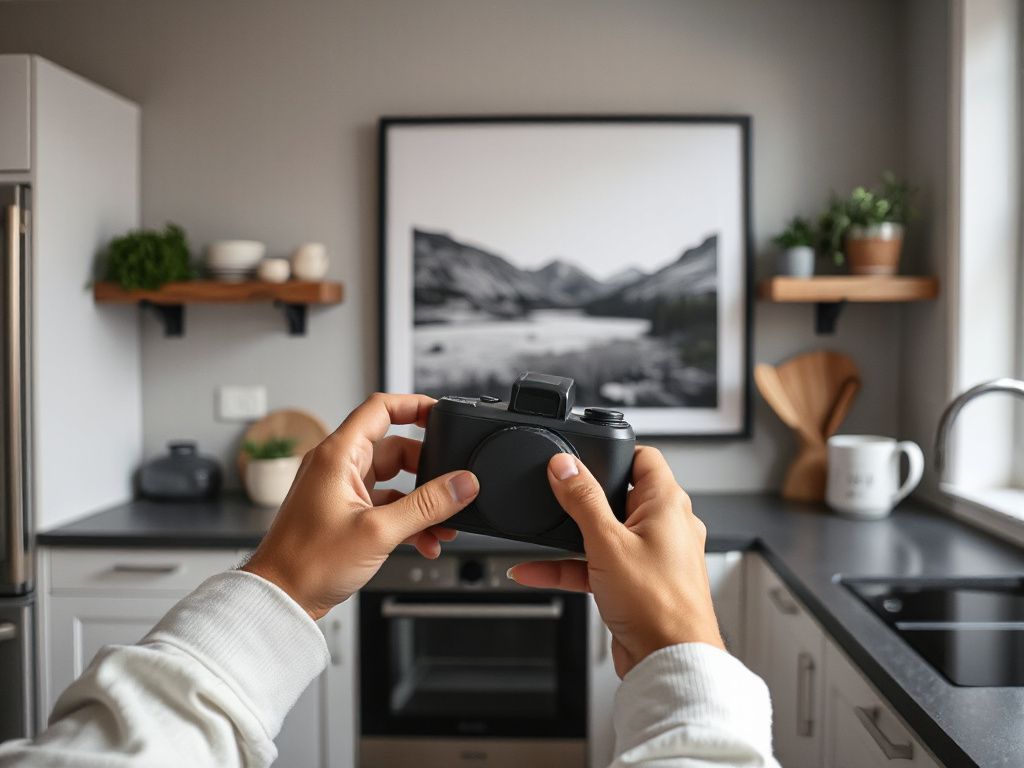
Printing at Home vs. Sending It Out
The next decision is where to print. A home inkjet printer is convenient and cheap per print if you already own one, but it has real limits. A professional print shop—FedEx Office, a local copy center, or an online photo lab—gives you access to better paper stocks and calibrated machines. Which route makes sense depends on the size, the paper you want, and how many times you’re willing to reprint to get it right.
Home Printing: The Friction Points
I lean toward home printing only for smaller pieces—8×10 and under—and only if you’re willing to spend ten minutes calibrating before you hit print. Most home printers are set to color-managed auto mode by default, and that mode tries to “correct” a black-and-white image by adding color. The result is often a subtle blue or yellow cast that you don’t notice until the print is on the wall next to a true neutral. Switch your printer driver to grayscale or black ink only, and disable any auto-enhance or photo correction setting.
Professional Printing: Less Friction, Better Paper
A print shop’s advantage is consistency. Their machines are calibrated daily, and they stock paper choices that most home printers cannot handle—heavyweight cotton rag, fine art matte, and true baryta. You can upload a PDF and pick up a print the same day at many places. For anything larger than 11×14, or for a piece you intend to frame without glass directly against the print, I would not use a home printer. The paper alone makes the difference worth the cost.
One more consideration: if you live in a humid climate, the dye-based inks in most home printers will smear if the print gets damp. Professional labs use pigment inks that are water-resistant and last decades longer. For a black-and-white piece you want to keep for years, pigment ink on acid-free paper is the baseline, not a luxury.
Getting the Tonal Range Right
Black-and-white art lives on contrast. A print with no true blacks and no clean whites looks flat and muddy, regardless of how sharp the lines are. The file itself can be perfect, but your printer’s calibration and paper choice determine whether the blacks come out deep and the highlights stay clean. This is where many people give up after one bad print, assuming the art itself was the problem.
CMYK vs. Grayscale: What to Send to the Printer
If you’re printing at home, you do not need to convert the file to CMYK. Home inkjet printers are RGB devices—they expect RGB data and do their own conversion internally. Converting to CMYK first can actually introduce color management confusion and shift the grayscale. If you’re sending the file to a commercial offset printer, then CMYK matters, but for an inkjet print shop or your home printer, leave it in RGB or true grayscale. Most print shops accept RGB PDFs and handle the conversion internally with calibrated profiles.
Paper Finish Changes Perceived Depth
Remember that first distinction: matte paper absorbs ink and softens blacks; glossy paper gives deeper blacks but reflects light. For most black-and-white wall art, I recommend a luster or semi-gloss paper as a middle ground. Luster papers (often called satin or pearl) give near-gloss black density without the mirror-like glare that washes out fine line work under gallery lights. True matte paper works well for soft, tonal pieces—think grayscale photography or abstract washes—but it kills a high-contrast graphite drawing because the blacks sink into the paper fibers and lose punch. Gloss is only right if the print will hang in a dim corner with no direct light source.
Framing and Longevity
Once the print is done, the next failure point is how you frame it. Black-and-white art fades and yellows for two reasons: UV light and acid migration from cheap backing boards. Both are preventable without spending a fortune. A black and white wall art printable can look like a gallery piece with the right frame, or like a dorm-room poster with the wrong one.
Matting and UV Protection
A mat is not decorative filler—it creates a physical air gap between the print and the glass, which prevents condensation from trapping moisture against the paper. Use an acid-free mat board (sometimes labeled archival or conservation) and acid-free backing. Standard glass blocks about 45% of UV light; if the piece hangs in a sunlit room, upgrade to UV-filtering acrylic or glass, which blocks 97–99%. The extra cost is usually $15–25 per frame and doubles the print’s life in bright conditions.
Choosing a Frame That Doesn’t Fight the Art
A thin black metal frame or a simple light wood frame works for almost any black-and-white print. Avoid ornate gold or heavily distressed frames unless the art style specifically calls for it—the frame should not compete with the tonal range you worked to preserve. If you’re framing a set of prints for a gallery wall, keep all frames identical in finish and thickness. A striped pattern on the wall pairs well with a black and white striped rug underfoot, but only if the stripes share the same visual weight as the art’s lines.
Where Black-and-White Art Works Best
High-contrast black-and-white prints hold their own in almost any room, but they shine in kitchens and bathrooms where color palettes are often limited and humidity can damage softer media. A black-and-white botanical print stands up to steam better than an oil painting, and it doesn’t clash with stainless steel appliances. For kitchen-specific choices, this guide to the best wall art for kitchens narrows down what holds up near steam and grease—the same logic applies to any printable you choose for that space.
Frequently Asked Questions
What file format should I download for a black-and-white printable?
Download a PDF or high-resolution PNG if available. PDF locks the layout and prevents scaling errors; PNG uses lossless compression so fine lines stay crisp. JPEG works only if it is saved at maximum quality with no repeated re-saving. Avoid any file under 1MB for a standard 8×10 print—it’s likely low resolution or heavily compressed.
What resolution do I need for a wall-art print to look sharp?
You need 300 DPI at the final print size. A file that is 300 DPI at 8×10 inches will not be sharp at 16×20. Enlarging beyond native size forces the printer to guess new pixels, which softens edges and loses fine detail. For larger prints, source the original at the largest size offered or use vector-based artwork that scales cleanly.
Is it better to print at home or send it to a professional print shop?
For pieces under 11×14 and a willingness to calibrate your printer’s grayscale mode, home printing is fine. For anything larger, a professional shop is the better choice: calibrated machines, better paper stocks, and pigment inks that resist fading and smearing. The cost difference is usually under $10 and saves you from multiple wasted reprints.
How do I stop my black and white wall art printable from fading or turning yellow?
Use acid-free paper and pigment-based inks, and frame the print behind UV-filtering glass or acrylic. Acid in cheap backing boards migrates into the paper and causes yellowing; UV light accelerates fading. A mat board also helps by keeping the print from touching the glass and trapping moisture. These three steps together extend the print’s life by decades.
