

Storage outranks reflection. That single priority separates a medicine cabinet you curse every morning from one you forget exists. The best bathroom medicine cabinet ideas apply that test before anything else—does the unit hold what you actually use, where you reach for it, without forcing a lean over the faucet?
A mirror over a sink is a tool, not a decoration. The distinction matters because a cabinet’s recess depth, door swing, and shelf layout determine whether you can grab toothpaste one-handed while half-asleep. Before choosing a style, look at the wall itself. Recessed cabinets need a cavity; surface-mounted units need no framing changes but stick out into the room. Both work, but only one fits your stud bay. Lighting angles and mirror quality decide how useful the reflection actually is. A deep cabinet with a poor backing fogs faster and shows streaks more. For a sleeker profile, a frameless medicine cabinet removes visible trim, but the installation rules stay the same.
Key Takeaways
- Recessed cabinets require an interior wall cavity of at least 3.5 inches deep; surface-mounted ones work anywhere but protrude into the room.
- Mount the cabinet so the mirror center sits 5 to 10 inches above the faucet spout, never lower than the light switch line.
- Tempered glass is a code requirement in bathrooms because it crumbles instead of shattering into sharp shards.
- Fogging is a condensation problem, and a heated mirror pad or anti-fog film solves it more reliably than wiping with shaving cream.
Recessed or Surface-Mounted? Bathroom Medicine Cabinet Ideas That Fit Your Wall
Before you pick a finish or a door count, decide how the cabinet attaches to the wall. This choice is driven by structure, not style. Get it wrong and you will be patching drywall or living with a cabinet that bangs your forehead every time you bend to spit.
What a recessed cabinet actually demands
Recessed installs sit inside the wall between studs. Standard stud spacing is 16 inches on center, giving you a 14.5-inch wide rough opening. The cabinet’s box depth must be less than the wall cavity depth—usually 3.5 inches for a 2×4 interior wall, but check for plumbing or electrical lines. You cannot recess into an exterior wall because insulation and vapor barriers block the cavity. According to the CPSC, tempered glass is required for safety in wet locations like bathrooms, and recessed units often use this glass for the door.
When a surface-mounted cabinet is the smarter play
If your wall is concrete, brick, or an exterior wall with insulation, surface mounting is the only option without major demolition. These units stick out 4 to 6 inches, so measure the clearance between the wall and the front edge of your sink. You need at least 2 inches of air gap between the cabinet bottom and the faucet handles when the door swings open all the way. Many surface-mounted designs include mirrored sides, which helps a narrow bathroom feel less tunnel-like.
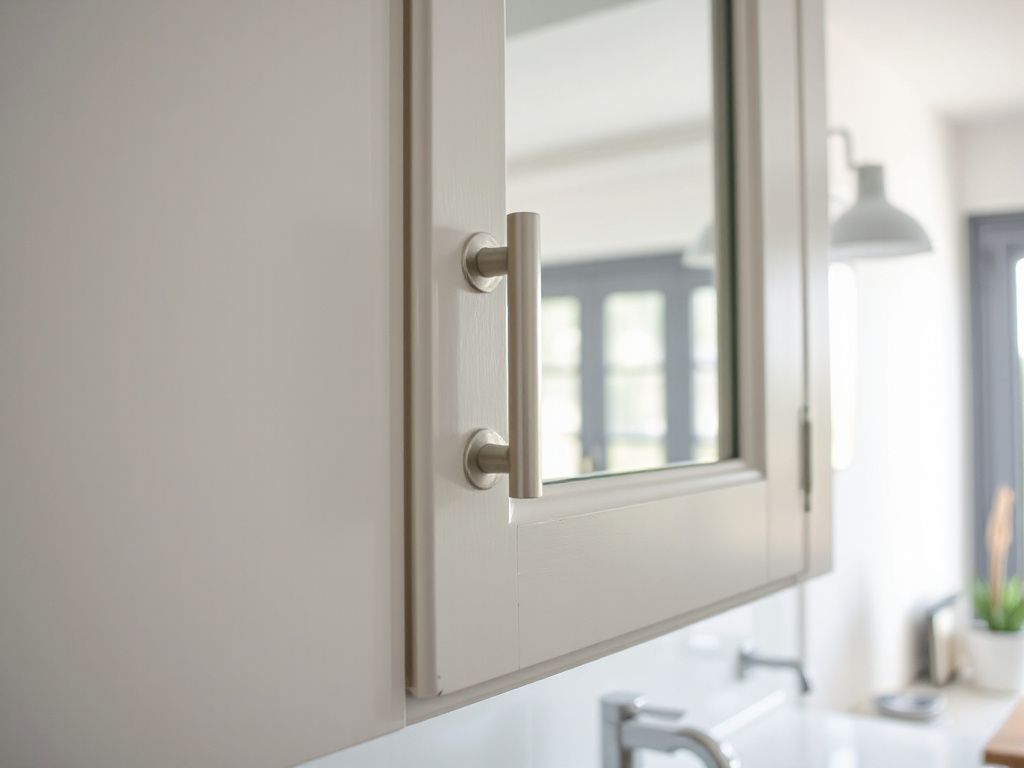
Sizing, Sightlines, and Mounting Height
Size is the second decision, and it is more about your body than your storage volume. A cabinet that forces you to duck under it or stand on tiptoes becomes a daily irritation. A 30-inch wide unit looks impressive but is useless if your stud bay only allows 16 inches without cutting a second stud.
Standard dimensions and how to measure your wall
Medicine cabinets come in standard widths of 16, 20, 24, and 30 inches. Height typically runs 24 to 36 inches. Depth for recessed models is 3.5 to 4.25 inches; surface-mounted runs 4 to 6 inches. To measure for a recessed unit, locate the studs with a magnetic stud finder. Your cutout must fit between two adjacent studs without nicking either one. Leave at least 1/4 inch clearance on each side. If your stud spacing is non-standard, check the complete guide to a small medicine cabinet for narrower options.
Getting the height right above the sink
The mirror center should align with your eye level, not the top of the sink. For a 5-foot-8 adult, that’s roughly 64 inches from the floor. Mount the cabinet so the bottom edge sits no lower than 4 to 6 inches above the faucet spout, depending on spout height. If you share the bathroom with someone shorter, split the difference and angle the mirror slightly downward. This prevents the daily neck craning that makes a cabinet feel like a chore. A medicine cabinet mounted with its bottom edge 6 inches above the faucet spout works for most adults, but households with children should lower that to 4 inches.
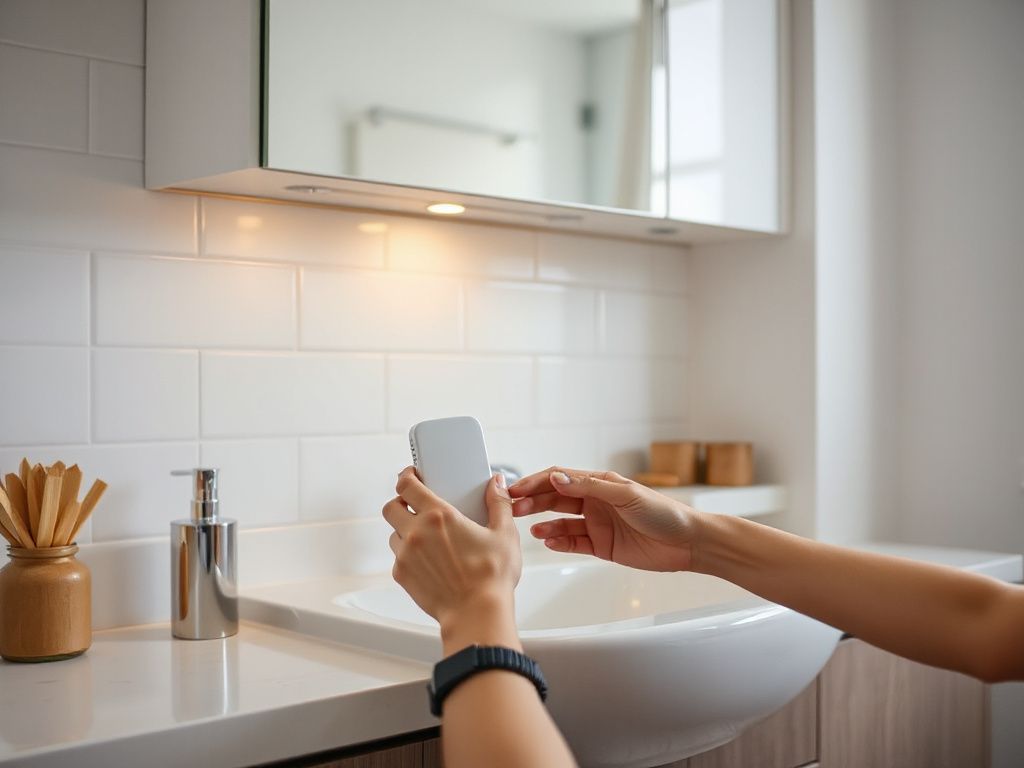
Mirror Glass, Defogging, and Cleaning for Daily Clarity
The mirror is the one part you look at every single day. Its quality determines whether you see your face clearly or a distorted, fogged mess. Glass choice is not just about safety; it changes how the cabinet performs over years of humidity and wiping.
Why tempered glass matters and backing material differences
Not all mirror glass is equal. Building codes require tempered glass for any door or panel that could break near water, because it shatters into small, rounded pieces instead of long shards. The ANSI Z97.1 standard governs this safety requirement. Beyond safety, the reflective quality comes from the backing: silver-backed mirrors give the truest color and least distortion, while aluminum-backed mirrors are cheaper but can develop a hazy edge over time in humidity. Check the listing for “copper-free silver backing” if you live in a damp climate. Copper-free silver mirror backing resists edge corrosion better than aluminum in humid bathrooms.
Preventing fog without overcomplicating it
Fog forms when warm, moist air hits a cold mirror surface. The fix is to keep the glass temperature above the dew point. A heated mirror pad installed behind the glass does this continuously and costs less than $100 in materials. If you don’t want to wire anything, apply a commercial anti-fog film—it traps a thin layer of air that slows condensation. Rubbing the glass with a drop of dish soap or shaving cream works for a day or two but leaves residue that attracts dust.
Streak-free cleaning methods
Skip paper towels and ammonia-based glass cleaners. Ammonia eats the edges of the mirror backing and causes black spots. Use a microfiber cloth and a mix of one part white vinegar to three parts distilled water. Spray the cloth, never the mirror, to avoid liquid seeping behind the frame. Wipe in an S-pattern from top to bottom, then buff dry with a dry microfiber cloth. For hard water spots, a paste of baking soda and water on a soft sponge lifts mineral buildup without scratching.
Wiring, Electrical, and Hardware Upgrades
Built-in lighting, outlets, and USB ports turn a plain cabinet into a functional station. But these upgrades add wiring requirements that many homeowners underestimate. A surface-mounted unit with a cord is simple; a recessed unit with an integrated light bar is a different project entirely.
Adding built-in outlets, USB ports, and lighting
Yes, medicine cabinets with integrated outlets and USB ports exist. They require a dedicated circuit or a properly wired junction box behind the unit. The National Electrical Code (NFPA 70) mandates that any outlet within 6 feet of a sink must be GFCI-protected. If you’re not comfortable adding a new circuit or tapping an existing one inside a wall cavity, hire a licensed electrician. The extra $200 to $400 in labor is cheaper than a fire or a failed inspection. GFCI protection is mandatory for any outlet within 6 feet of a bathroom sink, per the National Electrical Code.
Wiring considerations and when to call a pro
A freestanding surface-mounted cabinet with a cord and plug can be installed by any homeowner without opening the wall. A recessed cabinet with internal lighting needs to be hardwired, which means cutting into drywall, running Romex, and connecting to a junction box. That’s a professional job unless you have experience with residential electrical work. Never splice wires inside a wall without a junction box—it’s against code and a fire hazard.
Moisture Control, Replacement Mirrors, and Long-Term Durability
Bathrooms are wet rooms. Steam, splashes, and condensation work on every part of the cabinet, from the hinge screws to the mirror backing. A unit that looks fine on day one can show rust streaks and cloudy glass within a year if the hardware is cheap or the edges are not sealed.
Handling broken mirrors safely and replacement steps
If the mirror door cracks, the entire tempered glass panel needs replacement. Do not try to cut tempered glass—it is designed to fracture into small pieces upon impact and cannot be scored. Order a replacement from the original manufacturer using the model number printed inside the cabinet door hinge. To remove the broken panel, wear leather gloves and safety glasses, then peel off the old mirror from the adhesive, starting at a corner. Clean the door frame with denatured alcohol, apply fresh mirror adhesive, and press the new panel into place. Let it cure for 24 hours before closing the door. Tempered glass cannot be cut after manufacturing; a broken mirror panel must be replaced with a factory-cut piece.
Fighting rust and corrosion in humid bathrooms
The cabinet’s internal hardware fails before the glass does. Look for 304-grade stainless steel hinges and screws; 201-grade stainless looks similar but pits in a year of steam. Sealed edges around the mirror backing prevent moisture from creeping behind the reflective layer. The EPA recommends controlling bathroom humidity below 60% to prevent mold, which also protects your cabinet’s finish. Run the exhaust fan for 20 minutes after a shower, or leave the cabinet door cracked open overnight to dry out the interior.
Frequently Asked Questions
How do I know if my wall can support a recessed medicine cabinet?
Locate the studs with a magnetic or electronic stud finder. A recessed cabinet needs two adjacent studs at 16 inches on center (14.5 inches apart). Check the wall cavity depth by drilling a small test hole or removing the baseboard. You need at least 3.5 inches of clear space without plumbing or electrical lines. Exterior walls almost never work because insulation fills the cavity.
Why does my bathroom mirror fog up even with the exhaust fan running?
Your fan might be undersized, clogged, or venting into the attic instead of outside. Even a working fan cannot prevent all condensation if the mirror glass is much colder than the air. A heated mirror pad behind the glass raises the surface temperature above the dew point, stopping fog instantly. Anti-fog films provide a less permanent but effective alternative.
Can I replace just the glass in my medicine cabinet, or do I need a whole new unit?
You can replace only the glass panel if the frame and hinges are still solid. Order a factory-cut tempered panel from the manufacturer using the model number. Do not cut standard mirror glass to fit—it is not tempered and violates bathroom safety codes. Installation takes about an hour with adhesive and basic hand tools.
What are the best bathroom medicine cabinet ideas for a rental without damaging the wall?
Choose a surface-mounted cabinet that hangs on two screws or a French cleat, then patch the holes before moving out. Adhesive-mounted or tension-mounted options work on smooth tile but hold less weight. A freestanding mirrored storage tower next to the sink avoids wall changes entirely while giving you the same daily access to toiletries.
