

Most medicine cabinets are installed wrong. I’ve mounted and repaired dozens of these cabinets in bathrooms built from 1923 to last summer, and the sequence of errors is almost always the same: someone trusted the plastic anchors in the box, ignored the center stile, or tried to level a door by bending a hinge pin that wasn’t designed to bend. A two door medicine cabinet looks like a straightforward upgrade—double the mirror, double the storage—but the mechanics are nothing like a single-door unit. The thing beginners miss: two-door cabinets aren’t just a wider box. They have a center stile between the doors, which changes how you load shelves and how the doors swing. I always check the hinge type and whether the door leaves are independently adjustable, because most alignment problems come from trying to force a shared pivot hinge that wasn’t meant for a heavy mirrored door. The mirror itself is purely decorative—the actual weight is carried by the frame, so if you ever have to pry off a stuck door, you’re working against the frame, not the glass. Get the hardware and anchoring right, and the rest falls into place. Skip them, and you’ll be staring at a crooked reflection within 18 months.
Key Takeaways
- The mirror glass on any code-compliant cabinet must meet ANSI Z97.1 safety glazing—this isn’t a premium feature, it’s a residential legal requirement that protects against injuries from shattered glass.
- Never rely on the included plastic wall anchors. A loaded two-door cabinet easily exceeds 50 pounds, and drywall-only mounts fail in humid, high-vibration bathrooms. Use toggle bolts rated for at least 50 lb or anchor directly into blocking.
- Door alignment hinges on individual adjustability. Sagging gaps almost always trace back to hinges that weren’t rated for the mirrored door’s full weight or a shared pivot that can’t be corrected without replacing the hardware.
- Seal every exposed wood edge, including the inside shelf pegs and mounting cutout edges. Even moisture-resistant MDF absorbs humidity through unsealed nicks, causing swelling that warps the frame and jams doors.
What Separates a Two-Door Medicine Cabinet from a Single-Door Unit
A casual shopper sees an extra mirror panel and assumes the big difference is width. That’s the superficial layer. What actually sets a double-door cabinet apart is the center stile—the vertical strip of frame material running down the middle where the two doors meet. That stile isn’t just decorative. It’s the mounting surface for both magnetic catches or latch plates, and it changes shelf access completely. With a single door, you swing one panel open and reach across the entire interior. With two doors, each side opens independently, but the stile splits the front opening into two narrower compartments. If you store tall bottles, they have to angle in across that divide. That’s workable, but only if you plan shelf height around the bottle caps.
Hinge design is the second non-negotiable difference. A well-made two-door cabinet uses full-extension hinges on each leaf, with separate adjustment screws for tilt and side-to-side alignment. Cheaper units sometimes run a single long piano hinge across the top and bottom—or worse, a shared pivot pin—and that’s when the sagging starts. The mirrored door on a 30-inch-wide cabinet can weigh 10 to 15 pounds on its own. A hinge rated for half that weight will deform slowly under constant humidity cycles, leaving a quarter-inch gap at the top or bottom that nothing short of a hardware swap will fix.
The glass itself also demands verification. All mirror glass in a bathroom cabinet should comply with the American National Standards Institute (ANSI) Z97.1 standard for safety glazing. Tempered glass, when it breaks, crumbles into small, dull-edged pieces instead of sharp shards. Many imported cabinets skip this certification, and there is no quick visual test. If the box doesn’t print the ANSI mark alongside the tempered glass stamp, contact the supplier. A mirror that doesn’t meet Z97.1 is a legal liability in a residential bathroom, not just a safety concern.
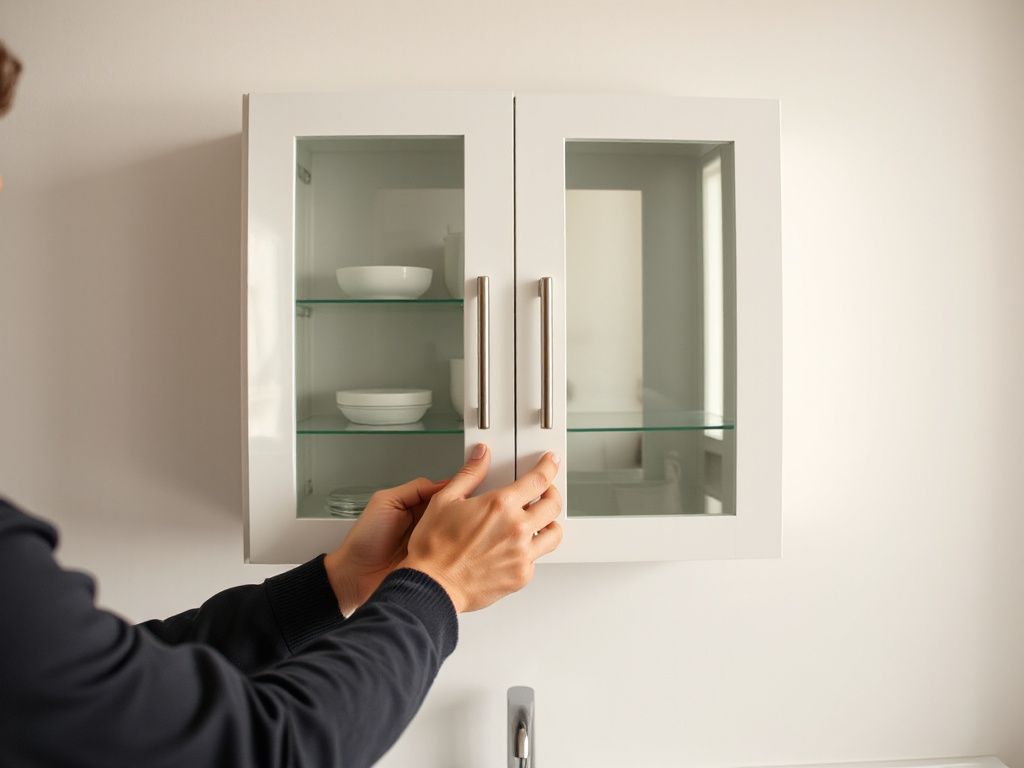
Surface-Mount vs. Recessed: The Wall Preparation That Decides Stability
This is the single most consequential choice before you even open the carton. A surface-mount cabinet bolts flat against the finished wall. It’s simpler to install because you only need to find studs (or use proper hollow-wall anchors) and hang it like a heavy picture frame. The downside is depth—it protrudes 4 to 6 inches into the room, which in a narrow bathroom means elbow-knocking every time you lean toward the sink.
A recessed cabinet sits inside the wall cavity between studs. It looks cleaner because only the door frame sits proud of the drywall, but the installation complexity jumps dramatically. You’re cutting into finished drywall, potentially relocating electrical wiring or plumbing vent stacks that run through that stud bay, and then building a mounting frame inside the opening. If the wall is load-bearing, you cannot safely remove or notch the studs without an engineer’s sign-off. This is not a weekend project for the unprepared.
Measuring a Rough Opening Without Regret
When replacing an existing recessed cabinet, measure stud-side to stud-side, not the finished drywall edge. I’ve seen openings where the drywall wrapped into the cavity, leaving a ¾-inch gap on each side that someone tried to fill with caulk. That never lasts. The rough opening width between the inner faces of the studs is the number the cabinet’s cutout width must match. Height is more forgiving because you can shim the top and bottom, but width errors leave an un-hideable gap. Standard recessed two-door cabinets expect a rough opening of 14.5 to 15 inches wide and anywhere from 22 to 34 inches tall. Surface-mount units don’t care about the cavity—only the available wall space between obstructions like light fixtures or towel bars.
Depth Considerations and the Plumbing Trap
Most wall cavities on interior framing are 3.5 inches deep (2×4 stud). That’s enough for a slim recessed cabinet, but many double-door models are 4 to 5 inches deep to accommodate larger bottles. If you’re mounting above a standard sink, the cabinet’s bottom edge needs to clear the faucet handle and the downward swing of the door, which usually means an 8- to 12-inch lift from the countertop. In bathrooms with a pedestal sink where storage is precious, a deeper cabinet sometimes justifies the recessed complexity. Just confirm there’s no drain vent or supply line running through the stud bay before you start cutting. A cheap inspection camera from any hardware store saves you from patching a PVC pipe you can’t move.
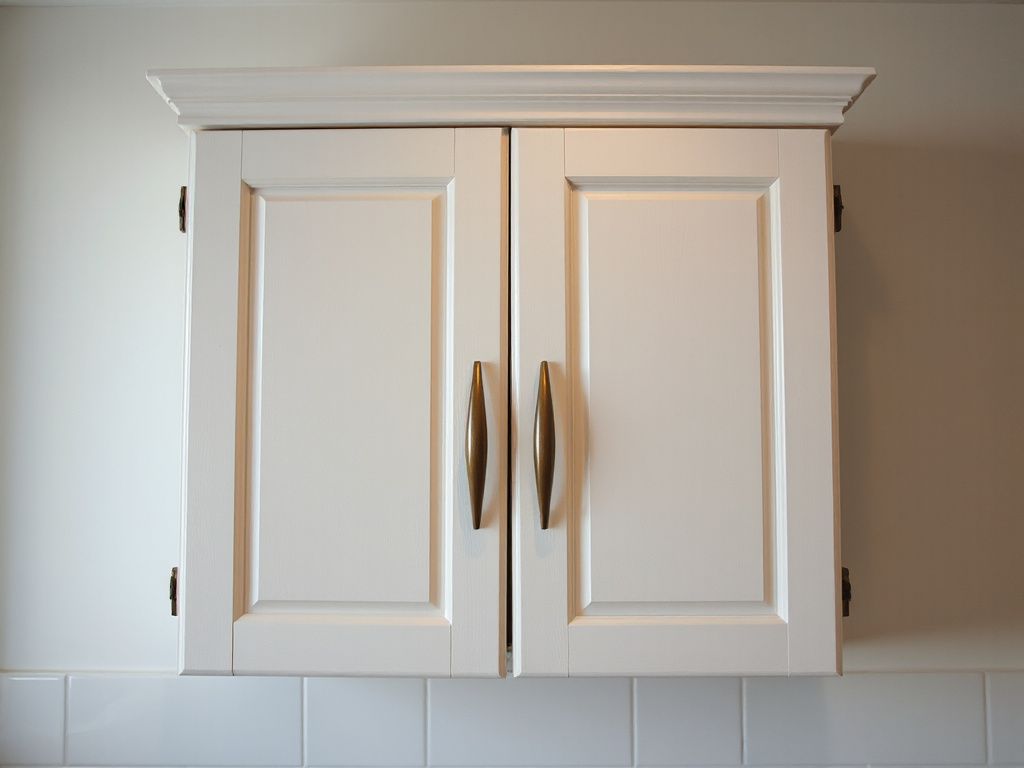
Anchoring a Wall Cabinet That Can Weigh 60 Pounds Loaded
This is where my safety-first approach turns non-negotiable. The mounting hardware included with most medicine cabinets—especially imports—consists of small plastic expansion anchors and #8 screws. Those anchors are rated at 15 to 25 pounds in ideal drywall conditions. A two-door cabinet with glass shelves, sheet metal body, and two heavy mirrored doors can weigh 35 pounds empty. Add 15 to 20 pounds of bottles, jars, and a charging toothbrush, and you’re easily over 50 pounds in a vertical dynamic load every time a door opens and the torque shifts. Plastic anchors fail catastrophically in bathrooms because of humidity cycling—the drywall around them softens, the anchor loosens, and one day the entire cabinet leans forward, pulling the top screws out of the wall.
Every mounting point must hit a stud or use a heavy-duty toggle bolt rated for at least 50 pounds in ½-inch drywall. If you can’t find a stud where you need one—common when centering above a sink—install horizontal blocking between the studs during a remodel, or use a surface-mount cleat system. A French cleat made from ¾-inch plywood, screwed into two studs with 3-inch #10 construction screws, will hold 200 pounds easily and lets you slide the cabinet into perfect alignment. For retrofit hollow-wall applications, Snaptoggle or Toggler brand anchors with solid metal bar backs are the minimum standard. Plastic toggles are not acceptable.
Once the cabinet is anchored, seal every exposed wood edge. Even cabinets labeled “moisture-resistant MDF” have a factory edge that’s barely sealed. The cutout around the mounting holes, the inside of shelf pin holes, and the back panel seams are all entry points for humidity. A small can of polyurethane varnish or a wipe-on dewaxed shellac takes ten minutes to apply with a foam brush. The EPA’s guidance on moisture control underscores that the primary defense against mold and material degradation is keeping water vapor from absorbing into porous surfaces. That unsealed shelf pin hole is exactly the kind of micro-gap that starts swelling within two weeks of a shower’s steam hitting it.
Door Alignment, Sagging, and That Annoying Pop-Open Problem
One door that won’t stay shut, or leaves a V-shaped gap on one side, is almost always a hinge problem—not a latch problem. The magnetic catch at the center stile works fine until the door pivots out of plane. The two main causes: the hinge screw holes in the MDF frame have stripped, or the hinge arm itself bent under repeated loading. Stripped screw holes happen because the factory drilled into bare MDF without pilot-stepping the screw to compress rather than tear the fiber. You can fix it by removing the screw, filling the hole with a mix of wood glue and sawdust, letting it cure hard, and re-drilling a tight pilot hole. But if the screw hole is near the edge and the MDF has swollen from moisture, the only permanent fix is to shift the hinge half an inch up or down into fresh material and patch the old hole with an epoxy filler.
If a door pops open spontaneously, check the magnetic catch first. The strike plate on the door might have shifted slightly so the magnet only engages halfway. Swap in a rare-earth neodymium magnet catch disc—they’re cheap and hold three times the pull force of the ferrite magnets in most stock catches. Also, verify the cabinet body hasn’t twisted out of square because the wall anchor pulled slightly. A twisted frame torques the door leaf, meaning the magnet lines up at the top but not the bottom. Solve the underlying anchor problem; don’t just add a stronger catch.
Realigning a Sagging Door Without Replacing the Frame
The adjustment screws on a quality European-style hinge let you raise the door by turning the top eccentric cam. On budget hinges without built-in adjustment, the sag correction is all manual. Loosen the mounting plate screws, lift the door to where the reveal gap is even, and retighten. If the screws don’t hold because the hole is wallowed out, the next step is inserting a small hardwood toothpick with carpenter’s glue into the hole, breaking it off flush, and screwing into that—it’s a time-tested cabinetmaker’s trick that lasts for years because the hardwood grain provides bite. For a door that’s also swinging open too fast, adjust the closing damper if the hinge has one; if not, stick a small silicone bumper pad on the center stile to absorb the impact instead of letting the magnetic catch take the full slam.
Rust, Streaks, and Mirror Fogging: Keeping the Cabinet Looking Fresh
The hinges and the lower door edge are the first places rust appears. A full-extension hinge with a nickel-plated finish resists corrosion better than raw steel, but even plating micro-scratches over years. To stop rust from forming around the hinge barrel, apply a thin coat of clear car wax to the metal surfaces twice a year. It seals off moisture and doesn’t gunk up the pivot like oils do. For the mirror, the cleansing rule is simple: never spray glass cleaner directly onto the mirror surface where it can run down and puddle at the bottom frame joint. That liquid seeps behind the glass and slowly degrades the silvered backing, causing black edge spots. Spray the cloth, then wipe. Microfiber cloths designed for optical lenses leave no lint and need no chemical cleaner for daily smudges—just water.
As for fogging, a two-door cabinet isn’t inherently more prone to it than a single, but the double hinges create more thermal bridge points. The cold metal frame touches the bathroom air while the back of the cabinet is warm from the wall cavity or heated from the wall side. The instant differential causes condensation for about 15 minutes after a shower. The low-tech fix: a portable demister pad plugged into the wall that warms the inner air space. Many modern cabinets now include a pre-wired demister, but retrofitting is possible with a stick-on heating element connected to the light switch. If you go that route, the pad must have a UL or ETL listing and be installed by an electrician if it ties into a circuit—damp bathroom wiring codes are strict for good reason.
Maximizing Interior Storage in a Split-Compartment Cabinet
Loading a two-door cabinet requires a different strategy. The center stile makes the left and right compartments essentially independent. That’s good for separating daily-use items from seldom-touched backups, but it kills the possibility of long horizontal storage. Tall prescription bottles and travel sprays have to tilt in from the side, which means the shelf height on the left might need to be lower than the right if you’re storing an electric toothbrush base on one side. Glass shelves offer more vertical adjustability than fixed melamine shelves, and they let light through if you add a small LED strip to the interior ceiling. However, glass shelves must be tempered and sized to carry at least 15 pounds each—the same ANSI Z97.1 requirement applies to internal glass, not just the door mirror.
For organizing dozens of small items without creating a cluttered avalanche every time you open a door, use compartmentalized bins that slide onto the shelf. The trick is to measure the interior width from the center stile to the side wall, not the total cavity width. That’s where our guide to small medicine cabinet layouts helps—many principles of vertical stacking and shelf-riser use in compact cabinets translate directly to the two-door format. If you’re storing tall Ayurvedic or essential oil bottles that exceed 8 inches, the bottom shelf often needs to sit just 3 inches above the floor of the cabinet to clear the door frame when swinging closed.
Repairing a Cracked Mirror and When to Replace the Entire Cabinet
A cracked mirror door is replaceable if the frame design allows it. Many metal-frame two-door cabinets have a removable gasket that holds the glass in the frame channel. You can order a replacement tempered mirror blank from a local glass shop—give them the exact width, height, and edge polish type, and specify tempered glass with the ANSI certification stamp. The cost is usually $40 to $80 for a single door panel, far less than a new cabinet. If the frame itself is bent or rusted through, however, saving it isn’t worth the effort; the sag will just transfer to the new mirror over time.
Painting the frame to match your bathroom trim is also doable with proper prep. Scuff the original finish with 220-grit sandpaper, apply a bonding primer made for metal and MDF, and then spray a moisture-cure paint that hardens in humid conditions. Standard latex wall paint will peel within a month because it can’t flex with the frame’s thermal expansion. And before painting, remove the doors and lay the cabinet flat to avoid paint pooling in hinge mortises.
If you’re weighing repair against replacement and considering a completely different style, a frameless medicine cabinet eliminates the frame entirely and often uses concealed hinges behind the mirror, which solves edge rust issues permanently. However, frameless models are typically single-door and lack the center stile storage split—so your organization will change accordingly.
Final word on secondhand vintage two-door cabinets: the charm of a 1940s enameled steel cabinet with beveled mirrors is real, but the safety requirement hasn’t changed. Pre-1970 mirrors are almost certainly not tempered. If you’re set on keeping it, have a glass shop laminate a safety film to the back, or replace the originals with new tempered glass panels. The weight savings alone can fix a decade-old sag.
Frequently Asked Questions
What’s the difference between a surface-mount and a recessed two-door medicine cabinet?
A surface-mount cabinet attaches directly to the finished wall face, protruding 4–6 inches. A recessed cabinet fits inside the stud cavity so only the door frame sits proud of the drywall, looking built-in. Surface-mount installation is simpler and leaves wall framing untouched, but consumes more room space. Recessed mounting demands cutting a rough opening between studs and dealing with potential electrical or plumbing obstructions; it’s visually cleaner but significantly more labor-intensive.
How do I stop my two-door medicine cabinet from sagging?
Sagging is almost always a hinge issue. First, tighten all hinge mounting screws on both the door and cabinet body. If the screw hole has stripped, fill it with a wood-glue-and-sawdust mixture, let it harden, and re-drill. Check whether the hinge arms themselves have deformed under the mirror’s weight; if they have, replace them with full-extension hinges that carry a static load rating of at least 30 lb per pair. Also verify the cabinet body is square and anchored securely to the studs—a twisted carcass forces doors out of plane.
Can I use toggle bolts to mount a two-door medicine cabinet if I can’t find a stud?
Yes, but only if the toggle bolts are rated for at least 50 pounds each in ½-inch drywall, and you use a minimum of four mounting points. Standard hollow-wall anchors included in packaging rarely meet that threshold. Metal snap-toggle anchors with solid bars distribute load across a larger drywall area and resist pull-out better in humid bathroom conditions. Always test the cabinet’s stability by hanging 60 pounds of weight inside before loading toiletries, and never mount a heavy cabinet solely into plaster-and-lath walls without imaging the lath condition first.
Does a two-door medicine cabinet need a demister or anti-fog coating?
It’s not required by code, but a demister significantly reduces the daily fog-up that occurs after a hot shower. Cold mirror surfaces and warm, humid room air create condensation that blocks reflection for 10–15 minutes. Stick-on heating pads that warm the mirror surface to just above dew point eliminate that frustration. Some two-door cabinets include integrated demisters wired to the bathroom light circuit; if retrofitting, use only UL-listed heating elements designed for damp locations and have a licensed electrician handle the connection to avoid shock risk.
For those considering alternative shapes, our oval mirror medicine cabinets guide covers the unique mounting hardware and hinge demands of rounded glass faces—many of the anchoring principles are identical, but the frame reinforcement points differ.
