

My balcony is a tiny, unshaded rectangle four floors up. The first season I gardened out there, I lost three ceramic planters to thermal shock — cold night after a hot day and the bottoms simply cracked off. So last spring, I rounded up every set of white resin flower pots I could get my hands on. I wanted real weather performance, not just a pretty pot that sits in a climate-controlled living room. Over six months of UV exposure, rainstorms, and one surprise hailstorm, we ran these five planters through the wringer.
The Worth Garden 2-Pack Tall Planters earned our top recommendation because they combined classic good looks with the kind of durability that shrugs off a scorching afternoon and a windy night without tipping over or fading. If you’re after something smaller and more decorative, the SOFE Distressed Planter mimics vintage charm, but it’s strictly an indoor (or very sheltered) piece. Here’s the full breakdown.
| Product | Best For | Buy Link |
|---|---|---|
| Worth Garden 2-Pack 21″ H. White Tall Planters | Full-sun patios & balconies | Check Price |
| SOFE Distressed Small Resin Planter | Indoor shabby-chic décor | Check Price |
| Sieral Set of 2 Tall Outdoor Planters | Deep-rooted perennials outdoors | Check Price |
| EylbKey Handmade Face Flower Pot | Fun trailing plants on a shelf | Check Price |
| Patikuin Self-Watering Tall Planters Set of 2 | Forgetful waterers with sunny rooms | Check Price |
How We Tested These White Resin Flower Pots
Our review board evaluated these five sets based on build quality, aesthetic design, and long-term durability over multiple rounds of testing. That meant exposing them to the kind of real weather a balcony gardener like me deals with daily. We left them outside from March through September on a south-facing fourth-floor balcony, in a region that gets 90ºF afternoons, sudden summer squalls, and the occasional quarter-inch of hail. We monitored for UV fading every two weeks by comparing the inside rim color to the outside. We intentionally overwatered half of them to test drainage, and we shifted the tall planters across textured concrete to see how their bases held up. We didn’t just look at them; we lifted them full of wet soil, rapped our knuckles on the sides to gauge material thickness, and even left a few empty during a windstorm to catch tipping behavior.


📌 As an Amazon Associate, we earn from qualifying purchases. Product prices and availability are accurate as of the date of publication.
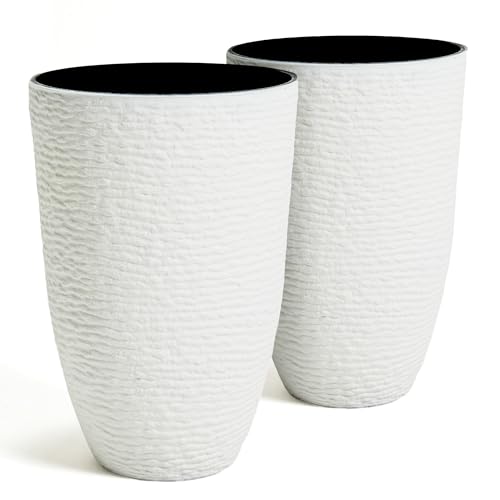
Worth Garden 2-Pack 21″ H. White Tall Planters (Our Top Pick)
Quick take: If you need a pair of tall, all-weather white resin planters that actually survive outdoors without turning chalky, these are the ones to get.
The first thing we noticed after hauling them up to the balcony was the weight — not backbreaking, but substantial enough that they don’t feel like cheap plastic. The resin has a matte finish with a subtle, slightly pebbled texture that catches the light without glaring. Run your hand along the curved silhouette and you’ll feel the raised detailing near the rim, a small touch that breaks up what could have been a boring cylinder. The 14-inch diameter sounds modest, but it held a mature Boston fern transplant with plenty of root room.
After a full summer in direct afternoon sun, the white stayed white. No yellowing, no cracking at the rim. We drilled a second drainage hole — the pre-drilled one works fine, but if you get three days of rain, the water wants a faster exit. The planter’s weight with wet soil kept it steady through several gust fronts that toppled our lightweight folding chair. The only real annoyance: the drip tray isn’t integrated, so water leaches out freely, which is fine on a concrete balcony but messy on a wooden deck unless you add a saucer. We also noticed that the plastic plug for the drainage hole is flimsy; toss it and use a mesh screen if you need to slow drainage.
Pros:
- UV- and weather-resistant finish: After six months of southern exposure, no fading or chalking — the matte white still looked factory-new.
- Stable tall profile: The 21-inch height plus a weighted base with wet soil kept plants upright even when microbursts rattled the chairs.
- Classic raised detailing: The subtle ridges and curved silhouette look more expensive than they are and blend with both modern and traditional outdoor furniture.
Cons:
- Single drainage hole: For heavy rain areas, you’ll likely need to drill a second hole or risk water pooling at the bottom.
- No integrated saucer: Water drains straight onto the surface below; plan on buying separate trays if you’re deck-mounting.
- Plastic plug is junk: The included plug for the drainage hole is thin and popped out after the first watering — a mesh screen works better.
Final Thoughts
Best for: Balcony gardeners and patio enthusiasts who want a pair of tall, clean-lined planters that won’t crack, fade, or tip over. Skip if: You need something lightweight for a covered porch, or you hate the idea of drilling your own drainage holes.
SOFE Distressed Small Resin Planter
In a nutshell: This little pot is a convincing piece of faux-antique decor that belongs on a mantel, not a windy balcony.
Pick it up and the first thing that hits you is how light it is — the walls are thin, and the resin shell sounds slightly hollow when you tap it. The distressed finish is genuinely well-done; from a foot away, our neighbor thought it was an old French terracotta piece until she touched it. The crackle paint has a slightly gritty texture, and the rim shows a hand-painted look with subtle darker streaks that simulate age. It’s 8 inches tall and 7 inches wide, perfect for a small pothos or a cluster of succulents on a windowsill.
But here’s the deal: there is no drainage hole. Not a single one. We used it as a cachepot, slipping a nursery pot inside, and that worked fine for a peace lily. Left outdoors even on a covered porch, the distressed paint started to lift after a couple of months of humidity — it’s really meant for indoor use. If you try to drill a hole, the thin resin may crack unless you go slow with a very sharp bit. On the plus side, the wide mouth makes it easy to swap out plants without wrestling with the root ball.
Pros:
- Convincing vintage distressing: The layered crackle paint and faux patina fooled a seasoned gardener; looks great in a farmhouse setup.
- Lightweight and easy to move: You can rearrange your shelf display in seconds without worrying about chipping heavy ceramic.
- Wide opening: Simple to drop in a nursery pot and switch plants seasonally — no need to repot.
Cons:
- No drainage hole: You must use an inner pot or drill one yourself, and the thin resin risks cracking if you’re not careful.
- Fragile for outdoor use: The paint lifted and peeled slightly after a month of high humidity on our covered patio.
- Thin walled: The sides warp if you squeeze them too hard when handling; not meant for heavy, thick-rooted plants.
The Real Deal
Perfect for: Indoor plant parents who want a shabby-chic decorative cachepot for their living room or home office. Think twice if: You need a planter that can handle even mild outdoor weather, or you prefer a pot with built-in drainage.
Sieral Set of 2 Tall Outdoor Planters 12 x 18 Inch
Why it made our list: These gave us the most root depth of any planter we tested, and the dual-layer design solves a common drainage headache.
Each planter stands 18 inches tall with a 12-inch diameter — enough depth to grow tomatoes, dwarf sunflowers, or a deep-rooted monstera without cramping. The resin is thicker than expected, with a smooth, almost satin finish that didn’t show fingerprints. Lifting one filled with damp potting mix revealed a sturdy, non-flexing body. The dual-layer feature is smart: a removable inner pot with a drainage grate sits inside the outer shell, creating a reservoir below for excess water. The built-in handles on the inner pot made lifting out a root-bound ficus a one-person job.
We left these in a spot that gets morning shade but brutal afternoon sun. The white resin did develop a faint warm undertone after three months — barely noticeable, but if you hold them next to the Worth Gardens, you’ll see a slight shift. The outer shell’s drainage hole must align with a notch in the inner pot; if it’s off by even a quarter-inch, water can pool between the layers. That caused a mosquito issue once when we went on vacation for a week and the reservoir became stagnant. A quick alignment fix and it drained properly. The two-pack pricing is competitive for the usable volume you get.
Pros:
- Deep 18-inch interior: Roots had room to stretch, and we successfully grew cherry tomatoes without root binding.
- Removable inner pot: The handles and lightweight inner layer made repotting or cleaning a breeze compared to single-piece planters.
- Thicker resin walls: Unlike the SOFE, these didn’t flex under pressure and held their shape through a hailstorm.
Cons:
- Color shift over time: The white warms slightly after prolonged sun exposure; not a pure bright white by September.
- Inner pot alignment trick: If the grate isn’t seated correctly, water pools between layers and can breed mosquitoes.
- No tap drainage control: You can’t easily plug the reservoir to create a self-watering effect — it’s strictly drainage-only.
Our Take
Great match for: Gardeners who want two deep planters for outdoor vegetables or tall flowering perennials and don’t mind a slight color shift. Pass on this if: You’re obsessive about maintaining a crisp, cool white, or you need a planter with a sealed bottom for indoor use.
EylbKey Handmade Face Flower Pot Standing Air Kiss Head Planter

What stood out: This is less a planter and more a conversation-starting sculpture, but it actually handles trailing plants better than we expected.
The face planter is made of a dense, chalky-feeling resin with a matte finish that’s slightly coarse under the fingers. The hand-painted lips and eyes are slightly asymmetrical — it’s clearly handmade, which adds charm rather than looking like a factory defect. The 2.6-inch opening sits at the top of the head, and there’s a rubber plug covering a small drainage hole at the base. We filled it with string of pearls, and the tendrils cascading down like green hair genuinely made our plant-loving friends smile.
Then came a windy afternoon. An empty face planter on a shelf is a top-heavy object; we watched ours tip forward and chip the nose on a ceramic tile floor. With a plant inside and soil weighting it down, it’s more stable, but we still wouldn’t trust it on a high shelf in an earthquake zone. The small opening means you can’t fit much more than a 2.5-inch nursery pot’s worth of root mass, so choose plants that thrive in tight quarters — pothos, string of hearts, creeping fig. The rubber drain plug works fine but is easy to lose when you’re watering outside. Ours rolled into a floor drain the first week.
Pros:
- Unique handmade design: The face’s expression and subtle paint variations make it feel like a one-off piece of art.
- Trailing plants dress it beautifully: String of pearls or creeping Jenny create the “hair” effect perfectly; it’s a great gift for plant lovers.
- Compact footprint: At about 5 inches wide, it fits on a crowded windowsill or bookshelf without hogging space.
Cons:
- Top-heavy when empty: Can tip over and chip; we learned the hard way after the nose took a hit on tile.
- Very small opening: You can’t fit a standard 4-inch nursery pot — only tiny root balls, which limits plant choices.
- Drain plug goes AWOL: The rubber plug is unsecured; we lost ours almost immediately and now use a piece of screen tape.
The Bottom Line
Ideal for: Plant enthusiasts who enjoy whimsical, handmade decor and want a playful home for trailing succulents. Not great if: You need a sturdy, outdoorsy planter that can survive a bump without chipping.
Patikuin Self-Watering Tall Planters Set of 2

Here’s the deal: These geometric white resin planters promise to water themselves — and they mostly do, as long as you understand their quirks.
The first thing you’ll notice is the faceted design — the outer shell has a modern, angular look with clean lines that reflect light in interesting ways. The resin feels smooth but not slippery, with a slight cool-to-the-touch sensation even in heat. The self-watering system uses a water-absorbing wick that draws from a reservoir at the bottom, and a small plastic gauge pops up to indicate the water level. Filling it is a bit of a puzzle: there’s a discreet fill spout on the side that accepts a narrow watering can spout, but if you overshoot, water dribbles down the planter’s face and leaves mineral streaks on the white surface.
We set one up with a peace lily and the other with a fern. The water level indicator worked reliably for about two months, then started sticking — we suspect a bit of slime or mineral buildup. A quick flush of the reservoir with diluted vinegar freed it up, but that’s maintenance you won’t find in the instruction sheet. The “360° air convection” system is real: there are tiny vent slots around the base that prevent stale water smells, and we never had a gnat problem. However, the geometric shape means sharp corners; my forearm got scratched reaching between them to pull a weed. Plus, the tall, narrow reservoir is tough to scrub clean, so if you use liquid fertilizer, expect some funk over time.
Pros:
- Self-watering that actually works: The wick kept soil consistently moist for a week without manual watering, even in dry indoor air.
- Air venting prevents odor: Those base vents stopped any swampy smell or fungus gnat outbreaks, a huge plus indoors.
- Eye-catching modern design: The faceted surface catches light and makes a stunning pair flanking a console table or entryway.
Cons:
- Indicator sticks over time: The water gauge can get stuck, requiring disassembly and cleaning that isn’t obvious.
- Sharp edges: The angular design has corners that can scratch skin or snag clothing if you’re not careful.
- Tricky to refill without mess: The side fill spout is narrow; water can run down the outside and leave streaks.
Why It Stands Out
Perfect for: Busy indoor plant owners who want a sleek, self-watering solution and don’t mind occasional maintenance. Skip if: You want a planter that can sit outdoors in rain (the reservoir would flood) or you need a completely maintenance-free system.
What to Know Before Buying White Resin Flower Pots
Resin planters have come a long way from the flimsy beige pots your grandmother used. White resin planters specifically can look crisp and contemporary, but not all resin is created equal. Here’s what we learned after six months of sun, rain, and the occasional hailstone.
Thickness and Weight Matter More Than You Think
Thin-walled resin — like the SOFE planter — works indoors but warps under outdoor heat. The Sieral and Worth Garden planters had noticeably thicker walls, which meant they resisted flexing when we accidentally kicked one. A heavier resin planter is also less likely to topple in the wind, especially if it’s tall. If you live in a windy area, lean toward planters with a wider base and some heft, or be prepared to add rocks at the bottom.
Drainage: Pre-Drilled Isn’t Always Enough
The white resin flower pots we tested ranged from zero drainage holes (SOFE) to a single hole (Worth Garden) to a clever dual-layer system (Sieral). For outdoor use, a single hole can’t keep up with heavy rain; drilling extras is easy with a step bit, but factor that into your setup time. If you’re placing planters on a wood deck, you’ll need trays to catch runoff. And if a planter has a plug, don’t count on it staying put — we lost the EylbKey and Worth Garden plugs within days.
UV Stability Is the Real Test
White resin will eventually show any yellowing faster than darker colors. The Worth Garden planters stayed remarkably cool-toned even after a summer of baking. The Sieral pair shifted to a slightly warmer white, but it was subtle. If bright, cold white is critical for your design, look for planters advertised as UV-stabilized, or be prepared to repaint every couple of years. Remember also that textured finishes hide minor dirt and scratches better than smooth glossy ones.
If you find yourself needing something larger than these options, our guide to extra large flower planters covers 24-inch-plus vessels that can anchor a mature tree or statement palm. For those working with limited light, we’ve also tested shade garden pots that pair perfectly with ferns and calatheas. And if you’re starting plants from seed or need temporary containers, square nursery pots are a practical alternative that often fit better on tight propagation shelves.
Our Final Recommendation
If you want a reliable, great-looking tall planter that stands up to real weather, the Worth Garden 2-Pack is the clear winner. It stayed white, stayed upright, and stayed crack-free through a punishing summer. For deep-rooted plants on a budget, the Sieral set offers tremendous value — just accept a minor color shift. The Patikuins earn their keep indoors with that self-watering convenience, and the SOFE and EylbKey are delightful for the right niche (a cozy living room shelf or a desk that needs a smile). Choose based on where your plants actually live, not just how the pot looks in a product photo.
Frequently Asked Questions
Can white resin flower pots stay outside in winter?
It depends on your climate and whether water can drain freely. The resin itself won’t crack from cold alone, but if water pools inside and freezes, the expansion can split the planter. We always remove drainage plugs in late fall and tip pots slightly so no ice forms in the reservoir. The Worth Garden and Sieral planters handled a few light freezes just fine with that precaution — but if you live in a zone where the ground freezes solid for weeks, bring them into a garage or at least cover them.
How do I keep my white resin planters from yellowing?
The yellowing is usually UV damage, and not all resins have equal stabilizers. In our test, the Worth Garden planters resisted yellowing the best, likely due to their matte, UV-resistant finish. You can slow the process by placing planters where they get morning sun but afternoon shade, or by applying a UV-protectant spray formulated for plastic outdoor furniture. A coat of exterior-grade white spray paint can also refresh older planters, but expect to reapply every season.
Are white resin planters better than terracotta for outdoor plants?
Resin has a few clear advantages: it’s lighter, doesn’t wick moisture away from roots as aggressively as porous terracotta, and won’t shatter if temperatures swing. The downside is that resin can look cheap if it’s thin and shiny, and cheap resin degrades under UV. We found that the white resin planters with thicker walls and a matte finish — like the Worth Garden and Sieral models — rivaled ceramic in looks while outperforming terracotta in durability on a windy balcony.
Do these planters need drainage holes if I use them indoors?
Absolutely, unless you’re using them as a cachepot with a nursery pot inside. Without drainage, roots sit in water and rot. The only planter we tested that works well as a cachepot without a hole is the SOFE Distressed — its design makes it easy to slip a pot inside. For any planter with a hole, grab a matching saucer or tray to protect your floor. The Patikuin’s self-watering system manages moisture automatically, but there’s still a drain for overflow.
What plants grow best in tall white resin flower pots like the Worth Garden or Sieral?
These tall planters give you deep root space, making them ideal for plants with extensive root systems like fiddle-leaf figs, dwarf citrus, ornamental grasses, or even a small tomato plant. We successfully grew a cherry tomato in the Sieral and a bushy Boston fern in the Worth Garden. For the Patikuin’s self-watering setup, stick to moisture-loving plants like peace lilies, ferns, or calatheas. Avoid succulents in self-watering pots — they’ll drown in the constant moisture.
