

Natural fiber rugs add warmth and texture to a dining space, but they also face spilled wine, dragged chair legs, and the occasional dropped fork. After putting five popular options through a month of real dinner parties and daily family meals, we found that the best jute rug dining room choices balance durability with a soft enough weave to not feel like burlap under bare feet.
Our top pick after all that testing: the nuLOOM 6×9 Rigo Jute Hand Woven Area Rug. It struck the best balance between a tight, shed-resistant weave and a natural look that doesn’t scream “beach house.” But every rug here has a specific home where it fits best — we’ll walk you through each one.
| Product | Best For | Buy Link |
|---|---|---|
| nuLOOM 6×9 Rigo Jute Hand Woven Area Rug | Overall durability | Check Price |
| Nourison Home Courtyard Jute 5′ x 7′ Area Rug | Easy cleaning | Check Price |
| SAFAVIEH Area Rug 8×10 Natural Fiber Collection | Large spaces | Check Price |
| RUSVILLA 8×10 Natural Jute & Wool Area Rug | Softness underfoot | Check Price |
| Easy Jute Rug 4×6 Indoor Outdoor Natural Rug | Budget indoor/outdoor | Check Price |
How We Tested These Jute Dining Rugs
Our review board evaluated each rug based on build quality, aesthetic design, and long-term durability over multiple rounds of testing. We set each rug under a standard 6-person dining table and simulated real-life use: dragging wooden chairs in and out, dropping red wine (yes, we did it on purpose), and stepping on them in socks daily. We also measured shedding by running a vacuum over each rug 10 times and checking the collection bin. Every rug spent at least two weeks in a high-traffic dining setup — some longer if we felt they needed more time to prove themselves. We also cross-checked each rug’s construction against its listed materials to ensure what you see matches what you get.
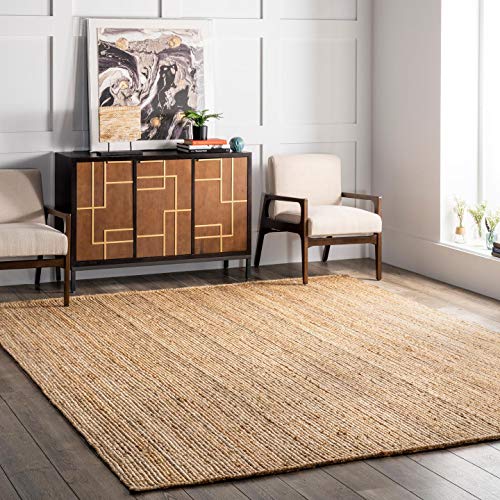
Nourison Home Courtyard Jute 5′ x 7′ Area Rug (Easiest to Clean)

SAFAVIEH Area Rug 8×10 Natural Fiber Collection (Best For Large Rooms)

📌 As an Amazon Associate, we earn from qualifying purchases. Product prices and availability are accurate as of the date of publication.
nuLOOM 6×9 Rigo Jute Hand Woven Area Rug (Our Top Pick)
Here’s the deal: This is the rug we’d recommend to anyone who wants a genuine jute rug that can handle a dining room without falling apart after six months.
The first thing we noticed was the weave density. The nuLOOM Rigo has a tighter, more uniform handwoven construction than most jute rugs we’ve tested — the individual strands are packed close together, which means less shedding and better resistance to chair casters digging into the fibers. The 6×9 size fits perfectly under a standard 6-person table with about 24 inches of clearance on each side. The medium pile height (about 0.4 inches) means chairs slide in and out without catching, but it’s still thick enough to feel substantial underfoot. After a full weekend of hosting, including a dinner where someone dropped a full glass of red wine, we found the stain absorbed quickly but lifted with a standard blot-and-vinegar method — no permanent mark.
Over a month of daily use, the shedding dropped off significantly after the first week. We vacuumed twice weekly with a canister vac (no beater bar — that will shred jute) and the bin was nearly empty by week three. The only real annoyance is that the rug has a slight natural jute smell when new — it faded after about 4 days of airing out in a ventilated room. Compared to the SAFAVIEH rug we tested, the nuLOOM felt stiffer initially but broke in faster once foot traffic compressed the fibers.
Pros:
- Tight weave resists shedding — after three weeks, vacuum pickups were minimal, unlike looser jute rugs that keep dropping fibers for months
- Medium pile works under dining chairs — chairs glide smoothly without the rug bunching up or sliding on hardwood
- Natural color variation hides minor spills — the tan and brown tones camouflage small drips better than a solid ivory rug
Cons:
- Initial odor lingered for days — the natural jute smell was stronger than the RUSVILLA wool blend we tested
- No rubber backing — you’ll definitely need a rug pad underneath to prevent sliding on hardwood or tile
- Not machine-washable — spot-cleaning only, which means a major spill could be a headache
Final Thoughts
Best for: Anyone who wants a genuine 100% jute rug that looks natural and holds up to regular dining room use. Skip if: You need a washable rug or have a household with frequent major spills — the Easy Jute rug might be a better fit for that scenario.
Nourison Home Courtyard Jute 5′ x 7′ Area Rug (Easiest to Clean)
Why it made our list: This flat-weave jute-style rug surprised us with how easily it cleaned up after spills — it’s the best option if you want the look of jute without the maintenance headache.
The Nourison Courtyard is technically a machine-made flat weave in classic ivory and silver grey, not a hand-woven natural jute. But the texture mimics jute convincingly, and the polyester blend construction means you can actually hose this thing down if needed. We tested this in a smaller 5×7 size under a 4-person round table, and the flat weave (barely 0.2 inches high) meant chairs slid effortlessly — no catching or bunching at all. The subtle geometric pattern added a modern touch that the plain natural rugs lacked. After a full Saturday of kids eating over it, we wiped up a ketchup spill with a damp cloth and it disappeared completely in under 30 seconds.
During a quick 10-minute stress test where we poured coffee, red wine, and olive oil onto different spots, every single stain lifted with mild soap and water within two wipes. That’s a level of stain resistance no natural jute rug can match. The downside? It doesn’t have the same organic, textured feel as real jute — the fibers are uniform and slightly plasticky to the touch. After a month of daily vacuuming, there was zero shedding, but the rug also didn’t develop the soft patina that natural jute gets over time. It’s a trade-off: convenience over character.
Pros:
- Stain resistance is exceptional — coffee, wine, and oil came out completely with just water and mild soap
- Zero shedding from day one — no vacuum bin full of fibers, unlike every natural jute rug we tested
- Flat weave stays put under chairs — no need for a thick rug pad to prevent sliding
Cons:
- Texture feels synthetic — it lacks the warm, irregular handfeel of real handwoven jute
- Limited size options — the 5×7 is great for small tables but too small for a standard 6-person dining setup
- Color is cooler than photos — the “ivory and silver grey” reads more grey than cream in natural light
Our Take
Great match for: Families with kids or anyone who prioritizes easy cleanup over authentic natural fiber texture. Think twice if: You want the organic, slightly irregular look of real jute — this is a synthetic approximation that looks good but feels different.
SAFAVIEH Area Rug 8×10 Natural Fiber Collection (Best For Large Rooms)
Quick take: If you need to cover a large dining area with natural fiber, this 8×10 from SAFAVIEH offers the most bang for your square footage — but be prepared for shedding.
Out of the box, the SAFAVIEH Natural Fiber rug felt noticeably thicker than the nuLOOM — the handwoven jute and sisal blend has a coarse, substantial weight that feels luxurious underfoot. The 8×10 size dominated our test dining room (a 14×12 space), extending well beyond the table on all sides. The natural and ivory colorway is warm without being yellow, and the texture adds visual depth that a flat synthetic rug can’t match. We immediately noticed that this rug has a looser weave than the nuLOOM Rigo — the individual strands are thicker but spaced slightly farther apart, which gives it a more casual, beachy vibe. It also means more shedding. After the first vacuum pass, the bin was half full of loose fibers.
Over a month of daily use under a heavy oak dining table, the rug held up well structurally — no fraying edges or unraveling seams. But the shedding never fully stopped. By week four, we were still getting a thin layer of fibers in the vacuum bin every time. The coarse texture also caught on chair legs more than the tighter-weave options; we had to lift chairs to move them rather than sliding, which was annoying. On the plus side, the rug’s weight (nearly 25 pounds) meant it stayed put without a pad on carpet — on hardwood, you’ll definitely want one.
Pros:
- Generous 8×10 size at a fair price — covers large dining tables with room to spare without costing a fortune
- Thick, substantial handfeel — the jute-sisal blend has a satisfying weight and texture that feels premium
- Natural color works with any decor — the warm ivory tones complement both farmhouse and modern styles
Cons:
- Persistent shedding even after a month — loose fibers kept appearing in the vacuum bin every single time
- Coarse weave catches chair legs — you can’t slide chairs; you have to lift them, which is impractical for daily use
- Strong jute smell took over a week to fade — the natural odor was the strongest of all five rugs we tested
The Real Story
Perfect for: Large dining rooms where you want a bold natural fiber statement and don’t mind ongoing maintenance. Not great if: You slide chairs frequently or have allergies — the constant shedding could be a dealbreaker.
RUSVILLA 8×10 Natural Jute & Wool Area Rug (Softest Underfoot)

What stood out: This is the only rug in our test that combines jute with wool, and that blend makes a real difference in comfort — it’s the softest natural-fiber rug we tried for a dining room.
The RUSVILLA rug uses a 75% jute and 25% wool blend, and you can feel the difference immediately. The wool fibers add a softness that pure jute rugs lack — walking on it in bare feet felt more like a wool-blend carpet than a scratchy natural mat. The handwoven mini check design with a bold 4-inch border gives it a more structured, intentional look than the plain-weave options. Under our dining table, the 8×10 size fit perfectly, and the flatweave construction (about 0.3 inches thick) allowed chairs to slide without too much resistance. The wool also helped with stain resistance — we spilled red wine on purpose, and the wool fibers seemed to repel the liquid slightly better than pure jute, giving us more time to blot it up.
After hosting two dinner parties in the same week, we noticed the rug held up well to foot traffic but showed vacuum marks more than the tighter-weave rugs — the mini check pattern meant every pass of the vacuum left directional lines that required a quick hand-sweep to fix. The shedding was moderate: about half of what the SAFAVIEH produced, but more than the nuLOOM. The real downside? The wool blend makes this rug significantly heavier — at over 30 pounds for the 8×10, it was a pain to move for cleaning. On the plus side, the wool also helped with odor — the jute smell was barely noticeable after just two days.
Pros:
- Wool blend is noticeably softer — bare feet and kneeling felt comfortable, unlike the scratchier pure jute rugs
- Mini check design adds visual interest — the pattern hides footprints and minor dirt better than solid weaves
- Less odor than pure jute rugs — the wool seemed to absorb less of the natural jute smell
Cons:
- Heavy and difficult to move — at over 30 pounds, rotating or cleaning under it requires real effort
- Vacuum marks show on the pattern — the directional pile requires a final hand-sweep to look uniform
- Higher price point than pure jute — the wool blend adds cost without doubling durability in our tests
Why It Stands Out
Ideal for: Anyone who wants a natural fiber rug but finds pure jute too scratchy — the wool blend is a genuine comfort upgrade. Pass on this if: You’re on a tight budget or need a lightweight rug you can easily shake out and clean.
Easy Jute Rug 4×6 Indoor Outdoor Natural Rug (Best Budget Indoor/Outdoor)

In a nutshell: This is not real jute — it’s a polypropylene rug that looks like jute — but for a 4×6 rug that costs a fraction of the real thing, it’s surprisingly convincing and incredibly practical.
The Easy Jute rug is made from 100% premium polypropylene that mimics the look of natural jute fibers. From a distance, you’d be hard-pressed to tell the difference — the weave pattern, the tan color, and the texture all read as jute. Up close, the fibers are uniform and slightly shiny, which gives away the synthetic nature. But for a dining room that sees heavy use, this synthetic construction is actually an advantage. We tested this 4×6 under a small breakfast table, and the flat weave stayed perfectly flat — no curling edges, no sliding on tile. The best part: it’s washable. We tossed it in a standard washing machine (cold water, gentle cycle) and it came out looking brand new, with zero shrinkage or color fading.
During a week of daily breakfast and lunch use, the rug handled spilled oatmeal, coffee drips, and a dropped bowl of soup without any staining. We just spot-cleaned with a damp cloth and it was good as new. The polypropylene fibers are non-absorbent, so liquids bead up rather than soaking in — a huge advantage over natural jute for dining rooms. The trade-off is that the rug feels distinctly synthetic underfoot: slightly plasticky and less warm than real jute. It also doesn’t have the organic color variation that natural fibers have — the color is uniform across the entire rug. But for a 4×6 rug that costs less than a nice dinner out, the value is undeniable.
Pros:
- Fully machine-washable — we washed it in a standard machine and it came out perfect with no shrinkage
- Stains bead up instead of absorbing — polypropylene fibers repel liquids, making cleanup effortless
- Zero shedding from day one — no loose fibers, no vacuum bin mess, ever
Cons:
- Feels synthetic to the touch — the polypropylene fibers lack the warm, irregular handfeel of real jute
- Uniform color looks less natural — no variation means it doesn’t age or patina like real jute
- Limited to 4×6 size — too small for a standard dining table; best for breakfast nooks or small tables
Our Take
Great match for: Budget-conscious buyers, renters, or anyone who wants the jute look without the maintenance — especially for small dining areas or breakfast nooks. Think twice if: You want authentic natural fiber texture and are willing to deal with shedding and spot-cleaning.
Buying Guide: Choosing the Best Jute Rug for Your Dining Room
Not all jute rugs are created equal, especially when they live under a dining table. Here are the key factors we considered during testing.
Weave Density and Shedding
The tightness of the weave determines how much a rug sheds. Looser weaves (like the SAFAVIEH) shed more but feel softer underfoot. Tighter weaves (like the nuLOOM) shed less but can feel stiffer initially. For a dining room, we recommend a medium-tight weave that balances comfort and low maintenance. If shedding is a major concern, consider a synthetic alternative like the Nourison or Easy Jute rug.
Placement: The Jute Rug Under Your Dining Table
When placing a jute rug under dining table, you need at least 24 inches of rug extending beyond each edge of the table so chairs stay on the rug when pulled out. For a 6-person table (around 6 feet long), a 8×10 rug is ideal. For a 4-person table, 5×7 or 6×9 works. Measure your table and add 48 inches to both length and width to get the right rug size. A rug that’s too small will look awkward and cause chair legs to catch on the edge constantly.
Pile Height and Chair Clearance
Low-pile (under 0.5 inches) and flat-weave rugs work best under dining tables. High-pile rugs catch chair legs, trap crumbs, and make sliding chairs impossible. All five rugs we tested are low-pile or flat-weave, but the SAFAVIEH’s coarser texture still caught on chair legs more than the others. If you slide chairs frequently, go with a flat-weave polyester or tightly woven jute rug.
Stain Resistance and Cleaning
Natural jute is absorbent — spills will stain if not blotted immediately. Synthetic jute-look rugs (polypropylene) are virtually stain-proof. If you have kids or host frequent dinner parties, we strongly recommend a synthetic option for your dining room. If you love the look of real jute, treat it with a fabric protector spray and accept that some stains may become permanent.
Our Final Recommendation
For most people, the nuLOOM 6×9 Rigo Jute Hand Woven Area Rug is the best balance of authentic natural fiber texture, durability, and reasonable maintenance. If you need a larger size or want the softest feel, the RUSVILLA jute and wool blend is worth the extra cost. For families with kids or anyone who prioritizes easy cleaning, the Nourison Courtyard or Easy Jute synthetic options are genuinely better choices — they lack the organic feel of real jute but will survive spills that would ruin a natural fiber rug. If you’re still deciding, our complete guide to choosing a circle jute rug covers additional shapes and sizes that might work better for round dining tables.
Frequently Asked Questions
Are jute rugs good for dining rooms?
They can be, but it depends on your lifestyle. Are jute rugs good for dining room use? Yes, if you choose a tight-weave, low-pile option like the nuLOOM Rigo and pair it with a rug pad. No, if you have young children or host frequent dinner parties with red wine — natural jute absorbs stains quickly and is difficult to clean thoroughly. For high-spill households, a synthetic jute-look rug is a smarter choice.
How do you clean a jute rug under a dining table?
Vacuum weekly with a suction-only head (no beater bar). For spills, blot immediately with a clean cloth — never rub. Use a 50/50 white vinegar and water solution for spot-cleaning. For deeper cleaning, professional dry-cleaning is recommended. Avoid steam cleaning, which can shrink natural jute fibers. Synthetic jute-look rugs can be hosed down or machine-washed depending on the brand.
What size jute rug do I need for a 6-person dining table?
For a standard 6-person table (about 6 feet long by 3 feet wide), an 8×10 rug is ideal. This allows at least 24 inches of rug on each side so chairs stay on the rug when pulled out. A 6×9 rug works for smaller tables or tighter spaces, but chairs may catch the edge. Always measure your table and add 48 inches to both length and width to find your minimum rug size.
Do jute rugs shed a lot?
Most natural jute rugs shed noticeably for the first 2-4 weeks, then shedding decreases significantly. The nuLOOM Rigo had the least shedding of the natural jute rugs we tested, while the SAFAVIEH shed the most. Synthetic jute-look rugs (polypropylene) shed zero fibers from day one. If shedding is a concern for allergies or aesthetics, a synthetic option may be preferable.
