

What do you actually know about the glass holding that flickering flame on your patio table? I’ve tested dozens of candle holders on my exposed balcony—through rain, summer sun, and a few surprise frosts. Over time, I noticed that a holder’s color isn’t just an aesthetic choice; it’s a clue to whether the piece will last a season or crack on its first warm evening. The real dividing line? Whether that hue was mixed into the molten silica or merely painted on the surface. For any glass holder that meets a flame, that distinction matters more than you’d think. Surface coatings can bake, crack, or release smells when the glass gets hot. Batch-colored glass, colored with metal oxides during melting, stays stable and handles heat without drama. My approach centers on heat management: matching the candle size to the holder’s depth and wall thickness is what prevents most cracked holders, not just ‘being careful.’ If you’re drawn to colored glass candle holders for the way they catch the light, understanding how that color got there will keep your collection safe—indoors and out.
Key Takeaways
- Color that’s “in the batch”—fused with metal oxides during melting—won’t peel, scorch, or release fumes the way surface coatings can under candle heat.
- Preventing cracked holders is about physics, not just caution: keep the flame at least ½ inch from the glass wall and never let the wax burn completely dry.
- Vintage colored glass (including lead crystal or uranium glass) is generally safe for candle use, but inspect for hairline cracks and avoid sudden temperature swings.
- Outdoor use demands more than beauty: wind-driven heat concentration, rain-chilled glass, and uneven balcony surfaces can wreck a holder faster than any flame.
How Do You Know If the Color Is Painted On or Actually in the Glass?
This is the most important question to answer before you even light a candle. I learned the hard way after a cheap ruby-red hurricane glass started blistering on my balcony. The finish was a sprayed-on lacquer that smelled like burning plastic the moment the holder warmed up. True colored glass candle holders are born, not dressed up, and there are simple ways to tell them apart.
Look at the Rim and Seams
On a surface-coated piece, the rim often reveals a thin line of clear or differently tinted glass where the coating didn’t reach—or where it wore away from handling. A batch-colored holder shows the same color all the way through the cross-section. Tilt the rim into bright light. If you see a pale or transparent edge beneath a vivid outer layer, that’s a coating. A holder that is the same shade on the inside, outside, and along the rim is almost certainly batch-colored.
The Scratch Test (Use Caution)
On an inconspicuous spot—inside the base, for instance—gently drag a sharp kitchen knife or a pin. A coating will produce a faint white or silver scratch mark because you’re cutting through the pigment layer. True colored glass will not change color or leave a trail, though you might leave a superficial scratch on the surface itself. Don’t do this on a treasured antique, but on a secondhand find it can instantly confirm what you’re holding.
What Are Metal Oxides Doing in There?
Traditional colored glass owes its hue to metal oxides added during the melting process. Cobalt produces deep blue; chromium or copper makes green; gold chloride yields cranberry; manganese can create amethyst; selenium with cadmium sulfide creates a ruby red. These are not dyes—they are minerals dissolved into the silica-soda-lime matrix of the glass itself. As a result, a properly made batch-colored holder behaves like clear glass thermally. It expands and contracts at the same rate, resists fading, and won’t outgas anything under candle heat.
Depression glass, for instance, famously got its jewel tones from such oxides. Those shades of jadeite, pink, and cobalt are permanently locked in. That’s why a 90-year-old Anchor Hocking Fire-King green mug still glows like new, and why a vintage amber candle holder handles a flame just as well as a modern borosilicate piece.
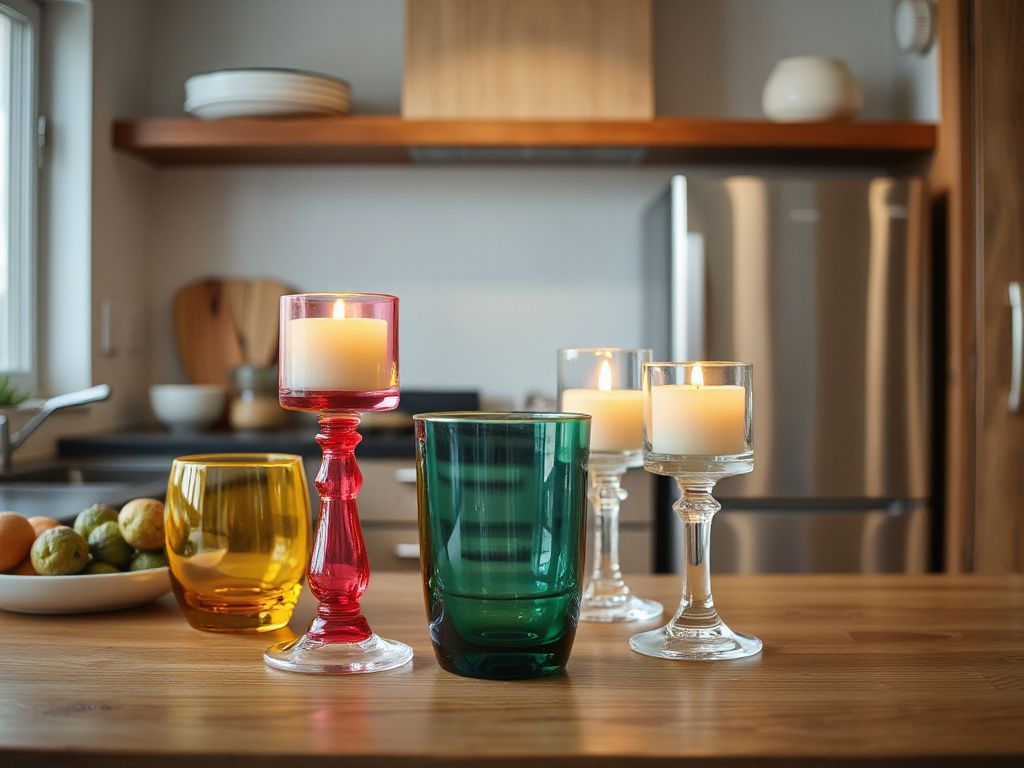
Will a Hot Candle Crack a Colored Glass Holder?
Yes—but almost never because of the color. The real enemy is thermal shock: uneven expansion when one part of the glass gets hot while another stays cool. Thick, poorly annealed glass is far more dangerous than a vividly tinted thin-wall tumbler. And yet, most cracks I see on my balcony happen in the dead of winter, not in July.
The ½-Inch Rule and Why It Matters
The flame of a votive or pillar candle generates a convection column that heats the surrounding air to over 300°F near the wick. If that hot updraft touches the glass directly, especially in a narrow holder, the inner surface expands faster than the outer. The simple fix: ensure the candle diameter leaves at least a ½-inch gap between the flame’s expected reach and the glass wall. A holder with a wide bowl—like many vintage Fenton ruffled designs—distributes the heat naturally. Hurricane shades, meanwhile, work because they create a chimney that draws air up and away from the glass body.
What Metal Type Means for Heat Tolerance
Most colored glass candle holders are made from soda-lime glass, the same material as window panes. It’s economical and perfectly safe if you follow the gap rule and avoid rapid temperature changes. A holder that’s been sitting in direct sun on a 95°F afternoon should never have a lit candle dropped into it—move it to shade first and let the glass normalize. Borosilicate glass, famed for laboratory beakers, can handle more extreme shifts, but it’s rarely used for decorative holders because it’s harder to color vividly. If you find a true borosilicate colored holder, you’ll pay more, but you’re buying a piece that can go from winter cold to candle warmth without flinching.
For additional safety background, the National Candle Association maintains fire-safety guidelines that cover placement, clearance, and extinguishing—all of which apply equally to glass holders.
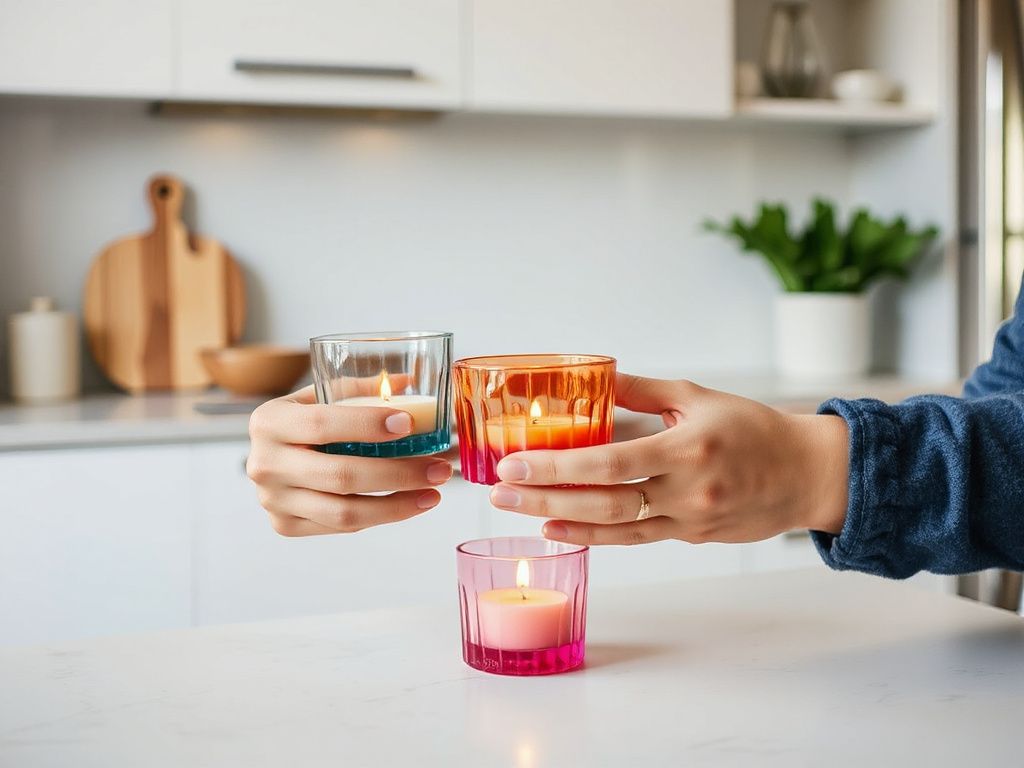
Can Colored Glass Holders Handle a Balcony in Winter?
I’ve kept a rotating collection of holders outside year-round. Snow, sleet, and those sudden thaws are where the real stress tests happen. Standard soda-lime holders can survive a freeze if you follow one rule: never trap moisture inside. Water that pools at the bottom of a holder and freezes will expand, fracturing glass from the inside regardless of what color it is.
Drainage and Elevation Tricks
After a rain, tip the holder to drain before lighting. Better yet, keep a small layer of washed pea gravel or coarse sand in the base. It lifts the candle above any lingering water and also adds weight, which helps on gusty days. I’ve found that dark amber and cobalt blue holders actually absorb enough solar warmth on a sunny winter day to melt a thin layer of ice inside before I even get to them—a nice bonus of color choice.
Wind Effects on Flame and Glass
A breezy balcony doesn’t just blow out candles; it can redirect the flame toward one side of the holder. Prolonged one-sided heating is a crack waiting to happen. A tall hurricane shade or a glass cloche that covers the candle shields the flame from wind and keeps heat distribution even. For tealights, I often use a simple clear glass cylinder around the holder; it doesn’t block the view and stabilizes the burn. If you’re curating a collection for outdoor display, a set of 3 glass candle holders with slightly varied heights creates windbreak patterns that a single holder alone cannot.
Getting Wax, Soot, and Stains Out Without Scratching
A gorgeous cranberry glass votive holder loses its magic when coated in black soot and waxy residue. The trick is knowing what dissolves wax without dulling the glass. I’ve cleaned enough holders to say this: never reach for abrasive scrubbers first.
The Freezer Method for Stubborn Wax
Place the holder in the freezer for 30–45 minutes. The wax contracts, becoming brittle enough to pop out with a gentle tap or a wooden chopstick. Don’t use metal tools on delicate vintage glass—even a butter knife can leave microscopic scratches that later trap soot. If a rim of wax remains, a plastic scraper like a worn credit card works safely.
Removing Smoke and Soot Stains
Fill the holder with warm water and a drop of mild dish soap. Let it soak for 20 minutes, then use a soft bottle brush to swirl, not scrub, the interior. For heavy soot on the inside of a hurricane or votive, make a paste of baking soda and a few drops of water. Apply it with a microfiber cloth and rub gently in circles. The mild alkalinity lifts carbon film without etching glass. Rinse thoroughly—any leftover grit can cause micro-scratches that diffuse light.
Dishwasher vs. Hand Washing
I hand wash every single colored glass holder I own. A dishwasher’s high heat and forceful spray can flake off coatings, and the detergents are often caustic enough to permanently cloud some vintage cranberry or milk glass. If the holder is uncoated, thick-walled, and modern, it might survive a dishwasher cycle, but the risk of fine vibration cracks around a seam isn’t worth it. Hand washing takes two minutes and guarantees you’ll spot any emerging damage before the next burn.
Vintage vs. Modern: What’s Safe and What to Watch For
I adore Westmoreland Glass milk glass candle holders and cobalt blue Fenton Art Glass vases repurposed as hurricanes. But vintage pieces come with safety caveats that modern production largely ignores.
Lead Crystal and Uranium Glass
Many older holders, especially those with a bell-like ring and brilliant clarity, contain lead oxide—sometimes as much as 24% of the formula. For candle use, lead crystal is perfectly safe because no food or drink touches it, and the flame does not vaporize lead. The same holds true for Vaseline glass (colored with uranium dioxide), which glows neon green under black light. These pieces are completely stable; the uranium is bound in the glass matrix. However, lead crystal and older soda-lime formulas tend to be more brittle. Inspect every vintage holder under strong light for hairline cracks, especially around the rim and base. A cracked holder is a shattered holder waiting to happen the moment it heats up. If you’re new to collecting, our antique cut glass candle holders guide explains how to date patterns and spot reproductions with confidence.
Machine-Made vs. Hand-Blown
Hand-blown holders often have a pontil mark—a rough, circular scar on the bottom where the glass was broken from the blowpipe. Machine-made pieces have a smooth, sometimes polished base with mold seams that run straight up the sides. Hand-blown glass varies slightly in thickness, which can create hot spots if one wall is significantly thinner. That doesn’t make it unsafe; you just need to be mindful of where the flame sits. A complete guide to vintage taper candle holders will show how these characteristics carry across different holder styles and eras.
Does the Color of the Glass Change How Much Light Comes Through?
Absolutely. A deep cobalt blue holder absorbs most of the warm spectrum, casting a cool, almost violet glow. Amber and topaz holders filter out blue wavelengths, leaving a richer, honeyed light. Cranberry glass, achieved with gold chloride, transmits a pinkish-red radiance that feels surprisingly warm, even though it’s actually blocking the yellows. This isn’t just aesthetic; it affects how you perceive the candle’s brightness. A tealight in midnight-blue glass looks dimmer, so you might burn two where one would suffice in clear glass. Milk glass and true opaque jadeite block nearly all direct flame light and instead create a soft halo—ideal for dining tables where you want atmosphere, not glare.
Placement and Decor Impact
On my balcony, I cluster cobalt holders near seating areas because the cool tone contrasts with green plants. Amber holders work beautifully on a wooden tabletop, amplifying the warmth of the wood grain. Groupings of three or five holders in graduated colors—clear, pale aqua, and deep teal—make the candlelight appear to move through a spectrum. The physics is simple: each hue subtracts part of the visible light spectrum. The artistry is arranging them so that removal of light becomes a design statement, not a dimming penalty.
Should You Add Sand or Water to the Bottom for Stability?
This is one of the oldest candle tricks, and it has merit—with caveats. A half-inch of clean sand at the bottom of a tall hurricane or a slim taper holder lowers the center of gravity and prevents the candle from wobbling. Sand also reflects heat upward gently, which can help a pillar burn more evenly. However, never fill a holder with water and then place a floating candle above it if the glass will be heated from below. The water can heat unevenly, creating steam pressure that cracks the vessel. For stability alone, dry sand wins. For display, polished river stones in a clear glass base look stunning and serve the same purpose.
Frequently Asked Questions
How do I tell if a colored glass candle holder is hand-blown or machine-made?
Look at the bottom. A rough, circular pontil mark where the glass was broken from the blowpipe indicates a hand-blown piece. Machine-made holders have a perfectly smooth, often polished base with vertical mold seams. Hand-blown glass will also have slight thickness variations that you can feel along the rim.
Are vintage colored glass holders safe to burn candles in if they contain lead?
Yes, because candle use involves no food contact. Lead oxide, once bound in the glass matrix, does not leach or vaporize at candle flame temperatures. However, lead crystal is brittle, so inspect for cracks and avoid rapid heating or cooling to prevent thermal shock.
Can I use colored glass holders outdoors in winter without them shattering?
They can survive if you prevent water from pooling inside and then freezing. Drain the holder after rain, or place a layer of sand at the bottom to lift the candle above any moisture. Let the holder warm gradually to room air before lighting it if it’s been outside in sub-freezing temperatures.
What size candle should I use in a colored glass holder to avoid overheating?
Choose a candle diameter that leaves at least a ½-inch gap between the flame’s expected reach and the glass wall. For votives and deep cups, stop burning when ¼ inch of wax remains—otherwise the metal wick tab can overheat the base and crack it.
Is it safe to clean colored glass candle holders in the dishwasher?
I advise against it. Dishwasher detergents can cloud vintage milk glass, cranberry glass, and any surface coatings. The high heat and water pressure may worsen tiny cracks. A quick hand wash with mild soap and a soft brush preserves the finish and reveals damage early.
Do certain colored glass candle holders block more light than clear ones?
Yes. Dark cobalt blue and deep green absorb much of the candle’s warm spectrum, appearing dimmer. Amber and cranberry allow more light through but filter it into warmer tones. Opaque milk glass blocks almost all direct flame, creating a soft ambient glow perfect for tabletops.
