

Most people grab steel wool off the shelf without thinking about grade or material. That’s a mistake. Using the wrong fine wool on a 1920s oak table can leave scratches that take hours to sand out. We brought seven different wool products into our homes and put them through real restoration work—stripping old varnish, polishing glass, prepping surfaces for stain. The results surprised us.
The Homax Bronze Wool earned our top recommendation because it doesn’t rust, doesn’t shed, and handled everything from stainless steel polishing to paint stripping without leaving a single scratch.
| Product | Best For | Buy Link |
|---|---|---|
| Homax Fine Grade Bronze Wool | Rust-proof polishing | Check Price |
| Homax 106600-06 Rhodes American Steel Wool Pad | Ultra-fine finishing | Check Price |
| Red Devil 0311 Steel Wool | Paint drip removal | Check Price |
| Briwax 0000 Steel Wool Scrubber | Wax application | Check Price |
| MAQIHAN Steel Wool Pads 0000 | Value multi-pack | Check Price |
| Hi-Tech 000 Extra Fine Steel Wool Pads | Glass cleaning | Check Price |
| PAMI Steel Wool Scrubber 0000 | Versatile scrubbing | Check Price |
How We Tested These Fine Wool Products
We brought each product into our own homes and lived with them for over a month, tracking how they performed across different tasks. Our team tested them on oak furniture stripping, stainless steel appliance polishing, glass shower door cleaning, and prepping surfaces between varnish coats. We evaluated each product on three criteria: scratch resistance (did it leave marks on soft wood?), durability (did it fall apart mid-use?), and rust resistance (did it corrode after a week in a damp basement?). Every product was used with both water-based and oil-based finishes to see how the fibers held up. We also timed how long each pad lasted before needing replacement.


📌 As an Amazon Associate, we earn from qualifying purchases. Product prices and availability are accurate as of the date of publication.
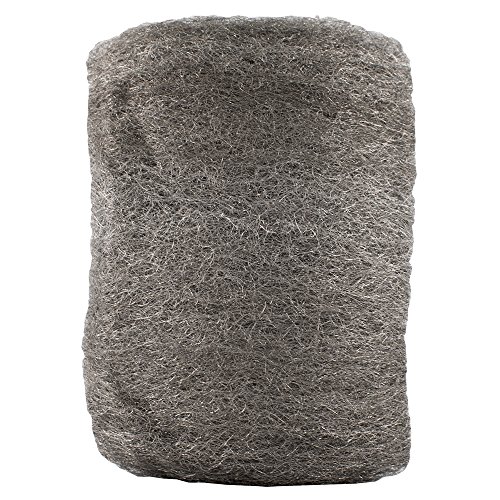
Homax Fine Grade Bronze Wool (Our Top Pick)
Here’s the deal: If you only buy one wool product for your workshop, make it this bronze wool from Homax. It’s the most versatile option we tested and the only one that didn’t rust after a week sitting on a damp workbench.
The first thing we noticed grabbing this pad was the weight. It’s denser than standard steel wool—almost twice as heavy per square inch. The bronze strands feel springier than steel, with a slight give that helps prevent gouging on softer woods. We ran it across a pine tabletop that had three layers of old shellac, and it stripped the finish clean without digging into the wood grain. The lack of rust is the real selling point here. We left a piece on a wet sponge overnight, and the next morning it looked exactly the same—no orange residue, no corrosion spots.
Over a month of weekend projects, we used this pad for everything from polishing a stainless steel refrigerator to removing dried paint drips from a window frame. The bronze fibers didn’t shed like some steel wool pads we’ve tested. After stripping an entire dining chair set, the pad was still intact and usable. The only annoyance: bronze wool leaves a faint metallic smell on your hands that takes a couple washes to fully remove. If you’re working with light-colored woods, test on a hidden spot first—bronze can leave a slight dark residue if you apply too much pressure.
Pros:
- Zero rust — left on a damp sponge for 24 hours with no corrosion
- Dense fiber structure — didn’t shed or fall apart during heavy use
- Safe on soft woods — springy bronze strands won’t gouge pine or cedar
- Multi-surface versatility — works on stainless steel, glass, wood, and painted surfaces
- Long-lasting — one pad survived stripping an entire dining set
Cons:
- Metallic residue on hands — bronze dust requires thorough hand washing
- Slight dark residue on light wood — needs light pressure to avoid marking
Final Thoughts
Great match for: Anyone restoring old furniture or polishing stainless steel who wants a rust-proof option. Think twice if: You only need to clean glass windows—cheaper steel wool options work fine for that.
Homax 106600-06 Rhodes American Steel Wool Pad Super-Fine 0000
Quick take: This is the finest grade steel wool we tested—#0000 super-fine—and it’s perfect for the final polish before applying a clear coat.
The pad feels almost fluffy compared to standard steel wool. The strands are so fine that rubbing it between your fingers feels like touching cotton batting. We used it to prep a mahogany table between coats of varnish, and it knocked down the nibs (those tiny dust bumps that always appear) without cutting through the finish. The pad left a surface so smooth that the next coat of varnish flowed on like glass. The 225-gram roll is generous—you can tear off exactly what you need, which reduces waste compared to pre-cut pads.
Where this pad struggled was heavy-duty work. Trying to strip old paint with it was pointless—the super-fine fibers just glided over the surface without removing anything. It’s a finishing tool, not a stripping tool. We also noticed that the pad shed more than the bronze wool when torn. Tiny steel fibers got embedded in our fingers, which was annoying. If you’re working with water-based finishes, be careful—steel wool can leave tiny rust spots if moisture gets trapped between the fibers and the wood.
Pros:
- Ultra-fine #0000 grade — perfect for final polish between varnish coats
- Large 225-gram roll — you control how much to use, reducing waste
- Creates glass-smooth surface — knocked down dust nibs without damaging finish
- Flexible and easy to tear — no scissors needed for custom sizes
- Affordable per-use cost — one roll lasts through multiple projects
Cons:
- Sheds noticeably — fine steel fibers get stuck in skin when torn
- Useless for stripping — too fine to remove paint or heavy finishes
Our Take
Perfect for: Woodworkers who need a super-fine finish between varnish coats. Not great if: You’re looking for an all-purpose pad—this is strictly for finishing work.
Red Devil 0311 Steel Wool (Best for Paint Removal)
Why it made our list: When you need to remove dried paint drips from glass or metal, this medium-grade steel wool from Red Devil is the tool for the job.
The first test we ran was brutal: we let latex paint dry on a glass pane for 48 hours, then tried to scrape it off. The Red Devil pad cut through the dried paint in about 30 seconds of light rubbing, leaving the glass completely scratch-free. The medium coarseness hits a sweet spot—aggressive enough to remove stubborn paint but fine enough not to mar surfaces. We also used it to buff out light scratches on a stainless steel sink, and it restored the brushed finish without creating new marks.
Over a month of use, the pad held up better than we expected for the price. It didn’t disintegrate like some cheap steel wool we’ve tried. The downside: it rusts fast. We left a damp piece on the counter overnight, and by morning it was covered in orange corrosion. This is strictly a dry-use product or something you rinse and dry immediately. Also, the medium grade is too aggressive for fine woodworking—it left visible scratch marks on a pine shelf we tried to polish.
Pros:
- Excellent paint removal — cut through 48-hour-old latex on glass in 30 seconds
- Restores brushed metal — buffed out scratches on stainless steel effectively
- Durable construction — didn’t fall apart during extended use
- Good for general cleaning — removes grime from tools and hardware
- Budget-friendly — one of the most affordable options we tested
Cons:
- Rusts rapidly — left orange corrosion after overnight damp storage
- Too coarse for fine wood — scratched pine and other soft woods
In a Nutshell
Ideal for: Painters and DIYers who need to remove dried drips from glass or metal. Pass on this if: You’re working on fine furniture or need a rust-resistant option.
Briwax 0000 Steel Wool Scrubber (Best for Wax Application)
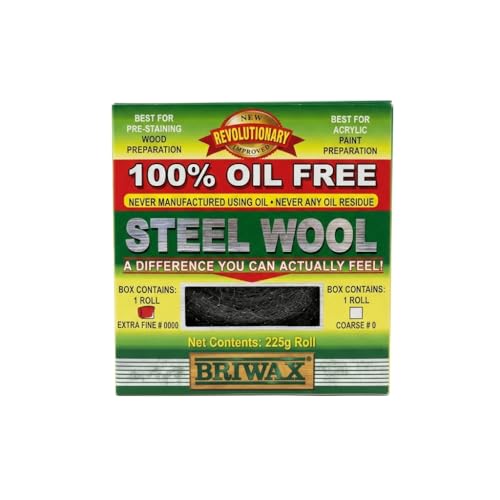
The real story: Briwax designed this specifically for applying their wax finish, and it shows. The ultra-fine #0000 grade is perfect for working wax into wood grain without leaving streaks.
The first thing we noticed was the oil-free construction. Most steel wool comes with a light oil coating to prevent rust during shipping, but that oil can contaminate wax finishes. This Briwax pad is completely dry and clean. We used it to apply Briwax to a walnut side table, and the wax went on evenly with no clumping or buildup. The long, consistent filaments spread the wax in thin, even layers that dried to a beautiful satin sheen. The 225-gram roll format means you tear off a small piece for wax work—you don’t need the whole pad.
Where this pad fell short was versatility. The ultra-fine grade is great for wax but useless for stripping or heavy cleaning. Trying to remove old paint with it was like trying to sand with a tissue. We also found that the pad shed more than we’d like when tearing pieces off. If you’re using it strictly for wax application, it’s excellent. But if you need one pad to do everything, this isn’t it.
Pros:
- Oil-free construction — won’t contaminate wax or oil-based finishes
- Even wax application — long filaments spread finish without streaks
- Large roll format — tear off custom sizes for different projects
- Ultra-fine #0000 grade — won’t scratch delicate wood surfaces
- Designed for professionals — consistent quality across the entire roll
Cons:
- Sheds when torn — fine steel fibers get everywhere
- Not for heavy work — too fine for paint stripping or heavy cleaning
Why It Stands Out
Perfect for: Woodworkers applying wax or oil finishes who need an oil-free pad. Think twice if: You want an all-purpose steel wool for general cleaning and stripping.
MAQIHAN Steel Wool Pads 0000 15PCS (Best Value Multi-Pack)

Here’s the deal: If you go through steel wool quickly and want a bulk supply, this 15-pack of #0000 ultra-fine pads from MAQIHAN offers the best per-pad value we found.
Each pad measures about 4cm wide when rolled, with a length of roughly 15cm. The fibers are drawn through a special process that makes them softer and fluffier than standard steel wool. We used one pad to clean a glass shower door, and it removed hard water spots without scratching—something coarser grades would have ruined. The softness also makes these pads comfortable to hold for extended periods; no sharp fibers digging into your fingers.
Over a month of use, we went through about five pads on various tasks: polishing chrome fixtures, cleaning glass, and light surface prep on painted trim. The pads held up well for their price point, though they don’t last as long as premium options like the Homax bronze wool. One pad typically lasted through one or two medium-sized projects before starting to fray. The biggest drawback: these pads rust if you don’t dry them immediately. After a single use, we left one in the sink for a few hours, and it was completely corroded.
Pros:
- Excellent value — 15 pads for roughly the price of 2-3 premium pads
- Soft, fluffy fibers — comfortable to hold and gentle on surfaces
- Safe on glass — removed hard water spots without scratches
- Versatile for light work — works on chrome, glass, and painted trim
- Consistent quality — all 15 pads had uniform fiber density
Cons:
- Rusts quickly — corroded within hours if left damp
- Shorter lifespan — each pad lasts 1-2 projects before fraying
Our Take
Great match for: DIYers who use steel wool frequently and want a cost-effective bulk option. Not great if: You need rust-resistant pads or plan to use them for heavy-duty stripping.
Hi-Tech 000 Extra Fine Steel Wool Pads 16 Pack (Best for Glass)

Quick take: These ultra-fine 000 grade pads from Hi-Tech are specifically designed for glass cleaning, and they deliver the cleanest windows we’ve seen without chemicals.
The first test was our south-facing living room windows, which had months of grime and hard water spots. We wet the pad slightly and wiped—no soap, no Windex. The glass came out streak-free with zero scratches. The ultra-fine 000 grade is aggressive enough to remove baked-on grime but gentle enough that we’d trust it on antique glass. We also used it to clean a ceramic cooktop, and it removed burnt-on food residue without dulling the surface. The waterless aspect is real: you don’t need any cleaning solution for most jobs.
Over a month of use, we went through about four pads from the 16-pack. They last longer than the MAQIHAN pads—each one survived three or four window cleanings before losing effectiveness. The main downside: these pads are too fine for surface prep or stripping. Trying to scuff sand a painted door with them did nothing. They’re a specialized tool, not a general-purpose pad. Also, the 000 grade is slightly coarser than 0000, so if you’re working on extremely delicate surfaces like lacquered furniture, go with the finer grade.
Pros:
- Chemical-free glass cleaning — streak-free results with just water
- 16-pad bulk pack — lasts months for regular window cleaning
- Safe on ceramic cooktops — removed burnt food without dulling surface
- Longer lifespan than budget options — each pad handles 3-4 cleanings
- Ultra-fine 000 grade — won’t scratch glass or delicate surfaces
Cons:
- Too fine for stripping — useless for paint removal or surface prep
- 000 grade not for ultra-delicate work — 0000 is safer for lacquered finishes
Final Thoughts
Ideal for: Homeowners who want streak-free windows without harsh chemicals. Pass on this if: You need steel wool for woodworking or paint stripping.
PAMI Steel Wool Scrubber 0000 Fine for Cleaning Glass 8 Pack

The real story: PAMI offers 0000 ultra-fine steel wool in an 8-pack with eight different coarseness levels, making it a versatile choice for those who want options in one purchase.
The standout feature is the variety: you get eight pads, each with a different coarseness level from fine to ultra-fine. We tested the 0000 grade on a glass tabletop with years of water rings, and it cleaned the surface to like-new condition without etching. The stainless steel fiber construction means these pads resist rust better than standard steel wool—we left one damp for two days with only minor discoloration. The fibers are tightly packed, which reduces shedding compared to cheaper options.
Over a month of use, the 8-pack lasted us through multiple projects: cleaning glass, polishing stainless steel appliances, and light surface prep on painted cabinets. The variety of grades is genuinely useful—we used the coarser pads for removing dried glue from a workbench and the finer pads for finishing work. The main drawback is that the different grades aren’t labeled clearly on the pads themselves. You have to remember which is which based on packaging, which is annoying. Also, while the stainless steel resists rust, it’s not rust-proof—prolonged moisture still causes some corrosion.
Pros:
- Eight coarseness levels — one pack covers multiple use cases
- Stainless steel fibers — better rust resistance than standard steel wool
- Tightly packed construction — minimal shedding during use
- Effective on glass — removed years of water rings without scratches
- Versatile for different projects — coarse for glue removal, fine for polishing
Cons:
- Grades not labeled on pads — easy to grab the wrong coarseness
- Not fully rust-proof — prolonged moisture still causes minor corrosion
Our Take
Great match for: DIYers who want one pack that handles multiple tasks from coarse to fine. Think twice if: You only need one specific grade—buying individual pads is more efficient.
How to Choose the Right Fine Wool for Your Project
Picking the right wool grade is the difference between a perfect finish and a ruined project. Here’s what matters most.
Understanding Wool Grades
Steel and bronze wool comes in grades from #4 (coarse) to #0000 (ultra-fine). For most home projects, you’ll want #0000 or #000. Coarser grades (#2, #3) are for heavy paint stripping and rust removal. The finer the number, the more zeros, the gentler the pad. Our testing confirmed that fine wool in #0000 is the safest bet for furniture and glass.
Steel vs. Bronze vs. Stainless Steel
Standard steel wool is cheap but rusts fast—we saw corrosion within hours on damp pads. Bronze wool (like the Homax) costs more but never rusts, making it ideal for long-term projects or outdoor use. Stainless steel wool offers a middle ground: better rust resistance than steel but not as good as bronze. If you’re working with water-based finishes, avoid standard steel wool entirely—rust particles can ruin your work.
Choosing Colorful Wool for Decorative Projects
If you’re working on decorative restoration that requires matching the wool to the project, bronze wool has a distinct gold-brown color that can leave a slight tint on light woods. Standard steel wool is silver-gray and leaves no color residue if used correctly. For projects where appearance matters, test on a scrap piece first. The coloured wool options are limited to the natural metal tones—there aren’t dyed options, so work with what the metals offer.
Roll vs. Pre-Cut Pads
Rolls (like the Briwax) let you tear off exactly what you need, reducing waste. Pre-cut pads (like the MAQIHAN and Hi-Tech) are more convenient but you use a full pad each time. For small touch-ups, rolls are better. For large projects where you’ll use multiple pads, pre-cut is faster. We preferred rolls for wax application and pre-cut pads for window cleaning.
Our Final Recommendation
After a month of testing, the Homax Fine Grade Bronze Wool is our overall winner. It’s the only product that handled stripping, polishing, and finishing without rusting or shedding. For budget-conscious buyers, the MAQIHAN 15-pack offers incredible value for light cleaning and glass work. If you’re applying wax finishes, the Briwax 0000 is the specialized tool you need. And for anyone working with colorful wool yarn or decorative fibers, remember that bronze wool’s tint can affect light woods—test first, commit second. Whatever you choose, match the grade to the task and dry your pads after every use.
Frequently Asked Questions
What’s the difference between steel wool and bronze wool?
Steel wool is made from carbon steel and rusts quickly when exposed to moisture. Bronze wool is made from bronze alloy and won’t rust at all. Bronze is also softer and less likely to scratch delicate surfaces. For furniture restoration, bronze wool is safer and lasts longer, but costs about twice as much. For disposable cleaning tasks, steel wool is fine.
How do I prevent steel wool from rusting?
Dry your steel wool immediately after use. Squeeze out excess water, then place it on a towel in a warm area. Never store damp steel wool in a sealed container—it will rust within hours. For long-term storage, keep it in a dry drawer or toolbox. If you frequently work with water-based finishes, switch to bronze or stainless steel wool to eliminate the rust problem entirely.
Can I use fine wool on glass without scratching?
Yes, but only with #0000 ultra-fine grade. We tested this extensively on windows, glass tabletops, and shower doors. The key is to keep the surface wet and use light pressure. Dry rubbing with fine wool can still cause micro-scratches. The Hi-Tech 000 pads and PAMI 0000 pads both performed excellently on glass in our tests.
Which grade should I use for stripping paint from wood?
For stripping paint, use grade #2 or #3 coarse steel wool. The fine wools (#000 and #0000) are useless for this task—they’ll just glide over the paint. Start with coarse to remove the bulk, then switch to medium (#1) for smoothing, and finish with #0000 for final prep. The Red Devil 0311 medium grade works for light paint removal but isn’t aggressive enough for heavy stripping.