

I’ve noticed a shift over the last year. A decade ago, black leather and chrome chairs lived almost exclusively in reception areas and architectural photo shoots. Now they’re showing up in home offices, living rooms, even breakfast nooks—and people are using them daily, not just admiring them from across the room. This is a chair that demands honesty: the chrome shows every smudge, the leather reveals every dry patch, and yet, when a well-built one settles into a room, it anchors the space with a clarity that upholstered silhouettes rarely match.
The most overlooked distinction is that chrome and leather have opposing care needs: chrome requires frequent wiping to prevent water spots, while leather needs occasional conditioning to prevent cracking. Beginners often treat them the same, using a universal cleaner that harms one or the other. Knowing which parts need what, and how to sequence maintenance, keeps the chair looking timeless.
Key Takeaways
- Chrome and leather require completely separate cleaning routines; one product cannot safely clean both materials.
- Full-grain black leather develops a distinctive patina over years, while bonded leather often peels within two to three years.
- Chrome plating resists rust but spots from mineral deposits—a quick wipe with a dry microfiber cloth is the most effective daily defense.
- A well-constructed black leather and chrome chair can last thirty years or more if the frame is solid hardwood or welded steel and the leather is conditioned twice a year.
The Material Divide: Why Chrome and Leather Fight Each Other
Sitting down, you experience the two materials as one piece of furniture. But chemically, they are worlds apart. Chrome is a hard, electroplated surface that resists corrosion but attracts fingerprints and water spots. Leather is a porous organic material that breathes, absorbs oils, and fades under UV light. Cleaning a black leather and chrome chair with a single all-purpose spray is like washing a wool sweater and a cast-iron pan in the same cycle—one gets ruined.
Chrome’s worst enemy is ammonia. Household glass cleaners often contain ammonia, which strips the microscopic chromium oxide layer that gives the finish its shine and protection. Over time, repeated ammonia exposure leads to pitting and a cloudy haze that cannot be polished out. The metal underneath can then begin to oxidize, especially if the chair is in a humid climate or near a coastal area. Leather, on the other hand, is sensitive to alkaline cleaners. Standard dish soap has a high pH that dries out the natural fats locked into the hide. That dryness shows up first as hairline cracks along the seat cushion piping, then as peeling that cannot be reversed.
Knoll’s care guidelines for chrome-plated furniture explicitly recommend wiping with a soft, dry cloth and, for stubborn marks, using a damp cloth followed immediately by a dry one. No solvents, no abrasive pads. This approach—dry wiping first, then a barely damp cloth only when needed—adds years to the finish by preventing the microscopic water droplets that leave calcium deposits behind.
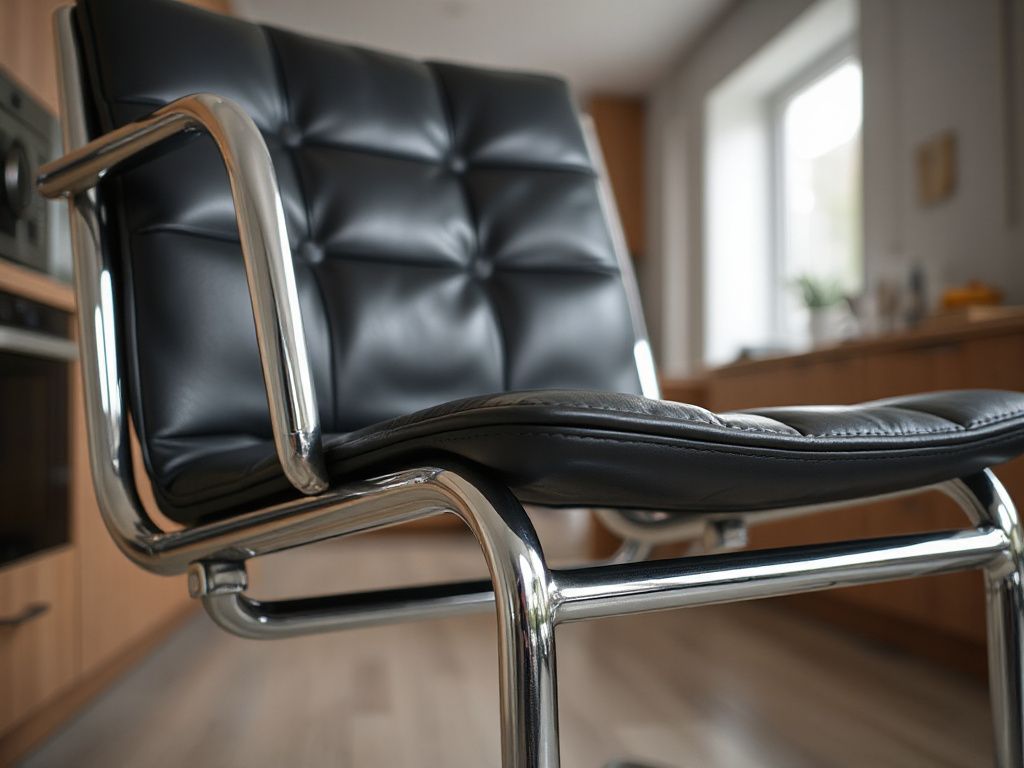
Understanding Leather Quality: More Than a Label
Black leather sounds straightforward, but the category splits into grades that determine everything about how the chair will look in ten years. Full-grain leather is the hide’s outermost layer, left intact with its natural grain and imperfections. It absorbs conditioner deeply, develops a rich patina, and is the most durable. In a black leather and chrome chair, full-grain hides will soften without losing their structure, and minor scratches can often be buffed out by rubbing with your fingertips—the natural oils redistribute.
Top-grain leather has the outermost layer sanded away to remove blemishes, then a uniform finish is applied. It’s softer and more stain-resistant than full-grain but less breathable. Federal Trade Commission labeling rules require that any product labeled “leather” be the genuine tanned hide of an animal, but bonded leather—made from shredded leather scraps glued to a fabric backing—can be labeled “bonded leather” and often looks deceivingly similar when new. Bonded leather peels, typically within two to three years of daily use, especially on high-friction areas like armrests and seat edges. I’ve watched chairs that looked nearly identical in catalog photos: one with top-grain leather that still looks great after five years of toddlers climbing on it, the other with bonded leather that started flaking after eighteen months.
Identifying genuine full-grain or top-grain leather on a black leather and chrome chair comes down to three quick checks. First, press your thumb into the surface—full-grain and top-grain will show fine creases radiating outward, like human skin, while bonded leather will look flat or show an unnatural grain pattern that repeats. Second, smell it. Real leather has a distinct earthy, slightly sweet scent; bonded leather smells chemically or like plastic. Third, check the edges. High-quality chairs fold and stitch the leather neatly, leaving a raw edge visible on the underside of the cushion that reveals the suede-like back of full-grain hide. Bonded leather edges look like compressed cardboard.
For chairs that will see heavy daily use—kids, pets, or just multiple seatings a day—full-grain black leather is worth the extra upfront cost. A comparable chair in a different style, like a traditional Leather Wingback Chair, might use the same leather grade but present a completely different aesthetic. The leather quality principles remain constant regardless of the frame material.
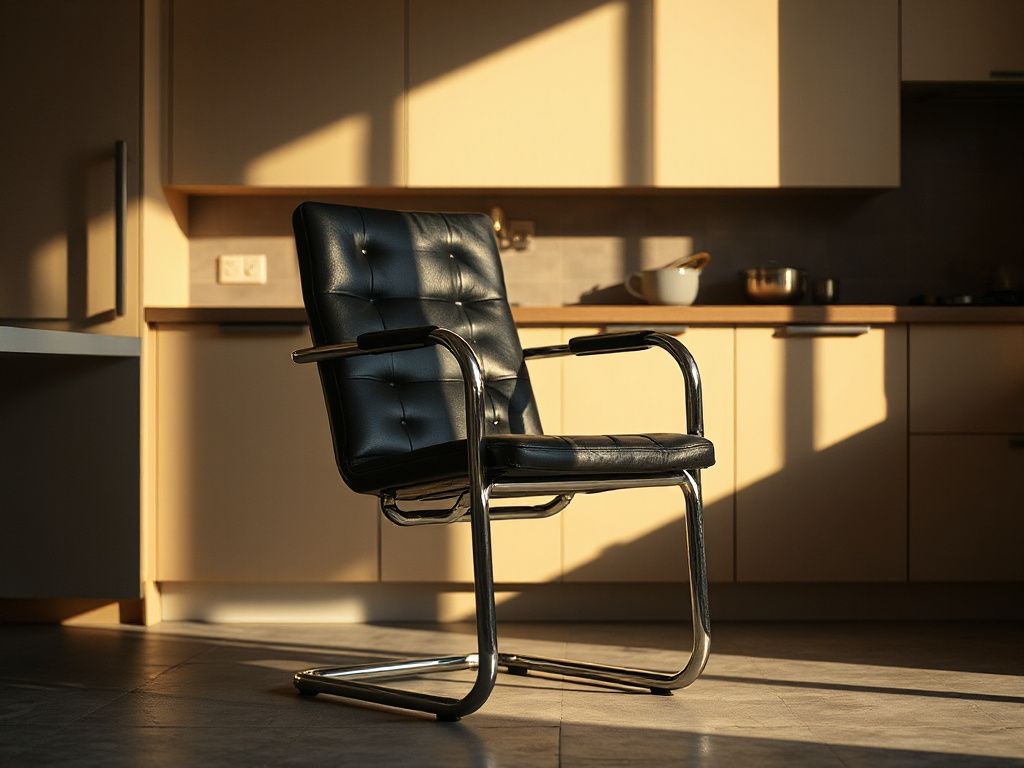
Chrome Varieties and Their Unexpected Quirks
Not all chrome is equal. Polished chrome is the mirror-shiny finish most people picture, achieved by electroplating multiple layers of nickel, then chromium, onto a steel or occasionally aluminum core. Polished chrome reflects light and fingerprints with equal enthusiasm. Satin chrome, sometimes called brushed chrome, goes through an additional abrasion step that creates tiny parallel lines, resulting in a muted, matte look that hides fingerprints far better. Both resist corrosion, but the plating thickness matters enormously. High-end manufacturers like Knoll or Cassina specify thicker plating—often with a copper base layer—that stands up to years of hard use. Cheaper chairs might skip the copper layer or use a thinner nickel-chrome layer that can chip if struck with a vacuum cleaner wand.
Water spots form when tap water evaporates and leaves behind calcium and magnesium minerals. On polished chrome, these spots become white hazy rings that look like the finish is fading. The Spradling Group’s leather care recommendations emphasize that leather should be cleaned with products maintaining a pH between 4.5 and 5.5, but for chrome the fix is simple: a drop of distilled white vinegar on a corner of a microfiber cloth, gently rubbed over the spot, then immediately followed by a dry cloth. The mild acid dissolves the mineral deposits without affecting the chrome layer. Do this once a month if your water is hard, and the chrome stays clear.
Daily and Deep Cleaning: Separate Routines, Better Results
Maintaining a black leather and chrome chair boils down to a two-track system. The chrome track is about dryness and speed. Twice a week, run a dry, clean microfiber cloth over every inch of exposed chrome. If you see a smudge, breathe on it and wipe—the moisture from your breath with immediate drying is usually enough. Once a month, if spotting appears, use the distilled water or vinegar method. I keep a small spray bottle of distilled water just for chrome frames. A light mist, followed by a dry wipe, cuts down mineral deposits dramatically.
The leather track is about moisture balance. Black leather won’t show dirt as quickly as lighter colors, but it still accumulates body oils, sweat, and airborne grime. Every three months—more often if the chair is in a high-traffic area—wipe the leather with a cloth barely dampened in warm water and a few drops of pH-neutral saddle soap or a dedicated leather cleaner. Avoid saturating the seams; water seepage can rot the thread or warp the substrate beneath. After cleaning, let the leather air dry completely, then apply a conditioner with lanolin or neatsfoot oil using a soft cloth, rubbing in circles. Wipe off any excess after twenty minutes. The conditioner replaces the fats that keep leather flexible, preventing the brittle cracking that happens when leather dries out.
Sequence matters. Always clean chrome first, then leather, so no dust or cleaning residues from the frame drop onto freshly conditioned leather. And never apply leather conditioner near chrome joints; even a tiny smear of oil will leave a visible film that attracts dust. If conditioner does get on chrome, clean it immediately with a dry cloth, then a slightly damp one.
Dealing with Damage: Scratches, Fading, and What the Frame Reveals
Black leather fades in direct sunlight. After two or three years parked next to a south-facing window, that deep black can shift to a grayish-brown. UV radiation breaks down the pigment and the leather’s collagen structure. I’ve repositioned chairs for clients just six feet away from a window and seen a dramatic difference in fading speed. If the chair must sit in sunlight, apply a leather protectant with UV inhibitors twice a year, and rotate the cushions or the entire chair periodically. A sheer curtain that filters UV light helps, too.
Chrome scratches fall into two categories: superficial scuffs that affect only the clear top layer, and deep gouges that expose the nickel or copper underneath. The first type can be diminished using a cotton wheel on a low-speed rotary tool with a non-abrasive blue polishing compound, but only if you are experienced; in the wrong hands, the friction burns the plating. For the second type, replating is the only real fix. A professional metal plating shop can strip and replate a chair frame, but the cost often exceeds the value of an entry-level chair. That’s why a well-built frame is insurance. A Antique Wooden Chair With Leather Seat may have its own frame concerns, but on a chrome chair, look for welded—not bolted—joints and a heft to the steel. Solid stainless steel tubing, though often mistaken for chrome, will never rust and weighs noticeably more. Chrome-plated steel, when properly maintained, resists rust for decades, but a tiny chip in the plating exposes the steel to moisture and air, starting oxidation that can spread beneath the chrome like rust under paint.
Leather scratches from pets or keys are part of an honest aging process in full-grain hides. A shallow scratch can be massaged with a dab of leather cream and gentle heat from a hairdryer on low to help the fibers relax. Deep cuts need a leather repair compound matched to the black color, but even then, achieving an invisible repair is tough. A chair that shows its history isn’t ruined; it’s acquiring character.
Styling a Black Leather and Chrome Chair in a Real Home
The fear that a black leather and chrome chair looks cold or corporate is outdated. Designers are mixing them into layered spaces where the shine and dark mass create a focal point. Pair the chair with warm textures—a wool throw over the seat back, a jute rug underneath—to dial down the starkness. The Barcelona Chair, originally designed for the 1929 International Exposition, and the Wassily Chair, designed by Marcel Breuer using tubular steel, are the iconic ancestors of most modern chairs with black leather and chrome. Their lines are crisp, and the materials are uncompromised. In a room with a soft beige sofa and wooden coffee table, a single black leather and chrome chair acts as a counterpoint, pulling the eye across the space.
If the chairs are used as dining seating, a set of four black leather chairs with chrome legs around a live-edge wood table is a surprisingly warm combination. The chrome reflects the table surface, the black leather absorbs light and hides spills—assuming you wipe them quickly. A Green Leather Accent Chair might bring a colorful twist, but black’s neutrality makes it the easier anchor. Don’t overthink matching metals; chrome works alongside brushed nickel faucets or matte black light fixtures without clashing, provided you let some other element—like the table wood grain—be the dominant texture.
Lighting plays a role. Place the chair away from harsh overhead downlights that create harsh reflections on the chrome; a soft lamp at seating height makes the metal glow gently. Black leather, particularly full-grain, absorbs light, so good ambient lighting prevents the chair from becoming a dark void.
Lifespan and What a Good Frame Actually Costs
A black leather and chrome chair from a reputable manufacturer, with a solid welded steel frame and full-grain leather, can easily last thirty years and often much longer. I’ve sat in mid-century originals from the 1960s whose leather had been replaced but the chrome frames were still flawless—just a little patina at the weld points. Cheaper chairs with bonded leather and thin chrome plating may look acceptable for two to three years, then begin to fail in ways that are not worth repairing. The difference in cost upfront is often the difference between buying one chair once and replacing it three times.
Beyond the leather grade, the frame construction is the most telling quality indicator. Lift the chair. A well-built one feels solid, not flimsy, and the legs don’t wobble when you press down on the seat corners. The chrome should feel smooth and cool to the touch, with no rough edges at the joins. Weld seams should be nearly invisible. On the underside, look for a tag identifying the leather type and a manufacturer’s stamp. A chair assembled with nuts and bolts that can be tightened over time is fine, but stress points should be welded.
Frequently Asked Questions
How do I tell if the leather on a black chrome chair is genuine?
Press your thumb into the surface; real leather shows fine creases that radiate outward, while bonded leather shows a uniform dimple or a stamped grain pattern. Check the underside of a cushion or swatch—full-grain leather has a suede-like backing, bonded leather looks like compressed fiber. A genuine leather tag alone isn’t enough; FTC rules allow the label on full-grain, top-grain, and sometimes split leather, so always use the touch and smell tests.
Why do water spots form on chrome and how do I remove them safely?
Water spots are mineral deposits left after tap water evaporates. The calcium and magnesium form a hazy white film. Wipe chrome immediately after any damp contact with a dry microfiber cloth. For existing spots, use a corner of a cloth dampened with distilled white vinegar and rub gently, then immediately dry the area. Never use an abrasive scrubber, as that dulls the reflective layer.
Can chrome rust on a black leather and chrome chair?
Chrome plating itself does not rust, but if the plating chips or scratches deeply to expose the underlying steel, that steel can oxidize. In humid or coastal environments, even tiny pinholes can lead to rust bubbles that lift the chrome. Regular wiping and addressing chips with a clear metal sealant when they first appear can prevent this, but once rust has spread beneath the plating, replating is the only reliable repair.