

Bedtime turns into a nightly negotiation, the covers land on the floor by midnight, and a kid who can’t wind down keeps popping back out of bed. A 4lb weighted blanket is one of the few tools that works with a restless little nervous system instead of against it, using gentle, even pressure — the deep pressure stimulation thought to calm the body — to help a child settle. The catch is that most of them are built cheaply, and the wrong one clumps, traps heat, or weighs the wrong amount for your child.
Here’s the short answer: the Dreamland Baby 4lb Weighted Blanket. Here’s the long answer: keep reading. Its two-sided fabric — warm micro-fleece on one face, cooling minky on the other — is the detail that makes it work across seasons, and 4lbs spread over a 36″x48″ panel lands in the sweet spot for the 40-60lb child it’s built for.
📌 This article contains affiliate links. As an Amazon Associate I earn from qualifying purchases, at no extra cost to you. Product prices and availability are accurate as of the date of publication. Full disclosure.
| Product | Best For | Buy Link |
|---|---|---|
| Dreamland Baby 4lb Weighted Blanket (Ocean Blue) | All-season comfort | Check Price |
| MAXTID Weighted Blanket for Kids | Budget sensory pick | Check Price |
| CuteKing Weighted Blanket (4lbs) | Leak-resistant build | Check Price |
| Waowoo Weighted Blanket (4lbs, 36″x48″) | Even weight spread | Check Price |
| Coolsaur Weighted Blanket 5lbs (Dinosaur Throw) | Dinosaur-loving kids | Check Price |
| Kivik Weighted Blanket 3lbs | Lighter 3lb option | Check Price |
What Separates These Kids’ Blankets From the Rest
These picks come from comparing published specifications, materials and documented features against what actually decides a good kids’ blanket — not from any hands-on test. Two things separate the good from the useless here. The first is fill and pocket construction: dense glass beads sewn into tight, evenly-gridded compartments hold their weight in place, while loose or oversized pockets let fill migrate and clump, leaving the blanket heavy in one spot and dead in another. The second is weight-to-body fit — 4lbs is calibrated for a specific child weight range, and a mismatch means either no felt pressure or a blanket the child can’t lift off unassisted. Breathability of the shell fabric is the tiebreaker, since a blanket that traps heat gets kicked off within minutes. I weighted construction and correct weight most heavily. Before you order, weigh your child and confirm the fill type — many listings quietly leave it out.
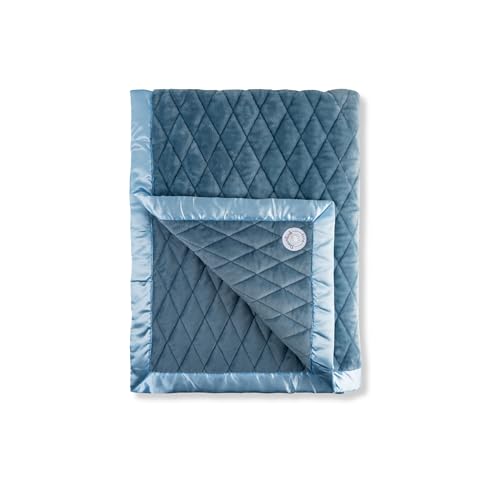


Dreamland Baby 4lb Weighted Blanket (Dual-Fabric, Ocean Blue)
Why it made our list: If your child runs hot some nights and cold on others, the reversible fabric here solves a problem most single-sided blankets ignore.
The build centers on two different faces — a warm, plush micro-fleece on one side and a cooler minky panel on the other. That’s not a gimmick. Flipping the blanket is the easiest way to manage a kid who overheats in July and wants warmth in January. At 36″x48″, this is toddler-bed sized, so picture a cover for one small sleeper, not something that drapes over a twin.
The 4lbs sits in the range built for a roughly 40-60lb child, following the standard 10% body weight guideline. Compared with the plainer MAXTID, Dreamland reads more finished and styled — the Ocean Blue looks calm and put-together in a nursery rather than loud. My one honest gripe: the listing stays vague on the exact fill and pocket sizing, and tight, evenly-gridded pockets are precisely what keep weight from migrating. You’re trusting the brand’s reputation there rather than a stated spec.
Pros:
- Reversible fabric — micro-fleece for cold nights, cooling minky for warm ones, so it earns its keep year-round
- 36″x48″ toddler-bed fit — sized for a single small sleeper without excess fabric to bunch
- 4lbs for a 40-60lb child — matches the 10% body weight rule most closely of the group
- Muted Ocean Blue colorway — looks styled in a kid’s room instead of clinical
Cons:
- Fill type left unstated — the listing never confirms glass beads or pocket dimensions
- Premium-priced — costs more than the sensory-focused budget picks here
- Single size only — no room to size up as the child grows past 60lbs
Who Should Buy This
Great match for: parents of a 40-60lb child who want one blanket that handles both hot and cold nights. Think twice if: you need a stated glass-bead fill on the spec sheet before you buy, since Dreamland doesn’t spell it out.
MAXTID Weighted Blanket for Kids (4lb Sensory Pick)
Quick take: A no-frills budget choice aimed squarely at sensory input, best for families who want the calming effect without paying for styling.
MAXTID keeps it simple with a cotton face on one side and a soft minky cuddle fabric on the other. That minky side is the point — the plush texture gives kids the tactile feedback that pairs well with the deep pressure of the weight itself. Cotton also breathes better than dense polyester microfiber, which helps on warmer nights.
At 4lbs it targets the same 40-60lb range as the Dreamland, but the presentation is plainer and the price tends to sit lower. For families using a weighted blanket as a calming sensory tool for a child with anxiety, ADHD or autism, this is a sensible entry point. The annoyance: the listing doesn’t confirm the fill material or how small the bead pockets are sewn, and loose pockets are the number-one cause of clumping. Wash it inside a cover to protect the seams.
Pros:
- Cotton-and-minky combo — breathable on one side, sensory-plush on the other
- Budget-friendly — one of the lower-cost 4lb options in this roundup
- Sensory-focused design — the minky texture suits kids who seek tactile input
- 4lb weight — appropriate for the 40-60lb child range
Cons:
- Unspecified fill and pocket size — no confirmation the beads stay put
- Plain looks — functional rather than styled for a decorated room
- Thin care guidance — the listing doesn’t clearly state machine-wash safety
Our Take
Ideal for: budget-minded parents who care about the calming, sensory function over appearance. Pass on this if: you want a blanket that doubles as a decor piece, or you need clear washing guidance up front.
CuteKing 4lb Weighted Blanket (Leak-Resistant Build)
What stood out: Of this group, CuteKing is the one that actually talks about construction — and construction is what keeps a weighted blanket working past month one.
The headline is a 5-layer design with precision stitching the brand says is built to stop beads leaking. That matters far more than any color or pattern. Bead leakage and clumping almost always trace back to oversized or loosely-sewn pockets, so a maker that leads with tight stitching is at least aiming at the right target.
CuteKing also states the sizing logic plainly: pick roughly 10% of body weight, which puts the 4lb version in the 40lb-child zone. Reading its spec sheet next to the vaguer listings, the gap is obvious — CuteKing tells you how it’s held together while others just show a cute print. The honest catch is that “5-layer” is the brand’s own description, not a third-party rating, and the shell’s breathability isn’t detailed, so hot sleepers are taking a small gamble.
Pros:
- 5-layer construction — designed to lock beads in place and resist migration
- Precision stitching — tighter seams are the real defense against clumping
- Clear sizing guidance — the listing spells out the 10% body weight rule
- Fill-first focus — build quality is prioritized over decoration
Cons:
- Breathability unstated — no detail on whether the shell traps heat
- Self-reported layering — “5-layer” isn’t an independent standard
- Fewer style options highlighted — a function-first listing
The Real Deal
Perfect for: buyers who prize durable construction and want the beads to stay evenly spread. Not great if: your child sleeps hot and you need a confirmed cooling or breathable shell.
Waowoo Weighted Blanket (4lbs, 36″x48″, Even Weight Spread)

Why it stands out: Waowoo’s smaller-than-usual bead pockets are the spec I’d point to first for anyone worried about weight bunching in one corner.
The listing calls out smaller pockets to keep the glass beads evenly distributed, and that’s the right engineering priority. Glass beads are denser and thinner than plastic pellets, so they sit flatter and stay quieter — but they only help if the compartments holding them are sewn tight. Waowoo’s pitch lines up with what actually keeps a 4lb blanket useful.
Dimensions are a confirmed 36″x48″, the standard kids and throw size, and 4lbs again targets the 40-60lb sleeper. Sitting it beside the CuteKing, both get the construction story right; Waowoo just states the glass-bead fill outright, which I appreciate. Where it stumbles: the marketing leans on sleep-disorder language that reads like adult-blanket copy, and parents should ignore that framing — a 4lb blanket is a child’s product, not a clinical device.
Pros:
- Small bead pockets — engineered to stop weight migrating to one spot
- Confirmed glass-bead fill — denser, thinner and quieter than plastic pellets
- Standard 36″x48″ size — fits a toddler or twin bed for one child
- 4lb weight — suits the 40-60lb range on the 10% guideline
Cons:
- Overreaching marketing — the sleep-condition claims fit adult blankets, not this
- Single small size — too little coverage for a shared bed
- Shell fabric unspecified — breathability isn’t detailed for hot sleepers
Who Should Buy This
Great match for: parents who want the flattest, most even weight distribution on the list. Skip if: you’re expecting a full-size blanket or a medical sleep aid.
Coolsaur 5lb Weighted Blanket (Dinosaur Throw, 36″x48″)

Here’s the deal: This is the odd one out — a 5lb dinosaur-themed throw rather than a strict 4lb blanket, best as a gift for a slightly bigger, dino-obsessed kid.
Coolsaur builds it with evenly distributed glass beads and multi-layer construction, the same fundamentals that matter across the category, wrapped in a playful dinosaur design pitched as a birthday gift. At 36″x48″ it matches the others on footprint, so it covers one child, not a bed.
The real question is the weight. 5lbs suits a heavier child — think roughly 50lbs and up on the 10% rule — so if your kid is on the lighter end of 40-60lbs, the 4lb options are the safer fit. For a 55-70lb child who loves dinosaurs, the extra pound is a feature, not a flaw. My gripe is the heavy gift-marketing; actual sleep performance rides on that bead distribution holding up, and the listing leans harder on the theme than on the construction detail.
Pros:
- Glass-bead fill — the denser, quieter option, evenly distributed per the listing
- Multi-layer build — aims to keep the weight in place
- Kid-friendly dinosaur design — genuinely appealing as a gift
- 5lb weight — a better fit for a heavier 50-70lb child than 4lb models
Cons:
- Heavier than 4lb — too much pressure for a small 40lb child
- Gift-first marketing — the theme gets more attention than the construction specs
- Single size and weight — no lighter option for younger kids
Our Take
Ideal for: a dinosaur-loving child around 50-70lbs who needs a touch more pressure. Pass on this if: your child is under 50lbs — the 4lb picks match their body weight better.
Kivik Weighted Blanket (3lb, Lighter Option)

In a nutshell: The featherweight of the group at 3lbs, aimed at younger or smaller children and buyers who want the gentlest possible pressure.
Kivik’s standout is trust-related. The fabric carries OEKO-TEX Standard 100 certification, meaning it’s been tested against a list of harmful substances — a genuinely useful assurance for anything a child sleeps under. The cartoon pattern is designed to feel playful, and the brand frames it around calm and focus for kids studying or winding down.
At 3lbs this is lighter than everything else here, which cuts both ways. For a child around 30lbs it’s appropriately sized, but drop it on a 55lb kid and there’s a real chance they feel almost no pressure at all. That’s the core trade-off: a 3lb blanket is the safe choice for a smaller body and the wrong choice for a bigger one. The listing is also light on fill and pocket detail, so construction is more of an unknown than with CuteKing or Waowoo.
Pros:
- OEKO-TEX certified fabric — tested for harmful substances, reassuring for kids
- Breathable shell — the listing emphasizes airflow for cooler sleep
- 3lb weight — well-matched to a smaller, roughly 30lb child
- Playful cartoon pattern — designed to feel inviting at bedtime
Cons:
- Too light for bigger kids — a 50lb-plus child may feel little pressure
- Fill and pockets unspecified — construction detail is thin
- Not a 4lb option — outside the core weight this roundup targets
Who Should Buy This
Perfect for: parents of a smaller child around 30lbs who want the lightest, gentlest pressure plus certified-safe fabric. Think twice if: your child is 40lbs or more — step up to a 4lb model for pressure they’ll actually feel.
How to Choose the Right 4lb Weighted Blanket for Your Child
Matching a 4lb weighted blanket to your child’s body weight
The one rule that matters: a weighted blanket should land near 10% of the sleeper’s body weight. That puts a 4lb blanket in the 40-60lb zone — roughly a preschooler through early grade-schooler. Go too heavy and a small child can’t push the blanket off themselves, which becomes a safety problem. Critically, weighted blankets are not safe for babies under one year because of suffocation and overheating risk; the word “baby” in a brand name doesn’t change that. A 4lb blanket is a kids’ product, and adults need far more weight — we cover that separately in our guide to adult weighted blankets. The U.S. Consumer Product Safety Commission tracks infant sleep-product hazards, and its guidance on loose bedding around babies is worth reading before buying anything weighted for a very young child.
Glass beads vs. plastic pellets
Fill is the quiet dividing line. Glass beads are denser and finer, so the blanket stays thinner, flatter and quieter — the Waowoo and Coolsaur both use them. Plastic pellets are bulkier and rattle more. Either way, the beads only stay put if the pockets are sewn small and tight, which is why CuteKing’s stitching focus earns points. Textile makers often reference ASTM International material standards for this kind of construction, and if you’d rather craft your own weighted textile from scratch, our look at weighted yarn for hands-on projects covers that route.
Breathability and staying cool at night
A blanket that traps heat gets kicked to the floor within minutes. Cotton and cooling minky shells breathe better than dense polyester; Dreamland’s reversible cooling side is built for exactly this. If heat is your child’s main issue, our roundup of cooling-focused weighted blankets goes deeper on all-season fabrics. Cotton one side, minky the other is the combo I’d chase for a hot sleeper.
Our Final Recommendation
For the overall win, the Dreamland Baby 4lb blanket takes it — the reversible warm-and-cooling fabric makes it the most flexible pick for a 40-60lb child across seasons. On a tighter budget, the MAXTID delivers the same calming 4lb pressure with a breathable cotton-and-minky build for less. If construction is your worry, the Waowoo earns the runner-up nod for its small, glass-bead-filled pockets that keep weight evenly spread. Match the weight to your child first, confirm the fill, and any of these three will settle bedtime better than the covers they keep kicking off.
Frequently Asked Questions
Can you machine wash a 4 pound weighted blanket, or does it need a cover?
It depends on the model, and the listing is where you check. Some 4 pound weighted blanket designs are fully machine washable on a gentle cycle, while others rely on a separate duvet cover to protect the bead compartments. Washing a non-washable one can burst the seams and cause leaking or clumping. When in doubt, use a removable cover and spot-clean the blanket itself.
Is 4lbs too light for my child to feel any real pressure?
Not if the weight matches the body. A 4lb blanket is calibrated for roughly a 40-60lb child on the 10% body weight rule, so within that range the deep pressure is noticeable and calming. Drop it on a 90lb kid and yes, it’ll feel like almost nothing — that’s a sizing mismatch, not a flaw. For heavier or older children, step up in weight.
Is a 4lb weighted blanket safe for a toddler or baby?
For toddlers who can lift the blanket off themselves unassisted, generally yes. For babies under one year, no — weighted blankets carry suffocation and overheating risk for infants, and brand names containing “baby” don’t override that. Always confirm a young child can move the blanket independently, and never let it fully cover the head or face.