

Let me tell you about my old home office setup.
It was a disaster. A folding chair I dragged from the garage. A wobbly desk from college. Lighting that made everything look like a horror movie.
I hated it.
And guess what happened? I procrastinated constantly. Scrolled through social media instead of working. Made every excuse to leave that depressing corner.
Then something clicked.
Your workspace isn’t just a place to put your laptop. It shapes how you think. How you feel. Whether you actually get stuff done or spend three hours “researching” before giving up.
In 2025, we’re way past the boring beige cubicle vibe. Home offices have become personal. Creative. Actually enjoyable to be in.
You might be freelancing full-time. Working remotely for a company. Or just need somewhere to tackle side projects without sitting on your couch hunched over like a question mark.
Whatever your situation.. your office should feel like yours.
I spent the last few months testing different setups. Moved furniture around more times than I can count. Tried color schemes that looked great on Pinterest but terrible in real life. And finally figured out what actually works.
These 20 ideas cover everything from clean minimalist spaces to bold creative studios. Some cost almost nothing to pull off. Others are bigger investments.
But here’s the thing.
You don’t need to pick one and copy it exactly. Mix and match. Take the parts that speak to you. Create something that makes you excited to sit down and work.
Let’s dive in.
1. Warm Minimalist Haven
Minimalism gets a bad rap for feeling cold and sterile.
But it doesn’t have to be that way.
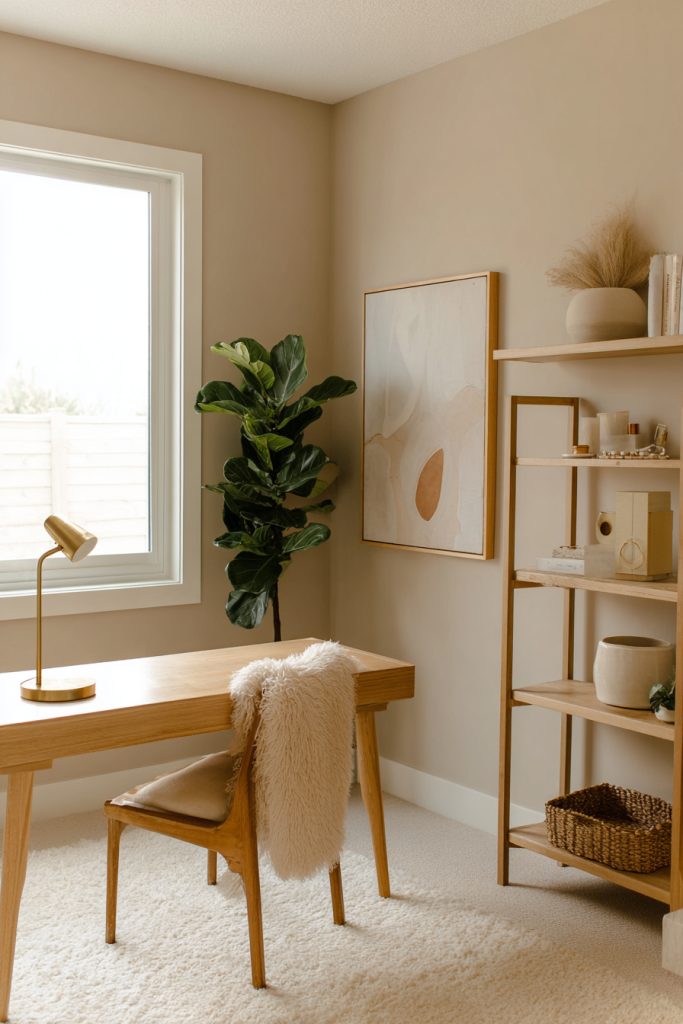
This style keeps things simple while adding warmth. Soft beige walls. Honey-colored oak furniture. The kind of space that feels calm the second you walk in.
Here’s the secret: quality over quantity.
One beautiful brass desk lamp beats three cheap ones from Target. A single framed print you actually love looks better than five random posters.
Position your desk near a window if you can. Natural light makes everything better.
Add texture to keep things cozy. A wool rug underfoot. Linen curtains that move with the breeze. Maybe one plant a fiddle leaf fig works great.
Keep decorations minimal. The goal? A space where distractions just.. disappear.
2. Vintage Library Study
Ever walked into an old library and felt instantly peaceful?
That’s what this style brings to your home.
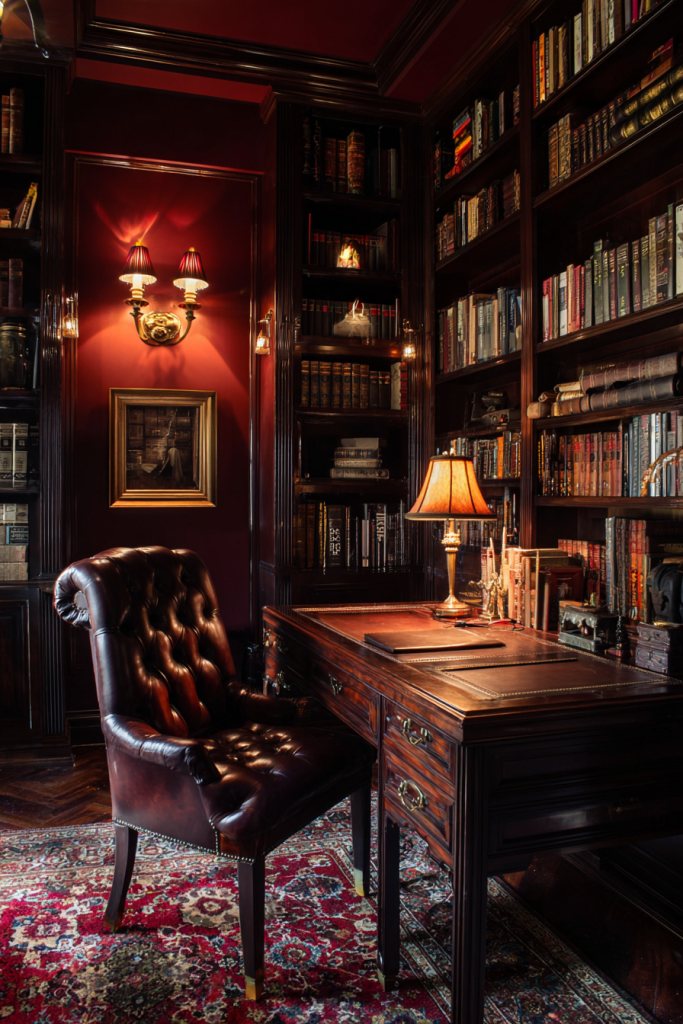
Rich mahogany or walnut desks. Floor-to-ceiling bookshelves packed with books. Deep forest green or burgundy walls that make the space feel like a cocoon.
I love this approach because it feels timeless. Not trendy. Not trying too hard.
A leather desk chair adds comfort and looks the part. Brass letter holders and wooden pen cups give you those vintage vibes without spending a fortune.
Here’s what matters most: lighting.
Soft overhead lights combined with a quality desk lamp. Otherwise, you’ll strain your eyes after an hour of reading.
This office feels like stepping away from everything modern and chaotic. A retreat where you can actually think.
3. Scandinavian Light & Bright
Nordic design makes even tiny spaces feel huge.
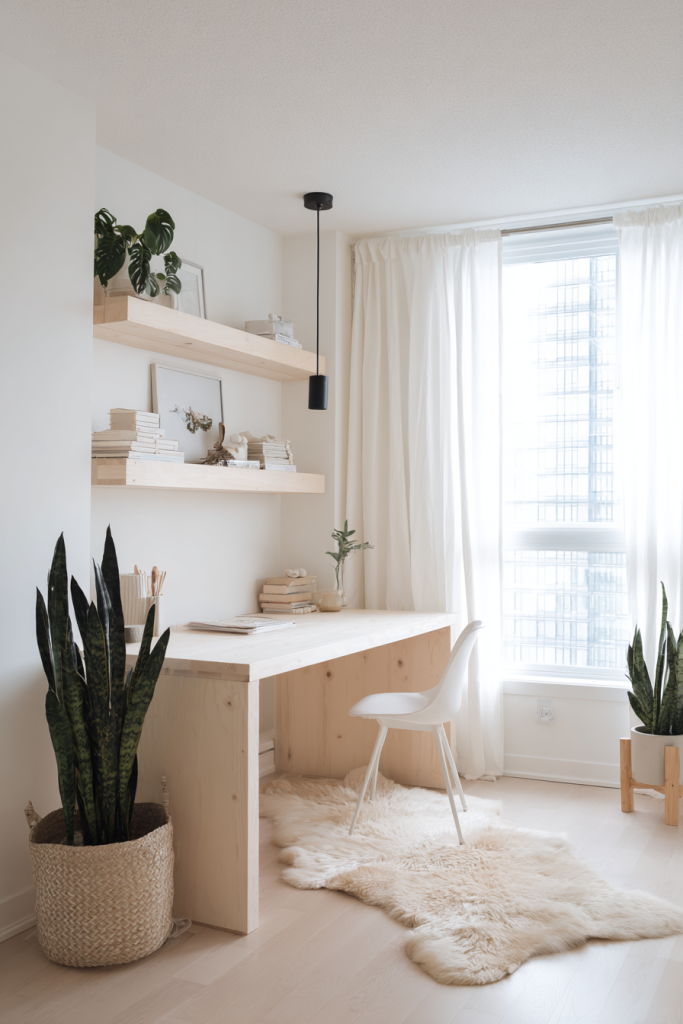
The trick? White or light gray walls that bounce natural light everywhere. Pale wood furniture in birch or ash. Everything functional and streamlined.
No unnecessary stuff cluttering surfaces.
Add soft textiles to keep it cozy. A sheepskin rug. A chunky knit throw draped over your chair. Simple touches that say “comfortable” without adding visual noise.
Plants are non-negotiable here. But not jungle-level. A snake plant. Maybe a monstera. They bring life without making the space feel busy.
Storage goes behind clean cabinet doors. Out of sight, out of mind.
A simple pendant light completes the look. Nothing fancy.
This works perfectly for small rooms. The lightness makes everything feel more open. More breathable.
4. Industrial Loft Workspace
Want something with edge?
This is it.
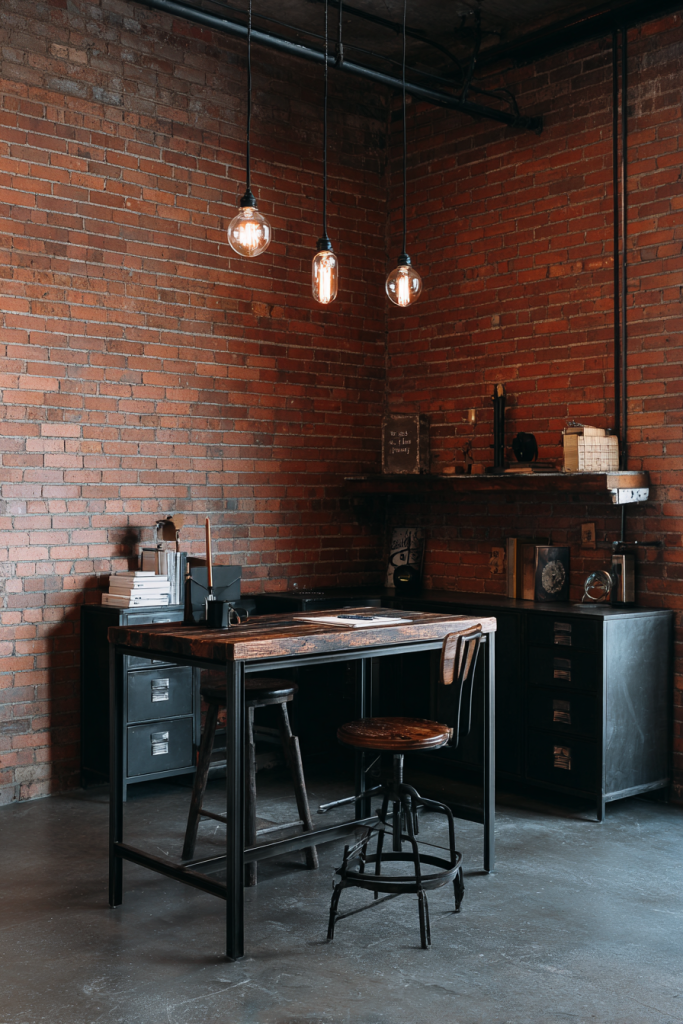
Exposed brick walls. Concrete floors. Metal furniture with visible welds that look like they came from an old factory.
I’m talking steel-framed desks with reclaimed wood tops. Black metal shelving. Edison bulbs hanging from the ceiling like something out of a Brooklyn loft.
The color palette stays neutral. Charcoal. Rust. Weathered wood tones.
Add vintage industrial pieces if you can find them. Old factory stools. Metal file cabinets with that worn patina.
This office feels creative. Unconventional. Perfect for designers, writers, or anyone who thinks corporate aesthetics are soul-crushing.
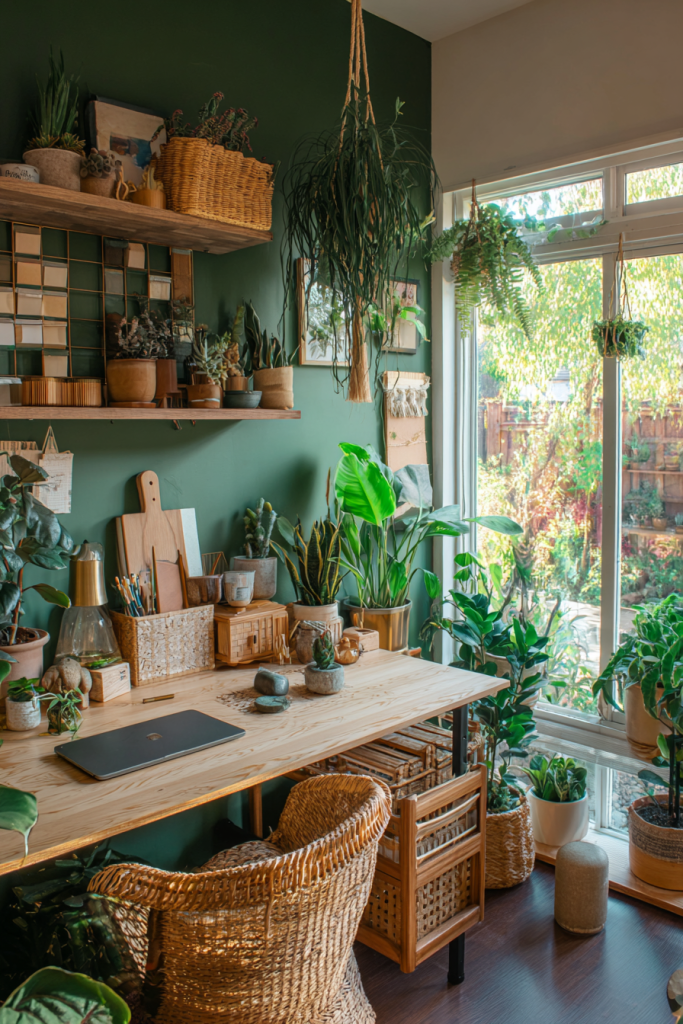
5. Biophilic Green Sanctuary
Here’s something wild.
Studies show that plants in your workspace reduce stress. Improve air quality. Make you more productive.
So why not go all in?
This style surrounds you with greenery. Large floor plants like bird of paradise or rubber trees. Smaller succulents and pothos on shelves and desk corners.
Natural materials everywhere. Bamboo organizers. Rattan baskets. Stone accessories.
Paint one wall sage green or terracotta. Add a small fountain for soothing background noise.
Wood furniture in natural finishes ties everything together.
Your office becomes a living, breathing space. Not just somewhere you sit and type.
6. Modern Coastal Retreat
Imagine working with the ocean nearby.
That’s the vibe here.
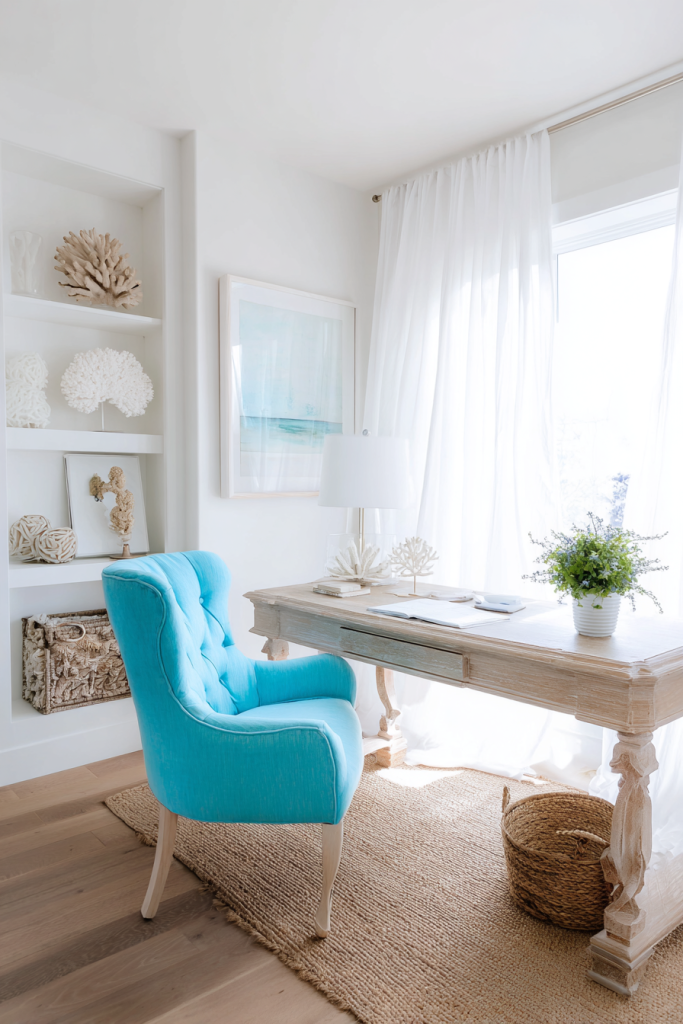
Start with soft white or sand-colored walls. Add watery blues through accent pieces. Throw pillows. Artwork. Maybe a statement chair.
Light wood furniture keeps things airy. Whitewashed oak works beautifully.
Natural fiber rugs jute or sisal add texture without heaviness.
Bring in decorative elements that remind you of the beach. Driftwood pieces. Coral sculptures. Nautical prints that don’t look cheesy.
Keep metallics subtle. Brushed nickel or brass for just a hint of shimmer.
Sheer curtains filter light without blocking it.
This works best in bright, sunny rooms. The result? You feel like you’re on permanent vacation even when grinding through deadlines.
7. Bold Jewel Tone Drama
Sometimes you need personality.
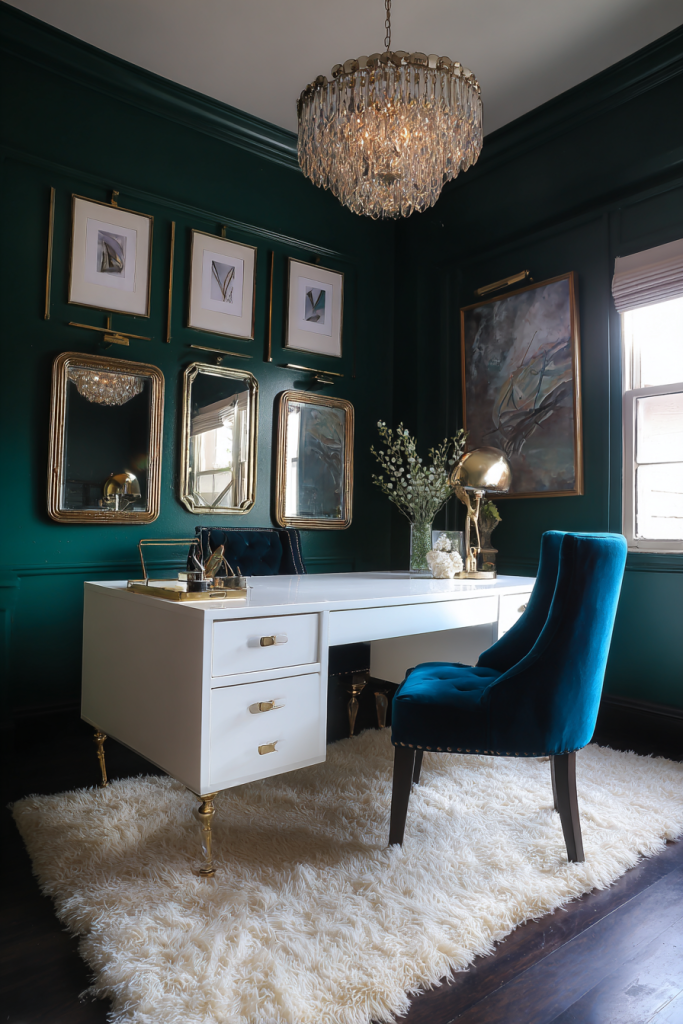
Deep emerald green walls. Sapphire blue. Amethyst purple. Colors that make a statement the second someone walks in.
Balance these rich tones with lighter furniture. A cream or white desk keeps the room from feeling like a cave.
Gold or brass hardware adds luxury. Velvet upholstery on your desk chair brings texture and comfort.
Layer in artwork that complements your jewel tone. But make sure you have excellent lighting. Dark walls eat light for breakfast.
This approach needs space and natural light to work. Otherwise, it feels overwhelming.
Done right? Your office becomes a space that energizes you. Makes you think bigger and bolder.
8. Japanese Zen Simplicity
Eastern design teaches us something important.
Harmony. Balance. Intention.
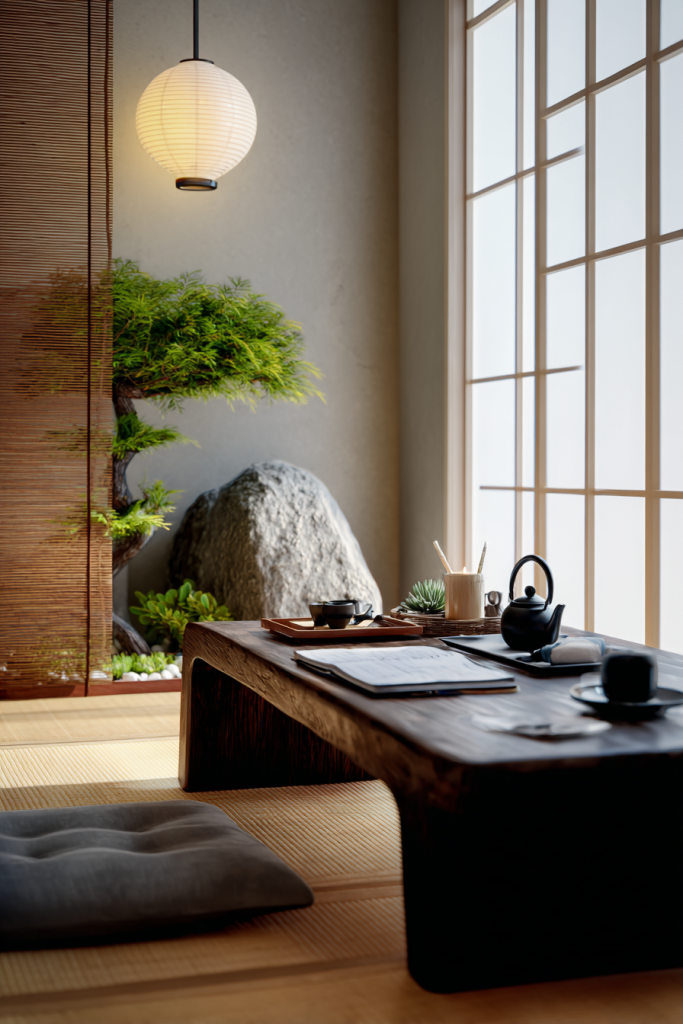
This office style strips away everything unnecessary. Natural materials. Neutral palette. Low-profile furniture in dark wood.
Sliding shoji screens or bamboo blinds filter light softly.
Add Japanese design elements. A small rock garden on your desk. A bonsai tree. Ceramic vessels that look like art.
Keep surfaces clear. Only essential items stay visible.
Put a meditation cushion in one corner. Take mindful breaks when your brain starts frying.
Soft, indirect lighting prevents harsh shadows.
The overall effect? Incredibly peaceful.
This workspace helps you disconnect from the constant digital noise. Focus deeply on what actually matters.
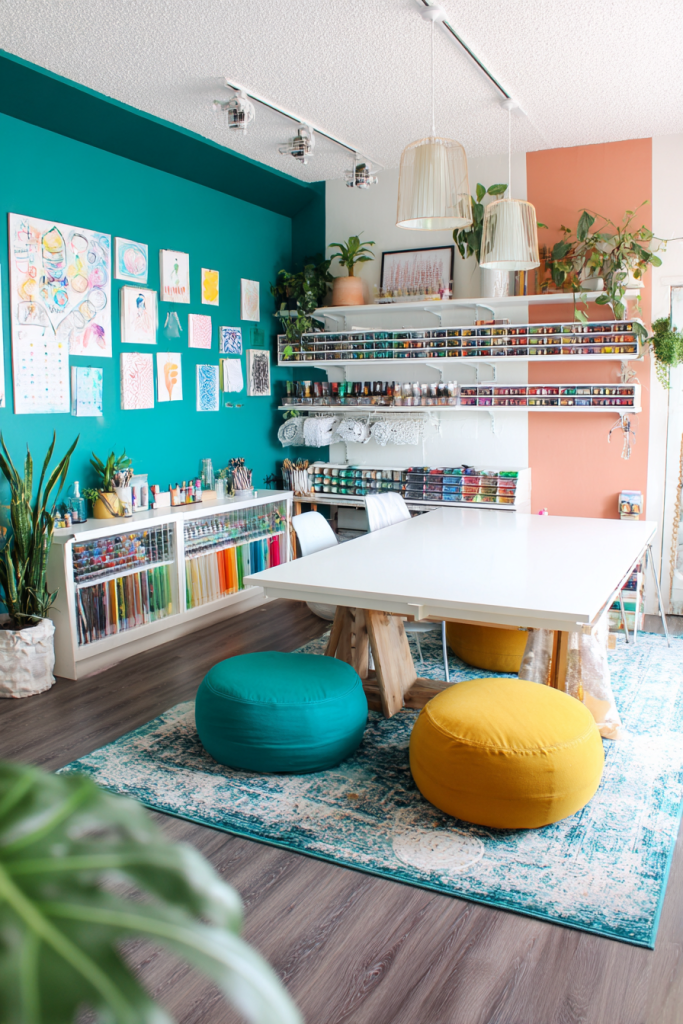
9. Colorful Creative Studio
If your work involves creativity, your office should show it.
Mix colors fearlessly. Mustard yellow. Teal. Coral. Terracotta. They can all live together if you do it right.
Cover one wall with an inspiration board. Mood boards. Fabric swatches. Artwork that sparks ideas.
Open shelving displays art supplies in glass jars and colorful containers. Everything visible and within reach.
A large work table gives you space beyond just computer work. Sketching. Planning. Making actual things with your hands.
Task lighting matters here. You need to see details clearly.
Add floor cushions or a small sofa for brainstorming sessions.
This office celebrates mess. Process. The messy middle of creating something new.
It’s not about managing emails. It’s about making things that matter.
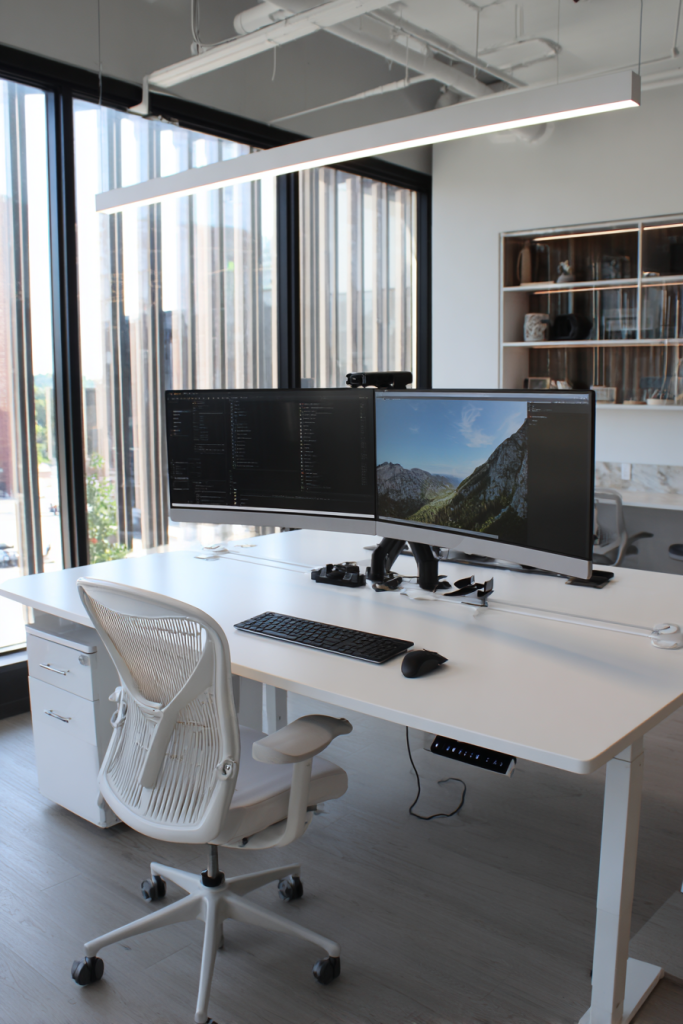
10. Smart Tech-Forward Hub
Let’s be real.
Modern work needs modern solutions.
This office integrates technology without making it look ugly. Cable management systems hide cords. A sit-stand desk adjusts throughout the day so you’re not stuck in one position.
Multiple monitors mount on arms that adjust and swivel. No more neck pain from awkward angles.
Smart lighting responds to voice commands. Or adjusts automatically based on time of day.
Wireless charging pads eliminate more cord clutter. Built-in USB ports and outlets put power exactly where you need it.
Sleek, minimalist furniture in white or light gray keeps the focus on function.
Storage solutions optimize efficiency without looking like a mess.
This workspace adapts to how you actually work in 2025. Not some outdated idea of what an office should be.
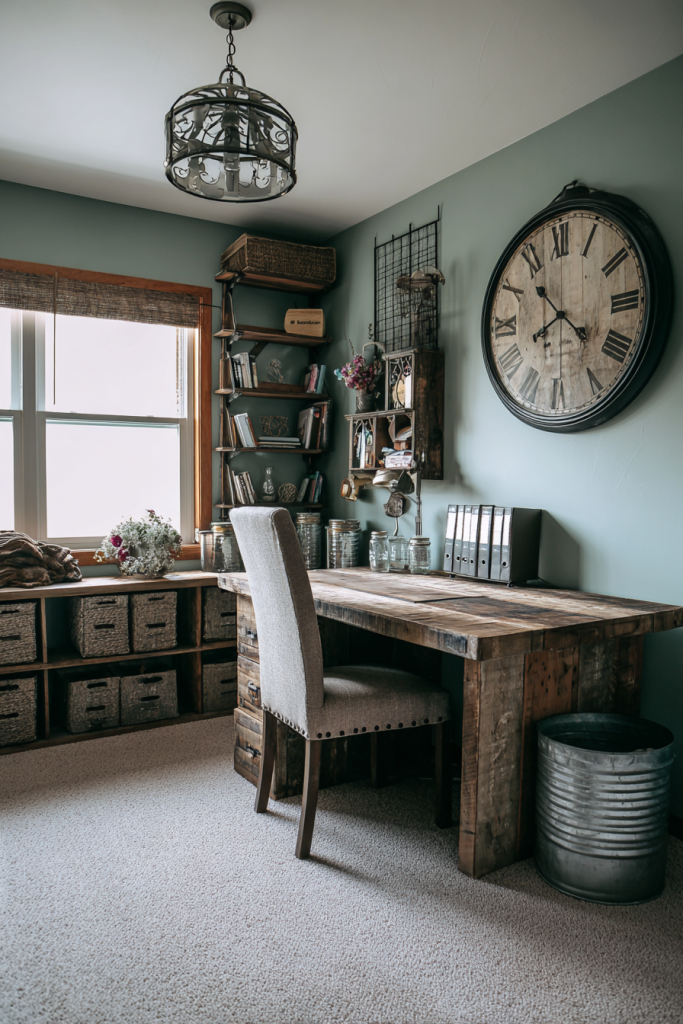
11. Rustic Farmhouse Charm
Comfort wins here.
Distressed wood furniture with visible grain. Each piece tells a story. Soft sage green or creamy white walls create a soothing backdrop.
Black metal hardware adds contrast. Not overwhelming. Just enough to define edges.
Open shelving from reclaimed wood displays work essentials and decorative pieces. Mix function with personality.
A vintage-inspired desk chair with cushioned seating. Because you’ll spend hours there.
Mason jar organizers and galvanized metal containers add functional charm. They’re not just props they actually hold your stuff.
Natural textures matter. Burlap. Linen. Cotton textiles.
A large farmhouse-style clock keeps time with character.
This office feels lived-in from day one. Not like you’re trying to impress anyone. Just comfortable and welcoming.
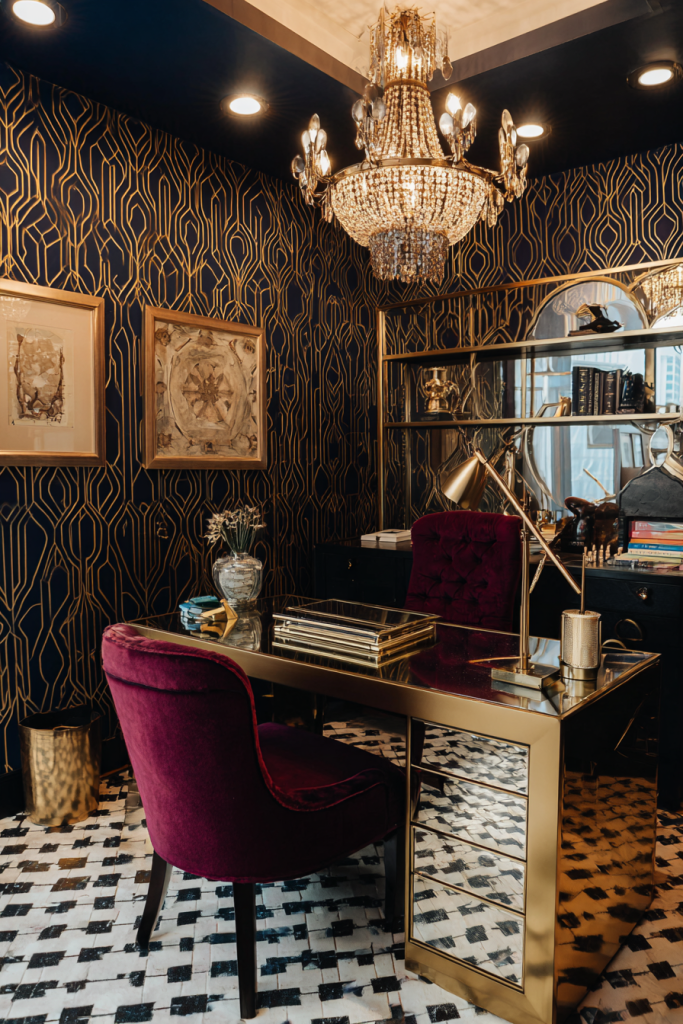
12. Art Deco Glamour
The roaring twenties knew how to do luxury.
Rich colors create drama. Navy. Gold. Black. Geometric patterns everywhere wallpaper, rugs, artwork.
Mirrored furniture surfaces reflect light and add sparkle. A plush velvet desk chair in jewel tones feels like sitting on a cloud.
Brass or gold desk accessories turn everyday items into statement pieces.
Curved furniture lines soften all those geometric patterns. A statement chandelier with crystal or glass elements becomes the focal point.
Marble or lacquered desk surfaces add sophistication.
This office makes you feel like you’re running an empire. Even if you’re just answering emails about quarterly reports.
Perfect for anyone who loves classic elegance with serious personality.
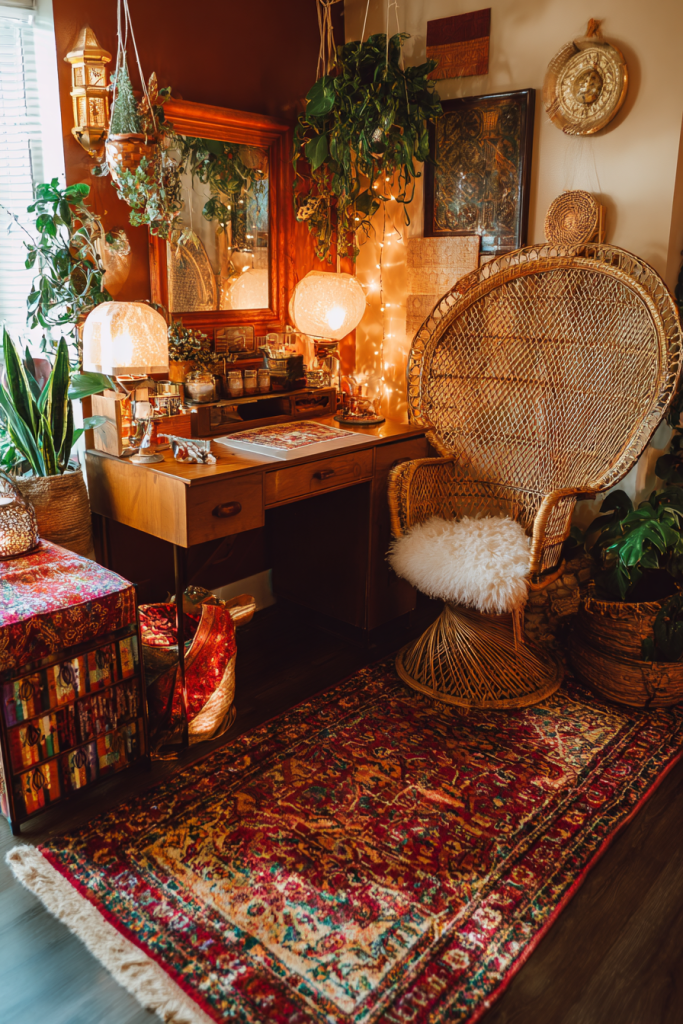
13. Eclectic Bohemian Mix
Rules? What rules?
This free-spirited workspace layers patterns, textures, and colors without apologizing.
A vintage rug with rich patterns anchors everything. Mix furniture styles fearlessly. Mid-century desk with a rattan chair? Absolutely.
Macramé wall hangings add handmade texture. Plants spill from hanging planters and happily crowd every surface.
String lights or Moroccan lanterns create warm ambient lighting.
Display treasures from travels. Vintage finds. Things that make you smile.
Natural materials dominate. Wood. Wicker. Clay.
This office feels collected. Like it evolved over time rather than being designed in one afternoon at IKEA.
Perfect for creative souls who find inspiration in visual abundance.
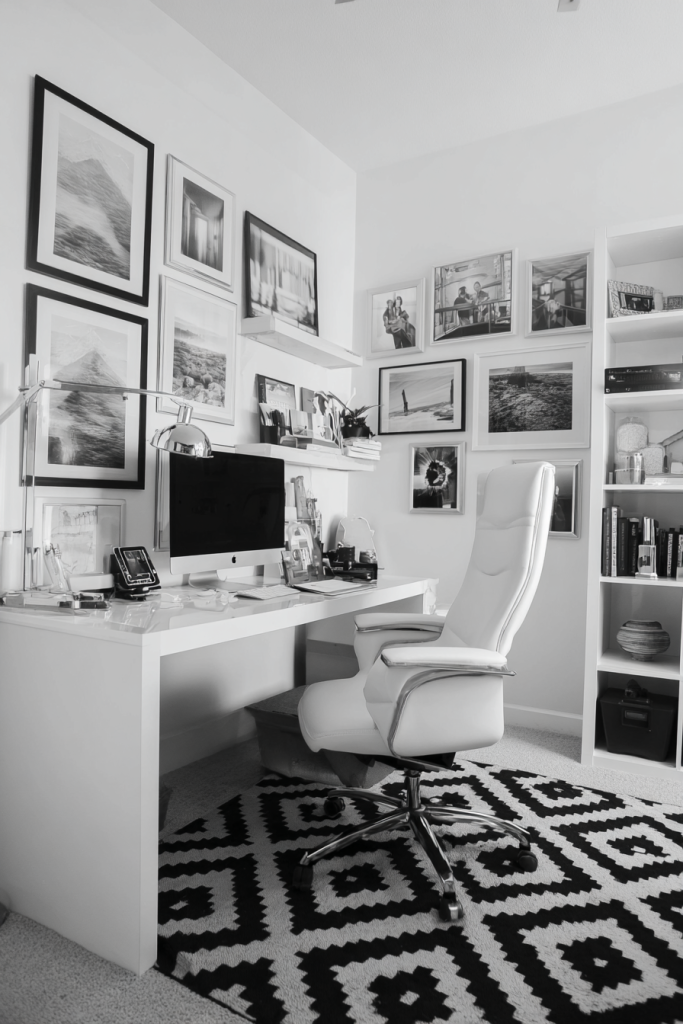
14. Monochrome Modern
Black and white never gets old.
This high-contrast approach creates serious visual impact. White walls keep the foundation bright. Black furniture and accents add definition.
A black desk against white walls makes a bold statement.
Add varying shades of gray to prevent harshness. Black and white photography or graphic prints enhance the theme.
Chrome or matte black hardware maintains the color scheme. A geometric black and white rug adds pattern without introducing color.
This office feels crisp. Clean. Perpetually modern.
Ideal for anyone who wants timeless design. Something that won’t look dated in five years.
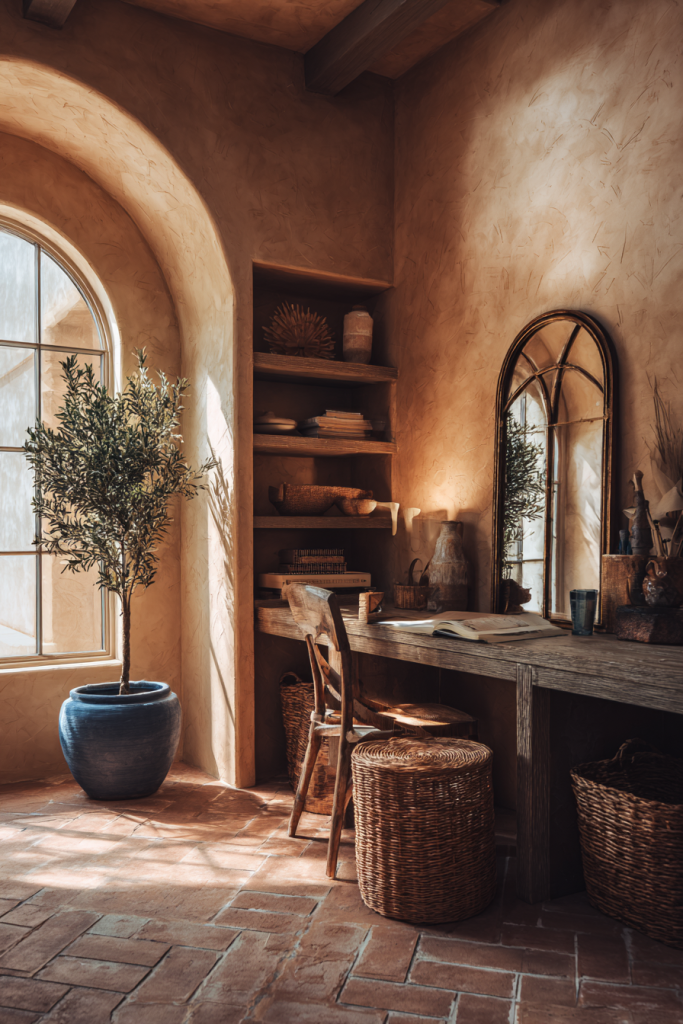
15. Mediterranean Warmth
Bring vacation vibes home.
Warm terracotta and sandy beige colors dominate. Textured plaster walls add rustic charm.
Wrought iron details on shelving or lighting fixtures provide authentic character.
Natural materials everywhere. Terracotta pots. Woven baskets. Ceramic accessories. Deep blue accents remind you of the sea.
Arched doorways or mirrors reference classic Mediterranean architecture. Wood furniture with weathered finishes looks sun-bleached and loved.
This works best in rooms with tons of natural light.
Your office feels like a retreat on the coast. Work becomes less of a chore and more like.. existing in a beautiful space.
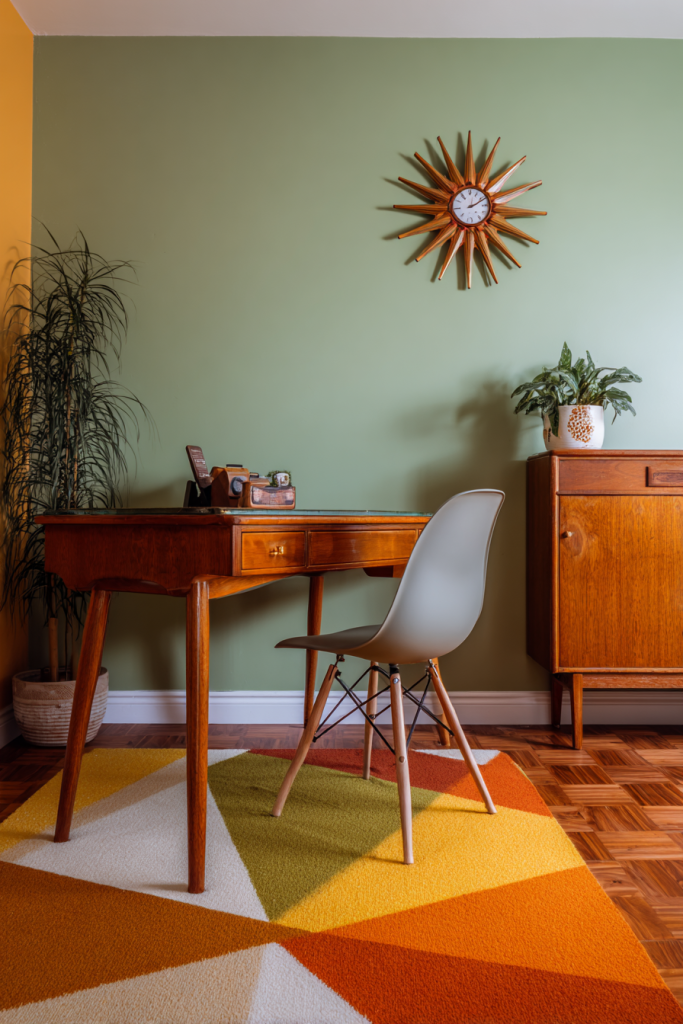
16. Mid-Century Modern Revival
The 1950s and 60s gave us furniture that still looks fresh.
This style celebrates those iconic pieces.
Teak or walnut furniture with tapered legs and clean lines. Pair warm wood tones with sage green, mustard yellow, or burnt orange accents.
A classic Eames-style chair provides comfort and visual appeal.
Geometric patterns in textiles and artwork reference the era. Keep accessories minimal but impactful. A sunburst clock. A ceramic vase.
Storage pieces with sliding doors maintain that streamlined aesthetic.
This office balances retro charm with modern functionality.
It proves that great design doesn’t follow trends. It transcends them.
17. Parisian Apartment Chic
Effortless elegance.
That’s the French way.
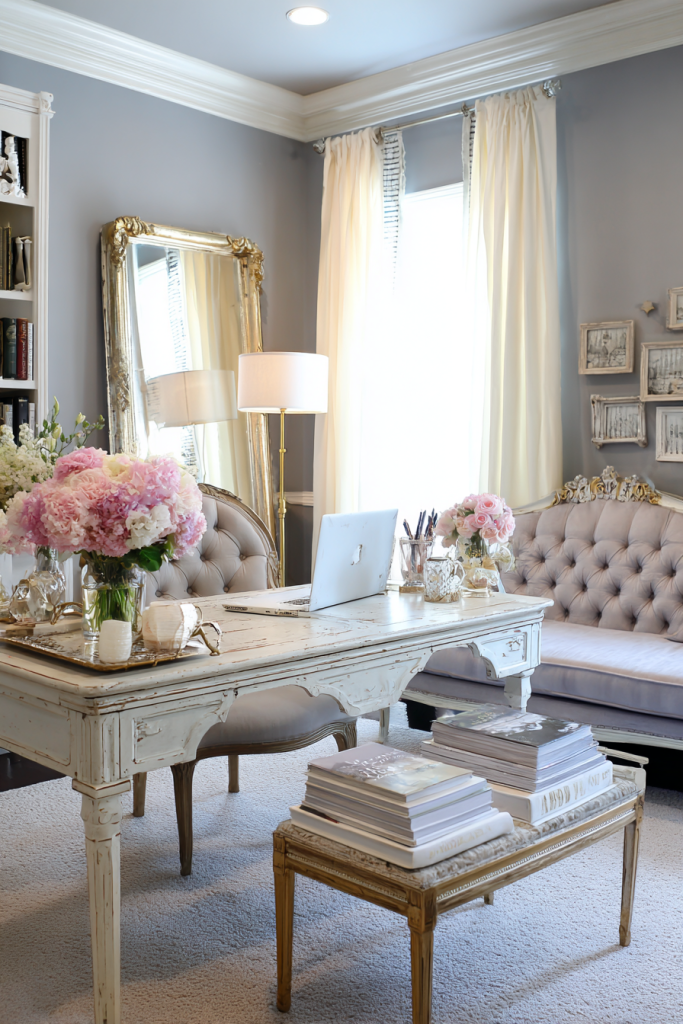
Soft gray walls create a sophisticated backdrop. Ornate molding adds architectural interest even in boring new construction.
A vintage-style writing desk in distressed white or gray sets the tone. A French bistro chair or tufted settee provides seating.
Gold or brass accents add subtle glamour. Fresh flowers in simple vases bring life to the space.
Sheer curtains filter light romantically.
Display books with beautiful covers as decoration. A vintage mirror leans casually against the wall.
This office feels cultivated. Worldly. Designed for someone who appreciates beauty in everyday moments.
18. Desert Modern Minimalism
Southwest aesthetics meet modern minimalism.
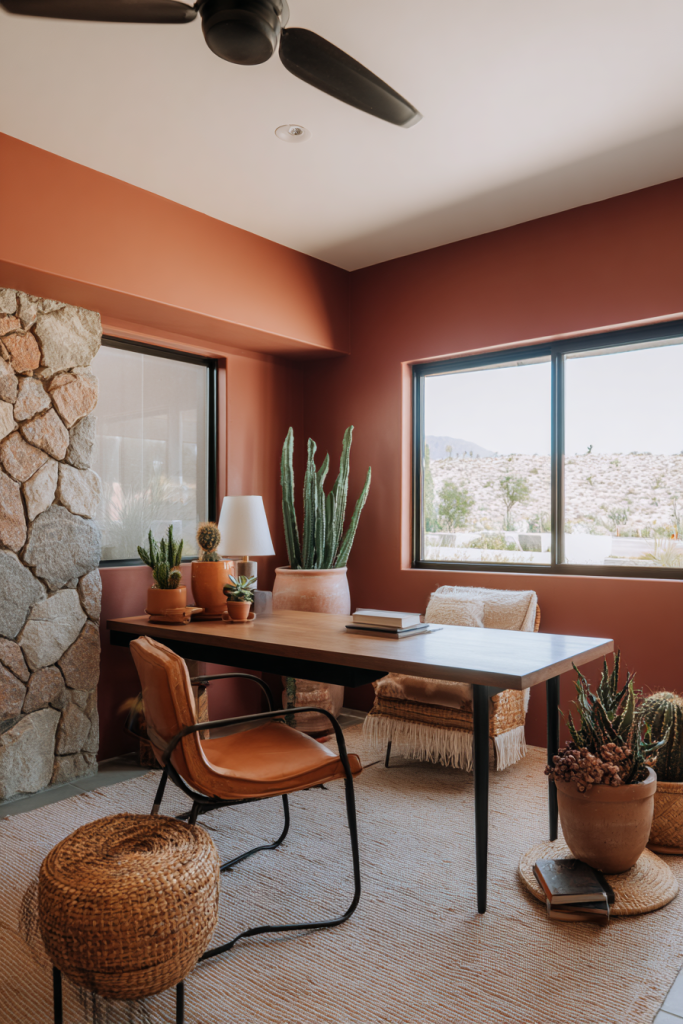
Clay and sand tones create a neutral foundation. Natural materials add organic texture. Leather. Stone. Raw wood.
Clean-lined furniture keeps things uncluttered.
Terracotta pots house desert plants. Cacti. Succulents. Things that barely need watering.
Woven textiles in neutral patterns add softness. Minimal metal accents in black or bronze complement the earthy palette.
Large windows frame desert or garden views. A simple ceiling fan circulates air overhead.
This office feels connected to the landscape. To nature.
Calming. Centering. Perfect for deep focus.
19. English Garden Study
Bring the outdoors inside.
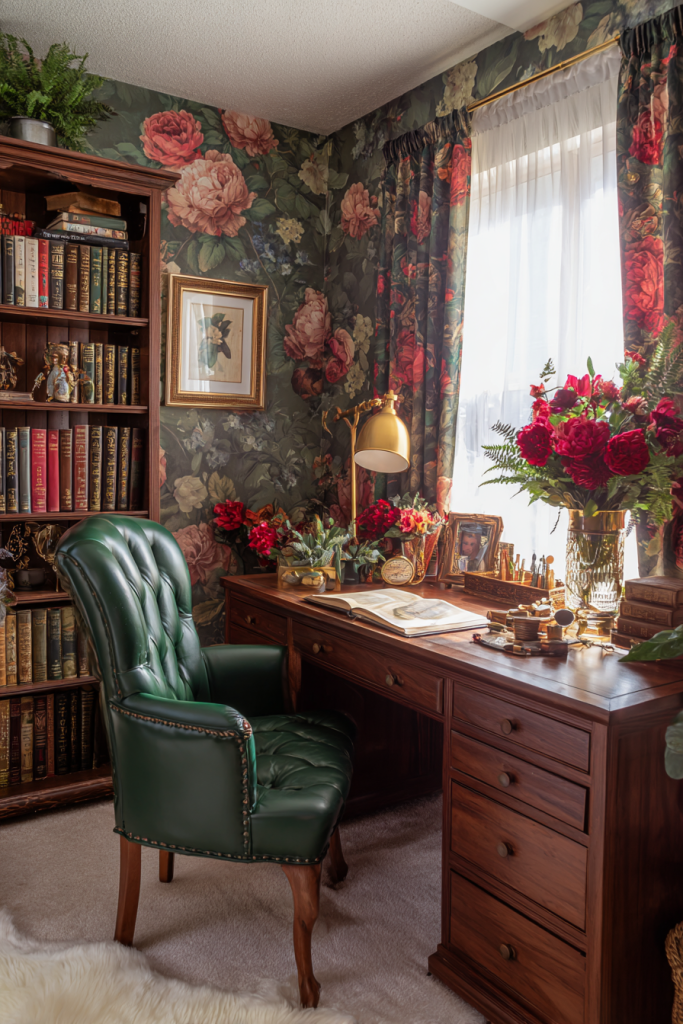
Wallpaper featuring botanical prints or garden scenes creates an immersive backdrop. Deep green walls offer an alternative if wallpaper isn’t your thing.
Wood furniture in dark finishes grounds the space. A comfortable reading chair creates a nook for breaks.
Fresh or dried flowers in vintage vases connect you to gardens. Brass desk accessories add traditional charm.
Built-in bookshelves house work references and beloved novels you can’t part with.
Natural light streams through windows framed with floral curtains.
This office feels like a secret garden. A sanctuary.
Perfect for writers, readers, or nature enthusiasts who’d rather be outside.
20. Urban Studio Apartment Office
Small space? No problem.
This style squeezes productivity from every inch without feeling cramped.
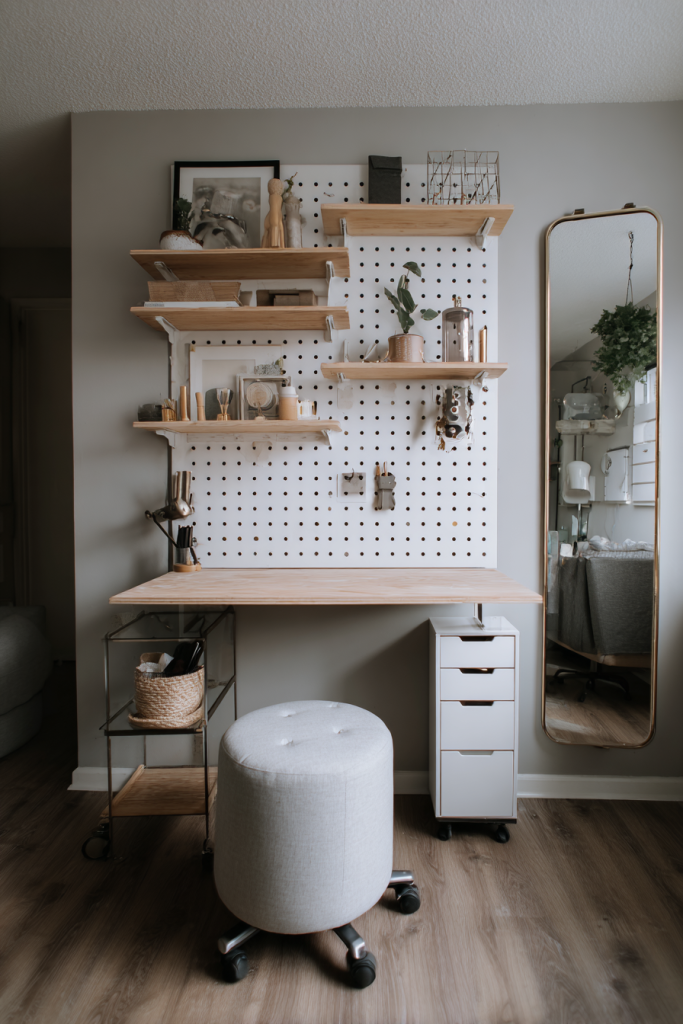
A wall-mounted fold-down desk disappears when you’re done working. Floating shelves climb walls vertically. Use height instead of floor space.
Multi-functional furniture serves double duty. An ottoman with storage. A console that becomes a desk.
A pegboard organizes supplies visibly without eating up surface area.
Mirrors strategically placed make the space feel larger. Light colors keep things airy.
Under-desk storage solutions hide clutter. Task lighting focuses light exactly where you need it.
This office proves something important.
You don’t need a huge room to be productive and stylish.
Your Office, Your Rules
Look.
Your office should work as hard as you do.
These 20 ideas show that home offices can be functional and beautiful. Professional and personal. Productive and comfortable.
Maybe you’re drawn to minimalist serenity. Maybe colorful creativity speaks to you. There’s something here for every style and space.
Here’s the best part.
You don’t have to pick one and copy it exactly. Mix elements from different ideas. Create something that feels uniquely yours.
Start with one change.
Paint an accent wall. Invest in a quality chair that doesn’t murder your back. Add those plants you’ve been eyeing for months.
Small improvements compound over time. Your office will evolve with your needs and tastes.
Remember this.
Your workspace affects everything. Productivity. Mood. Creativity. Energy levels.
When you actually enjoy where you work, you show up differently. Focus comes easier. Ideas flow better. Stress decreases.
That’s worth the investment.
So pick your favorite idea from this list. Start transforming your office into a space you’ll genuinely love spending time in.
Your future self will thank you.
Frequently Asked Questions
How much should I budget for a home office makeover?
Honestly? It depends.
A basic refresh costs around competitive price range. That covers paint, new lighting, and some accessories. Nothing crazy.
Mid-range renovations run great value,500-great value,500. Quality furniture. Better organizational systems. Pieces that’ll last.
High-end makeovers with custom built-ins and designer furniture? You’re looking at great value,000-great value,000+.
Here’s my advice.
Start with ergonomic essentials. A good chair. Proper lighting. Those matter most.
Then build from there.
Shop secondhand for furniture you can refinish. Facebook Marketplace has hidden gems if you’re patient. Thrift stores too.
Many impactful changes cost almost nothing. Rearranging furniture. Decluttering. DIY painting.
Sometimes the best changes aren’t about money. They’re about intention.
What colors work best for productivity in a home office?
Color psychology is fascinating.
Blue promotes focus and calm. Excellent for concentration-heavy work. Think accountants, programmers, analysts.
Green reduces eye strain and creates balance. Ideal for long computer sessions. Your eyes will thank you.
Yellow stimulates creativity and energy. Perfect for brainstorming spaces. But not too bright or it becomes distracting.
Neutral colors like beige, gray, and white provide versatile foundations. They don’t compete for attention.
I avoid bright reds or oranges in primary work areas. They can increase anxiety. Make you feel jittery.
Consider your work type.
If you’re a graphic designer, you might thrive with energizing yellows. A therapist might prefer calming blues.
You can also use different colors for different zones. Neutral walls with colorful accessories you can easily swap out.
Test before committing. Paint a small section. Live with it for a week. See how it makes you feel.
How do I create an office in a small space or shared room?
Small spaces need creative thinking.
Room dividers create visual separation. Bookcases work great. Curtains are cheap and flexible. Folding screens add style.
Wall-mounted or fold-down desks disappear when you’re done working. Game changer for tiny apartments.
Vertical storage maximizes wall height instead of eating floor space. Floating shelves going up instead of out.
Choose furniture with hidden storage. Ottomans. Benches. Multi-functional pieces.
Keep your color palette light. Makes the area feel larger and less cramped.
Define your office zone with a distinct rug. Even in a corner of your bedroom. It creates psychological boundaries.
Good lighting helps establish the space as dedicated work area. Not just wherever you happen to sit.
I’ve seen productive offices in closets. Under stairs. Bedroom corners.
It’s not about size. It’s about smart solutions.
What’s the most important element to get right in a home office?
If I could only fix one thing?
Ergonomic seating.
You’ll spend hours in that chair. Poor posture leads to pain, fatigue, and decreased productivity.
Invest in quality. Adjustable height. Lumbar support. Comfortable armrests.
Your desk height matters too. Arms should rest at 90-degree angles while typing.
Position your monitor at eye level. Prevents neck strain and headaches.
Proper lighting comes second. Both natural light and task lighting prevent eye fatigue.
Everything else enhances the experience. But none of it matters if you’re physically uncomfortable.
Décor is fun. Color schemes are important.
But they won’t help if your back hurts after 30 minutes of work.
Start with ergonomics. Build the aesthetic around it.
Your body will thank you. Your productivity will skyrocket. Your mood will improve.
It’s that simple.